
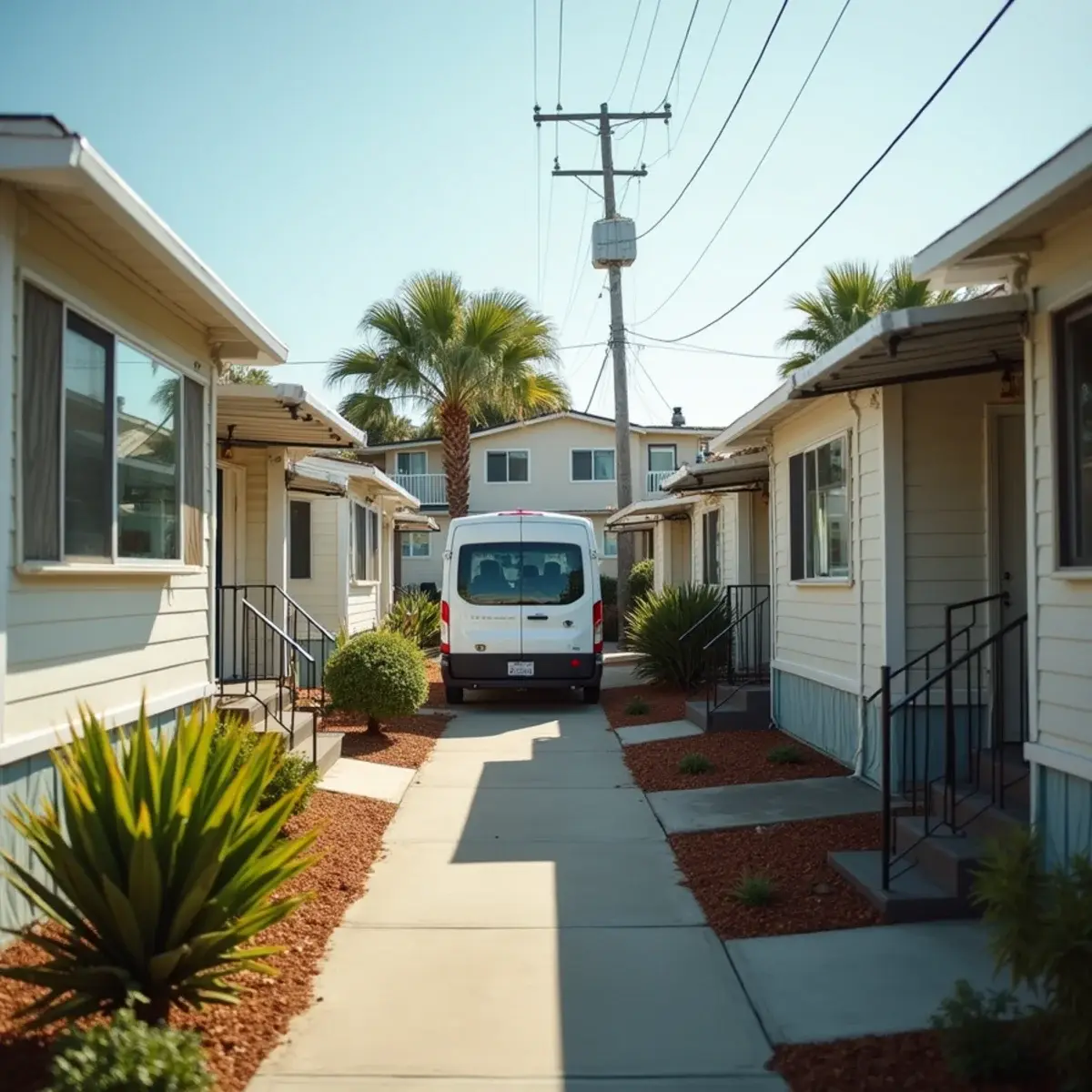
Stanton is one of the densest cities in this part of the county, and its housing mix is different from its neighbors in a way that changes what water damage looks like. Alongside the 1950s and 1960s single-family tracts there is a large stock of older apartment buildings and a significant number of mobile home communities.
Each of those has a distinct failure mode. Older apartment buildings have shared plumbing stacks where one failure travels through several units. Mobile homes have their own construction entirely — supply lines running through an underbelly, floor systems built of materials that do not tolerate water, and no slab to work with.
We work all three, and we mention it specifically because manufactured housing is where homeowners most often get told nobody can help them. That is not true, but it does require a different approach than a stick-built house on a slab.
Water Damage in Manufactured and Mobile Homes
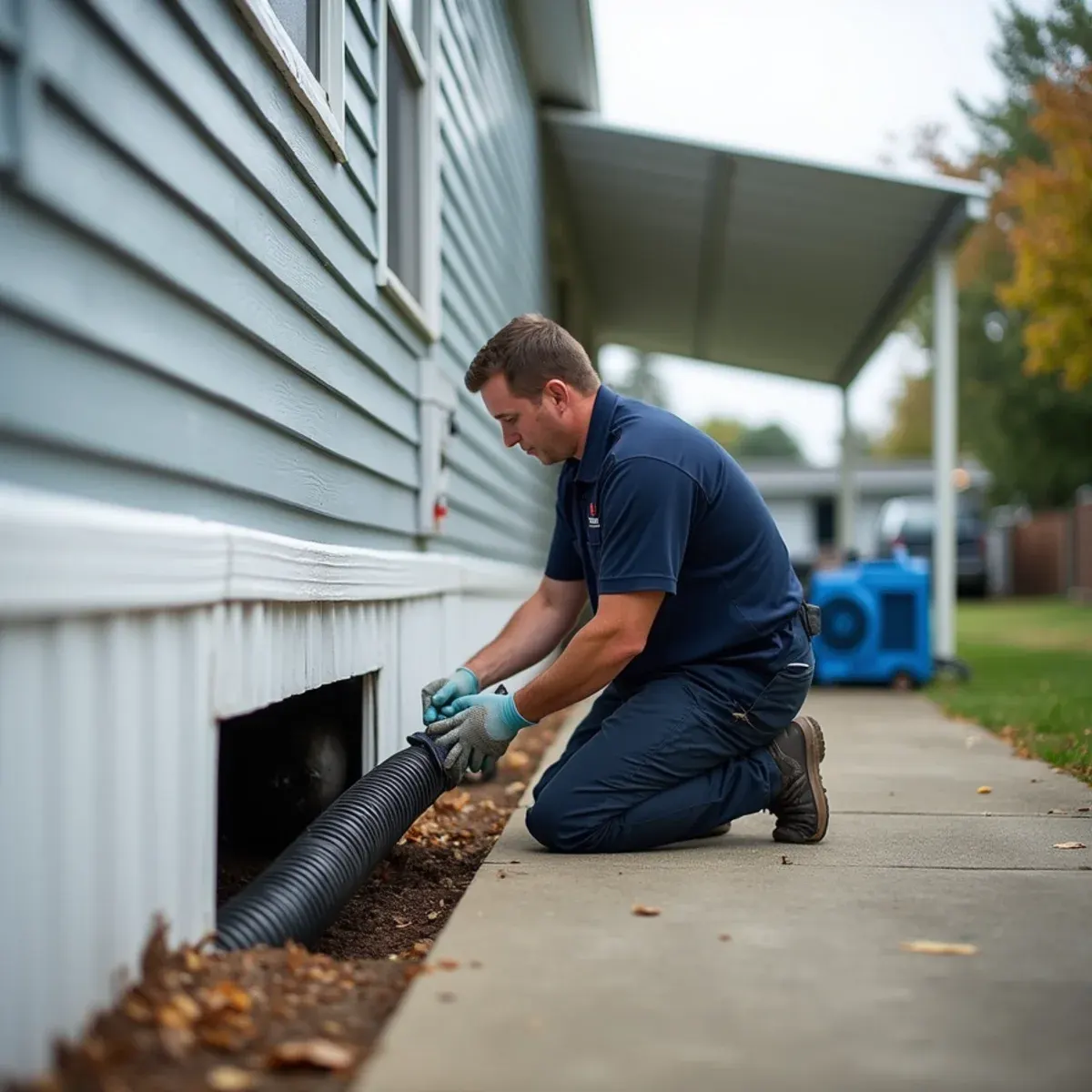
Mobile and manufactured homes need a genuinely different restoration approach, and the reason is what they are built from. The floor system is typically particleboard or OSB over a wood frame with insulation and a vapor barrier belly wrap underneath — and particleboard exposed to water swells, loses structural integrity, and does not recover. It cannot be dried back to serviceable the way plywood often can.
Water also behaves differently. Supply lines run through the underbelly rather than through a slab, so a leak drips into the insulation and gets trapped by the belly wrap instead of running out. That creates a sealed reservoir under the floor that can sit for months, and it is the single most common reason a manufactured home develops soft spots and odor with no visible water anywhere.
Restoration means opening the belly wrap to drain and dry the cavity, removing saturated insulation, evaluating the floor decking honestly, and replacing what has failed before repairing the vapor barrier. It is more involved than a comparable stick-built job, and doing it half-way guarantees a recurrence.
Older Apartment Buildings and Shared Plumbing Stacks
Much of Stanton's multi-family stock dates from the 1960s and 1970s, built with vertical plumbing stacks shared between stacked units. When a supply line or drain in that stack fails, the water does not stay in one apartment — it follows the chase down through every unit below.
That means the tenant who calls is frequently not the tenant with the problem. Water appearing in a first-floor ceiling often originates two floors up, and locating the actual source requires working up the stack with meters rather than assuming the wettest unit is the origin.
For tenants: document everything with photographs immediately and notify management in writing the same day, because renters insurance claims and habitability questions both turn on the timeline. For owners and managers: getting a crew in fast keeps a single-unit repair from becoming a four-unit repair, and it substantially reduces the mold exposure that follows a slow response.
Neighborhoods and Landmarks We Cover in Stanton
We work throughout Stanton — every neighborhood, every street, residential and commercial. If your address is in the city, we cover it.
Neighborhoods & corridors
- Beach Boulevard corridor
- Katella Avenue area
- Cerritos Avenue area
- Magnolia Avenue area
Landmarks nearby
- Stanton Central Park
- Beach Boulevard corridor
- Stanton Community Services Center
- Katella Avenue corridor
- Harry M. Dotson Park
Why Stanton Residents Call Us First
Any restoration company can put Stanton on a service-area list. What matters at 2 a.m. is how far the truck has to come and whether the crew has opened a wall in a house like yours before.
About 8 minutes east via Katella Avenue
We dispatch from 6122-6182 Katella Ave in Cypress — not from a regional depot and not from a call centre that sells your job to whoever bids for it. That is the whole reason the 60-minute commitment is one we can put in writing.
Manufactured-home floors give no warning
Underfloor leaks seal inside the belly wrap. A soft spot underfoot is usually the first and only sign.
Eight minutes east on Katella
The same corridor we stage on, so response here is among our fastest.
- 20+ years restoring Orange County homes
- IICRC Certified Firm
- Licensed, Bonded & Insured
- We bill your insurance company directly
- IICRC S500:2025 compliant on every job
- 100% satisfaction guarantee — in writing, on every job
Stanton Water Damage Questions
Yes, and we say so explicitly because a lot of companies will not. Manufactured homes need a different approach — opening the belly wrap to dry the floor cavity, removing saturated insulation, and honestly assessing particleboard decking, which usually cannot be dried back to serviceable.
Photograph everything immediately, notify your property manager in writing the same day, and move belongings out of the affected area. The source is often a unit or two above rather than directly overhead, and finding it requires working up the plumbing stack with moisture meters.
It depends on the cause and the building's governing documents, but generally the building or the origin unit's policy handles the structure while your renters or condo policy covers your belongings. Thorough documentation from day one is what keeps that resolution from turning into a dispute — and we document each unit separately for exactly that reason.
Regularly — Stanton has a substantial manufactured-home population and the failures are genuinely different from conventional construction. Supply lines run underfloor inside the belly wrap, so a leak is sealed in where it cannot evaporate and gives no visible sign until the decking softens. We access and dry from underneath, replace affected insulation and belly material rather than leaving wet material in place, and document it in the form your insurer expects for a manufactured home.