
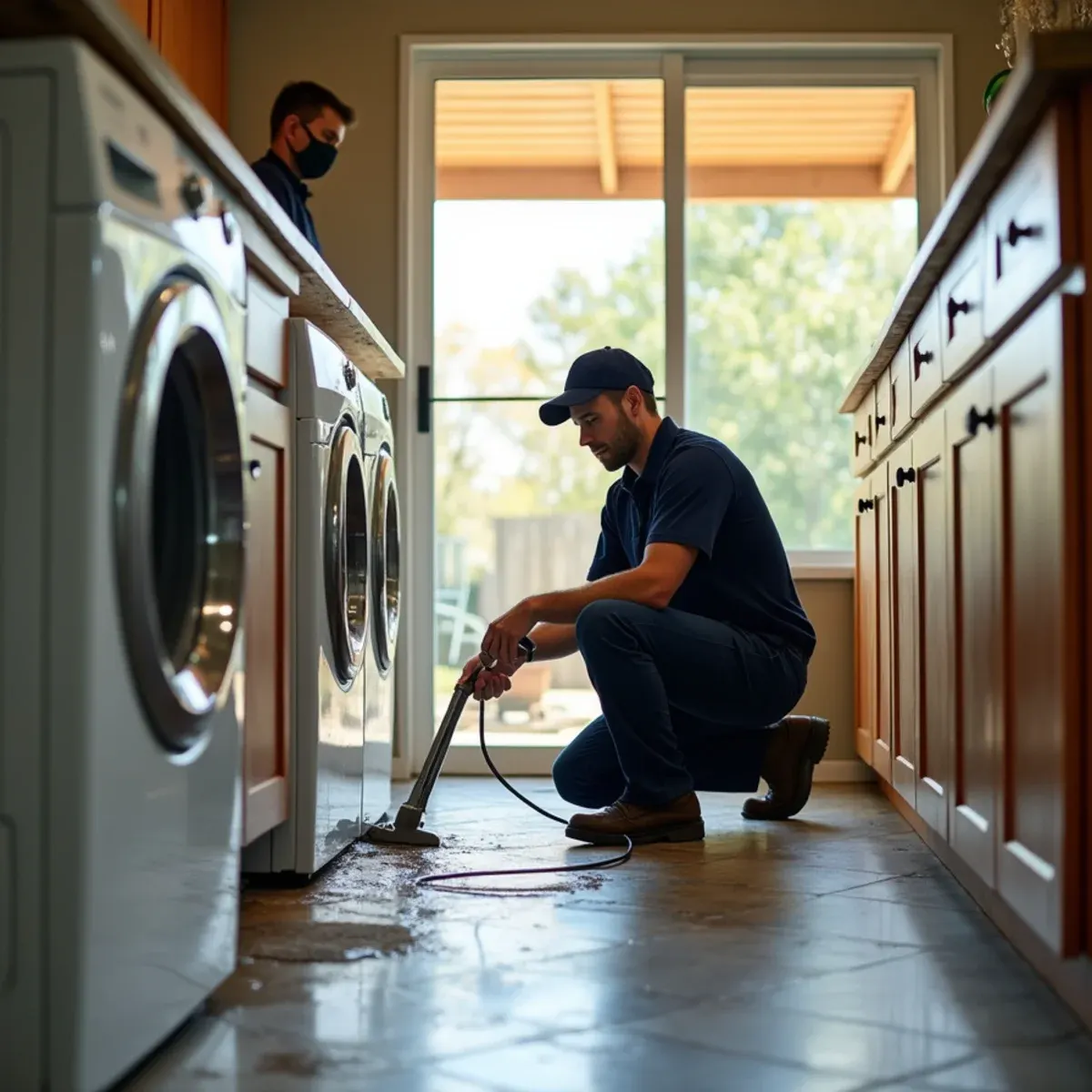
Garden Grove is a large city — roughly 170,000 people across five ZIP codes — and our work there covers everything from small single-family losses in the west end to multi-tenant commercial jobs along Garden Grove Boulevard and Brookhurst.
Most of the housing dates from the postwar building surge of the 1950s and 1960s, when the city grew from farmland to a full suburb in about fifteen years. That gives it the same aging-infrastructure profile as the rest of this region: original galvanized and copper reaching end of life, cast-iron sewer laterals with root intrusion, and water heaters well past their service life.
One thing distinguishes Garden Grove operationally: a large share of homes here house multiple generations or multiple families, which means more people, more fixtures in use, and more demand on plumbing that was designed for a 1955 household. It also means a water loss displaces more people, so getting a home habitable again quickly carries more weight than the square footage alone suggests.
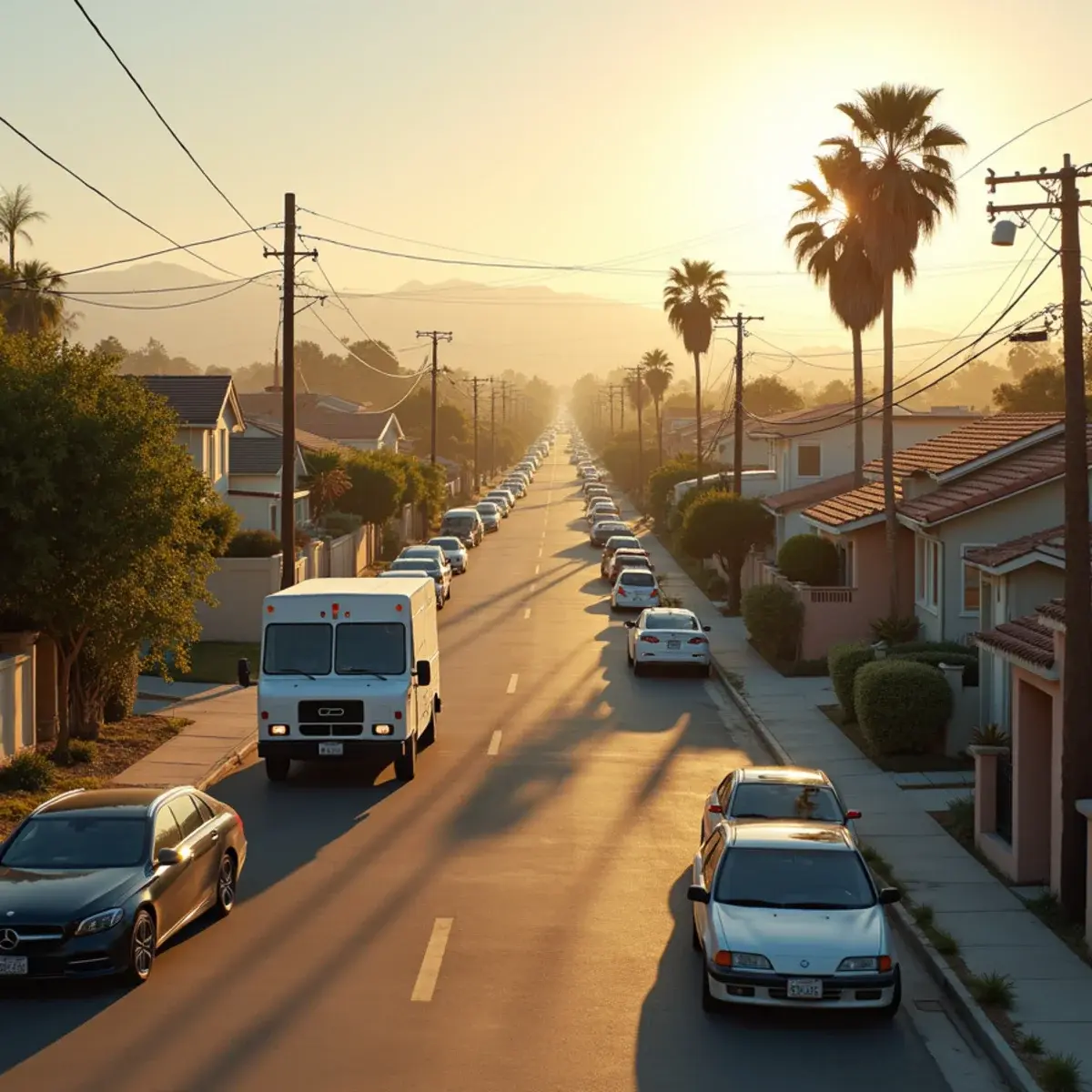
Higher Occupancy, Harder-Working Plumbing
A 1958 tract home was plumbed for a family of four with one bathroom in regular use, one washing machine, and a single water heater sized to match. Many Garden Grove homes today support considerably more than that, and the plumbing feels it.
More cycles through the same fixtures means more wear on angle stops, supply risers, and washing machine hoses. Higher hot water demand means water heaters run harder and fail sooner. And drain lines carrying more volume through a sixty-year-old cast-iron lateral back up more readily when roots have already narrowed the pipe.
None of that is a criticism of how anyone lives — it is just what the plumbing is experiencing. The practical takeaway is that in a high-occupancy older home the maintenance intervals should be shorter: replace washing machine hoses every five years without exception, replace angle stops and supply risers when they get stiff, and plan on a water heater lasting closer to eight years than twelve.
Working With Households Where English Is a Second Language
Garden Grove is one of the most linguistically diverse cities in the county, with large Vietnamese and Korean-speaking communities, and a water emergency is the worst possible moment to be navigating technical vocabulary in a second language.
We try to handle that plainly. We explain what we are doing in ordinary words rather than industry terms, we show rather than tell wherever possible — moisture meter readings, thermal images, the actual wet material — and we put the scope in writing so it can be read carefully or reviewed with family later rather than decided under pressure at the door.
We will also say this directly: high-pressure sales tactics during an emergency are a warning sign, and they are used disproportionately on people who feel at a disadvantage in the conversation. You are entitled to a written scope, time to read it, and a second opinion. Any legitimate restoration company will give you all three without complaint.
Neighborhoods and Landmarks We Cover in Garden Grove
We work throughout Garden Grove — every neighborhood, every street, residential and commercial. If your address is in the city, we cover it.
Neighborhoods & corridors
- West Garden Grove
- Historic Main Street district
- Garden Grove Boulevard corridor
- Chapman Avenue area
- Brookhurst corridor
Landmarks nearby
- Christ Cathedral
- Garden Grove Park
- Historic Main Street
- Atlantis Play Center
- Korean Business District
- Garden Grove Boulevard corridor
Why Garden Grove Residents Call Us First
Any restoration company can put Garden Grove on a service-area list. What matters at 2 a.m. is how far the truck has to come and whether the crew has opened a wall in a house like yours before.
About 12 minutes southeast
We dispatch from 6122-6182 Katella Ave in Cypress — not from a regional depot and not from a call centre that sells your job to whoever bids for it. That is the whole reason the 60-minute commitment is one we can put in writing.
Multi-generational households wear fixtures faster
Far higher fixture cycle counts mean angle stops, supply risers and washer hoses fail years earlier than the general guidance suggests.
Five-year hose replacement, no exceptions
We swap failed rubber supply lines for braided stainless as part of the work, because the same hose failing twice is a claim you should not file twice.
- 20+ years restoring Orange County homes
- IICRC Certified Firm
- Licensed, Bonded & Insured
- We bill your insurance company directly
- IICRC S500:2025 compliant on every job
- 100% satisfaction guarantee — in writing, on every job
Garden Grove Water Damage Questions
Yes, all five ZIP codes — 92840, 92841, 92843, 92844, and 92845 — for both residential and commercial properties. Response time runs about twenty-five to thirty-five minutes depending on where in the city.
Usually, and we plan for it. Containment lets us isolate the drying chamber so the rest of the house stays livable, and we sequence repairs to keep at least one bathroom and the kitchen functional wherever the scope allows.
Higher occupancy accelerates wear on everything. Replace washing machine hoses every five years, watch for angle stops that have become stiff or weep at the packing nut, and plan on a shorter water heater lifespan than the label suggests. A camera inspection of the sewer lateral is also worth it on any home this age that has never had one.
Almost always because they are doing far more work than the manufacturer's replacement interval assumes. Multi-generational households in Garden Grove run dramatically higher fixture cycle counts — more laundry loads, more dishwasher runs, more toilet fills per day — and every wear item ages on that count rather than on the calendar. Braided stainless hoses replaced at five years without exception, and angle stops exercised annually so they still turn, covers most of it.