
A lot of Garden Grove houses hold two or three generations, and during a storm that matters in a specific way. The 1950s and 1960s clay and cast-iron laterals under these lots take on ground water when the soil is saturated, the line's working capacity drops, and a full household's normal water use is suddenly more than the pipe can move. The backup surfaces at the lowest fixture — a hallway shower, a garage floor drain — while it's still raining outside.
Above ground, the picture is a city that went from farmland to full suburb in about fifteen years, so roofs across whole tracts near Garden Grove Park and the streets off Historic Main Street are the same age and were re-covered in the same decade. We work in households where English is a second or third language, and we take the extra time to explain what counts as clean water and what counts as contaminated, because those two categories decide whether your carpet stays or goes.
What Garden Grove Changes About Storm Damage
1Storm backups are Category 3 water
When a saturated lateral pushes sewage back into the house, IICRC S500 puts that in the highest contamination category no matter how it looks. Carpet and pad come out. Wet drywall gets cut above the line. Non-porous surfaces get cleaned and treated. It's a harder conversation than "we'll dry it," but drying contaminated material in a house full of kids and grandparents isn't something we'll offer.
2High-occupancy homes dry differently
A house with eight or ten people in it produces a lot of interior moisture on its own — cooking, showers, laundry running most of the day. During a storm loss that added load slows drying and can push readings the wrong way overnight. We size dehumidification for the household, not just the square footage, and set daily targets instead of assuming a standard three-day dry-out.
3Scope the lateral before the season
Most homes here have never had a camera in the sewer line. Ten minutes of video before November tells you whether roots and offset clay joints are waiting for the first long soak. If the line is compromised, a spot repair in dry weather costs a fraction of a Category 3 loss inside the house during a storm, and it spares you the part nobody wants to clean up.
How the Work Runs
The method is the same one we use on every storm damage job, documented to the IICRC S500:2025 standard. Here it is in short — the full storm damage restoration process explains each stage in detail.
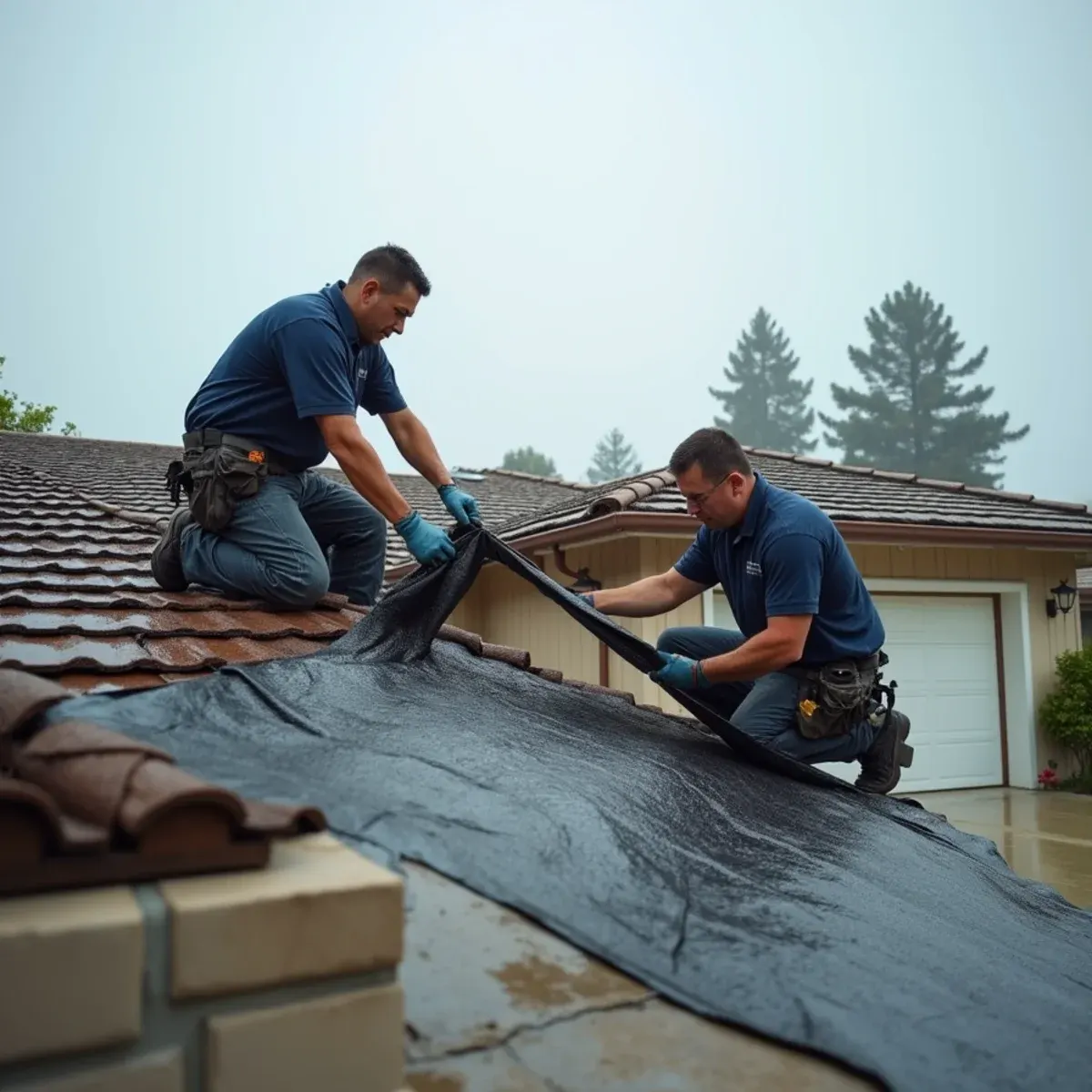
- Emergency tarping and board-up
- Water diversion and extraction
- Full damage documentation
- Interior mitigation
- Structural drying to standard
- Permanent repairs
The Garden Grove Background Worth Knowing
A 1958 tract home was plumbed for a family of four with one bathroom in regular use, one washing machine, and a single water heater sized to match. Many Garden Grove homes today support considerably more than that, and the plumbing feels it.
There is more on the housing stock, drainage and plumbing history of this city on our water damage restoration in Garden Grove page.
Garden Grove at a glance
- Dominant construction era
- 1950–1970
- Foundation type
- slab on grade
- Supply piping found here
- galvanized steel, under-slab copper
- Drain line materials
- cast iron, clay
- Terrain and water table
- flat, moderate water table
- Most common local failure
- accelerated wear on angle stops, supply risers and washing machine hoses from far higher fixture cycle counts
- Highest-value local prevention
- shorter replacement intervals on every wear item — hoses at five years without exception
What It Costs in Garden Grove
We do not quote a number over the phone before seeing the property — anyone who does is guessing. The variables that actually move the price on a storm damage job are size of the opening and duration of intrusion, emergency mitigation scope, how many rooms the water reached, and they are broken down in full on the storm damage restoration page. The assessment and the written estimate are free anywhere in Garden Grove, day or night, with no obligation.
Storm Damage Questions from Garden Grove Homeowners
A long soak raises the ground water around your lateral and pushes it in through cracked clay joints and root openings. That extra water fills capacity the line needs for the house, and the backup surfaces at the lowest drain — usually a first-floor shower or a garage drain. It's a pipe problem the rain exposed, not the rain itself. We handle the contaminated cleanup first, then recommend having the lateral scoped once things dry out.
During. Emergency tarping and board-up happen in the rain — that is the entire point of them. We triage by severity, so active intrusion into occupied living space goes to the front of the queue.
Sudden wind and rain damage is generally covered, including the resulting interior water damage. What gets excluded is damage from a roof that had already failed or from deferred maintenance, and flooding from water that came across the ground, which needs separate flood insurance.
Yes, all five ZIP codes — 92840, 92841, 92843, 92844, and 92845 — for both residential and commercial properties. Response time runs about twenty-five to thirty-five minutes depending on where in the city.