Appliance failures cause more residential water losses in this country than any other single source, and the reason is simple: a washing machine, dishwasher, refrigerator ice line, and water heater are each connected to a pressurized supply line and each spend their entire service life quietly waiting to fail. Most do it eventually.
What makes appliance leaks distinctly annoying is where the water goes. It runs behind and underneath — under the dishwasher into the cabinet toe-kick and subfloor, behind the washer into the wall cavity, under the water heater into the garage slab and the wall it shares with the house. All of those are places you cannot see and cannot dry with a towel.
Slow leaks are worse than dramatic ones. A dishwasher that has been weeping a cup a day for four months has destroyed the cabinet bases and the subfloor without ever putting visible water on your kitchen floor. When we pull the unit, that is when everyone finds out.
Where Appliance Leaks Show Up
Each appliance fails in a characteristic way. These are the signs worth acting on:
Warped or delaminating cabinet toe-kick
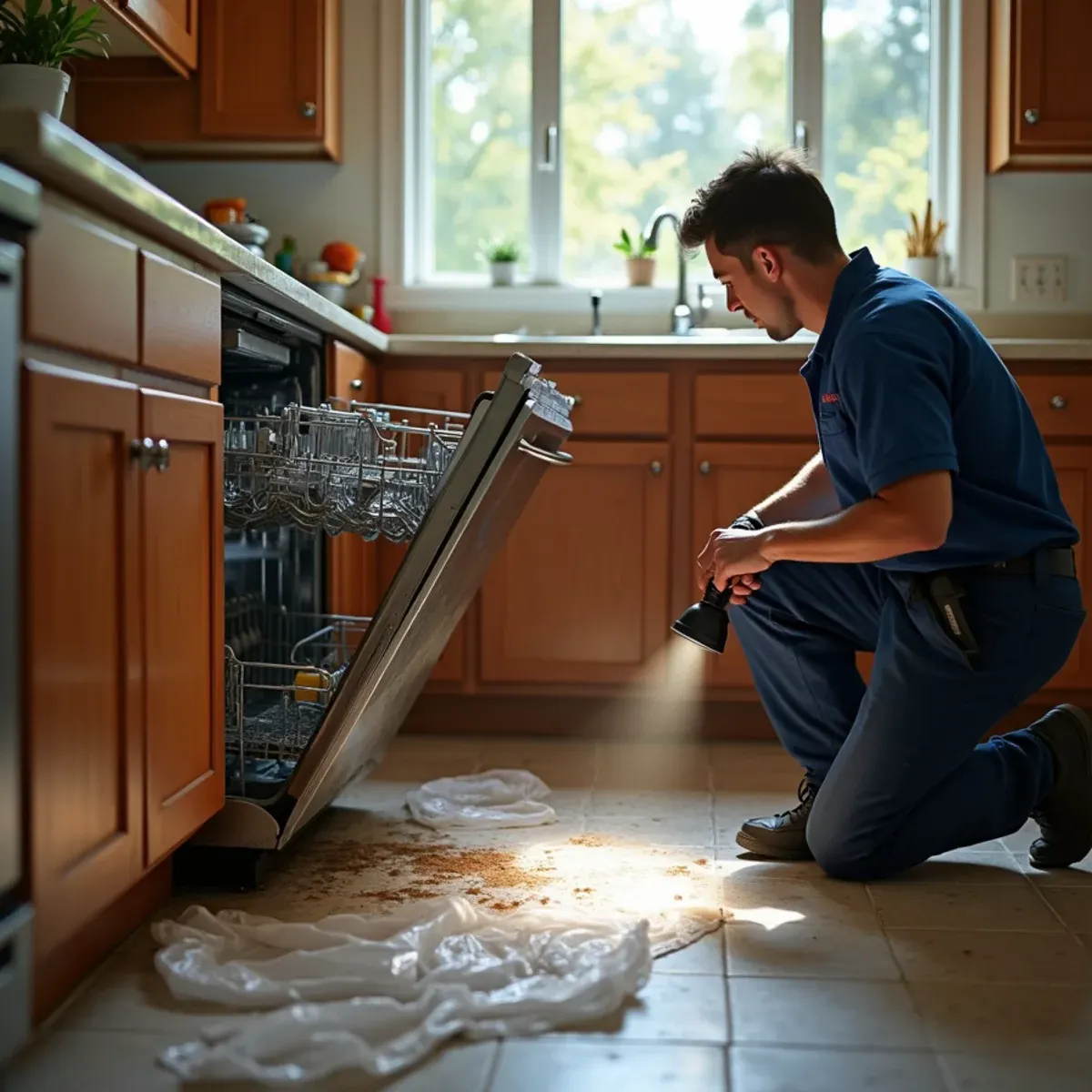
The base of the cabinet next to the dishwasher is particleboard, and it swells and delaminates when wet. Visible swelling means water has been there a while and the subfloor underneath is wet too.
Flooring lifting or cupping near an appliance
Vinyl plank separating at the seams or laminate swelling at the edges in front of a dishwasher or fridge is a slow leak signature.
Rust or mineral staining under the water heater
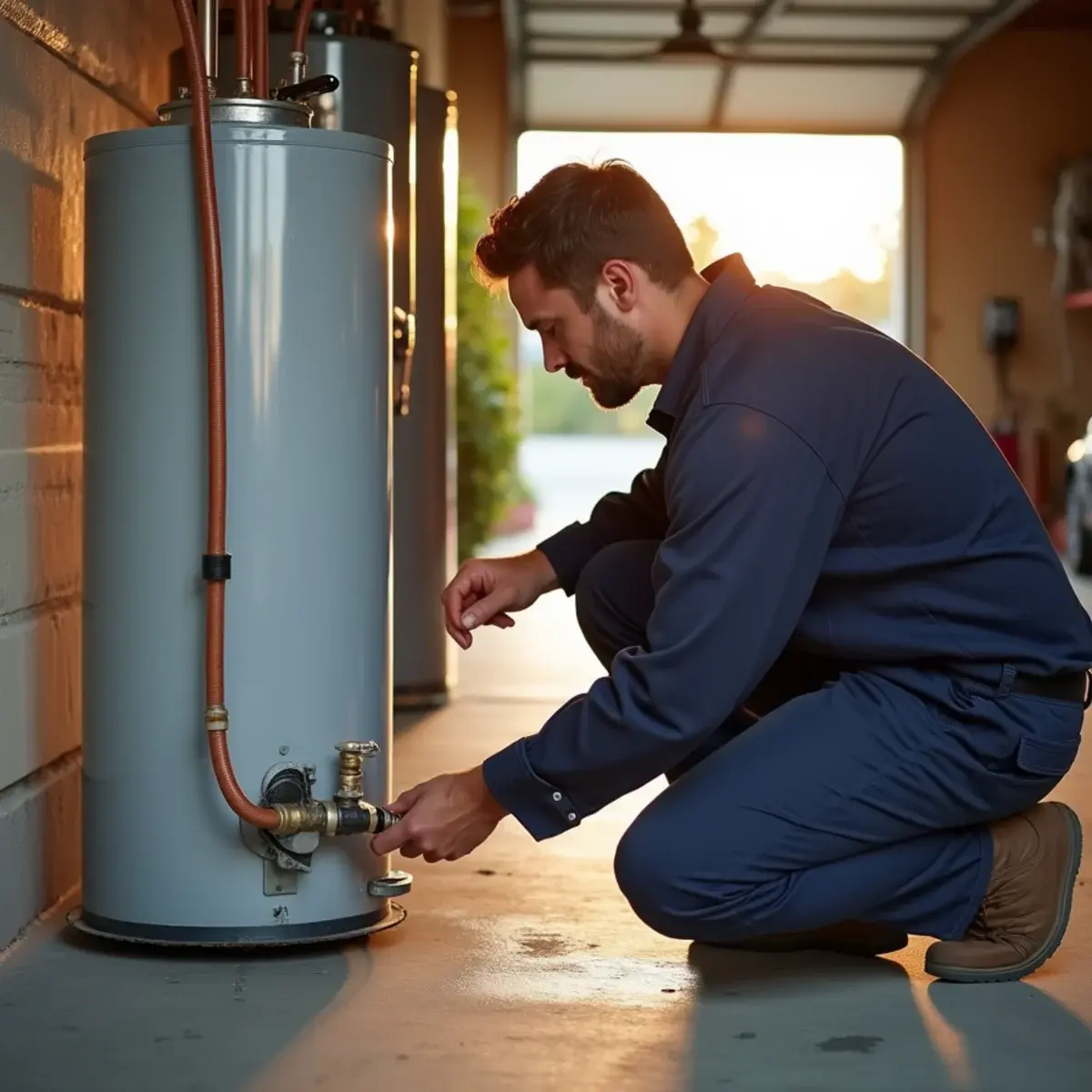
A water heater usually weeps before it fails outright. Rust streaks on the tank or a mineral ring on the pan is a warning to replace it, not a repair to defer.
Damp drywall behind the washing machine
Supply hose connections at the box are the failure point. Any dampness on the wall behind or beside the washer means the connection or the hose is leaking.
Musty smell from a lower cabinet
Under-sink supply and drain connections leak slowly into a closed, dark, unventilated box. That is close to ideal growth conditions, and the odor arrives before the visible damage.
Water pooling around the fridge
Ice maker supply lines — especially older plastic ones — crack and leak, often behind the unit where nobody looks until the flooring buckles.
How We Handle an Appliance Leak
The appliance is usually the least of it. The job is drying the cabinetry, subfloor, and wall assembly around it.
- 1
Isolate the supply
We close the angle stop or the local shutoff for that appliance rather than the whole house, so you keep water everywhere else while we work.
- 2
Pull the appliance and read behind it
Nothing can be assessed with the unit in place. We pull it, then map moisture in the subfloor, the adjacent cabinet bases, and the wall cavity behind.
- 3
Open cabinet bases where needed
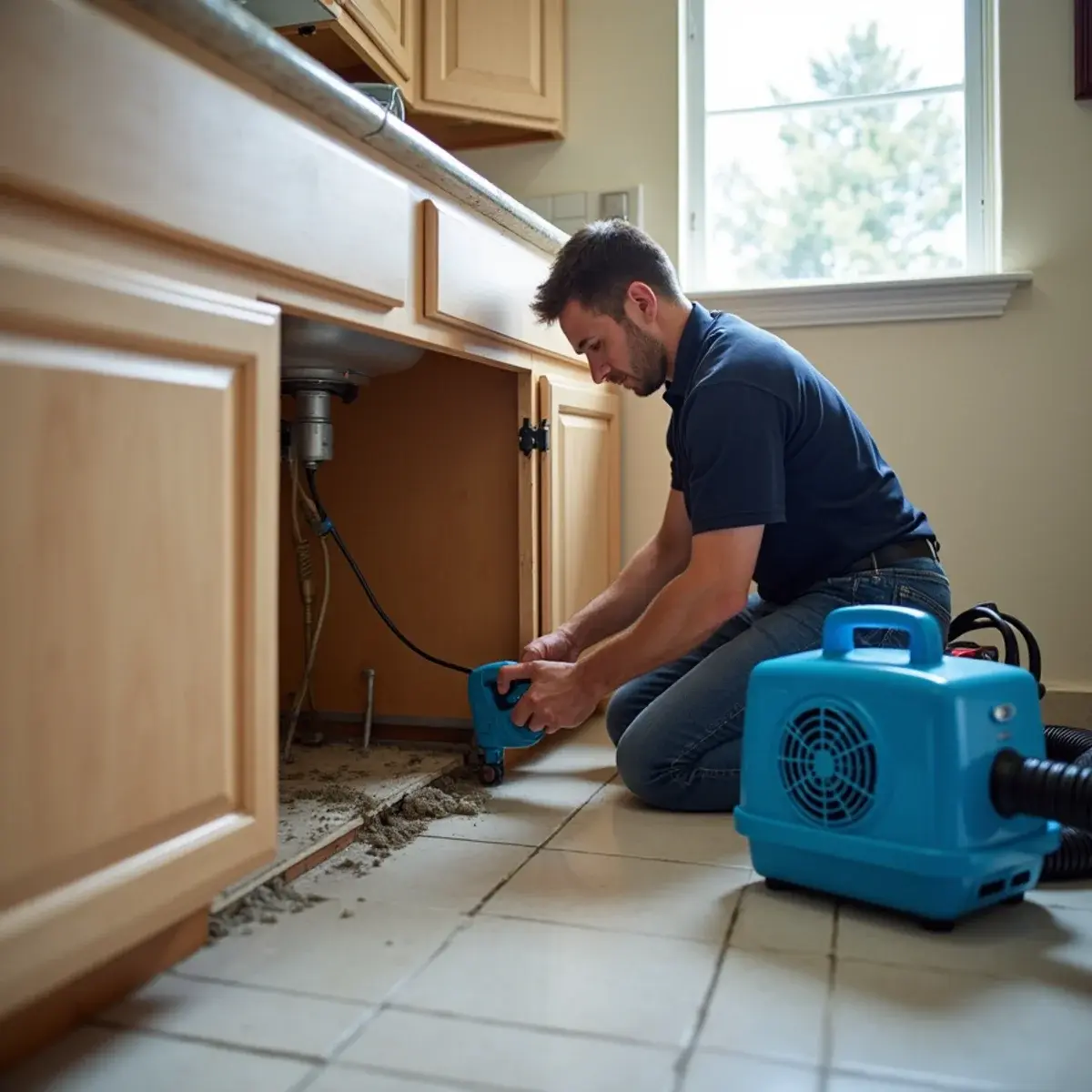
Toe-kicks and cabinet bottoms trap water in an enclosed void. A small removal at the toe-kick lets us get airflow into that space without dismantling your kitchen.
- 4
Extract and remove unsalvageable material
Saturated particleboard cabinet bottoms, wet underlayment, and swollen laminate come out. Plywood subfloor can usually be dried in place if we get to it early.
- 5
Targeted drying of the enclosed spaces
Cabinet interiors, subfloor voids, and the wall cavity get directed airflow through small hidden ports, with dehumidification managing the room. These voids do not dry on their own at any useful rate.
- 6
Rebuild and reinstall
Cabinet base repair or replacement, flooring, and reinstallation of the appliance — plus new supply lines, because reusing the hose that just failed is not a saving.
The Five-Year Hose Rule
Washing machine supply hoses are responsible for an outsized share of catastrophic residential water losses, and the reason is that they fail while nobody is home. A hose under constant 60 psi pressure that lets go on a Tuesday morning will run for eight hours before anyone walks in.
Standard black rubber hoses degrade from the inside, and there is no reliable way to see it. Replace them every five years with braided stainless steel — it costs about twenty dollars a pair and takes fifteen minutes. If you cannot remember when yours were replaced, they are due.
The same logic applies to the plastic ice maker line behind your refrigerator, the flexible supply risers under every sink, and the water heater flex connectors. All of them are wear items with a service life, and all of them are cheaper to replace on a Saturday than to have fail on a weekday.
Why Water Heaters in the Garage Are a Cypress-Specific Risk
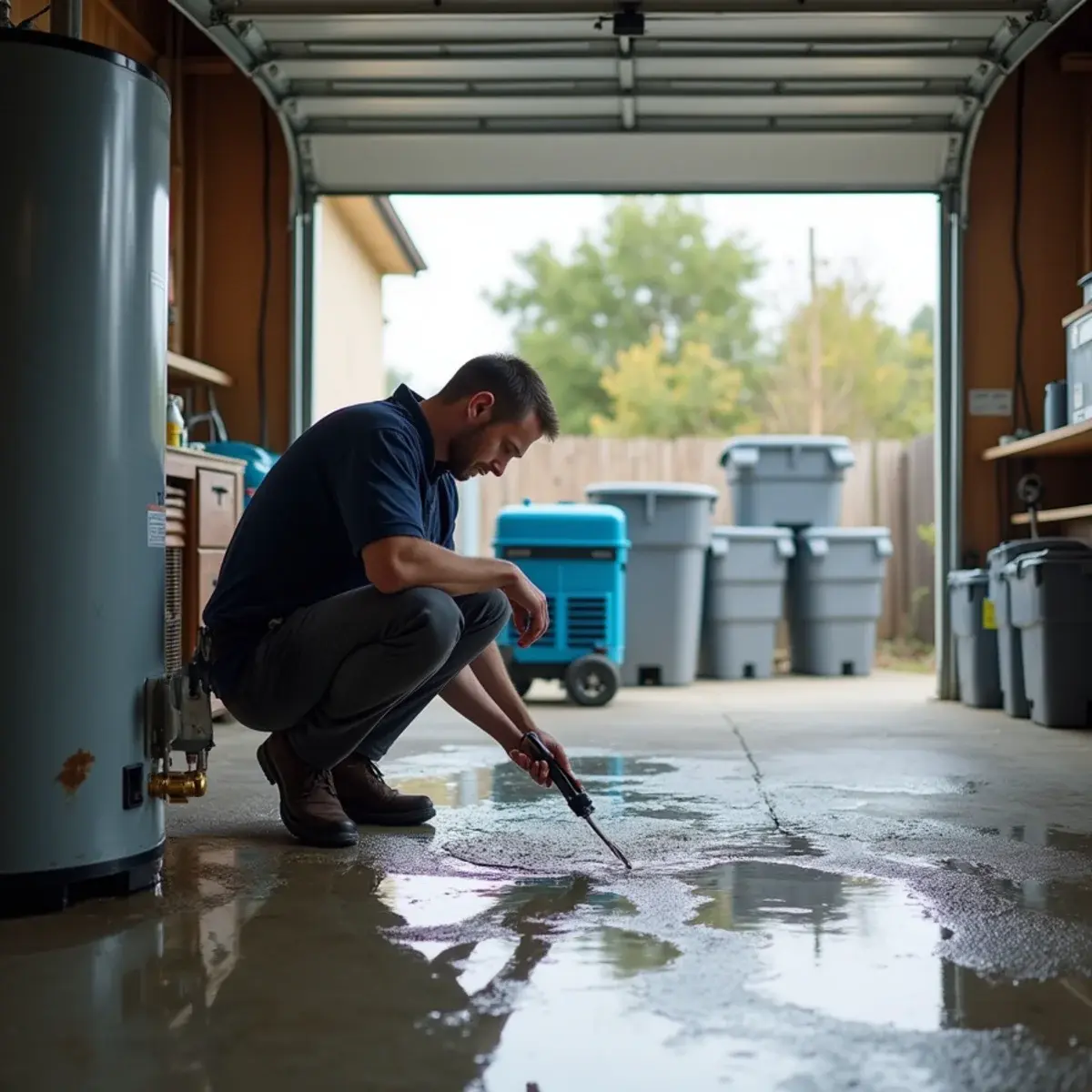
Most homes in this city have the water heater in the garage, which is genuinely better than a hallway closet — a failure there dumps forty or fifty gallons onto a slab that drains toward a door rather than into your living room.
But it creates two problems people underestimate. The wall between the garage and the house is usually a shared framed wall, and water pooling against it wicks straight into the bottom plate and the drywall on the living-space side. And most garages are packed with stored belongings sitting directly on the floor — boxes of photographs, holiday decorations, paperwork — which absorb water in minutes.
Two cheap fixes: a drain pan under the heater plumbed to the exterior, and getting stored items off the slab onto shelving or pallets. Both take an afternoon. A water heater over ten years old should also just be replaced on your schedule instead of its own — the average tank lasts eight to twelve years here, and the ones that fail catastrophically are almost always past that.
What Appliance Leak Cleanup Costs Depends On
The spread here is wide, driven almost entirely by how long the leak ran.
Slow leak versus sudden failure
A hose that burst this morning is a one- or two-day dry-out. A dishwasher that has been weeping for months has usually destroyed cabinet bases and subfloor and may have started microbial growth — a far larger scope.
How much cabinetry is affected
One cabinet base is a modest repair. A run of custom cabinets where the bases have delaminated across several boxes gets expensive quickly, and matching an existing finish is its own challenge.
Subfloor condition
Plywood subfloor caught early dries in place. Particleboard or OSB underlayment that has swollen has to be cut out and replaced, which means the finish flooring comes up too.
Flooring type and continuity
Replacing a section of a continuous floor is only invisible if the material is still available. Discontinued flooring often forces a larger replacement area to reach a natural break.
Whether the wall cavity is involved
Water behind a washer that entered the wall adds cavity drying, insulation removal, and drywall repair to the scope.
Insurance note: Sudden appliance failures are typically covered. Long-term seepage is typically not — most policies exclude damage from leaks that occurred over weeks or months. This is precisely why a slow appliance leak found early is worth acting on immediately rather than watching.
Why Cypress Homeowners Call Us for Appliance Leaks
Plenty of companies list this service. Fewer can tell you what equipment they will bring, what standard the work is measured against, or what happens if they are wrong. Here is what you are actually buying.
We pull the unit and read behind it
Dishwasher and washer leaks soak the cabinet base and subfloor behind the appliance, where nothing is visible. That cavity is the job.
Cabinet kick space is dried, not written off
Toe-kick and cabinet base can usually be dried in place with targeted airflow instead of replacing a whole run of cabinetry.
Braided stainless on the way out
We replace failed rubber supply hoses as part of the work, because the same hose failing twice is a claim you should not have to file twice.
- 20+ years restoring Orange County homes
- IICRC Certified Firm
- Licensed, Bonded & Insured
- We bill your insurance company directly
- IICRC S500:2025 compliant on every job
- 100% satisfaction guarantee — in writing, on every job
Frequently Asked Questions
Yes. Dishwasher leaks run backward and sideways under the unit into the cabinet bases and subfloor, which is why the visible floor often looks untouched. A free moisture reading takes twenty minutes and will tell you definitively whether anything behind or beneath is wet.
Often only the affected base or toe-kick, not the whole box. Particleboard bottoms that have swollen and delaminated have to be replaced, but the cabinet frame, doors, and countertop can usually stay. We repair at the smallest reasonable scope.
A quickly caught leak is typically two to four days of drying. If cabinet bases or subfloor have to be replaced, add several days for the repair work. Slow leaks that caused microbial growth take longer because remediation is added.
Usually the resulting water damage is covered, while the water heater itself is not — policies generally treat the appliance as a maintenance item and the damage as the covered peril. If the tank has visibly been rusting and weeping for a long time, the carrier may argue it was foreseeable, which is another reason not to defer a replacement.
We do not sell appliances, but we handle the disconnection, the restoration, and the reinstallation, and we replace supply lines and connectors as part of the work. Most people order the new unit while we are drying and we set it once the space is ready.
Related Reading
- Your Water Heater Is Leaking: What to Do Right Now — A failed water heater dumps forty to eighty gallons in minutes. Here is the shutdown sequence, in order, and what happens next.
- The Water Damage Prevention Checklist for Southern California Homes — Nearly every water loss we respond to was preventable for under two hundred dollars. Here is the whole list, by room and by season.