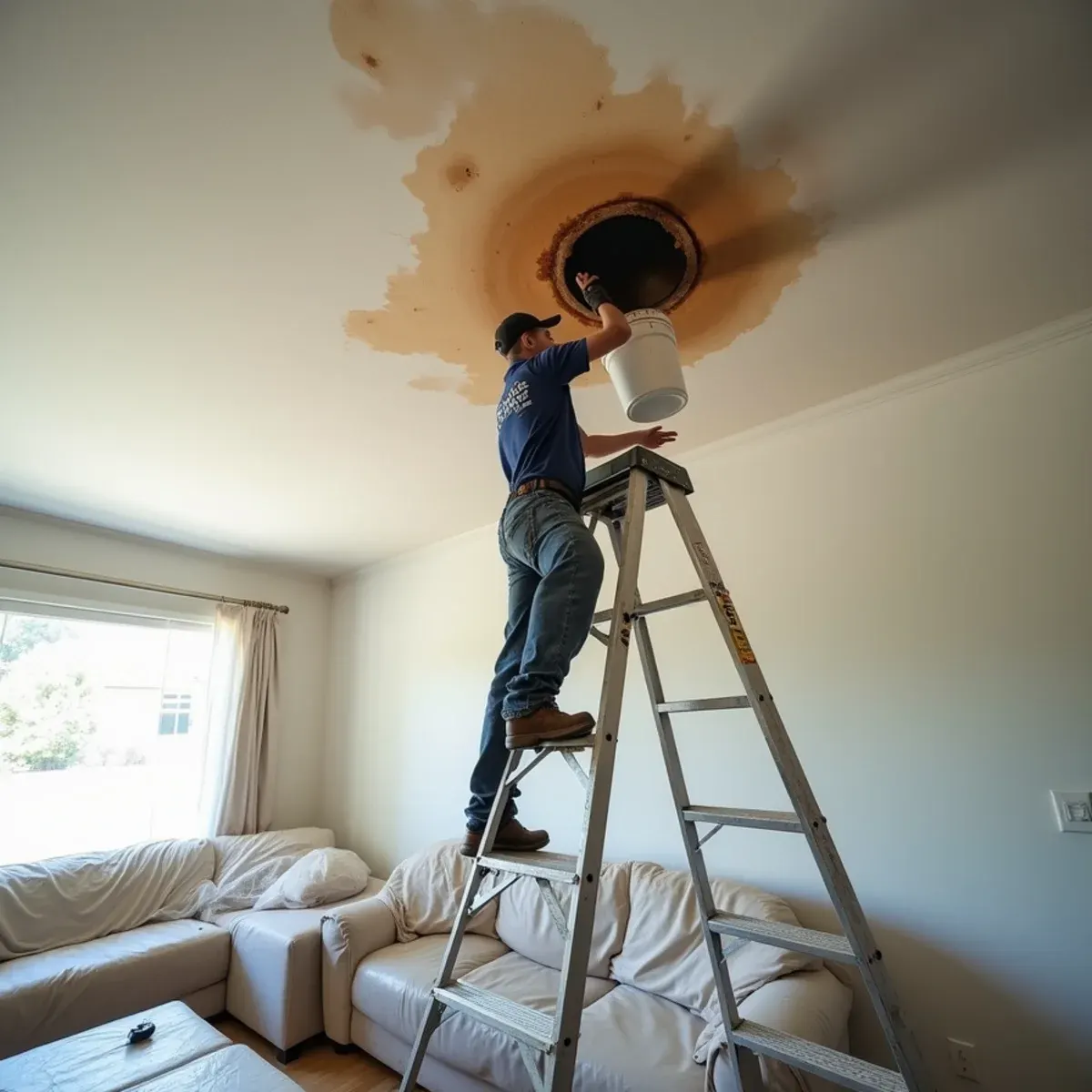
A ceiling stain is the last symptom, not the first. By the time water shows on the drywall below, it has already crossed the attic insulation, soaked the ceiling joists, and often traveled several feet horizontally along a truss chord from wherever it actually entered. The stain marks the low point, not the leak.
In Cypress that entry point is usually one of a handful of things: a failed pipe boot around a plumbing vent, cracked or slipped concrete tiles, deteriorated flashing at a chimney or wall transition, or a flat patio-cover roof whose membrane has given out. Our roofs here bake under UV for three hundred days a year and then get asked to handle four inches of rain in one week, which is exactly the cycle that kills sealants and boots.
The urgent part is safety. A ceiling holding water is heavy — a single square foot of saturated drywall plus wet blown-in insulation can weigh several pounds, and a bulging area will come down without warning. If a ceiling in your home is sagging or bulging right now, clear the room, keep everyone out, and call us.
What a Roof or Ceiling Leak Looks Like
Some of these are obvious. The ones people miss are the reason attics rot quietly for years.
Brown or yellow ring stains on the ceiling
A ring with a defined edge means the leak has cycled wet and dry more than once. That is not a one-time event — it is an ongoing leak that has been running through storms for a while.
A bulge or sag in the drywall
Water pooling on the paper face of the drywall. This is the dangerous one. Do not poke it while standing underneath, and keep the room clear.
Peeling or bubbling paint on the ceiling
Moisture pushing through from above breaks the paint bond. Often visible before any staining appears.
Drips from a light fixture or ceiling fan
Water follows the electrical path because it is the easiest opening. Kill the circuit at the breaker before touching anything in that room.
Damp, matted, or discolored attic insulation
The clearest early evidence, and the reason to actually look in the attic after a storm. Compressed dark insulation directly under the roof deck is where the water is coming in.
Daylight visible through the roof deck
If you can see light from inside the attic, water can get in. Check around vent penetrations and at the ridge.
Musty odor upstairs or in a closet
Attic moisture that has been present long enough for microbial growth frequently makes itself known through a top-floor closet before anything is visible.
How We Handle Ceiling and Roof Leak Damage
Stopping the intrusion comes first. Everything else waits until the building is closed up.

- 1
Emergency tarping or temporary dry-in
If rain is still coming or forecast, we tarp the affected roof section immediately. This is mitigation your policy expects, and it prevents each subsequent storm from expanding the claim.
- 2
Controlled relief of trapped water
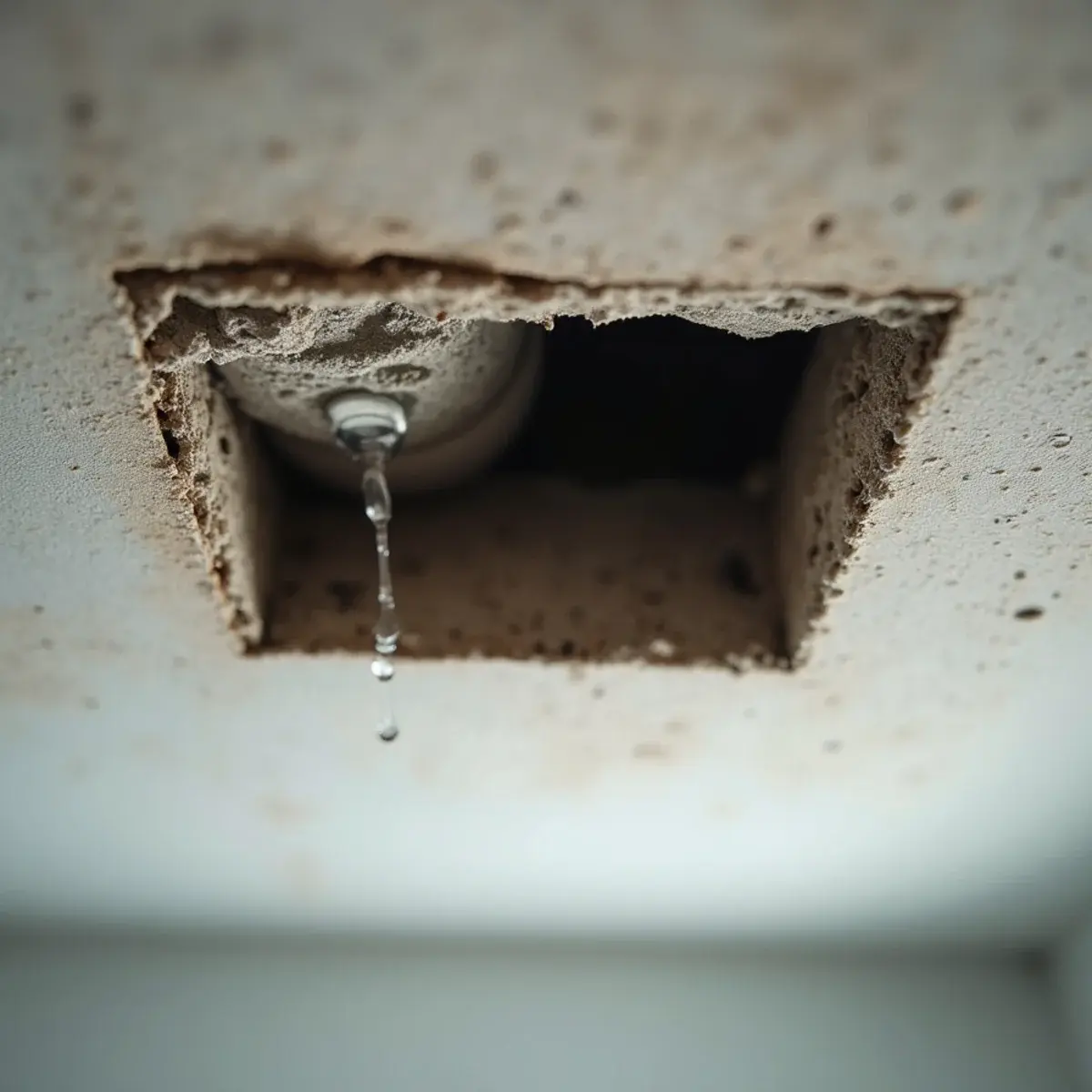
A bulging ceiling gets relieved deliberately — a small hole at the low point, with containment underneath — rather than left to collapse. It is safer, cleaner, and preserves far more of the ceiling.
- 3
Trace the intrusion to its real source
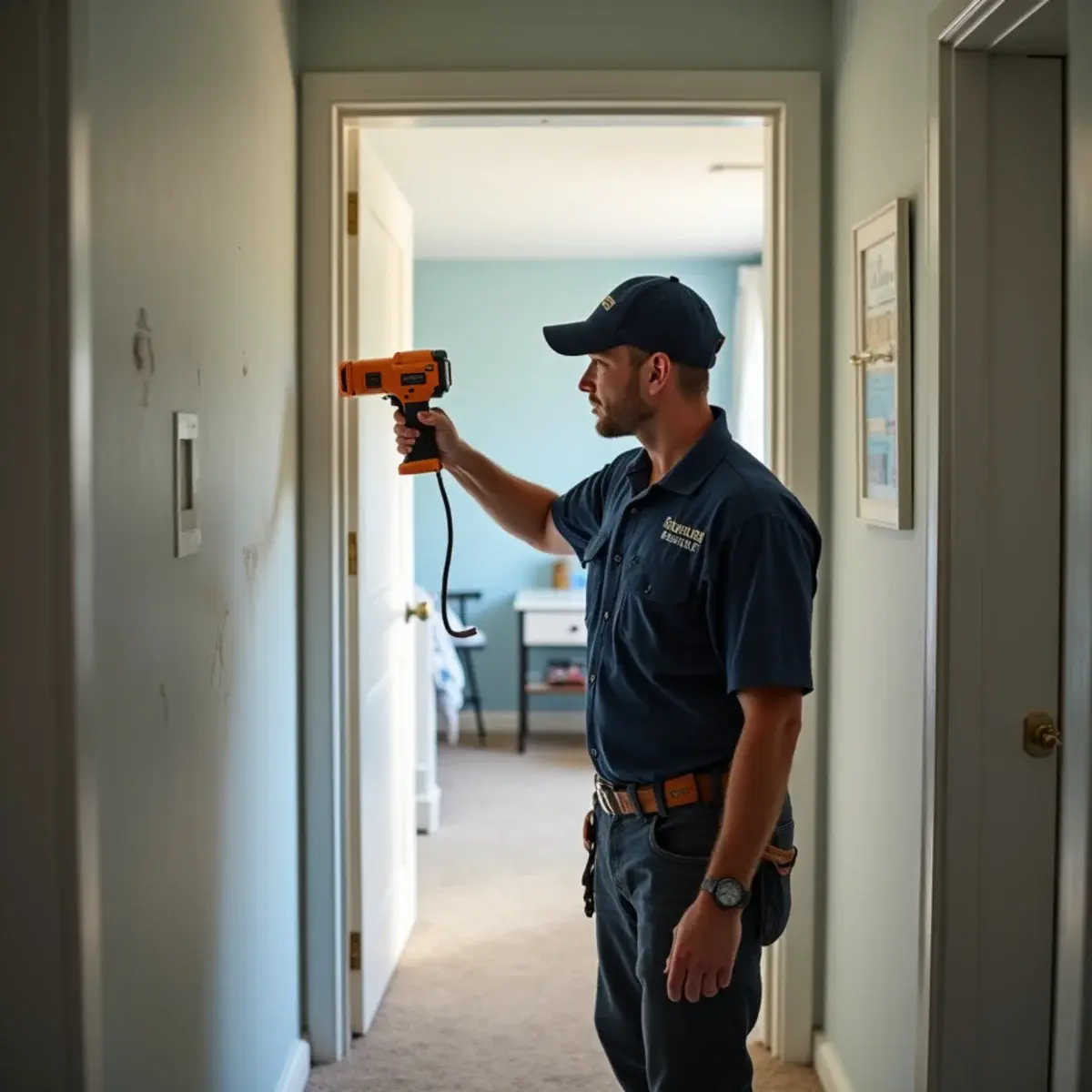
We follow the moisture up through the attic with meters and thermal imaging to find the entry point, which is regularly several feet away from the stain. Fixing the stain without finding the entry accomplishes nothing.
- 4
Remove wet insulation and compromised drywall
Wet blown-in or batt insulation loses its R-value permanently and holds moisture against the framing. It comes out. Drywall that has lost integrity is cut back to sound material at a joist line.
- 5
Dry the attic and the ceiling assembly
Attics need airflow and dehumidification directed into the space, not just a fan in the hallway below. Joists, the roof deck underside, and the top plates are monitored to a documented dry standard.
- 6
Restore the ceiling completely
New insulation to the correct R-value, drywall, a matched texture, stain-blocking primer, and paint. The stain-blocking primer step is what stops a ghost stain from bleeding back through in six months.
Why Ceiling Stains Come Back After a Repaint
This is the most common ceiling call we get on a second visit: someone painted over the stain, it looked fine for a few months, and now a brown ring is bleeding through the new paint.
Two things cause it. Either the leak was never actually fixed and the ceiling is getting wet again, or the tannins and minerals in the original stain migrated up through the new latex paint. Water-based paint does not block them. The fix is a dedicated shellac- or oil-based stain-blocking primer over the affected area before any finish coat.
That is a small detail that separates a permanent repair from a temporary cosmetic one, and it is why we prime with a stain blocker on every ceiling we touch — even when the drywall was replaced.
The Attic Is Where the Damage Actually Lives
In an attic-space leak, the ceiling drywall is the least valuable thing that got wet. Above it sit the insulation that determines your cooling bill, the framing that holds the roof up, and, in most Cypress homes, the HVAC ductwork.
Wet insulation is the immediate problem. Fiberglass compresses when saturated and never recovers its full R-value, and cellulose holds moisture against the framing for weeks. Both have to come out — leaving them is how you get a slow-motion mold problem across a whole attic plane.
Ductwork is the one people forget. If water reached flex duct or the air handler, the system will distribute moisture and spores through every room in the house every time it runs. We inspect ducting on every attic loss and will tell you if it needs cleaning or replacement rather than leaving it as an unpleasant surprise later.
What Ceiling Leak Restoration Costs Depends On
Ceilings are more labor-intensive than walls because everything happens overhead. These drive the number:
How long the leak has been active
A single storm event is a contained repair. A leak that has run through three winters has usually rotted decking and framing, which turns a restoration into a structural repair.
Ceiling texture and finish
A flat or light orange-peel ceiling matches easily. Heavy knockdown, acoustic popcorn, or a hand-troweled finish takes skilled labor to blend invisibly. Popcorn ceilings in homes built before 1980 may also require asbestos testing before disturbance.
Attic access and insulation type
A generous attic with a full walkway is straightforward. Low-clearance framing, dense blown-in cellulose, or ductwork in the way slows removal and drying considerably.
Whether the roof itself needs work
We handle tarping and coordinate the roofing repair. A single pipe boot is inexpensive; a tile field that has reached end of life is a roofing project and priced as one.
Electrical involvement
Water through recessed cans or a fan box means fixtures must be evaluated and often replaced, and the circuit inspected before it is re-energized.
Insurance note: Insurance usually covers sudden storm-driven roof damage and the resulting interior water damage, but excludes a roof that failed from age or lack of maintenance. Photographing the damage before any repair, and dating it to the storm, is what keeps that determination in your favor.
Why Cypress Homeowners Call Us for Ceiling & Roof Leaks
Plenty of companies list this service. Fewer can tell you what equipment they will bring, what standard the work is measured against, or what happens if they are wrong. Here is what you are actually buying.
Bulging drywall relieved safely, not popped
A sagging ceiling holding water is a collapse risk. Controlled relief drains it without bringing the section down on your furniture.
Attic insulation dried or replaced, not ignored
Wet blown-in insulation loses R-value permanently and holds moisture against the ceiling. Deciding correctly here is most of the long-term outcome.
A ceiling that finishes without a ghost stain
Water staining bleeds through fresh paint unless it is sealed properly. Texture matching on a ceiling is the hardest finish in the trade, and it is the part homeowners notice forever.
- 20+ years restoring Orange County homes
- IICRC Certified Firm
- Licensed, Bonded & Insured
- We bill your insurance company directly
- IICRC S500:2025 compliant on every job
- 100% satisfaction guarantee — in writing, on every job
Frequently Asked Questions
Clear the room and keep everyone out from underneath it, including pets. Move furniture if you can do it from the side. Put a bucket down if you can place it safely without standing under the bulge. Then call us — we relieve it deliberately, which is safer and preserves much more of the ceiling than letting it fail on its own.
We tarp immediately to stop the intrusion and coordinate the roofing repair with a licensed roofer, then handle all the interior restoration ourselves. You get one point of contact and one schedule instead of managing two trades during a storm week.
Rarely. We cut back to sound drywall at a joist line and patch, then match the texture. Full replacement only makes sense when the damage spans most of the ceiling or when a heavy texture cannot be blended convincingly on a partial repair.
We go into the attic and trace the moisture backward. Water runs along the top of the drywall and down truss chords, so the entry point is often several feet uphill from where it drops through. Thermal imaging and moisture meters let us follow that path to the actual penetration.
Yes, and it is free to have it read. A small stain means water reached the drywall, which means the insulation above it is wet and the framing may be. A twenty-minute inspection with a meter tells you whether it is an old dry stain or an active leak — and those two situations need very different responses.
Related Reading
- Atmospheric River Prep: Getting Your Orange County Home Ready — Southern California gets a year of rain in a handful of storms. Here is the pre-season checklist that prevents most of what we get called out for.
- 9 Signs of Hidden Water Damage Behind Your Walls — Most expensive water losses start as small leaks nobody could see. These are the nine signals that something is wet inside your walls.