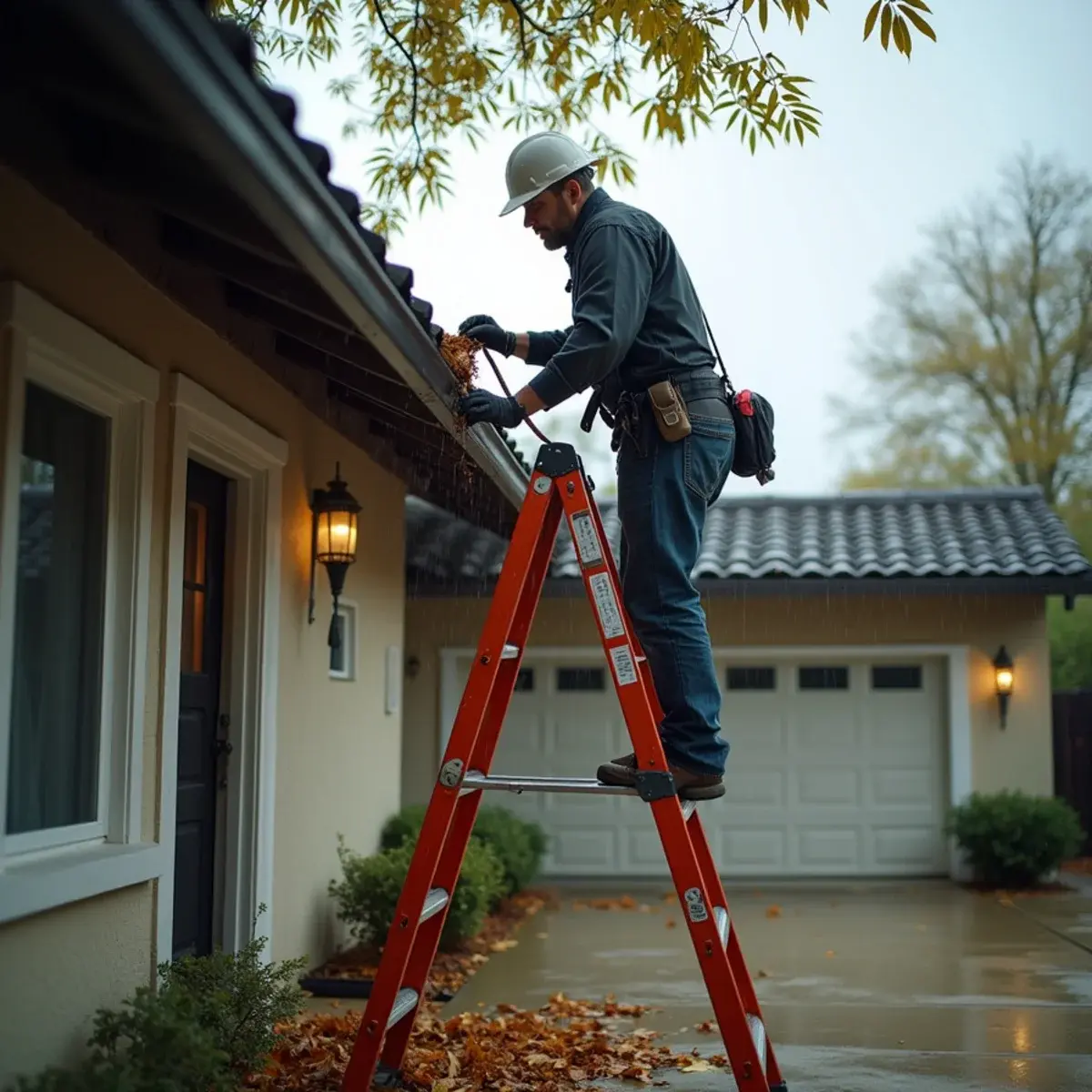
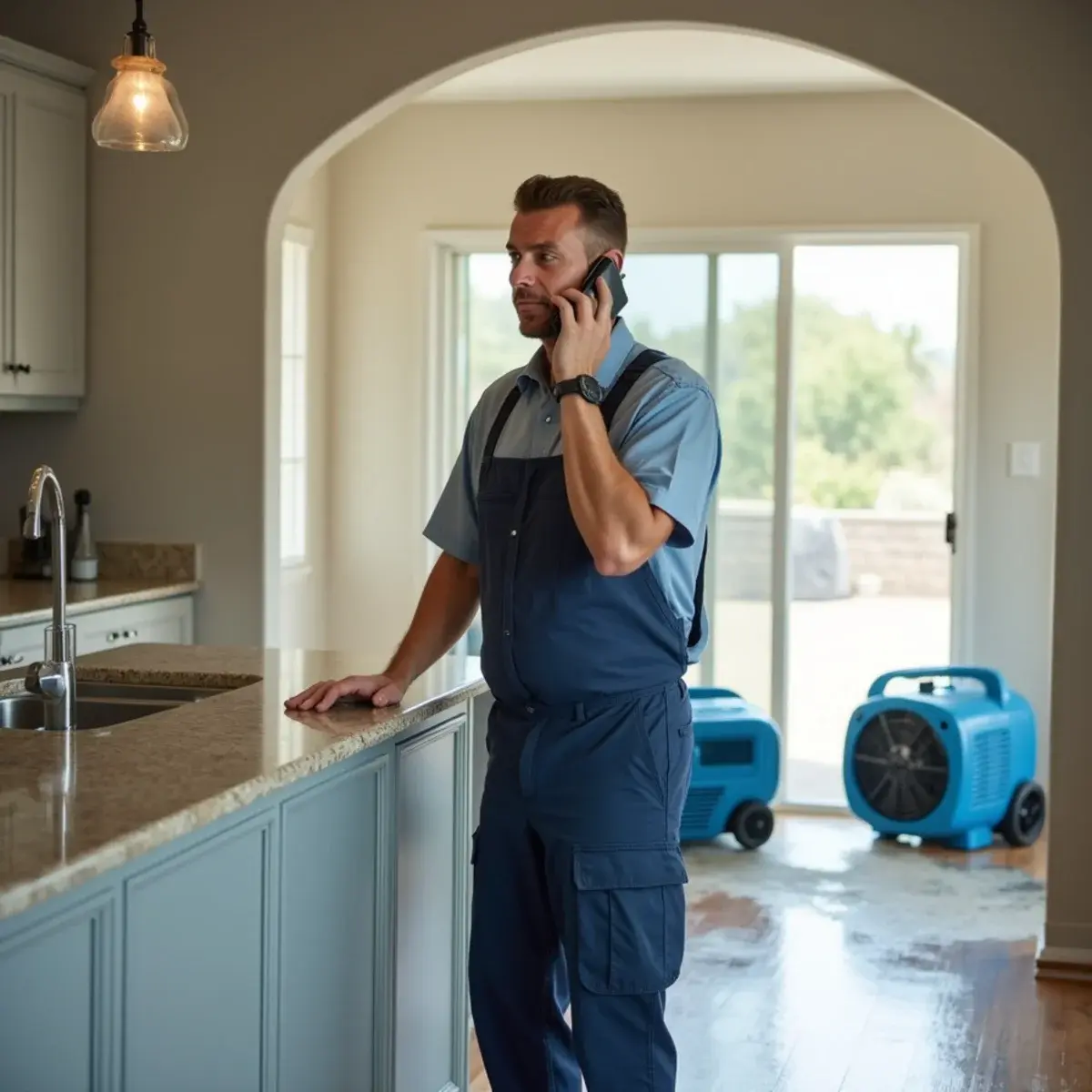
The damage that put a hole in your building is usually over in seconds. What happens next is measured in days. A tile field lifts off in a wind event, a car comes through a garage wall on Valley View, a fire crew vents a roof to pull heat out of an attic — and then the crew leaves, the street clears, and your house sits open to the weather with nobody watching it. Every hour after that is what turns a repairable loss into a gut. Rain finds the opening. Wind widens it. And an open door on a vacant property in any neighborhood is an invitation.
Most people picture a blue poly sheet held down with bricks and a few bungee cords. That is not what a tarp is supposed to be, and it is the reason so many homeowners end up with a second interior loss three weeks after the first one. A tarp that works is a heavy reinforced sheet, run up and over the ridge where the geometry allows, wrapped on furring strips and mechanically fastened into the deck, with the fasteners placed where the eventual roof repair will cover them. Installed that way it holds through a season. Installed the other way it becomes a sail.
There is a second reason this work matters, and it is written into your policy. You have a duty to protect the property from further damage after a loss. Board-up and tarping are how that duty gets met, they are a covered line item in nearly every claim we handle, and the emergency invoice is normally settled ahead of the rest of the file. Skip it, and the adjuster has a fair argument that the water that came in during the next three storms was avoidable. We stage our trucks on Katella Avenue here in Cypress, which is how we commit to 60 minutes inside the city. Elsewhere we roll as fast as conditions allow.
Signs Your Building Needs to Be Secured Tonight
These are the things people call us about, roughly in the order they notice them.
Daylight showing through the roof deck
Go into the attic with the lights off and look up. Pinholes of sky mean the underlayment is breached, not just the tile. An opening you can see light through will take a night of rain straight into the insulation and the ceiling below it.
Broken glass at a window, slider, or storefront
Impact, a break-in, or heat from a fire leaves an opening at ground level. Tape and cardboard do not hold overnight and they do not stop anyone. Plywood cut to the opening and braced or screwed to solid framing is the only version of this that works.
Tiles or shingles down in the yard
Concrete tiles in the planter after a wind event mean a bare section of underlayment on the roof, and that felt is not a waterproof layer on its own. It has been baking in the sun for decades. It will hold a light drizzle and fail in a real storm.
A door or window that no longer latches
After an impact or a forced entry, frames rack and hardware stops engaging. A door you have to wedge shut is an open building as far as your carrier is concerned, and as far as anyone walking past is concerned. It gets secured the same night as the roof.
An existing tarp that snaps or balloons in wind
If the sheet lifts and slaps when the wind picks up, it is not fastened, it is weighted. Those come off in the first real gust, usually at two in the morning, and they take a strip of ridge tile with them when they go. That is a re-tarp, not a repair.
Openings the fire department made on purpose
Vent holes in the roof, a forced front door, windows taken out to clear smoke. Those were the right calls at the time and they leave the building wide open once the engines pull out. Fire debris also means the water coming in is no longer clean.
Rain in the forecast and a repair weeks out
Roofers book out after a widespread storm, and that is normal. The gap between the damage and the permanent repair is exactly what a tarp is for. If your repair date is a week or more away and there is weather between now and then, the building needs a cover.
How We Secure a Building
The sequence is fixed, because once a cover goes on nobody can see what was underneath it.

- 1
Safety and structure first
Nobody goes up until we know the deck will hold. After a fire or an impact, framing can be charred or fractured under a surface that still looks intact. We check for downed service conductors, gas odor, and burn-through, and where the plane is not walkable we work from ladders or a lift instead of standing on it.
- 2
Photograph the opening before we cover it
Once the tarp is on, the damage underneath is invisible to your adjuster. So we shoot the breach first — wide context, close-ups of the failure point, and a measurement in frame — then photograph the finished cover. Those two sets are what justify both the emergency invoice and the roof scope that follows.
- 3
Dry-in the roof opening
Loose tile and debris come off first so nothing works its way under the sheet. We run reinforced tarp past the breach on all sides, carry it over the ridge where the geometry allows so wind cannot get under the top edge, roll the edges onto furring strips, and screw those strips through to the deck.
- 4
Board and brace the openings
Plywood is cut to the opening, not tacked over the trim. On a house we screw into solid framing and seal the perimeter; on a storefront or an occupied unit we often brace from the inside with carriage bolts and interior cleats so the exterior stays intact. Where a door has to keep working, we frame in a lockable panel.
- 5
Shore what is carrying load
A vehicle into a wall or a burned-through header leaves framing carrying weight it was not designed to carry. Temporary posts and beams go in before anyone works underneath, and if the damage looks structural we stop and get a licensed structural engineer involved rather than guessing. That is not a delay; it is the part that keeps people safe.
- 6
Handle the water already inside
Securing the envelope stops the loss from growing; it does not fix what already got wet. Before we leave we meter the ceilings, wall cavities, and insulation under the breach, and set extraction and drying if the readings call for it. Under IICRC S500:2025 that clock starts at the loss, not at the tarp.
Why Weighted Tarps Fail and Fastened Ones Hold
Wind does not push a tarp off a roof. It lifts it. Air moving over a ridge accelerates and drops pressure above the sheet, and the sheet gets sucked upward — the same effect that pulls shingles off a perfectly good roof. Sandbags, bricks, and water jugs resist gravity, which is the one force that was never the problem. Once an edge lifts, air gets underneath, the whole sheet inflates, and it peels from that corner in seconds. This is why the tarp you see flapping on your neighbor's roof will be in the street by the weekend.
A fastened tarp answers that directly. The edges get rolled around furring strips and screwed through into the sheathing, so the load spreads along a batten instead of tearing out at a grommet. The top edge carries over the ridge or tucks under the course above, which means wind hits a closed edge instead of an open one. Laps run downhill so water sheds the way the roof already does. And we place the fasteners inside the area the roof repair will remove anyway, so securing the building does not create a second set of holes for someone to patch later.
When You Do Not Need Us to Board Up
Not every opening is an emergency, and we will say so on the phone. A single broken pane in a dry stretch with a glass company coming tomorrow does not need a plywood panel and an after-hours crew. A cracked tile with intact underlayment underneath it is a roofing item, not a mitigation item. A garage side door that still latches is secure enough to wait. Paying emergency rates for work the weather is not going to punish you for is money you do not get back, and your carrier is unlikely to reimburse it either.
The judgment flips the moment weather, security, or a claim enters the picture. Then a cover is not extra caution; it is the evidence that you did what the policy asked. If you are unsure which side of that line you are on, call and describe what you are looking at. We do free assessments around the clock, and talking you out of an unnecessary night call costs us a job but keeps you as a neighbor who trusts what we say the next time. Here is the short version of when it is worth doing tonight:
- Rain is in the forecast within the next several days and the opening reaches the attic or an interior room.
- The property is vacant, or will be overnight, and the opening is reachable from the ground.
- The damage is part of a claim you intend to file — mitigation you can document is nearly always worth more than it costs.
- The opening was made by fire suppression, which means smoke, debris, and standing water are already inside.
- A roofer has given you a repair date more than a few days out.
What the Housing Stock Around Here Changes
Most of the roofs we tarp in Cypress, La Palma, Cerritos, and Lakewood are concrete tile or comp over a single layer of felt on a 1960s or 1970s tract house. Tile changes the method. You cannot screw a batten through a tile field without cracking more tile than you save, so we lift and stack courses back from the breach, work on the deck, and set the tile back at the perimeter of the cover. It takes longer than a comp roof and it is the difference between a tarp that seals and a tarp that funnels water under the surrounding tile.
The older raised-foundation neighborhoods — Old Towne Orange, Uptown Whittier, the Anaheim Colony, Old Town Tustin — bring a different problem. Skip-sheathed roofs with spaced boards under the covering give you very little solid material to fasten into, and a lot of those decks have been walked on for ninety years. We spread the load across battens and multiple boards rather than trusting any one of them, and on the worst ones we do not walk the plane at all. Manufactured homes in Stanton and Midway City have almost no structural roof to fasten to, so those get an over-the-top strap system instead of screws.
Commercial and multi-family work is mostly about openings rather than roofs. A storefront in Santa Fe Springs or a fourplex in Hawaiian Gardens needs to stay usable while it is secured, so we brace panels from the inside where we can and leave a lockable access point for tenants and trades. Near the coast in Seal Beach, Huntington Beach, and Long Beach, add wind: onshore flow works on any loose edge day after day, so covers there get more fastening than the same job three miles inland and we check them after every blow.

What Drives the Cost of Securing a Building
We do not quote tarping over the phone without knowing the roof, because the roof is most of the job.
Area covered and roof pitch
Tarping is priced by the area covered, and the roof under it changes the labor. A walkable low-slope section is straightforward. A steep barrel-tile plane, a second story, or a hillside lot in Yorba Linda or Whittier where the access side drops away all take longer, more fall protection, and more people.
Number and size of openings
Board-up is counted by opening. A single broken bedroom window is one sheet and twenty minutes. A commercial front with six glass panels, or a house where a fire crew took out every window on one elevation, is a different job in both material and labor.
Conditions at the time of the call
Working a roof at two in the morning in wind and rain is slower and needs more crew than the same roof on a dry Tuesday afternoon. We still do it, because that is when it matters, but night and weather mobilization carries a call-out rate.
Shoring, debris, and demolition
If limbs, a vehicle, or collapsed framing has to come out before anything can be covered, that is separate work. Temporary posts, beams, and engineered bracing add material and time, and anything that has to be hauled off carries disposal cost. We tell you which of those three buckets each item falls into before we start, because adjusters price them separately too.
How long the cover has to stay up
A tarp that comes off in ten days when the roofer arrives is one price. One that has to survive two months while a claim, an engineer, and a permit work themselves out gets built heavier, gets checked after storms, and sometimes gets replaced mid-course. Long-duration covers are their own line item.
Insurance note: Emergency mitigation is handled differently from the rest of a claim. Carriers generally treat board-up and tarping as a covered obligation rather than a discretionary repair, they usually pay it ahead of the main scope, and many policies allow reasonable emergency measures without prior approval. We bill the carrier directly and provide the before-and-after photographs and an itemized invoice they will ask for. What gets challenged is scope that outruns the damage — tarping a whole roof when one plane failed.
Why Cypress Homeowners Call Us for Board-Up & Tarping
Plenty of companies list this service. Fewer can tell you what equipment they will bring, what standard the work is measured against, or what happens if they are wrong. Here is what you are actually buying.
Same visit as the emergency, not a separate trip
Securing the opening is part of the response, not a subcontractor you have to schedule for the next day.
Weather-rated, not a stapled sheet
Properly fastened tarping and structural board-up that holds through the rest of the storm and satisfies your insurer's mitigation requirement.
Photographed before and after
Emergency mitigation is a reimbursable line item, but only when it is documented as one.
- 20+ years restoring Orange County homes
- IICRC Certified Firm
- Licensed, Bonded & Insured
- We bill your insurance company directly
- IICRC S500:2025 compliant on every job
- 100% satisfaction guarantee — in writing, on every job
Frequently Asked Questions
A properly fastened tarp on a sound deck holds for weeks and gets you through the rest of a wet season. We have had covers stay tight for a couple of months while claims and permits worked out. That said, it is temporary by design — the material degrades in UV, and every storm works on the edges. If yours is going to be up longer than a few weeks, we come back and check it rather than assuming.
Usually not. Most policies require you to take reasonable steps to prevent further damage and allow emergency mitigation without waiting for an adjuster — waiting is often the thing that creates a coverage argument. Call your carrier and open the claim, then let us secure the building. We photograph everything before and after and give you an itemized invoice, which is what the adjuster needs to approve the emergency line separately from the repair scope.
It puts holes in the deck, yes. We place them inside the area a roofer is going to tear off anyway, so in practice the repair removes the evidence. On the rare job where the cover has to extend past the damaged section, we tell you where the fasteners are going before we set them, and we seal them. A handful of screws in sheathing is a far smaller problem than an attic that takes three more storms.
Yes, and it is one of the more common calls we get after a fire. We can work from photographs and a phone walkthrough, secure every ground-level opening, and send you the documentation the same night. What we cannot do is make an unoccupied property invisible — plywood slows entry and satisfies your policy, but a determined person with time gets past it. If the property will sit for a while, talk to your carrier about vacancy provisions too.
The assessment is free, day or night. Inside Cypress we commit to a technician on-site within 60 minutes of a confirmed emergency call, because our trucks stage on Katella Avenue. In the other cities we cover we dispatch as fast as conditions allow, and during a widespread storm that is honestly slower — everyone is calling at once. We triage by severity, so an active opening over occupied living space goes ahead of a garage.
Related Reading
- Atmospheric River Prep: Getting Your Orange County Home Ready — Southern California gets a year of rain in a handful of storms. Here is the pre-season checklist that prevents most of what we get called out for.
- How to File a Water Damage Insurance Claim (Step by Step) — Most people file exactly one water damage claim in their life, while doing it under stress. Here is the process, in order, with the mistakes flagged.