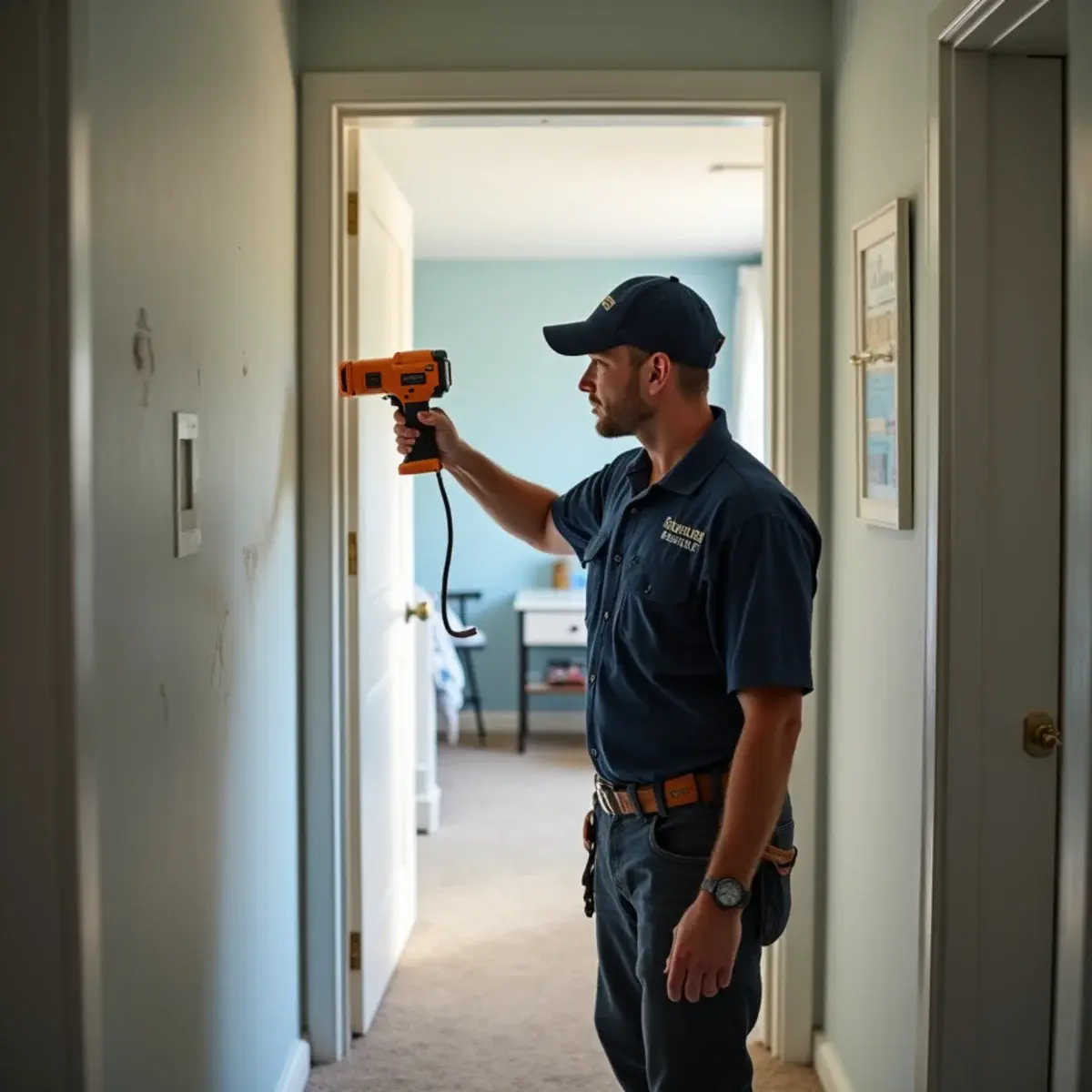
A shower pan leak keeps banker's hours. Water escapes only during the ten or fifteen minutes somebody is actually standing in there, then it stops, and the assembly gets the other twenty-three hours to look completely normal. That is why these run for months. You are not seeing a puddle or hearing a drip. You are seeing a small stain on a hallway ceiling that appears on Tuesday, dries by Thursday, and comes back the following week, and it takes most people a long time to connect that to the shower on the other side of the wall.
The failure is almost never the tile. Underneath a tiled shower floor there is a pan, a sheet membrane, a lead or copper liner in older homes, or a bonded waterproofing layer in newer ones, and it is the only thing standing between your shower and the framing. When it cracks at a fold, pulls away at the curb, or loses its seal at the drain clamping ring, water goes straight past the tile into the mortar bed and out into the subfloor. Grout and caulk are not waterproofing. They shed water and they buy time, and re-grouting a failed pan hides the symptom for a season.
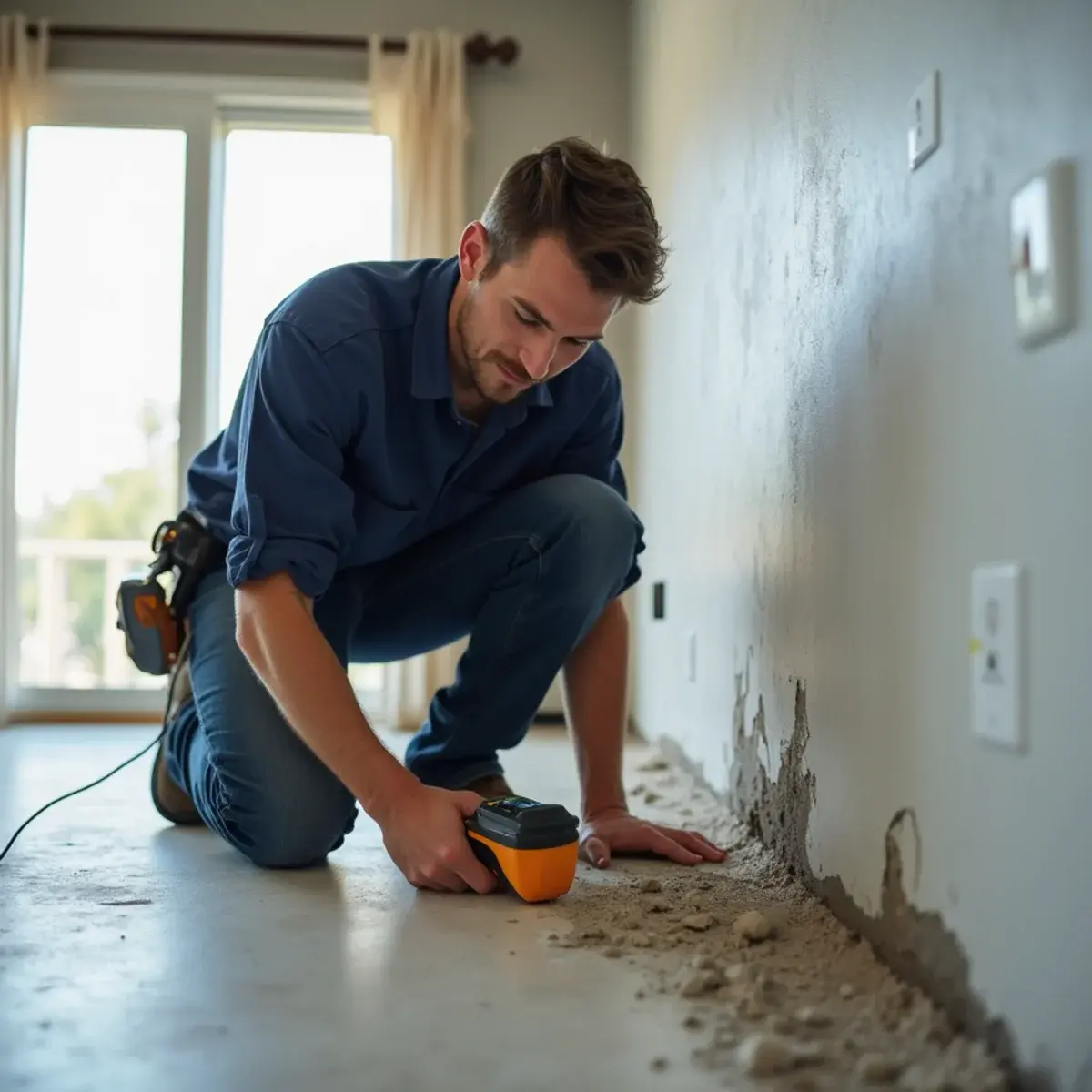
Because the water leaves at the pan or at the wall base, the damage shows up somewhere other than the bathroom. On a slab home it wicks under the wall plate into the hall carpet or the bedroom closet backing onto the shower. On a raised-foundation house it drops into the joist bay and surfaces on the ceiling below, often a room or two away from where it started. That geography is why these get misdiagnosed as roof leaks, as slab leaks, and as condensation. Our job on the first visit is to answer one question honestly: is it the pan, the drain connection, the surround, or a supply line.
Signs of a Failing Shower Pan
These are the ones homeowners actually catch, roughly in the order they tend to catch them.
A ceiling stain below the bathroom
The first thing most people see, and it usually appears a day or two after a long shower, then fades. A stain that darkens and lightens on a weekly cycle is following somebody's shower schedule. Trace the room directly above it before you assume the roof is the problem.
Grout and caulk that keep cracking
You seal the corner where the shower floor meets the wall, and four months later it has opened again. Recurring failure at that joint usually means the substrate behind it is moving because it is wet and soft. The caulk is not failing. It is reporting.
Loose, hollow, or cracked floor tile
Tap across the shower floor with a knuckle. A dull hollow note where the rest of it rings solid means the mortar bed has separated from the substrate below, which happens when that substrate has been saturated long enough to lose its grip. Tile that cracks in the same spot repeatedly says the same thing.
Damp baseboard in the next room
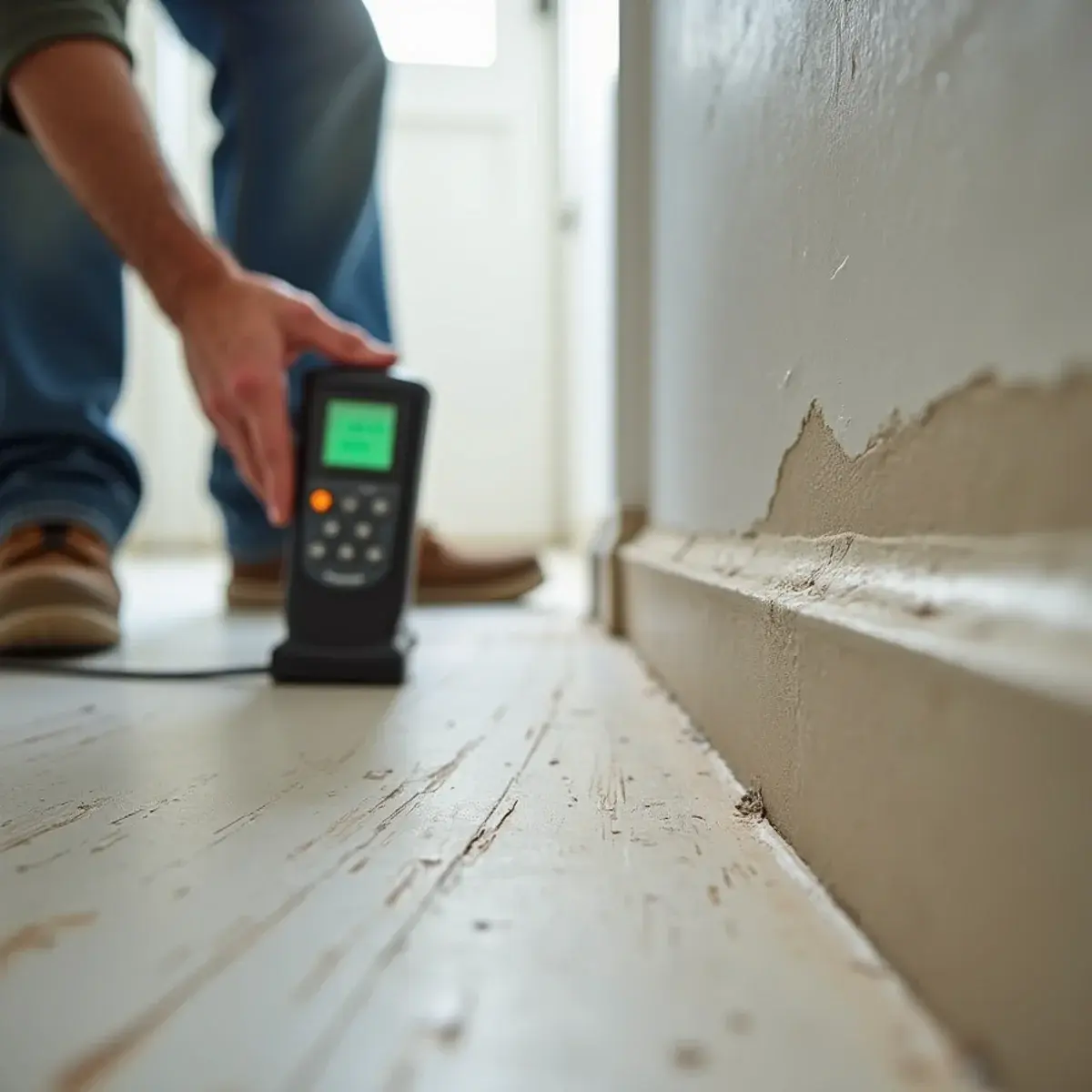
Feel the bottom two inches of drywall and the baseboard on the far side of the shower wall: the hallway, a closet, a bedroom. Water leaving at the wall base wicks into the bottom plate and travels up. Discoloration, a soft spot, or paint releasing at the floor line is the tell.
A musty smell that never clears
Bathrooms are humid, so people write this off. The distinction is timing. Normal shower humidity clears within an hour of running the fan. An odor that is there first thing in the morning, before anyone has bathed, is coming from wet material inside the assembly rather than from the air in the room.
The shower floor flexes underfoot
Step near the drain and then near the curb. Any give, any springiness, or a sense that the floor moves as your weight shifts means the subfloor or the framing under it has lost strength. On a raised-foundation home, this is the point where the job stops being a plumbing repair.
A toilet that rocks or stains at the base
A failed wax ring lets a small volume of water out at every flush, straight into the subfloor around the flange. The signs are a toilet that moves slightly when you sit down, discoloration in the flooring ringing the base, and an odor that keeps coming back after cleaning.
How We Diagnose and Repair a Shower Pan Leak
Diagnosis comes first here, because four different failures produce the same stain on the same ceiling.
- 1
Map the moisture first
We start with the rooms around the bathroom, not the bathroom itself. Thermal imaging finds the temperature differentials, and pin and pinless meters give us actual numbers on the shower wall, the shared wall, the floor outside the door, and the ceiling below. That map tells us how far the water traveled and, just as usefully, where it did not go.
- 2
Flood test the pan
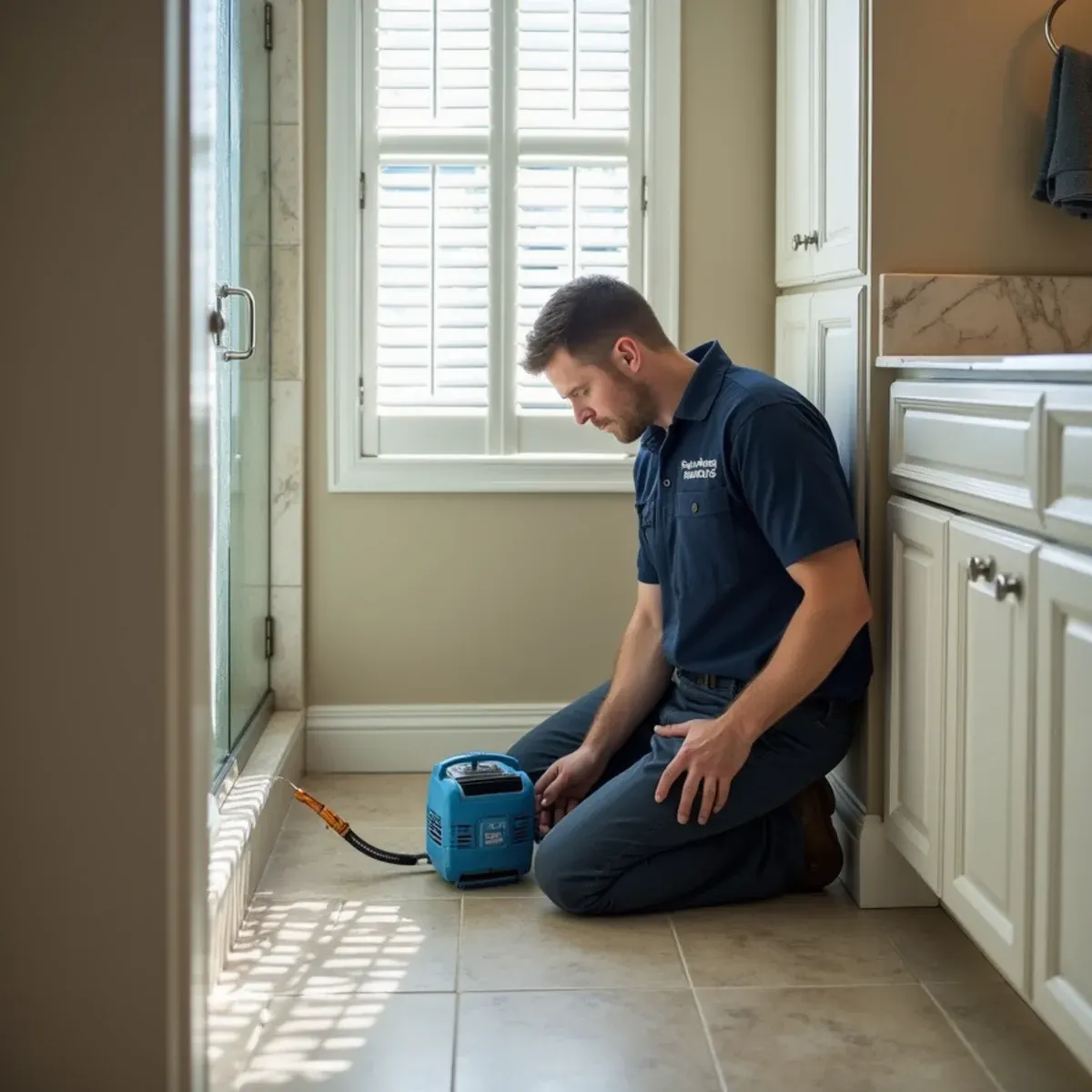
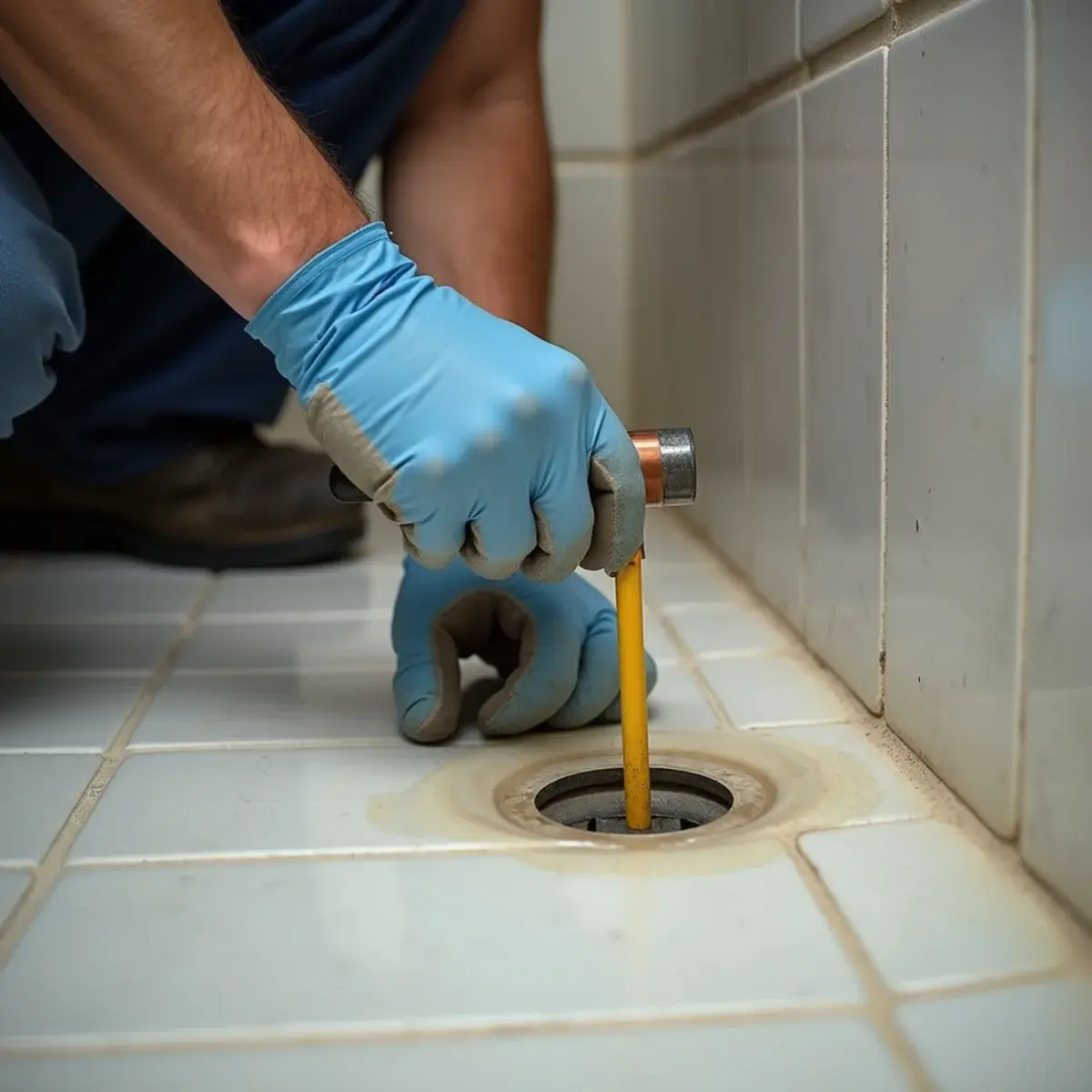
We plug the shower drain, fill the pan to just below the curb, mark the water level, and leave it alone. A pan that holds for the full test is not your leak. A level that drops, or moisture that appears below within that window, gives us a direct answer instead of an educated guess. It is the single most useful test in this whole category, and it costs nothing but time.
- 3
Isolate the actual failure
If the pan holds, water is getting out another way. We run the shower head alone with the pan blocked to test the surround and the valve body, wet the curb and the door track separately, inspect the drain connection from below where access allows, and check supply lines under pressure. Each of those points to a different repair, so guessing at this stage is expensive.
- 4
Open only what has to open
We set containment at the bathroom door, protect the path out through the house, and remove only material that is wet and cannot dry in place: tile and mortar bed over the pan, the lower few inches of the surround, saturated subfloor. A wet mortar bed holds a surprising volume of water and will not dry through a tile face, so it comes out.
- 5
Dry the structure to standard
Air movers and dehumidification on the framing, the subfloor, and the wall cavities, with readings logged daily against a dry standard taken from unaffected material in the same house, as IICRC S500:2025 calls for. Bathroom framing sits in a tight space with poor airflow, so we usually have to open the cavity and direct air into it rather than hoping the room dries it.
- 6
Rebuild the waterproofing correctly
The rebuild is where these leaks are won or lost. A sloped mortar bed to the drain underneath the liner, not just over it. A clamping ring with its weep holes clear. Membrane turned up the curb and the walls high enough, corners folded rather than cut, and no fastener driven through the pan below the curb line. Then tile, then grout, then caulk, each doing its own job.
Why Re-Caulking a Failed Pan Costs You Twice
The most common sequence we see goes like this. A stain shows on the ceiling or a baseboard goes soft in the hallway. Someone re-grouts the shower floor and runs a fresh bead of caulk at the curb. The symptom stops getting worse, because grout and caulk did briefly slow the water down. Six months later it is back and bigger, and now the joist under it is soft. That homeowner has paid for a tile repair, a ceiling patch, a paint job, and then the real repair, which now includes framing work that was avoidable in month two.
The reason is what those materials actually do. Grout is a cementitious filler. It is not waterproof and was never meant to be. Caulk is a flexible seal at a movement joint. Both of them live on top of the waterproofing layer, and neither one can substitute for it. If the membrane under the mortar bed has split, water passes it regardless of how good the surface looks. Testing before repairing is the cheap step, and it is the step almost everyone skips. We would rather spend an afternoon flood testing than watch a family pay for the same bathroom twice.
Slab Homes and Raised Foundations Fail Differently
Most of the bathrooms we work on in Cypress, Lakewood, La Palma, Cerritos, and Norwalk sit on a slab. There is no crawl space and no ceiling below, so a failing pan puts water into the mortar bed, out under the wall plate, and into whatever is on the other side of that wall: carpet in a hallway, the bottom of a linen closet, laminate in the adjoining bedroom. There is no early warning from underneath. The first symptom is usually an odor or a damp baseboard in a room nobody associates with the shower.
In the raised-foundation neighborhoods, Old Towne Orange, Uptown Whittier, Old Town Tustin, Eastside Costa Mesa, the Anaheim Colony, the water drops into the joist bay instead. That is better and worse. Better, because a ceiling stain or a look in the crawl space finds it sooner and you can actually see the framing you are dealing with. Worse, because those floors are often board sheathing over old joists carrying a heavy mud-set pan, and once a joist has been wet through a season, the repair is carpentry rather than restoration.
The coastal cities add one more wrinkle. In Seal Beach, Huntington Beach, and Long Beach, ambient humidity stays high enough that a bathroom assembly dries slowly on its own, so a small chronic leak that might have kept pace with evaporation further inland does not here. We plan for longer equipment runs on those jobs and say so up front. It is not a dramatic difference, but it is a consistent one, and it decides whether a subfloor comes back.
When This Is Not a Restoration Job
Not every wet bathroom needs us. If the water on the floor came from a splashing kid, an overflowing tub, or a shower door that leaks at the sweep, the fix is a towel and a door adjustment. If your shower has a molded acrylic or fiberglass base rather than a tiled pan, those units rarely fail in the middle of the floor. When they leak, it is almost always at the drain connection or where the surround meets the base, and that is a plumber's visit before it is anything else.
Surface-level tile problems are worth separating out too. Grout that is stained or crumbling on the vertical walls, with dry framing behind it and no symptom anywhere else in the house, is maintenance. Regrout it and keep an eye on it. The moment there is a moisture reading in the wall behind, a stain outside the bathroom, or any movement in the floor, it stops being maintenance. We will tell you which of those you have on the assessment visit, and we do not charge for that answer. A call that ends with nothing to do is a normal outcome here.
- A shower door or sweep that leaks onto the bathroom floor and nowhere else
- An acrylic or fiberglass base with a wet spot only at the drain connection, which is a plumbing call first
- Grout wear on the vertical walls with dry moisture readings in the framing behind them
- A toilet tank sweating in summer, which soaks the floor at the base and imitates a flange leak
What Drives the Cost of a Shower Pan Repair
The plumbing and tile work are separate scopes from the restoration, and these are the variables that move the restoration number.
How long the shower kept running
The dominant variable. A pan caught in its first month has wet a small footprint of subfloor. One that has been used twice a day for two years has fed a joist bay, a wall cavity, and a ceiling, and has usually grown something in the process. Nothing else on this list moves the number as much as elapsed time does.
What sits under the shower floor
A thick traditional mortar bed over a sheet liner is heavy, saturated, and slow to take apart. A modern bonded system over foam comes out in a fraction of the time. Bathrooms in the older Cypress and Rossmoor tracts are almost always the former, and that demolition and disposal is real labor before any drying equipment goes in.
Whether the framing is compromised
Wet plywood that dries to standard stays in place. Plywood that has delaminated, or a joist that has softened where the leak sat on it for a year, is a structural repair involving sistering, blocking, and sometimes a permit. That is a different trade and a separate line on the estimate from drying, and it is the item people do not anticipate.
How many rooms the water reached
A leak that stayed inside the bathroom footprint is a contained job. One that put moisture into hallway carpet, a bedroom closet, and the ceiling below is three additional drying chambers, more equipment days, and more finish repair afterward. On the bad ones, the bathroom itself is the cheapest part of the entire scope.
Matching the tile and finishes
Shower tile from the seventies and eighties is generally discontinued. If we cannot source a match, the choice is a partial repair that reads as a repair or a full re-tile of the shower. Custom stone, mud-set floors, curbless entries, and frameless glass enclosures all push the rebuild side up considerably.
Insurance note: Carriers push back hardest in this category. Most policies cover sudden and accidental water damage but exclude losses from long-term seepage, and a shower pan leaks slowly by definition. Coverage often turns on documentation: the flood test result, dated moisture readings, and photographs of the failed component. We build that record from the first visit and bill your carrier directly, but we will tell you early if we think this one is a denial.
Why Cypress Homeowners Call Us for Shower Pan Leaks
Plenty of companies list this service. Fewer can tell you what equipment they will bring, what standard the work is measured against, or what happens if they are wrong. Here is what you are actually buying.
We find whether it is the pan, the valve, or the grout
These three failures look identical from the ceiling below. Testing them separately is what stops you paying to rebuild a shower that did not need rebuilding.
Adjacent framing and subfloor are opened and read
A pan leak has usually been running for months. The damage is in the framing beside the shower, not just under it.
Rebuilt to a waterproofing standard
Pre-slope, membrane, and drain assembly done properly. A shower that leaked once because it was built wrong will leak again if it is rebuilt the same way.
- 20+ years restoring Orange County homes
- IICRC Certified Firm
- Licensed, Bonded & Insured
- We bill your insurance company directly
- IICRC S500:2025 compliant on every job
- 100% satisfaction guarantee — in writing, on every job
Frequently Asked Questions
Timing is the cleanest clue. A pan leak only produces water when the shower is running, so the symptom appears within hours of use and dries out between uses. A pressurized supply line leaks around the clock, and the damage grows steadily whether anyone is home or not. Shut off every fixture and watch the water meter's low-flow indicator. If it still moves, you have a supply leak, not a pan. We confirm it with a flood test either way.
Sometimes, and we will tell you honestly which case you are in. A leak at the drain clamping ring, or a failed seal where the surround meets the pan, can occasionally be handled with a limited opening. A split or perforated liner cannot. Liquid-applied products sold as pan sealers can buy a few months on a pinhole, but they will not repair a membrane that has failed at a fold or a corner, and we are not going to sell you that as a fix.
We fill the pan and hold it for a set period, usually a couple of hours and longer on a slow failure, with moisture readings taken below and beside the shower before and after. That is why we often schedule this as a stand-alone assessment visit rather than something squeezed into another call. You will not be able to use that shower during the test, and on a single-bathroom home we plan the timing around that.
Usually not. We open enough to reach the wet framing and to get air into the cavity, and on most of these that is a section rather than the whole room. What forces a bigger opening is insulation that has been saturated, growth on the joists, or drywall that has lost its integrity and will not hold paint. We show you the moisture readings before we cut, so the scope is a decision you are part of.
Drying the structure typically runs three to five days with equipment in place, though a saturated mortar bed and wet framing can take longer. The rebuild is the longer half. Waterproofing has to cure before tile, and tile has to set before grout. Plan on a couple of weeks for a full shower rebuild once materials are on site. We give you a real schedule after demolition, when we can see what is actually there, instead of a guess before.
Related Reading
- 9 Signs of Hidden Water Damage Behind Your Walls — Most expensive water losses start as small leaks nobody could see. These are the nine signals that something is wet inside your walls.
- How Fast Does Mold Grow After Water Damage? — The commonly cited window is 24 to 48 hours. Here is what that actually means, what makes it faster, and where the real deadline sits.