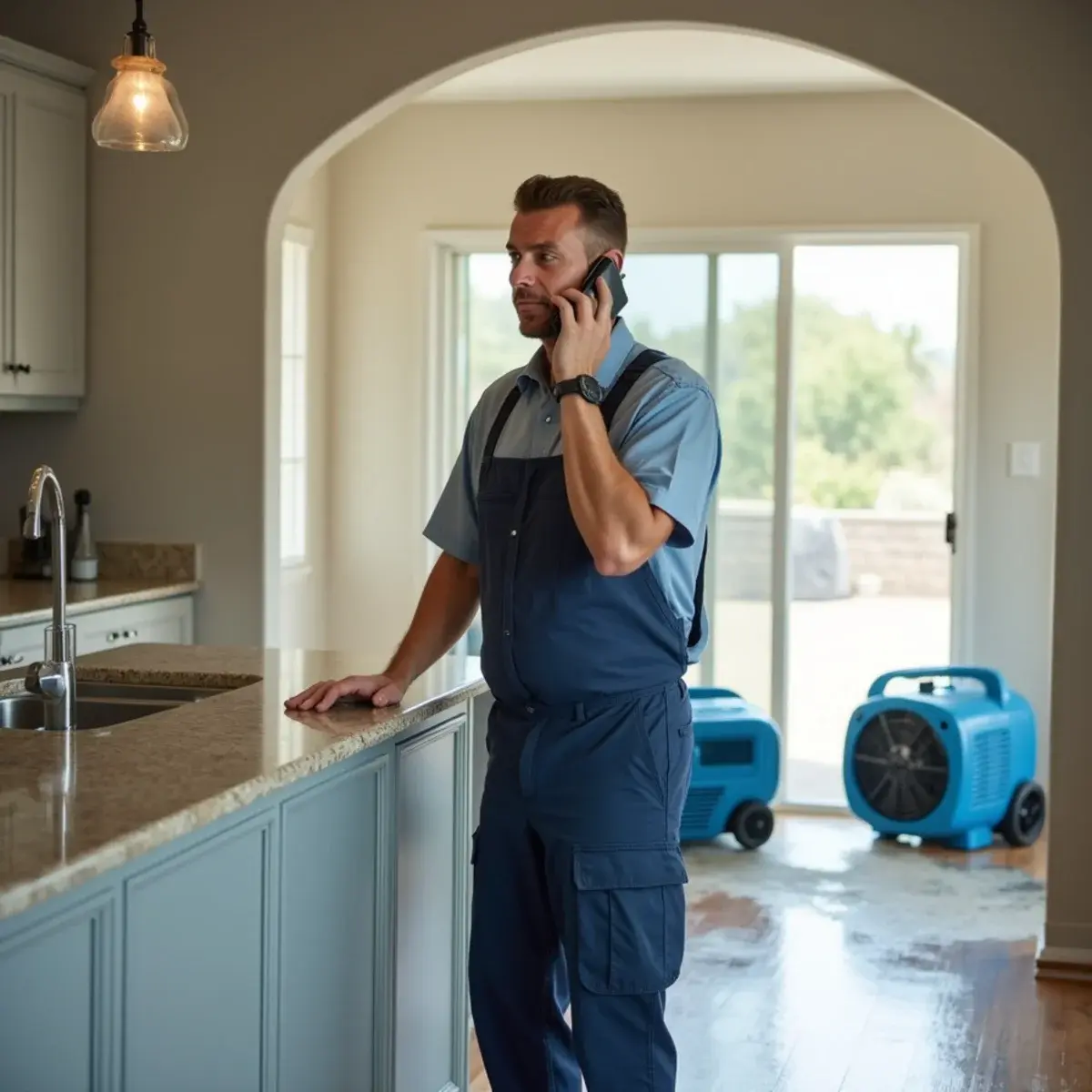
The water is still on the floor and your carrier already wants a claim number, a cause of loss, and a description of the damage. You have never done this before. The adjuster taking the call has handled thousands of them, works from a standardized estimating platform, and will decide what gets paid based on what ends up in the file, not on what happened in your hallway. That gap is the whole problem. It isn't bad faith and it usually isn't a villain on the phone. It is one person doing something once in a lifetime while the other does it every working day.
So we take that part of it off you. Before anything gets moved, torn out, or thrown away, we photograph the loss with dates on the files, map moisture room by room, and record readings that establish how far the water actually traveled through the structure. Then we write an itemized scope in the same estimating platform your adjuster uses, so the conversation is about line items instead of impressions. We bill your carrier directly, which means your money out of pocket is your deductible. When concealed damage turns up after the estimate is written, we document it and submit a supplement.
Two limits, stated plainly. We are not public adjusters and we are not attorneys. We do not represent you in a settlement negotiation and we do not give advice about your policy. Coverage is your carrier's determination, every time, and anyone promising otherwise is selling something. What we can do is make sure that determination gets made against a complete, dated, defensible record of what the water did, rather than against a twenty-minute walkthrough on day four. Most of the disputes we see are not arguments about policy language. They are arguments about facts nobody wrote down while they were still visible.
Signs a Claim Is Going Sideways
These are the moments, roughly in the order they turn up, when a claim starts costing more than it should.
You cleaned it up before photographing it
The most common one, and the most expensive. Wet carpet gets rolled and put at the curb, baseboards come off, fans go on, and by the time an adjuster arrives the room looks fine. Carriers pay for damage that is proven, not damage that is described. Photographs taken before anything moved are the proof.
The adjuster's inspection took twenty minutes
A quick walkthrough is normal on the carrier side and not a sign of anything sinister. It is a sign that the estimate will reflect what was visible from a doorway. Water inside a wall cavity, under a floating floor, or wicked up behind a cabinet toe-kick does not present itself in twenty minutes.
The estimate has no drying line items
Look for air movers, dehumidifiers, equipment days, monitoring visits, and containment. If the estimate jumps straight from water extraction to new flooring, the drying that actually happened in your house has not been priced. That is the most common omission we find in an initial estimate, and it is straightforward to correct with logs.
Nobody recorded what the meters read
Ask whether anyone documented moisture content readings, the affected square footage, and the drying goal. If the answer is no, the file holds no measurement of how far the water traveled, and the scope becomes a negotiation about opinions. IICRC S500:2025 expects those readings daily, and adjusters expect to see them too.
Flooring is replaced in one room only
Your family room floor runs continuous through the hall and into the kitchen with no threshold anywhere, and the estimate replaces the family room. That is the matching question, and it is worth raising before the work starts rather than after, when half a floor has already been ordered.
The first check is smaller than the estimate
On a replacement cost policy the carrier typically pays actual cash value first and holds back depreciation until the work is finished. That gap is usually not a shortfall. It is money waiting on completion documentation, and it becomes a real loss only when nobody ever sends the paperwork in.
You're asked to pay and claim it back
You can do it that way, and on a small loss it is sometimes the right call. But a receipt is not a scope. Without an itemized estimate, moisture readings, and drying logs behind it, reimbursement turns into a conversation about whether the work was necessary at all.
How We Document and Handle the Claim
Six things happen, and the first one happens before anybody touches a wet baseboard.
- 1
Photograph before anything moves
The first fifteen minutes matter more than the next three days. Wide shots of every affected room, then tight shots of the water line on baseboards and walls, the source itself still in place, and the model and serial plate if an appliance failed. Files carry their own date and time. Anything we remove gets photographed where it lay before it leaves the house.
- 2
Map moisture and set the category
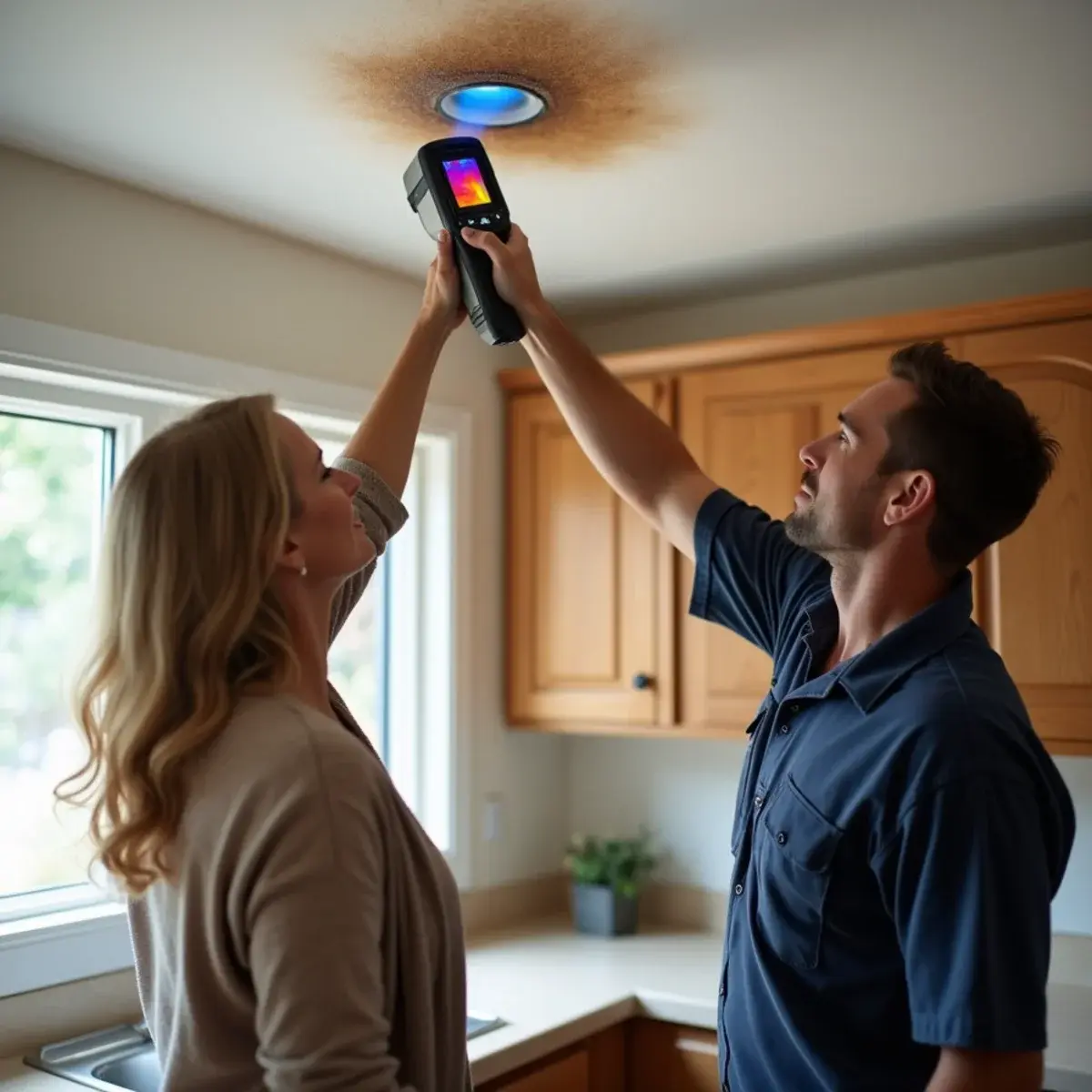
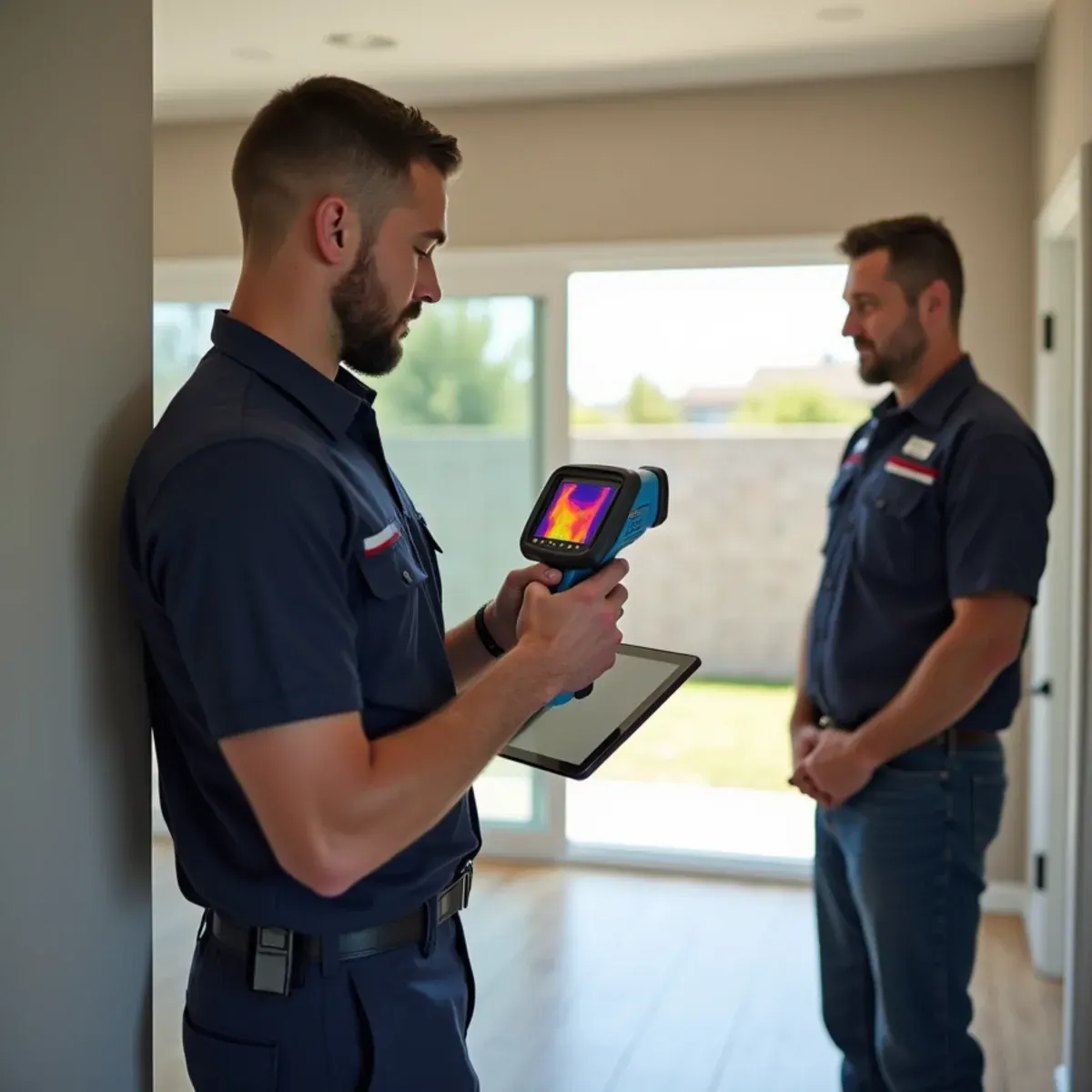
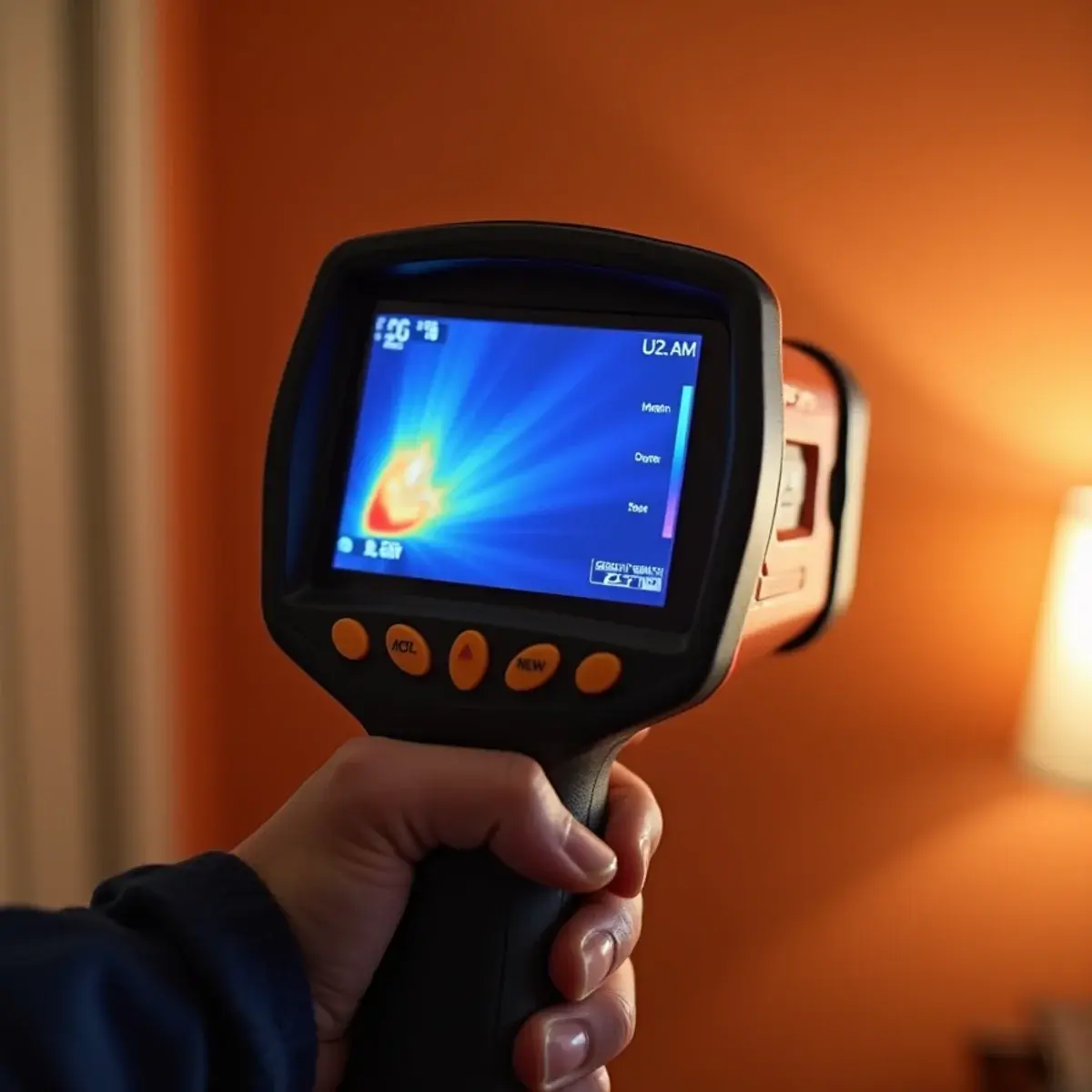
We take meter readings across the affected area and a control reading somewhere unaffected, then draw a moisture map showing how far the water actually migrated. That map, plus the water category and class under IICRC S500:2025, determines which materials can be dried and which have to come out. It is also the first thing a reasonable adjuster asks for.
- 3
Open the file with the right facts
Cause of loss, date and time first noticed, what failed and where, and the mitigation already done. We give you those in writing so the account you give your carrier matches the account in our file. From there we keep a call log with names, dates and what was said. Claims that go sideways almost always have gaps in that record.
- 4
Write the scope in their platform
The estimate goes out itemized, in the same estimating platform carriers use, priced from the same regional data. That removes an entire category of argument. An adjuster can disagree with a line, which is a normal conversation. What they cannot easily do is dismiss a document written in the format and pricing structure their own file is built on.
- 5
Daily drying logs and supplements
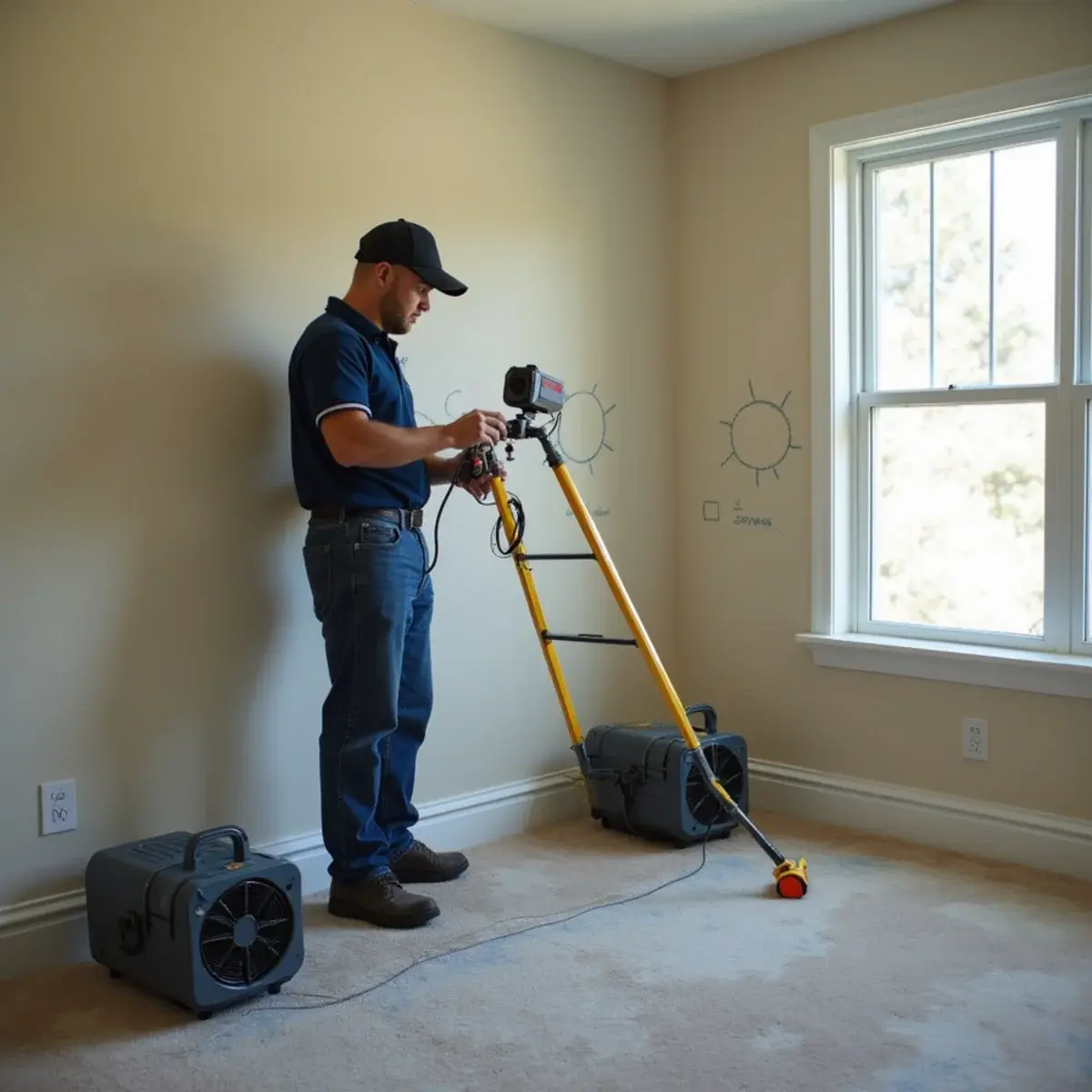
Every day equipment runs, we record moisture readings, temperature, relative humidity and the drying goal, and we photograph progress. Those logs justify each equipment day instead of leaving it to be argued later. When we open a wall and find concealed damage the original estimate never saw, that becomes a documented supplement with photographs attached, not a phone call.
- 6
Completion documents that release depreciation
At the end we send final photographs, dry standard verification, a certificate of completion and the final invoice. On a replacement cost policy that package is what releases the depreciation your carrier held back at the start. A meaningful number of homeowners never submit it and simply leave that money with the insurer. We submit it for you.
The Mistake That Makes People Pay Twice
Two versions of the same mistake account for most of the money homeowners lose on a water claim. The first is cleaning up too well, too fast. The instinct is right, pull the wet carpet, get air moving, bag the ruined contents, and the instinct destroys the evidence. An adjuster standing in a room that has already been stripped and dried has nothing to price except your description of what used to be there. The second version is paying a contractor out of pocket for emergency work and submitting the receipt afterward. A receipt shows what you spent. It does not show why the work was necessary.
Both are fixable in about ten minutes, and the fix is the phone in your hand. Stop before you move anything and record the room as it is. Then keep recording as you go: what came out, where it sat, what it looked like underneath. We would far rather arrive to a house someone has already started drying with good photographs than to a tidy room that was never documented. Speed and evidence are not opposites here. You can do both, and the first hour is where it gets decided.
- A wide shot of every affected room before anything is moved
- The source still in place, with the model and serial plate if an appliance failed
- The water line on walls and baseboards, with a tape measure in the frame
- Every material you remove, photographed where it lay before it goes to the curb
- The date and time you first noticed it, and who you called
The Matching Question Nobody Explains Early Enough
Water gets into the family room. The flooring in that room runs continuous through the hall and into the kitchen with no threshold anywhere, because that is how these houses were floored. The initial estimate replaces the family room. Then the product turns out to be discontinued, or the dye lot is three years gone, and you are being offered a new floor in one room that will never look like the rest of the house. This is the most contested issue in water damage claims, and it has almost nothing to do with how wet anything got.
What moves it is documentation, submitted before anyone orders material. Photographs showing the run of flooring with no transition strip between rooms. Product identification from a leftover box, a stamped batch number, or the installer's invoice. Written confirmation from a manufacturer or supplier that the line is discontinued. Same-angle photographs of the adjacent rooms in the same light. Some policies carry language about restoring a reasonably uniform appearance and some do not, and either way the decision belongs to your carrier. A documented request gets a considered answer. A phone call gets a no.
Sometimes the answer is still no. We have had claims where the carrier paid for the affected room only and the homeowner chose between a transition strip, paying the difference for a full replacement, or living with a close-enough match. That is a legitimate outcome, and we would rather set that expectation at the estimate than discover it with you halfway through demolition. What we will not do is quietly write a scope that pretends the question does not exist.
How Local Housing Stock Changes the Claim
Most of what we work on in Cypress, Rossmoor, La Palma, Lakewood and Cerritos is 1950s to 1980s slab-on-grade tract housing, and slab losses carry a distinction that costs people money when it gets blurred. Policies commonly treat the failed pipe itself, and its repair, differently from the damage that water caused and the access needed to reach it. That means the plumber's invoice and the restoration scope should not arrive as one number. We keep them separate, document the concrete access and the reinstatement as their own line items, and let your carrier make its call on each.
The older raised-foundation pockets, Old Towne Orange, Uptown Whittier, Old Town Tustin, Eastside Costa Mesa, the Anaheim Colony and Santa Ana's historic districts, need a different scope entirely. Default line items assume painted drywall. Lath and plaster is a heavier, slower-drying assembly that fails at the keys, original old-growth flooring has no modern equivalent, and a crawl space adds an entire area that an estimate written from the living room will miss. If a scope says drywall on a 1924 house, that estimate is wrong before anyone argues about price.
Two more local realities show up in claim files. Along the coast in Seal Beach, Huntington Beach and Long Beach, sustained marine humidity means drying takes more equipment days than the same job inland, and the only thing that justifies those days to a carrier is a daily log with readings. In the dense multi-family stock in Hawaiian Gardens and Buena Park, water crossing a demising wall creates a separate claim for each unit plus a possible association claim. Each unit needs its own readings, its own photographs and its own file from the first hour.
What Claim Assistance Costs
The documentation is part of the job rather than a separate invoice, but several things genuinely move what the claim itself pays.
How quickly the loss was documented
Water damage that has been running for weeks is harder to attribute to a single sudden event, and most policies treat long-term seepage differently from a sudden discharge. The earlier documentation starts, the cleaner that distinction is. This is the factor with the largest effect on a claim and the one homeowners have the most control over.
Category and class of water
Under IICRC S500:2025, clean water, gray water and contaminated water carry different handling requirements, and the class describes how much material got wet. Together they decide what is dried in place and what is removed. A category call made and documented on day one changes the entire scope, in both directions.
Whether the materials still match
Continuous flooring, discontinued tile, and a paint color from twelve years ago all raise the question of how far a repair has to extend for the house to look like one house again. That question is usually the largest single variable in a water damage estimate, and documentation and policy language decide it, not preference.
Concealed damage found later
Wet insulation behind a wall, a swollen cabinet base, subfloor delamination under a floor that looks intact. None of it is visible at the initial inspection, and each one becomes a supplement. Supplements are routine rather than adversarial, but they get paid only when they arrive photographed, metered and written into the same estimate file.
How your policy is structured
Your deductible, whether the policy pays replacement cost or actual cash value, any water sublimits, whether you carry water backup coverage, and whether ordinance-and-law coverage exists to handle code upgrades during repair. We read the declarations page with you. What is in it is the boundary of the entire conversation.
Insurance note: There is no separate charge for this. Documentation, moisture mapping, drying logs, the estimate and the supplement work are how we run a restoration job, not an add-on. On a covered loss we bill your carrier directly and you pay your deductible. If a claim is denied, you owe for the work you authorized, and we say that before we start rather than after.
Why Cypress Homeowners Call Us for Insurance Claim Help
Plenty of companies list this service. Fewer can tell you what equipment they will bring, what standard the work is measured against, or what happens if they are wrong. Here is what you are actually buying.
We document to the standard adjusters expect
Room-by-room moisture mapping, daily drying logs, and a line-item scope. Claims get underpaid when the evidence is phone photos and a summary invoice.
We bill the carrier directly
You pay your deductible, not the full cost up front while waiting months for reimbursement.
We will not inflate a scope
Padding an estimate is how a claim gets denied and a homeowner gets left with it. Everything in our scope is something we can defend line by line.
- 20+ years restoring Orange County homes
- IICRC Certified Firm
- Licensed, Bonded & Insured
- We bill your insurance company directly
- IICRC S500:2025 compliant on every job
- 100% satisfaction guarantee — in writing, on every job
Frequently Asked Questions
No, and the distinction matters. A public adjuster is licensed to represent you in negotiating your settlement and charges a percentage of it. We are a restoration contractor. We document the loss, write and defend the scope of the physical work, and bill your carrier directly for it. If your claim turns into a genuine coverage dispute rather than a scope disagreement, that is the point to consider a public adjuster or an attorney, and we will say so.
Sometimes no. If the total loss is close to or below your deductible, filing puts a claim on your record without producing a payment worth having, and claim history affects renewal in California's current market. Get a written estimate first and compare it to your deductible before you call your carrier. We will give you that number without a claim being open. Any company that pushes you to file before you have seen an estimate has told you something.
Yes, if you want us to, and it usually shortens things. We handle the scope conversation, meaning line items, readings, drying logs and supplements, because that is a technical discussion between two people working in the same estimating platform. You stay the decision maker on everything, and we send you whatever we send them. Coverage questions go back to you and your carrier, because that determination is not ours to make.
That is normal and it is not the end of anything. An initial estimate gets written from a walkthrough. Ours gets written from meter readings and from what we found once the assembly was open. We identify each line where the two differ, attach the photographs and readings behind it, and submit it as a supplement. Most differences resolve at that stage. When they do not, you hold a documented file, which is what any next step would require.
By proving the work was completed. On a replacement cost policy the carrier pays actual cash value first and holds the depreciation until the repairs are actually done, then releases it against completion documentation: final photographs, dry standard verification, a certificate of completion and the final invoice. We assemble and submit that package as part of closing out the job. The money is genuinely yours. The only way to lose it is to never ask.
Related Reading
- How to File a Water Damage Insurance Claim (Step by Step) — Most people file exactly one water damage claim in their life, while doing it under stress. Here is the process, in order, with the mistakes flagged.
- Does Homeowners Insurance Cover Water Damage in California? — The answer is usually yes, with four specific exclusions that account for nearly every denied claim we see. Here they are.