
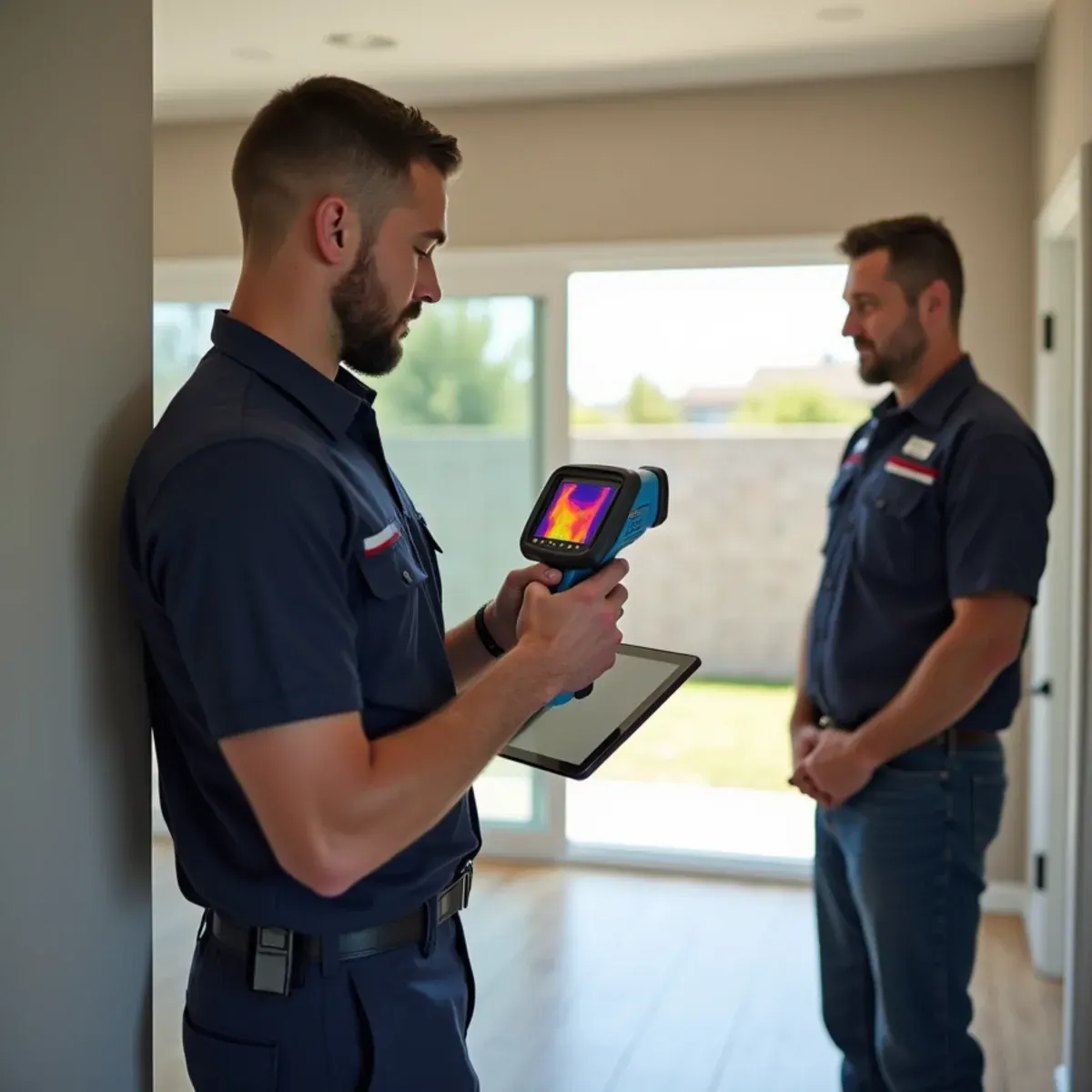
The fight on a Costa Mesa claim is rarely about whether the water happened. It's about day six. Carriers work from expectations about how long a structure takes to dry, and this city drags past them regularly. Strong marine influence keeps outdoor humidity high, the water table sits shallow, and heavy tree canopy over the Eastside blocks the sun that helps everywhere else. A structure that would be dry inland in three days can still read wet here on day six, and without documented psychrometrics that extra equipment time looks like padding.
Building stock makes it worse in the most interesting way. Eastside cottages from the twenties through the forties sit on raised foundations, and a crawl space under a marine layer barely dries on its own — the air you'd normally use to remove moisture already carries plenty. Mesa Verde is 1960s slab tract and behaves more conventionally. The Westside mixes light industrial with housing, which puts commercial and residential losses on the same street with different policies behind them. We log daily readings on all of it, inside and out.
What Costa Mesa Changes About Insurance Claim Help
1Daily psychrometrics justify every extra day
We record temperature, relative humidity and grains per pound inside the containment, outside, and at the dehumidifier, plus moisture content in the materials, every single day. When drying runs long here — and it does — that log is the reason the extra days get paid. Without it, an adjuster is looking at an equipment invoice with no explanation, and reasonable people cut those.
2Eastside crawl spaces don't dry passively
Under a 1920s cottage on the canopy streets, ambient air isn't a drying tool. Most mornings it's a moisture source. That means sealed containment and dehumidification rather than fans and patience, and it means the scope includes work an adjuster may not expect under a small house. We photograph the sub-floor conditions and the vapor readings that make the case.
3Westside blocks put two policy types side by side
Housing and light industrial share streets here, and one loss can involve a residential carrier, a commercial carrier and a tenant's own coverage in a single building. We separate structure, tenant improvements and contents into distinct scopes at the outset. Blended estimates in mixed-use buildings are the most common reason a Costa Mesa file stalls.
How the Work Runs
The method is the same one we use on every insurance claim help job, documented to the IICRC S500:2025 standard. Here it is in short — the full water damage insurance claim assistance process explains each stage in detail.
- Photograph before anything moves
- Map moisture and set the category
- Open the file with the right facts
- Write the scope in their platform
- Daily drying logs and supplements
- Completion documents that release depreciation
The Costa Mesa Background Worth Knowing
Under a raised Eastside cottage there is bare soil, and that soil is supposed to stay dry because the foundation vents exchange air with the outside. That system depends on the outside air being drier than the space under the house. For a good part of the year in Costa Mesa it is not. The marine layer holds humidity high through the night and well into the morning, so the crawl space never gets the dry stretch it needs, and moisture that arrives from a plumbing drip, a downspout, or an irrigation line just accumulates.
There is more on the housing stock, drainage and plumbing history of this city on our water damage restoration in Costa Mesa page.
Costa Mesa at a glance
- Dominant construction era
- 1920–1980
- Foundation type
- mixed on grade
- Supply piping found here
- original 1920s–1940s piping on the Eastside, galvanized steel, under-slab copper
- Drain line materials
- cast iron, clay
- Terrain and water table
- coastal-flat, shallow water table
- Most common local failure
- crawl-space moisture under Eastside cottages, held in by a marine layer that slows every natural drying process
- Highest-value local prevention
- confirming crawl-space vents are actually open and that the ground under the house is dry
What It Costs in Costa Mesa
We do not quote a number over the phone before seeing the property — anyone who does is guessing. The variables that actually move the price on a insurance claim help job are how quickly the loss was documented, category and class of water, whether the materials still match, and they are broken down in full on the water damage insurance claim assistance page. The assessment and the written estimate are free anywhere in Costa Mesa, day or night, with no obligation.
Insurance Claim Help Questions from Costa Mesa Homeowners
That happens here more than in inland cities, and it's answerable with data rather than argument. We send the daily log: outdoor humidity, indoor conditions, dehumidifier performance, and material moisture content trending down slowly but steadily. Marine air this close to the coast limits how fast a structure can release moisture, and a documented drying curve makes that case for us. If the readings had plateaued instead, we'd be telling you something else is wrong.
No, and the distinction matters. A public adjuster is licensed to represent you in negotiating your settlement and charges a percentage of it. We are a restoration contractor. We document the loss, write and defend the scope of the physical work, and bill your carrier directly for it. If your claim turns into a genuine coverage dispute rather than a scope disagreement, that is the point to consider a public adjuster or an attorney, and we will say so.
Sometimes no. If the total loss is close to or below your deductible, filing puts a claim on your record without producing a payment worth having, and claim history affects renewal in California's current market. Get a written estimate first and compare it to your deductible before you call your carrier. We will give you that number without a claim being open. Any company that pushes you to file before you have seen an estimate has told you something.
Almost always the crawl space. On these raised 1920s to 1940s houses the soil under the floor stays damp when the foundation vents are blocked and the marine layer keeps outside air humid overnight. That moisture moves up through the subfloor and into the rooms above it. Before assuming anything, walk your perimeter and see whether a planter, a poured patio or landscaping has covered the vents that are supposed to be breathing.