
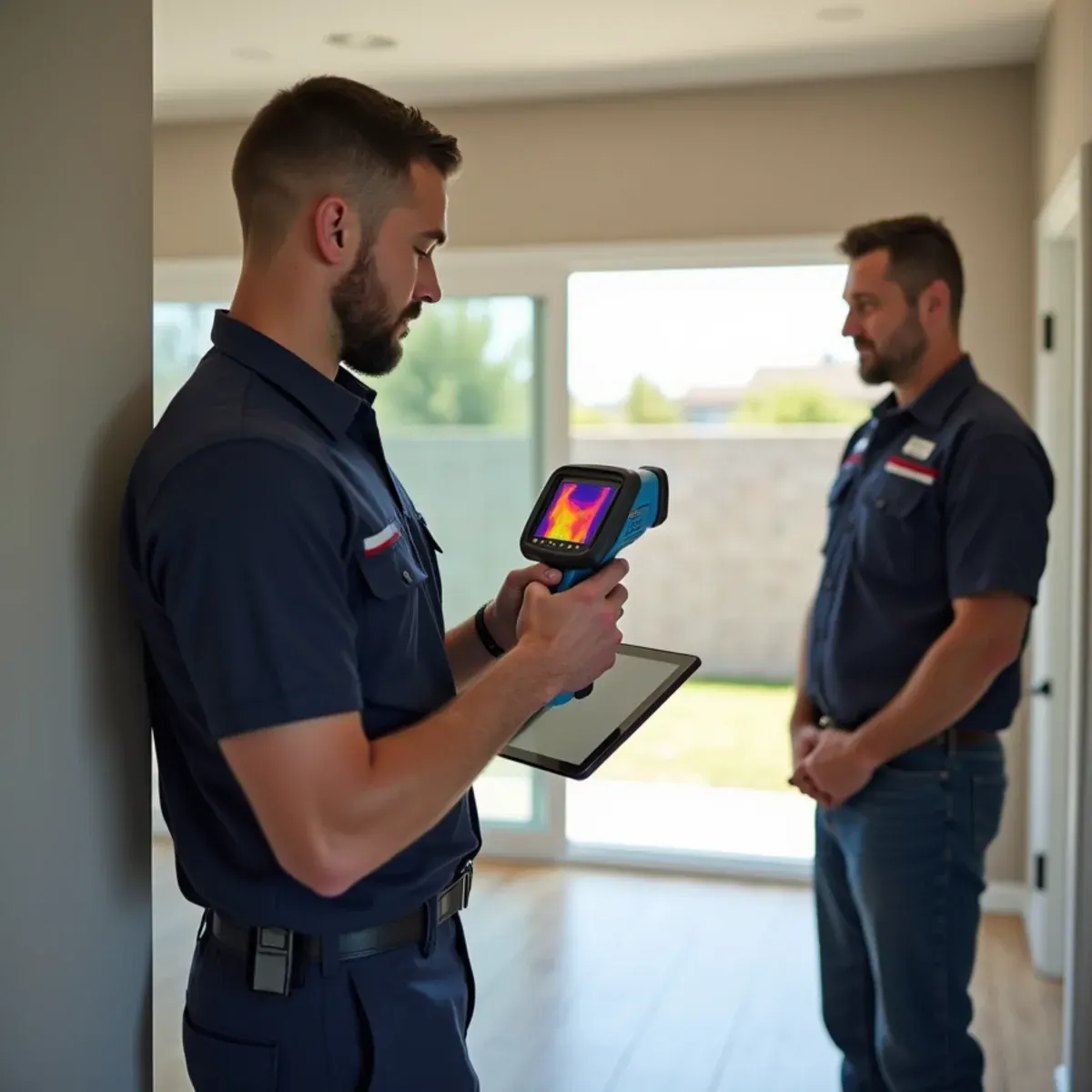
The storm comes in sideways off the water on a Tuesday night, and Wednesday morning there is a stain running down the inside of a window wall. Nothing plumbed failed. Salt air has been working on that flashing and sealant for twenty years, and this was the rain that found the gap. That is the most contested claim we handle on this coast, because policies commonly cover wind-driven rain entering through a storm-created opening but not water entering through a component that simply wore out.
Which way it goes depends on what gets recorded, and how fast. Exterior photographs of the flashing and sealant, the direction the wet pattern runs, interior readings showing the entry path, and the date and time of the weather event all belong in the file before the wall is opened. Huntington Harbour adds a second question entirely, where tidal groundwater and seawalls can put a loss on the flood side of the coverage split rather than the homeowners side. Downtown's narrow lots with no driveway mean long hose runs and staging that belong in the scope.
What Huntington Beach Changes About Insurance Claim Help
1Flashing photographed before anything opens
The exterior evidence is gone the moment repairs start. We photograph the flashing, the sealant joint, the sill and the wet pattern outside and inside, in daylight, with the weather event dated. Whether the carrier ultimately calls it a covered opening or a maintenance issue is theirs to decide, but that decision should be made against pictures rather than a description given over the phone three days later.
2Harbour losses and the flood line
Along the Huntington Harbour channels, tidal groundwater, seawall seepage and rising water sit outside a standard homeowners policy and inside a separate flood policy, if one exists. We document the entry path and elevation so the right file goes to the right carrier. That determination is not ours to make, and pretending otherwise wastes weeks that the drying schedule does not have.
3Access costs on downtown lots
On the narrow downtown lots off Main Street there is often no driveway, so equipment is carried in and hose runs stretch a long way to the truck. That is real labor with real time attached, and it is a routine line item when it is documented. We photograph the staging constraint on arrival so it appears in the estimate as a condition rather than as an unexplained charge.
How the Work Runs
The method is the same one we use on every insurance claim help job, documented to the IICRC S500:2025 standard. Here it is in short — the full water damage insurance claim assistance process explains each stage in detail.
- Photograph before anything moves
- Map moisture and set the category
- Open the file with the right facts
- Write the scope in their platform
- Daily drying logs and supplements
- Completion documents that release depreciation
The Huntington Beach Background Worth Knowing
Salt does not damage buildings directly. It damages the details that keep water out, and then water does the rest.
There is more on the housing stock, drainage and plumbing history of this city on our water damage restoration in Huntington Beach page.
Huntington Beach at a glance
- Dominant construction era
- 1960–1990
- Foundation type
- slab on grade
- Supply piping found here
- under-slab copper
- Drain line materials
- cast iron, ABS
- Terrain and water table
- coastal-flat, shallow water table
- Most common local failure
- wind-driven rain entering through salt-corroded window flashing and failed exterior sealant
- Highest-value local prevention
- renewing exterior caulking and flashing on a far shorter cycle than inland guidance suggests
What It Costs in Huntington Beach
We do not quote a number over the phone before seeing the property — anyone who does is guessing. The variables that actually move the price on a insurance claim help job are how quickly the loss was documented, category and class of water, whether the materials still match, and they are broken down in full on the water damage insurance claim assistance page. The assessment and the written estimate are free anywhere in Huntington Beach, day or night, with no obligation.
Insurance Claim Help Questions from Huntington Beach Homeowners
It depends on how the water got in, and your carrier makes that call. Many policies cover rain entering through an opening the storm created, and exclude rain entering through a component that had deteriorated. Salt corrosion here blurs the two. What helps is evidence taken immediately: dated exterior photographs of the flashing, the wet pattern's direction, interior readings showing the path, and the weather record for that night. We assemble that and submit it with the scope.
No, and the distinction matters. A public adjuster is licensed to represent you in negotiating your settlement and charges a percentage of it. We are a restoration contractor. We document the loss, write and defend the scope of the physical work, and bill your carrier directly for it. If your claim turns into a genuine coverage dispute rather than a scope disagreement, that is the point to consider a public adjuster or an attorney, and we will say so.
Sometimes no. If the total loss is close to or below your deductible, filing puts a claim on your record without producing a payment worth having, and claim history affects renewal in California's current market. Get a written estimate first and compare it to your deductible before you call your carrier. We will give you that number without a claim being open. Any company that pushes you to file before you have seen an estimate has told you something.
Ambient humidity near the coast stays high enough for long enough that materials dry slowly on their own, which widens the window in which growth can establish after any moisture event. Combined with salt-accelerated failures of exterior sealants and flashings, coastal homes simply get more moisture intrusion and dry from it more slowly.