

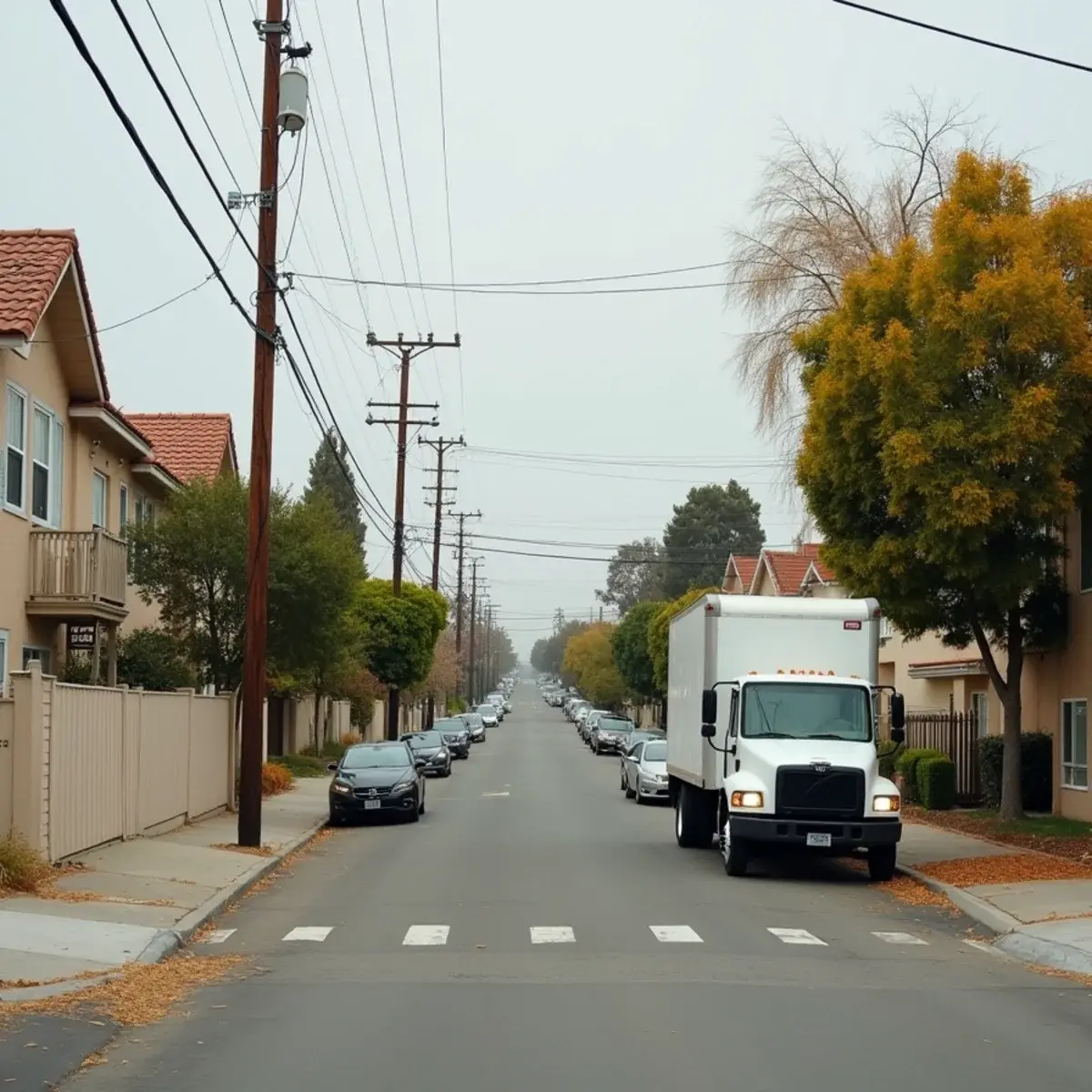
If you own an older house in Bellflower and you are only going to spend money on one piece of preventive plumbing work, don't spend it on the supply lines. Put a camera down the sewer lateral instead. On a house built in the years right after the war, that run from the house out to the street has almost certainly never been looked at, and it has spent seventy-odd years under a street canopy that has had all that time to mature. The roots know where the water is. We find things in Bellflower laterals that homeowners had no idea were down there.
Bellflower filled in fast. This was dairy and orchard land, and the city takes its name from an apple grown here. When the postwar demand arrived, small houses went up on small lots at speed, followed by a large amount of multi-family layered in over the decades since. The result is a city where original single-family systems are pushing eighty years old in places, older than almost anything we work on back in Orange County, sitting a block away from apartment buildings that represent three or four different plumbing generations.
The ground here is dead flat, the water table is moderate, and nothing drains by gravity on its own. Around the Civic Center, along Bellflower Boulevard, and through Mayfair and the Somerset area, the pattern is two aging systems reaching the end of their lives in the same decade: original galvanized steel on the pressure side, cast iron on the drain side. A house can go thirty quiet years and then lose both within a couple of winters. We are about twelve minutes northwest of our Cypress shop, and we dispatch as fast as conditions allow, any hour.
Galvanized Supply Lines on an Eighty-Year Clock
Galvanized steel was the standard supply pipe when Bellflower was being built, and it fails from the inside out. The zinc lining wears through, the steel underneath corrodes, and scale builds on the interior wall until the pipe is a fraction of its original diameter. Narrower pipe means faster, more turbulent water, which chews at elbows and threaded fittings until one of them lets go. Hot lines corrode faster than cold, which is why hot water pressure is usually the first thing to drop. Eighty years is well past any service life anyone intended when this was installed.
What makes that specific to Bellflower is the timing. Because the tracts went up in a compressed period on former dairy land, an entire street's supply piping shares an installation date. When we take a call on one block and the house two doors down calls us the following spring, that is not coincidence. It is the same pipe reaching the same point on the same curve. If a neighbor has had a pinhole flood a wall, treat it as information about your own house rather than as their bad luck.
If a repair is already opening walls, that is the least expensive moment you will ever have to repipe, because the demolition and the patching are in the scope either way. We will tell you honestly when a spot repair is the right call and when you are paying twice for the same wall. We are not plumbers and we will not pretend the repipe decision is ours to make, but we do see which houses call us back a year later and which ones never need to.
- Water pressure that has drifted down so gradually you stopped noticing
- Rust-colored water from a tap that has not run since the night before
- Hot side noticeably weaker than cold at the same fixture
- A warm patch on the slab, or running water audible with everything shut off
- A water bill that stepped up one month and never stepped back down
Cast Iron, Tree Roots, and the Lateral Nobody Has Scoped
The drain side of a Bellflower house is cast iron, and it ages differently from the supply side. Cast iron corrodes from the inside along the bottom of the pipe, where waste sits, until the invert channels out and the joints lose their seal. Then the parkway trees do the rest. Bellflower streets have a mature canopy, which is one of the nicest things about living here and one of the worst things that can happen to a seventy-year-old lateral. Roots find the open joints, thicken inside the line, and turn a partial restriction into a full blockage on the day the whole family is home.
A sewage backup is a different job from a supply leak, and it is worth understanding why before it happens. Under IICRC S500:2025 that water is Category 3, and the classification drives everything: carpet and pad come out, drywall is cut above the wick line rather than at the stain line, and porous material that absorbed it does not get dried and kept. A clean pinhole leak in a hot line can often be dried in place with the walls intact. A lateral failure cannot. Same house, same square footage, completely different scope and cost.
This is why we push the camera inspection so hard here. Scoping a lateral costs a small fraction of a remediation, and on a Bellflower line that has never been looked at, it very often finds root intrusion, a bellied section, or a joint that has already dropped. What gets done about it after that, whether that is jetting, a liner, or a dig, is a plumber's call and we will say so. Our interest is in you never needing us for that particular emergency.
Duplexes, Fourplexes, and Small-Lot Access
Bellflower has far more multi-family than a city of its size and era would suggest, and water behaves differently in a stacked building. A supply failure in an upstairs unit runs into the floor assembly, travels along the joists, and comes out through a downstairs ceiling that may be a room or two away from anything that actually broke. The unit with the damage is frequently not the unit with the problem. We map the whole assembly with moisture meters and thermal imaging instead of working outward from the stain, because on these buildings the stain is the last place water arrived, not the first.
The other Bellflower constraint is physical. These are small lots with three or four feet of side yard, cars on both sides of the street, and often no way to bring a truck close. We plan access before we roll: where the extraction hose runs, where dehumidifiers can sit without blocking an occupied unit's door, and how we keep power draw off a panel that was sized for a 1950s duplex. It is unglamorous, and it is the difference between starting extraction in twenty minutes and starting it in two hours.
Neighborhoods and Landmarks We Cover in Bellflower
We work throughout Bellflower — every neighborhood, every street, residential and commercial. If your address is in the city, we cover it.
Neighborhoods & corridors
- Bellflower Boulevard corridor
- Somerset area
- Mayfair
- Rosecrans corridor
Landmarks nearby
- Bellflower Civic Center
- Caruthers Park
- Simms Park
- Thompson Park
- Bellflower Boulevard
Why Bellflower Residents Call Us First
Any restoration company can put Bellflower on a service-area list. What matters at 2 a.m. is how far the truck has to come and whether the crew has opened a wall in a house like yours before.
About 12 minutes northwest
We dispatch from 6122-6182 Katella Ave in Cypress — not from a regional depot and not from a call centre that sells your job to whoever bids for it. That is the whole reason the 60-minute commitment is one we can put in writing.
Galvanized and cast iron failing in the same decade
1940s–60s Bellflower housing is reaching the end of both systems at once. Finding one failure usually means looking hard at the other.
We scope the lateral before you rebuild
On a house this age the sewer line has often never been looked at. Putting new flooring over an unscoped lateral is a bet we would not take.
- 20+ years restoring Orange County homes
- IICRC Certified Firm
- Licensed, Bonded & Insured
- We bill your insurance company directly
- IICRC S500:2025 compliant on every job
- 100% satisfaction guarantee — in writing, on every job
Bellflower Water Damage Questions
It is the most common gap we see here. A cast iron lateral that age has corroded along the bottom, the joints have shifted, and the parkway trees on most Bellflower streets have had seventy years to find them. A camera inspection costs a small fraction of a sewage remediation, and on a line that has never been scoped it usually finds something worth knowing about before it finds you at two in the morning.
That is close to a signature of original galvanized supply piping, which is what most Bellflower houses of this era were built with. Hot water accelerates the corrosion, so the hot lines scale up and narrow faster than the cold ones do. If pressure has been drifting down for years and you get rust-colored water from a tap that sat overnight, the system is well along. Get it assessed before it picks which wall to fail in.
That depends on the source and on the policies involved, and we will not pretend to settle it for your building. What we can do is document it properly: where the water originated, how far it traveled inside the floor assembly, moisture readings unit by unit, and daily drying logs. That record is what the carriers and adjusters actually argue from. Without it the whole thing turns into two neighbors disagreeing about something neither of them saw.
We are about twelve minutes northwest of our Cypress base on a clear road, so Bellflower is one of the closer cities we cover. Our 60-minute response guarantee applies only inside Cypress itself, and we are not going to promise you a clock we do not control. What we will do is dispatch as fast as conditions allow, give you an honest arrival window when you call, and talk you through shutting the water off while we are on the way.