
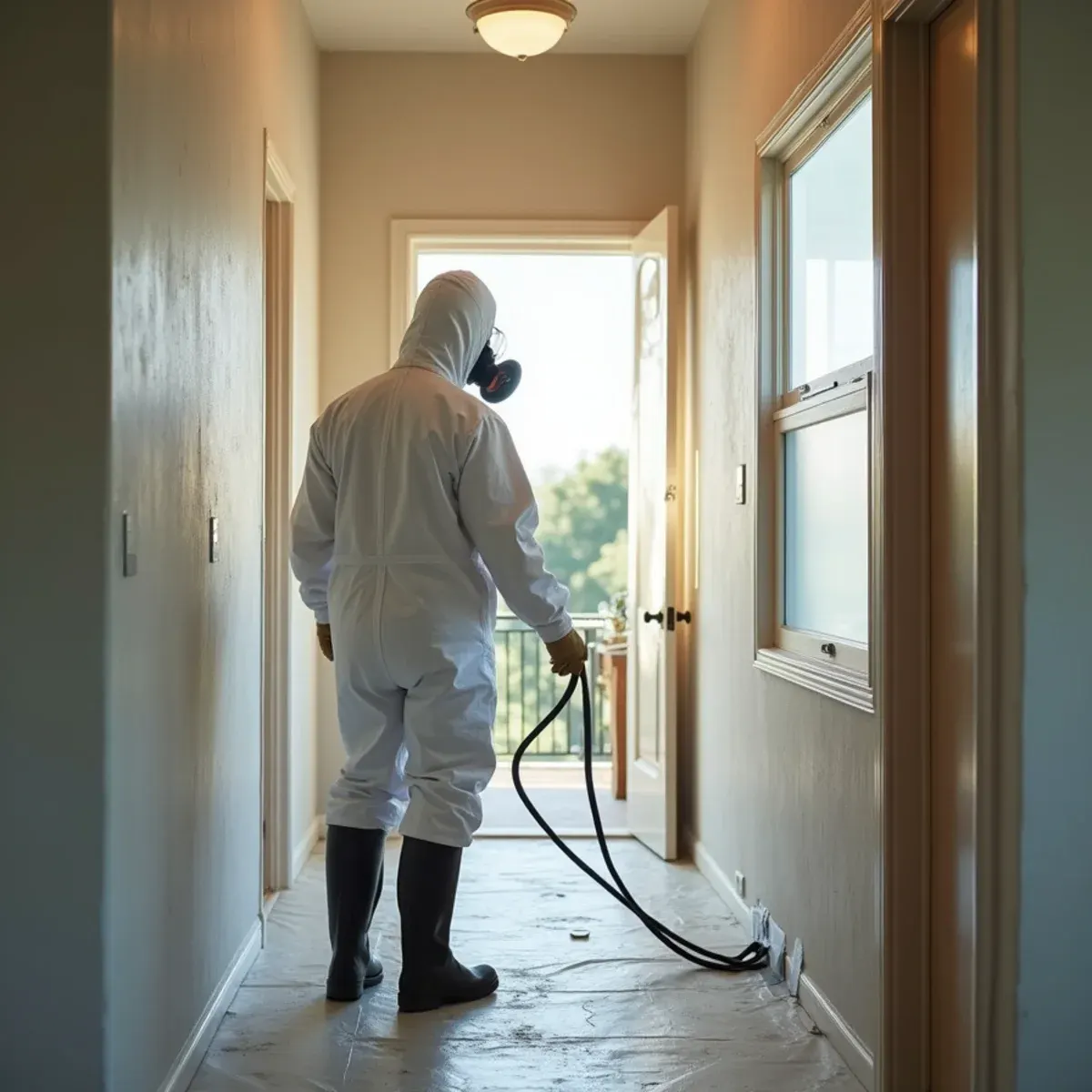
Bellflower was dairy and orchard country — the name comes from an apple — until the war ended and it filled in almost overnight with small houses on small lots. That speed is why the plumbing here is older than nearly anything in Orange County. Galvanized supply and cast iron waste lines installed between 1945 and 1960 are now approaching eighty years of service, and cast iron doesn't announce itself. It thins from the inside, roughens, catches solids, and then one ordinary Tuesday it doesn't carry anything at all.
The small lots change the job as much as the pipe does. Houses sit close to the property line, driveways are narrow, and there's often no side yard wide enough to walk a loaded cart through. Setting hard containment, running negative air ducting to the outside and getting contaminated material off site takes planning on a Somerset or Mayfair street that it doesn't on a half-acre lot. Add the volume of apartments along Bellflower Boulevard and Rosecrans, and a single blocked stack can involve several households at once.
What Bellflower Changes About Sewage Cleanup
1Laterals nobody has ever scoped
On a house this age the sewer lateral has usually never had a camera in it, not once in eighty years. That's the single most useful thing to fix while the floor is already open after a cleanup. A scope costs a fraction of what the second backup will, and it's the only way to know whether you solved anything.
2Tight lots, staged equipment, planned disposal
Negative air has to exhaust somewhere, and on a lot with six feet between houses that somewhere needs thought before we start. We plan the exhaust path, the material route and the container placement on arrival, then keep the walking path sealed. Neighbors this close notice everything, so we'd rather do it right than reset it halfway through.
3Supply and waste failing together
The galvanized supply lines and the cast iron drains in these houses went in at the same time and are wearing out at the same time. It's common to finish a sewage cleanup and find a pinhole supply leak inside the same wall we opened. We document both, because an insurer treats them as separate causes even when the wall is one.
How the Work Runs
The method is the same one we use on every sewage cleanup job, documented to the IICRC S500:2025 standard. Here it is in short — the full sewage backup cleanup process explains each stage in detail.
- Secure the area and set containment
- Full PPE and safe extraction
- Remove contaminated porous materials
- Clean and disinfect all remaining surfaces
- Deodorize at the source
- Dry, verify, and clear
The Bellflower Background Worth Knowing
Galvanized steel was the standard supply pipe when Bellflower was being built, and it fails from the inside out. The zinc lining wears through, the steel underneath corrodes, and scale builds on the interior wall until the pipe is a fraction of its original diameter. Narrower pipe means faster, more turbulent water, which chews at elbows and threaded fittings until one of them lets go. Hot lines corrode faster than cold, which is why hot water pressure is usually the first thing to drop. Eighty years is well past any service life anyone intended when this was installed.
There is more on the housing stock, drainage and plumbing history of this city on our water damage restoration in Bellflower page.
Bellflower at a glance
- Dominant construction era
- 1940–1960
- Foundation type
- slab on grade
- Supply piping found here
- original galvanized steel, early copper
- Drain line materials
- cast iron
- Terrain and water table
- flat, moderate water table
- Most common local failure
- original galvanized supply lines and cast-iron laterals failing together in the same decade
- Highest-value local prevention
- scoping the sewer lateral, which on a house this age has usually never been looked at
What It Costs in Bellflower
We do not quote a number over the phone before seeing the property — anyone who does is guessing. The variables that actually move the price on a sewage cleanup job are affected square footage, volume of porous material removed, contents in the affected area, and they are broken down in full on the sewage backup cleanup page. The assessment and the written estimate are free anywhere in Bellflower, day or night, with no obligation.
Sewage Cleanup Questions from Bellflower Homeowners
Not inevitable, but the odds shift with age, and yours is in the range where cast iron starts failing. What we'd suggest is one camera scope. If the invert is smooth and the joints are tight, you've bought yourself years of not worrying. If it shows scale, channeling or a root at a joint, you can jet or line it on your own schedule instead of dealing with Category 3 water in a one-bathroom house.
It depends on the source. A toilet that overflows with clean bowl water because of a stuck fill valve is Category 1 or 2 and is far less serious. A toilet that backs up from the main line is carrying waste from the whole system, and that is Category 3 — it needs the full protocol.
No. Standard practice for Category 3 water is removal and disposal of carpet and pad that were contacted. Porous materials cannot be reliably disinfected all the way through, and the health risk of leaving them is not worth the savings.
It is the most common gap we see here. A cast iron lateral that age has corroded along the bottom, the joints have shifted, and the parkway trees on most Bellflower streets have had seventy years to find them. A camera inspection costs a small fraction of a sewage remediation, and on a line that has never been scoped it usually finds something worth knowing about before it finds you at two in the morning.