Nearly every home built in Cypress since the 1960s sits on a concrete slab, with the copper supply lines running through or beneath it. When one of those lines develops a pinhole, the water has nowhere to go but into the soil and the underside of the slab — and it can do that for months before anything appears in your living space.
Slab leaks are the most under-diagnosed water loss we deal with in Orange County. Homeowners call us about a musty smell, a stubborn warm spot on the tile, or hardwood that cupped for no apparent reason. In a meaningful share of those, the actual cause is a supply line failure under the concrete that has been quietly saturating the sub-slab soil since sometime last year.
Two things make this urgent beyond the water bill. Sustained sub-slab saturation can undermine the soil supporting your foundation, and moisture migrating up through concrete carries mineral salts that destroy flooring adhesives and feed mold under any floor covering that traps vapor.
Slab Leak Warning Signs in a Cypress Home
These are the indicators that consistently turn out to be a leak beneath the concrete:
A warm spot on the floor
The classic sign, and specific to hot-water line failures. If one patch of tile or vinyl is noticeably warmer than the surrounding floor, hot water is running under the slab there.
The water meter moves with everything off
Shut off every fixture and appliance and watch the meter's low-flow indicator for fifteen minutes. Any movement means water is escaping — and if nothing is visible above the slab, it is below it.
Sound of running water with no fixture on
A slab leak often produces a faint continuous rushing sound that seems to come from the floor. It is usually most audible at night.
Cracked or lifting flooring
Vinyl plank that separates at the seams, tile that cracks along a line, or hardwood that cups in one area — all signal moisture pressure from underneath.
Persistent musty odor with no visible source
Moisture wicking up the slab edge into the bottom plate and drywall produces odor long before any staining appears.
Unexplained increase in the water bill
A pinhole under a slab can waste thousands of gallons a month while producing no visible symptom at all. An unexplained bill increase is often the only early evidence.
Damp or discolored baseboard at the slab line
Water that reaches the slab edge wicks into the bottom plate and up into the drywall. Discoloration in the lowest inch or two of the wall is a strong indicator.
How We Handle Slab Leak Damage
Locating the leak is a specialized job. Drying concrete afterward is a different specialized job. We handle the damage side and coordinate the detection and repair.
- 1
Confirm it is actually a slab leak
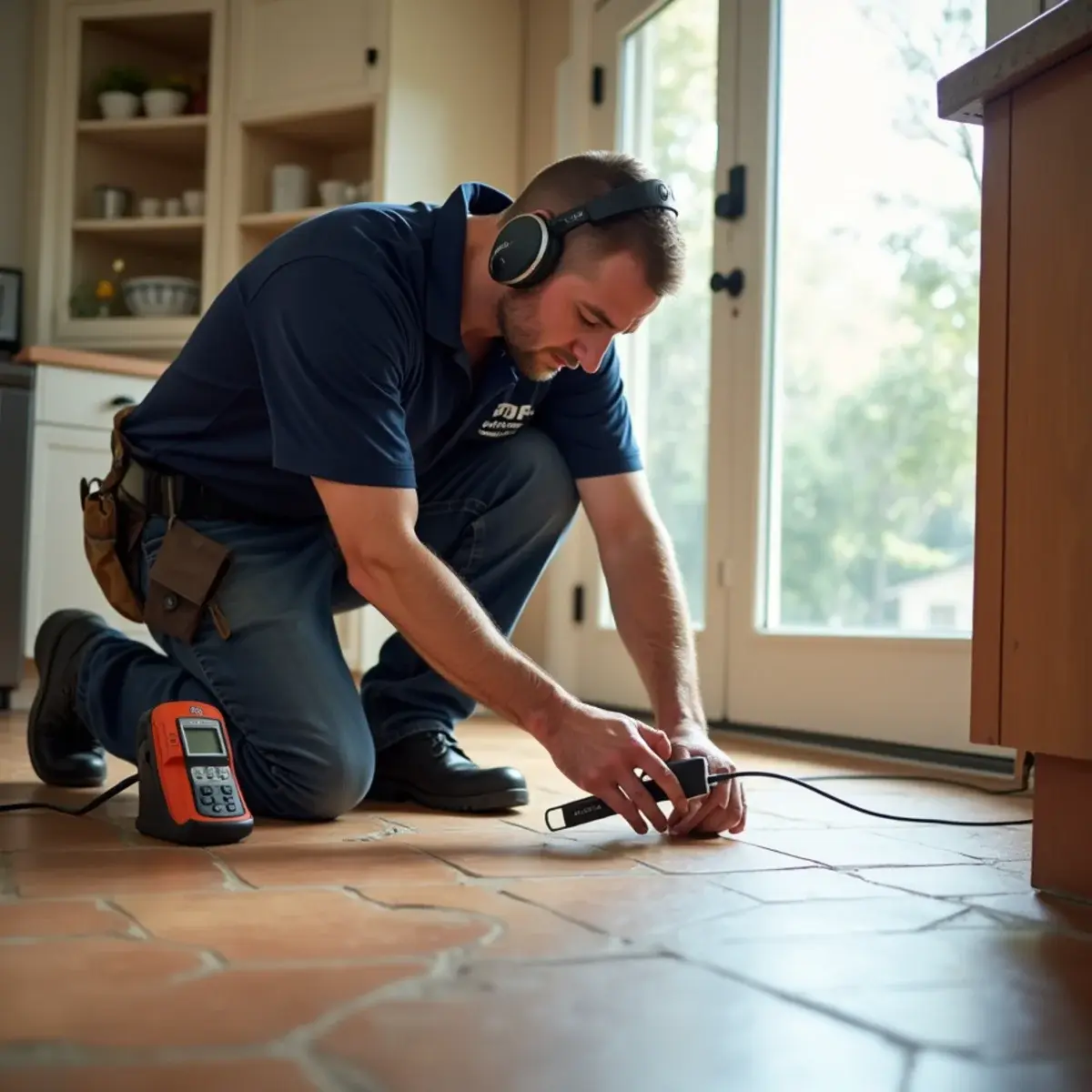
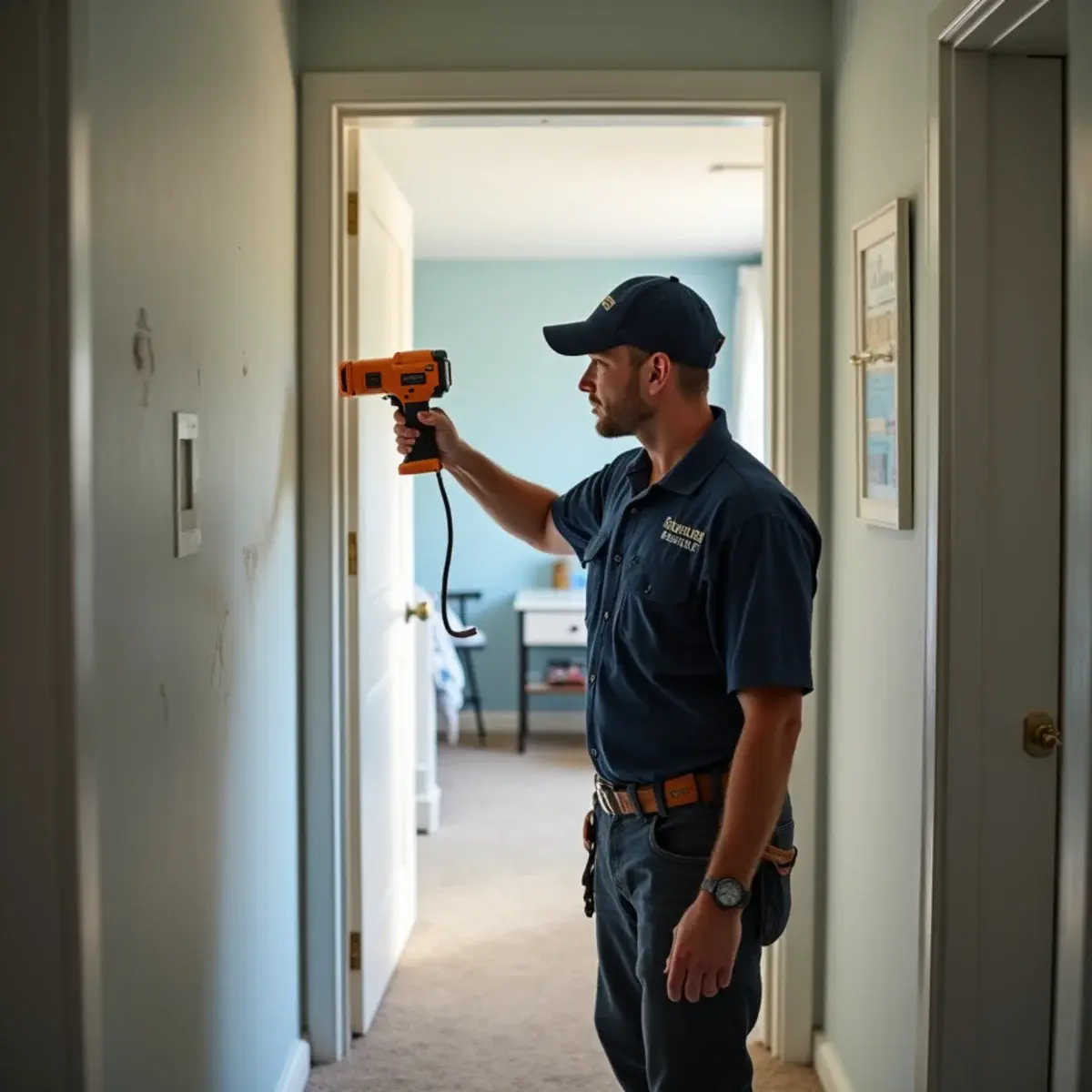
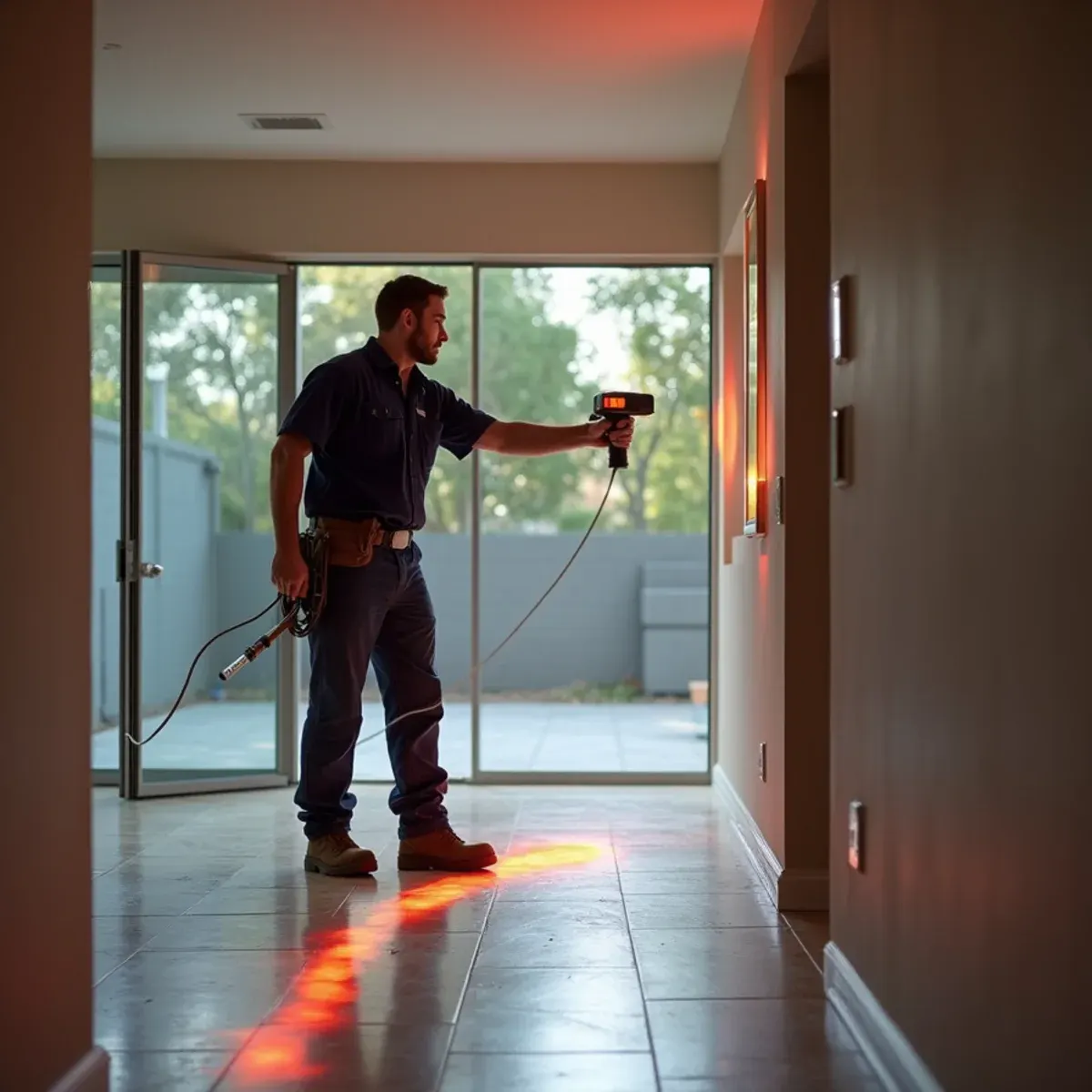
We isolate the water supply and use moisture mapping, thermal imaging, and meter testing to rule out the far more common causes — a wall leak, a shower pan failure, or an exterior drainage problem — before anyone talks about opening concrete.
- 2
Electronic leak location
Acoustic listening equipment and line tracing pinpoint the failure to within a small area. Precision here is what determines whether the repair is a two-foot opening or an exploratory search across your living room.
- 3
Choose the repair approach with you
Depending on the location and the age of the system, the options are a spot repair through the slab, rerouting the line overhead through the attic and walls, or a full repipe. We lay out the cost and disruption of each honestly — an older system with a second failure often justifies a reroute over another spot repair.
- 4
Dry the slab and the affected assemblies
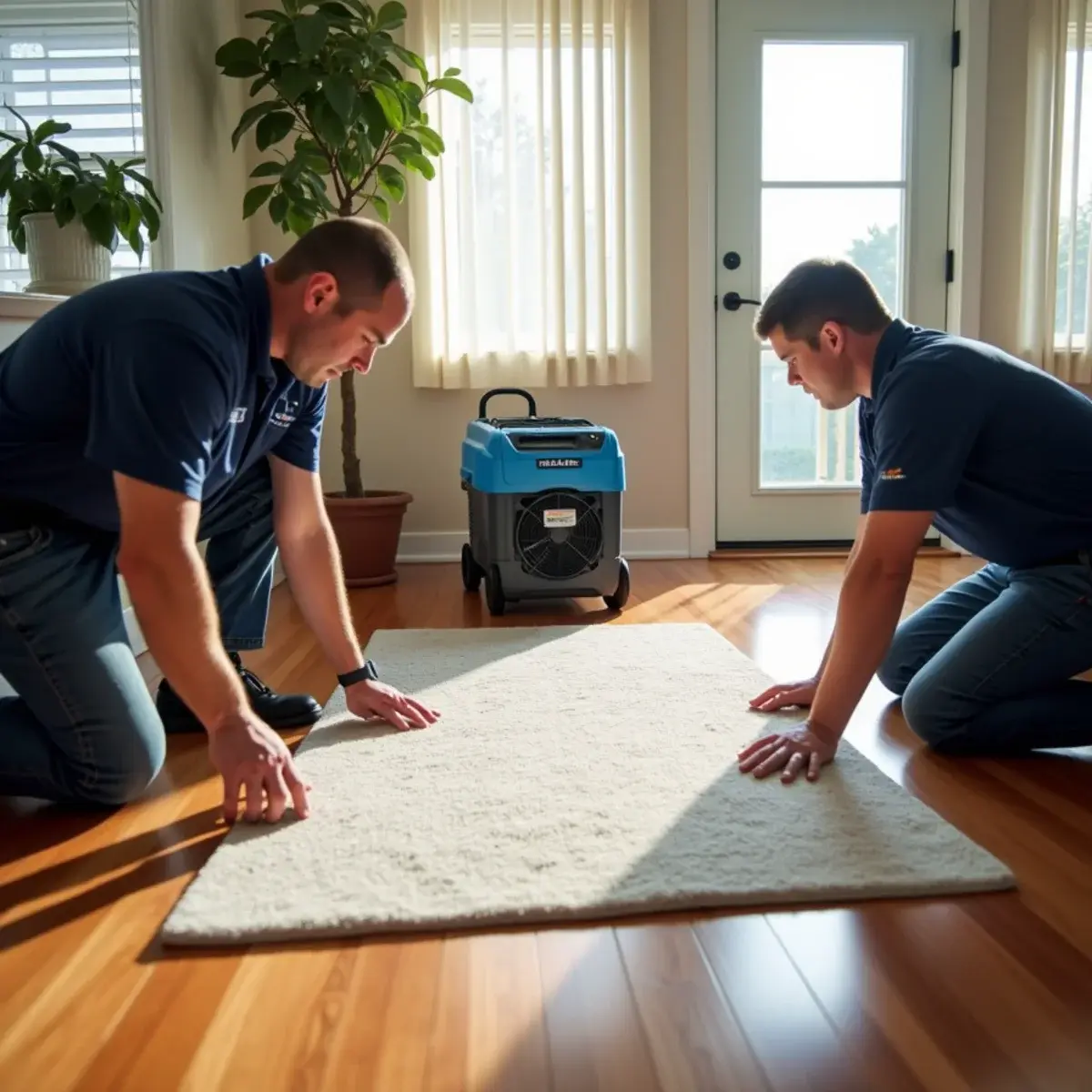
Concrete releases moisture slowly. We use targeted drying with dehumidification and, where warranted, heat and airflow directed at the slab surface, monitoring with a non-invasive concrete moisture meter until readings stabilize at the dry standard.
- 5
Address the flooring and wall base
Flooring that trapped moisture usually has to come up. Wall bottom plates and the lower drywall are read and treated, with antimicrobial applied where microbial growth is present.
- 6
Restore the floor and finish
Patching the slab, re-leveling where the concrete was opened, and reinstalling flooring and baseboard so the repair does not read as a repair.
Why Slab Leaks Are So Common in This Part of Orange County
Three factors stack up here. First, the construction era: the tract housing that defines Cypress, La Palma, Los Alamitos, and Buena Park was built slab-on-grade with copper supply lines routed under or through the concrete — the standard practice of the time, and now fifty to sixty years old.
Second, soil chemistry. Parts of this coastal plain have soils that are mildly aggressive toward buried copper, driving external pitting that eventually breaches the pipe wall from the outside in.
Third, water chemistry and velocity. Decades of treated municipal water moving through undersized older lines causes internal erosion-corrosion, particularly at elbows and on hot recirculating loops. When a home starts producing repeated pinholes, it is rarely bad luck — it is the whole system reaching the end of its service life at once, which is why a second slab leak within a couple of years is usually the moment to price a full repipe.
Drying Concrete Is Not Like Drying Drywall
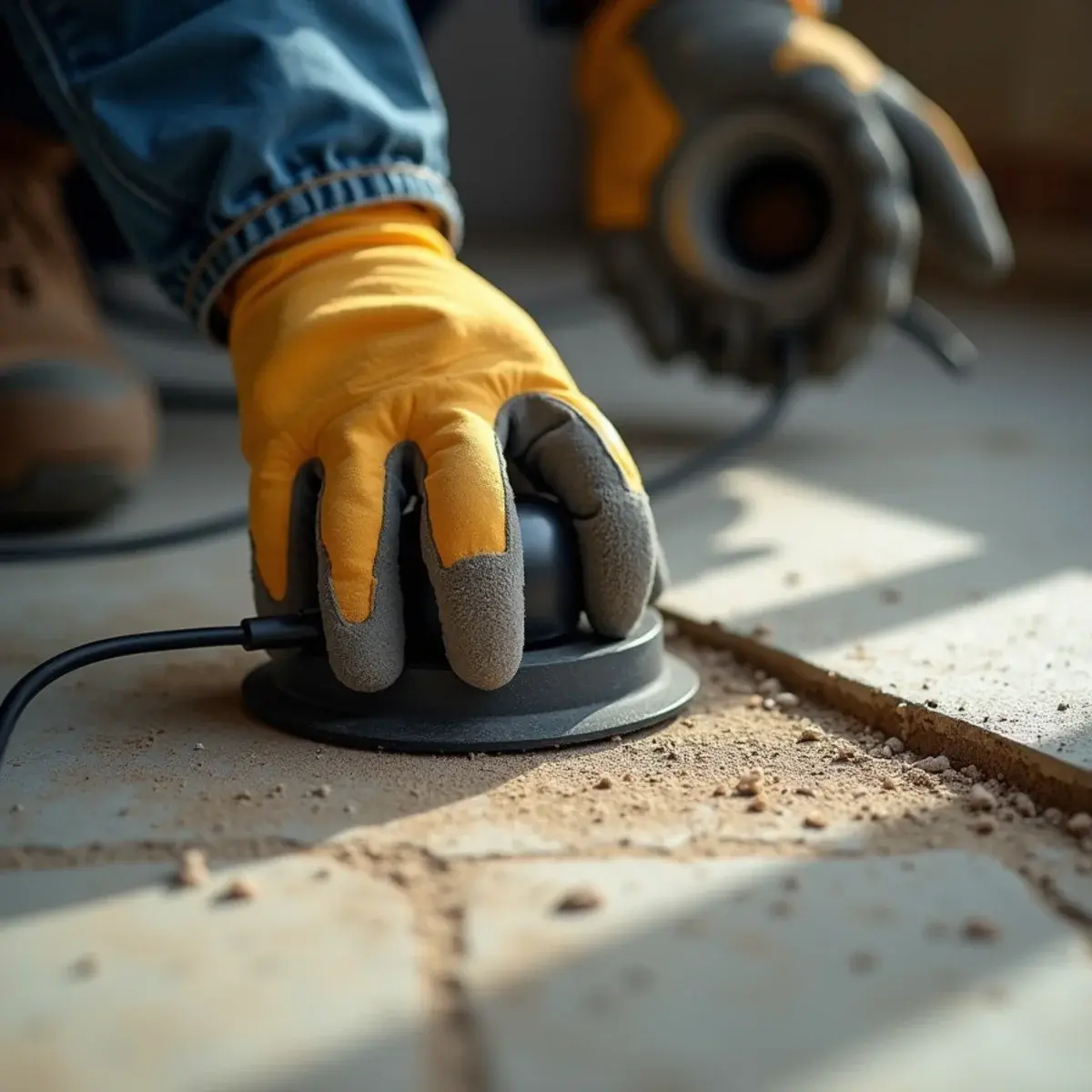
Concrete is porous and holds an enormous volume of water relative to its appearance. A slab that looks and feels dry can still be releasing significant vapor into the room, and if you install flooring over it at that stage, you have sealed the moisture in — which is how a repaired slab leak turns into a failed floor and a mold problem twelve months later.
We measure slab moisture with non-invasive impedance meters and, on higher-stakes installations, relative humidity probes set into test holes drilled into the concrete. That in-situ RH reading is the number flooring manufacturers actually specify against, and it is the only reliable way to know a slab is ready for a new floor.
Practically, this means slab drying takes longer than most people expect and the equipment stays a few days past the point where everything looks fine. We would rather explain that up front than come back to a delaminated floor.
What Slab Leak Restoration Costs Depends On
The detection and plumbing repair are separate from the restoration. Restoration cost tracks these variables:
How long the leak ran undetected
The dominant factor. A leak found in weeks affects a small area; one running for a year has saturated a wide zone of sub-slab soil and driven moisture into multiple rooms of flooring and wall base.
Flooring type over the leak
Tile over a mortar bed is expensive to remove and replace. Floating vinyl plank often lifts and reinstalls cheaply. Hardwood over concrete generally cannot be salvaged once it has cupped from below.
Repair method chosen
A spot repair opens a small section of slab and flooring. A reroute avoids the concrete entirely but runs new line through walls and ceilings, adding drywall and paint. Neither is universally cheaper — it depends on where the leak is.
Concrete drying duration
Slabs give up moisture far more slowly than framing. Expect a longer equipment run than a comparable above-slab loss, and budget for those additional days.
Whether mold developed
Long-running slab leaks frequently produce growth in the wall base and under flooring. Remediation adds containment, removal, and clearance work on top of drying.
Insurance note: Insurance treatment varies sharply here. Most policies cover the resulting water damage and the access work to reach the pipe, but exclude the pipe repair itself — and many exclude damage from leaks deemed long-term or gradual. Prompt reporting and thorough documentation materially affect the outcome, which is why we photograph and log from the first visit.
Why Cypress Homeowners Call Us for Slab Leak Damage
Plenty of companies list this service. Fewer can tell you what equipment they will bring, what standard the work is measured against, or what happens if they are wrong. Here is what you are actually buying.
We find it before anyone breaks concrete
Thermal imaging, moisture mapping, and meter isolation locate the line first. Opening a slab to search is expensive and unnecessary when the leak can be narrowed to a few feet.
Slab drying is a different discipline
Concrete releases moisture slowly and unevenly. It needs targeted equipment and a longer, monitored cycle — flooring laid over a slab that only looks dry will cup or delaminate within months.
The signature Cypress failure
Under-slab copper pinhole leaks run for months with no visible cue. If your water meter creeps with every tap closed, that is usually what it is, and we have chased it across this city for years.
- 20+ years restoring Orange County homes
- IICRC Certified Firm
- Licensed, Bonded & Insured
- We bill your insurance company directly
- IICRC S500:2025 compliant on every job
- 100% satisfaction guarantee — in writing, on every job
Frequently Asked Questions
The meter test is the first step: shut off every fixture and watch the low-flow indicator. If it moves and nothing is wet above the floor, suspect the slab. Warm spots on the floor, running-water sounds from below, and flooring that lifts or cups without an obvious cause all point the same direction. We confirm it with thermal imaging and moisture mapping at no charge.
Not always. Depending on where the leak is and the condition of the system, rerouting the line overhead through the attic and walls avoids opening the concrete entirely. When a spot repair is the better option, precise electronic location keeps the opening small — typically a couple of feet, not a trench across the room.
Typically the policy covers the resulting water damage and the cost of accessing the pipe, but not the pipe repair itself. Coverage is often denied when the carrier determines the leak was long-term or gradual, which is exactly why reporting it promptly and documenting from day one matters so much.
Longer than framing — commonly seven to fourteen days depending on how long the leak ran and how much moisture the concrete absorbed. We monitor with concrete-specific meters and, where a new floor is going down, in-situ relative humidity probes, and we do not sign off until the readings meet the flooring manufacturer's specification.
If this is your first leak in an otherwise healthy system, a spot repair or reroute is reasonable. If it is your second or third in a few years, the system is telling you it has reached end of life, and repeated spot repairs will cost more over time than a repipe — with another water loss every round.
Related Reading
- Slab Leak Signs Every Orange County Homeowner Should Know — A slab leak can run for a year before you see water. These are the signs that show up first — and the free test that confirms it.
- 9 Signs of Hidden Water Damage Behind Your Walls — Most expensive water losses start as small leaks nobody could see. These are the nine signals that something is wet inside your walls.