
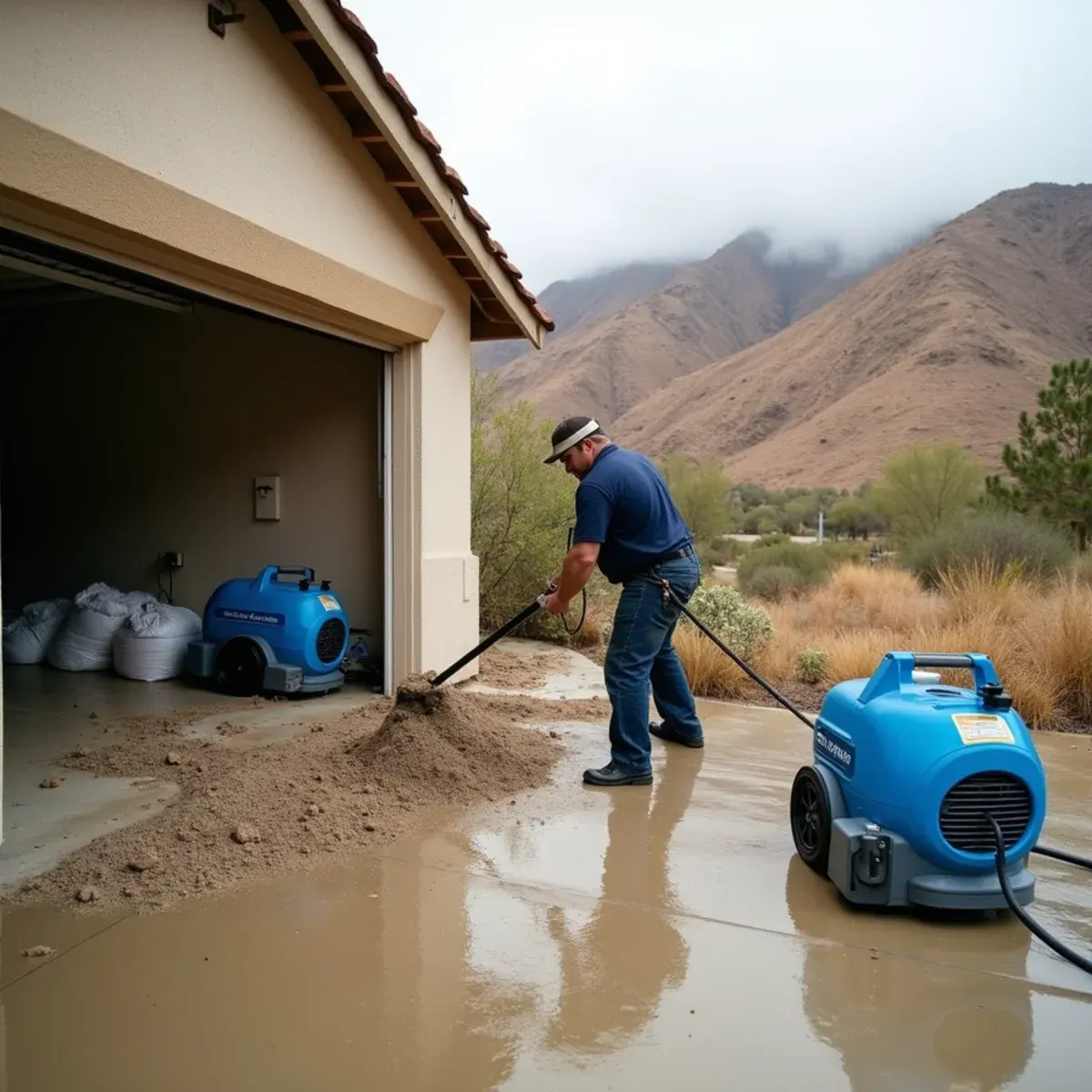
Most Brea calls do not start with a burst pipe. They start two or three hours into a hard storm, when water that has been moving down a slope all afternoon finds the lowest opening in a house — a side yard gate, a settled patio, a garage cut into a hillside. Up toward Carbon Canyon and through Olinda Ranch and Blackstone, the ground does the deciding. Every one of those tracts was engineered with terrace drains, v-ditches and slope drains, and every one of them depends on those staying clear.
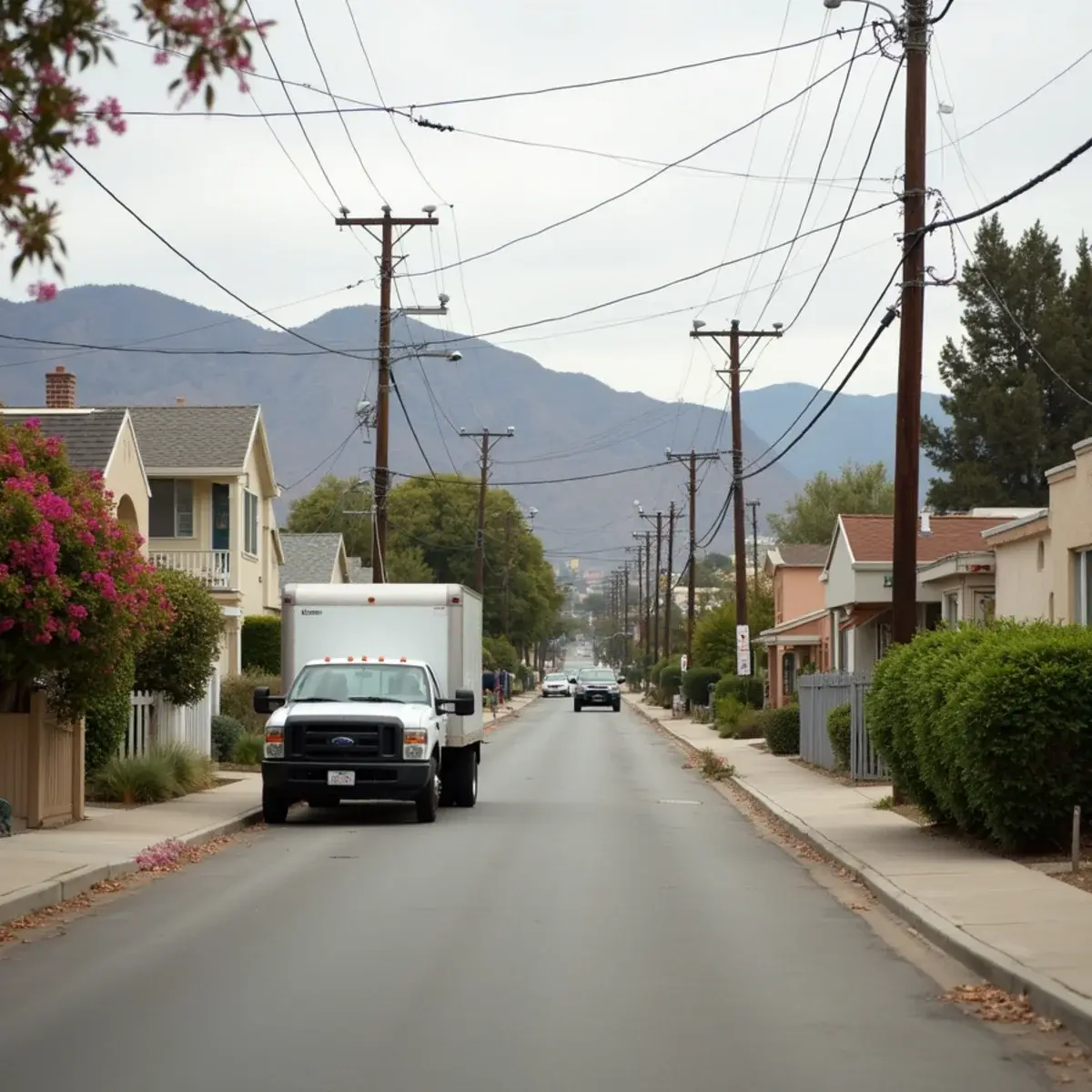
Ten minutes downhill, Downtown Brea is a different building altogether. This was an oil town before it was a suburb, and the small houses on the streets nearby date to the 1920s and 1930s. Raised foundations, tight crawl spaces, galvanized supply lines patched in sections over decades, clay and cast-iron drain lines running under mature trees. Those houses do not fail during storms. They fail quietly, from the inside, and they usually announce it as a musty smell in a back bedroom or a floor that has started to feel soft near a bathroom wall.
That split is the reason we ask which Brea we are coming to before we load the truck. A 1928 house near Brea Boulevard and a 2001 house above Blackstone share a city and almost nothing else — one has a vented crawl space and steel pipe, the other a slab, often post-tensioned, with PEX branches and an engineered drainage system somebody is responsible for maintaining. The leak-location method is different, the drying plan is different, and the question of what has to come out is different. Treating them the same is how a job goes wrong here.
When Hillside Drainage Quits Working
Brea's hillside tracts were designed to handle rain. Terrace drains catch runoff partway up a slope, v-ditches carry it around the toe, area drains take the flat yard, and everything ties into a system that moves water past the house rather than through it. The design works. What fails is maintenance. Over a dry summer those inlets fill with eucalyptus leaf litter, decomposed granite, and whatever the wind brought down the canyon, and nobody looks at them because they sit on a slope behind a fence. The first hard storm of the season finds every one that is blocked.
When an inlet backs up on a slope, the water does not stop. It sheets over the ditch and takes the fall line, which on these lots usually runs straight at the back of the house or into a side yard between two structures where it has nowhere to spread. From there it gets in at the lowest detail — a slider track, a settled patio slab, a garage cut into the hill. Water that has crossed open ground is Category 3 under IICRC S500:2025, so the carpet and pad it soaked come out. That is not an upsell, it is the standard.
If you own a hillside lot here, the work that actually prevents this takes an afternoon in October. It is not glamorous and no contractor makes money on it, which is probably why it goes undone. Walk the slope, lift every grate you can find, and dig the silt out of the standpipes below them. Then run a hose into the highest inlet for a few minutes and confirm the water comes out where it is supposed to. If it does not surface at the outlet, the line between them is packed, and you have just found the failure before the storm did.
- Clear terrace drains and v-ditches on the slope itself, not just the yard drains you can see from the patio.
- Pull the grates and check that the standpipes below them are not packed with silt from last season.
- Extend downspouts past the planter so roof water is not delivered straight to the top of a slope.
- Reset any patio or walkway slab that has settled back toward the house.
- Add a threshold seal at the garage door if the garage sits below driveway grade.
What Is Under Downtown Brea's Oil-Era Houses
The houses near downtown were built for oil field families, and they were built small and simple: a raised floor on short cripple walls, a crawl space you can get into if you are willing to, and plumbing that has been repaired rather than replaced for ninety years. We routinely find three generations of pipe in a single house — original galvanized, a copper section from some 1970s repair, and a PEX patch from last decade, joined with whatever fitting was on the truck that day. The connections between dissimilar metals are usually where the next failure starts.
A crawl space changes the failure pattern in both directions. A supply leak under the floor drips into dirt instead of pooling on tile, so it can run for months with nobody noticing until the smell reaches a bedroom or the hardwood begins to cup. The upside is access. We can get eyes on the actual pipe, which makes locating a leak far cheaper than the same problem under a hillside slab, and the repair does not involve breaking concrete or lifting finished flooring to reach it.
Drying these houses asks for patience. Old-growth fir framing and original board subfloor hold more water than modern lumber and give it up slowly, and the soil in the crawl space becomes a reservoir that keeps feeding moisture up into the floor system if it is left alone. So we dry the ground as well as the structure, and we plan for a longer equipment run than the square footage suggests. Rushing it looks fine on day four and shows up as cupped floors in month three.
Where Brea Claims Get Complicated
The coverage line in hillside Brea usually falls between two things that look identical while you are standing in the water. A pipe that fails inside the house is generally a covered sudden loss. Runoff that crosses your yard and comes in under a door is surface water, which standard homeowners policies exclude, and no amount of arguing changes that language. It is worth reading your policy before storm season rather than during it, and worth knowing that separate flood coverage exists and that most people up on these slopes do not carry it.
The second wrinkle is who owns the slope. In parts of Olinda Ranch, Blackstone and the newer Country Hills tracts, some slopes and their drainage are association-maintained and some fall to the homeowner, and the line does not always follow the fence. When a blocked terrace drain sends water into a house, that answer decides who is pursuing whom. We photograph the point of entry, the condition of the drainage above it, and the direction of flow on the day we arrive, because a week later everything has dried and nobody can prove what happened.
Neighborhoods and Landmarks We Cover in Brea
We work throughout Brea — every neighborhood, every street, residential and commercial. If your address is in the city, we cover it.
Neighborhoods & corridors
- Downtown Brea
- Olinda Ranch
- Blackstone
- Carbon Canyon
- Country Hills
Landmarks nearby
- Brea Mall
- Downtown Brea
- Carbon Canyon Regional Park
- Craig Regional Park
- Brea Olinda oil field
- Brea Community Center
Why Brea Residents Call Us First
Any restoration company can put Brea on a service-area list. What matters at 2 a.m. is how far the truck has to come and whether the crew has opened a wall in a house like yours before.
About 18 minutes north
We dispatch from 6122-6182 Katella Ave in Cypress — not from a regional depot and not from a call centre that sells your job to whoever bids for it. That is the whole reason the 60-minute commitment is one we can put in writing.
Canyon runoff arrives with velocity
Carbon Canyon-side storms do not pond against the house, they run at it. That is an exterior-water problem, and it is documented differently from a plumbing failure.
Hillside tracts and Downtown are different jobs
Olinda Ranch PEX and a 1920s Downtown bungalow have nothing in common. We establish which one we are in before anyone opens a wall.
- 20+ years restoring Orange County homes
- IICRC Certified Firm
- Licensed, Bonded & Insured
- We bill your insurance company directly
- IICRC S500:2025 compliant on every job
- 100% satisfaction guarantee — in writing, on every job
Brea Water Damage Questions
Usually not under a standard homeowners policy. Water that runs across the ground and enters a building is surface water, and that is an excluded cause on nearly every form, whether it came off a Carbon Canyon slope or out of the street. Separate flood coverage handles it. Damage from a covered failure is a different story, so let us document the entry point and cause before anything gets cleaned up.
Brea is about eighteen minutes north of Katella Avenue on a clear run, and we dispatch as fast as conditions allow, any hour. During a heavy storm, when the canyon roads and the freeway are both slow and every crew in the county is already committed, it can take longer than that. We will give you an honest arrival window when you call instead of a number that only sounds good.
Smell first. A musty odor in a back bedroom with no visible leak almost always means moisture under the floor. After that, watch for hardwood that cups along one wall, a floor that feels soft near a bathroom, and rust-colored water at a tap nobody has run in a while. Get under there once a year with a flashlight, or have someone do it, and look at the soil and the pipe.
Yes, and we work those jobs expecting a second party to be involved. We dry and document your home first, then keep the scope, photographs and moisture logs organized so your carrier and the association's management company are looking at the same record. Sorting out who maintained what is not our decision to make, but the evidence that settles it has to be collected on day one.