
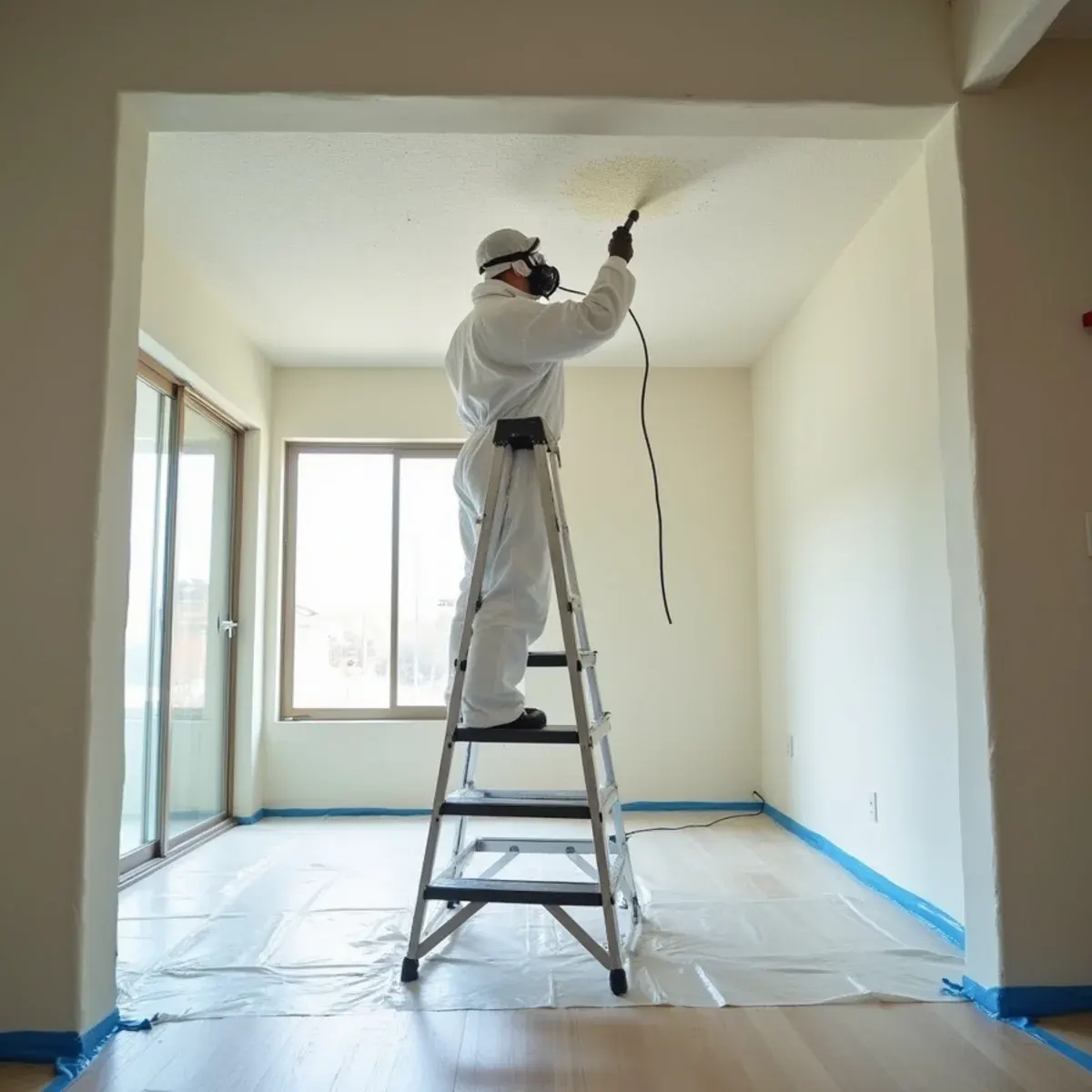
Two miles separates the oldest and newest housing in Brea, and they could not be further apart on this. The small houses near downtown date to the 1920s, when this was an oil town and much of the stock went up for field workers. Those have the deep paint layers, the original wood windows, and in some cases plaster and pipe insulation from an era with no restrictions at all. Anything cut into them gets tested first, including the exterior if the repair involves scraping or sanding.
Head north toward Carbon Canyon and the picture inverts. Those hillside tracts went up in the 1990s and 2000s, well past both cutoffs, and the failures there are drainage — canyon runoff arriving in a concentrated burst, overwhelming slope drains, and getting into the lowest level of the house. That is a drying and rebuild problem, not a sampling problem. The Brea Olinda field shaped the northern hills, and older service structures scattered through them can be a different story than the homes around them.
What Brea Changes About Asbestos & Lead Testing
1Downtown oil-era cottages test positive most often
The 1920s houses near downtown are the highest-probability stock in the city. Paint from that decade carried far more lead than anything later, and it is usually still on the window sashes and door casings under newer coats. If a water loss means pulling casing or baseboard, we test those components specifically rather than assuming a wall sample represents them.
2Canyon tract losses rarely need sampling
On a 1998 hillside house the honest recommendation is to skip testing and put the money into fixing the slope drainage that let the water in. We say that out loud because it is true, and because the alternative — sampling a house that cannot contain either material — burns days you do not have in the middle of a storm.
3Commercial buildings follow a different rule
Around Brea Mall and the older commercial corridors the rules do not care how old the building is. Renovation and demolition of commercial structures carry survey obligations regardless of build year, and property managers are often surprised by that. We handle the sampling side and coordinate the licensed abatement contractor rather than doing both ourselves.
How the Work Runs
The method is the same one we use on every asbestos & lead testing job, documented to the IICRC S500:2025 standard. Here it is in short — the full asbestos & lead paint testing process explains each stage in detail.
- Emergency stabilization without cutting
- Define exactly what gets disturbed
- A certified inspector takes the samples
- Independent laboratory analysis
- Lead assessment on painted surfaces
- Abatement, clearance, then restoration
The Brea Background Worth Knowing
Brea's hillside tracts were designed to handle rain. Terrace drains catch runoff partway up a slope, v-ditches carry it around the toe, area drains take the flat yard, and everything ties into a system that moves water past the house rather than through it. The design works. What fails is maintenance. Over a dry summer those inlets fill with eucalyptus leaf litter, decomposed granite, and whatever the wind brought down the canyon, and nobody looks at them because they sit on a slope behind a fence. The first hard storm of the season finds every one that is blocked.
There is more on the housing stock, drainage and plumbing history of this city on our water damage restoration in Brea page.
Brea at a glance
- Dominant construction era
- 1920–2005
- Foundation type
- mixed on grade
- Supply piping found here
- galvanized steel, under-slab copper, PEX in newer hillside tracts
- Drain line materials
- cast iron, clay, ABS
- Terrain and water table
- hillside-mixed, deep water table
- Most common local failure
- canyon and hillside runoff overwhelming slope drainage during concentrated storms
- Highest-value local prevention
- keeping Carbon Canyon-side slope drains, v-ditches and downspout extensions genuinely clear
What It Costs in Brea
We do not quote a number over the phone before seeing the property — anyone who does is guessing. The variables that actually move the price on a asbestos & lead testing job are the number of distinct materials, how many samples each needs, how fast you need results, and they are broken down in full on the asbestos & lead paint testing page. The assessment and the written estimate are free anywhere in Brea, day or night, with no obligation.
Asbestos & Lead Testing Questions from Brea Homeowners
Yes, if any of it will be scraped, sanded or power-washed. On a 1920s house the original exterior paint is the most likely lead source in the whole building, and dust from prep work lands in the soil where it stays. A few samples from siding, trim and sash tell you whether the crew needs containment and ground sheeting, or whether it is an ordinary repaint.
No, and that's the whole point of testing. Plenty of ceilings from that decade come back clean — the manufacturers were mixed, the formulas changed year to year, and two houses on the same street can give different results. What we can't do is assume either way. A 1974 ceiling is a suspect material, which means one sample and a lab report separates a routine repair from a regulated one. Guessing in either direction is the expensive choice.
Usually less than people fear, and we design around it. Extraction, containment and dehumidification all start on the first visit, because none of that disturbs a suspect material. Sampling happens the same day where we can get an inspector out, and rush lab analysis is available when the clock matters. What genuinely adds time is a positive result, since abatement, containment and clearance testing have to finish before we cut. We'll give you a realistic date rather than an optimistic one.
Usually not under a standard homeowners policy. Water that runs across the ground and enters a building is surface water, and that is an excluded cause on nearly every form, whether it came off a Carbon Canyon slope or out of the street. Separate flood coverage handles it. Damage from a covered failure is a different story, so let us document the entry point and cause before anything gets cleaned up.