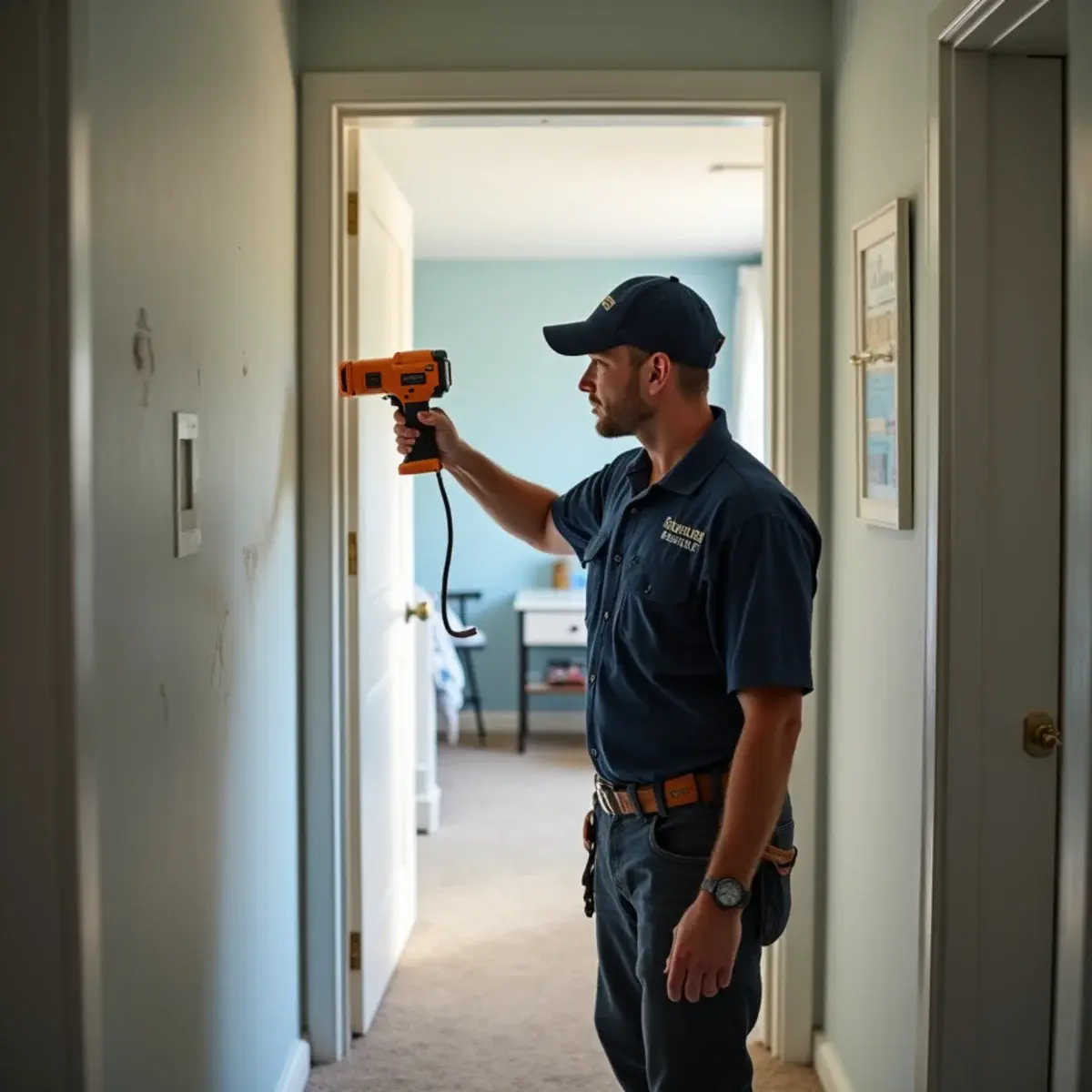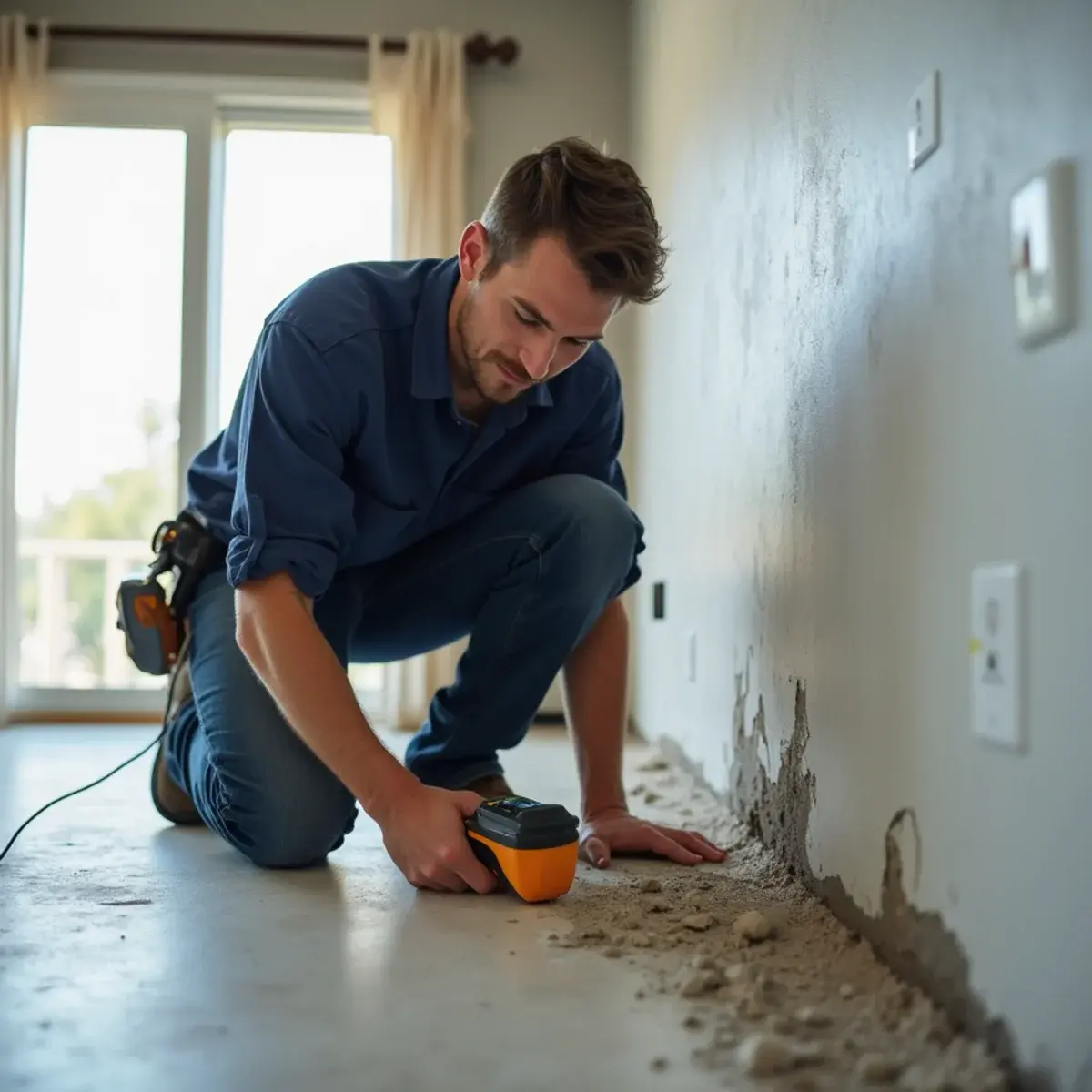
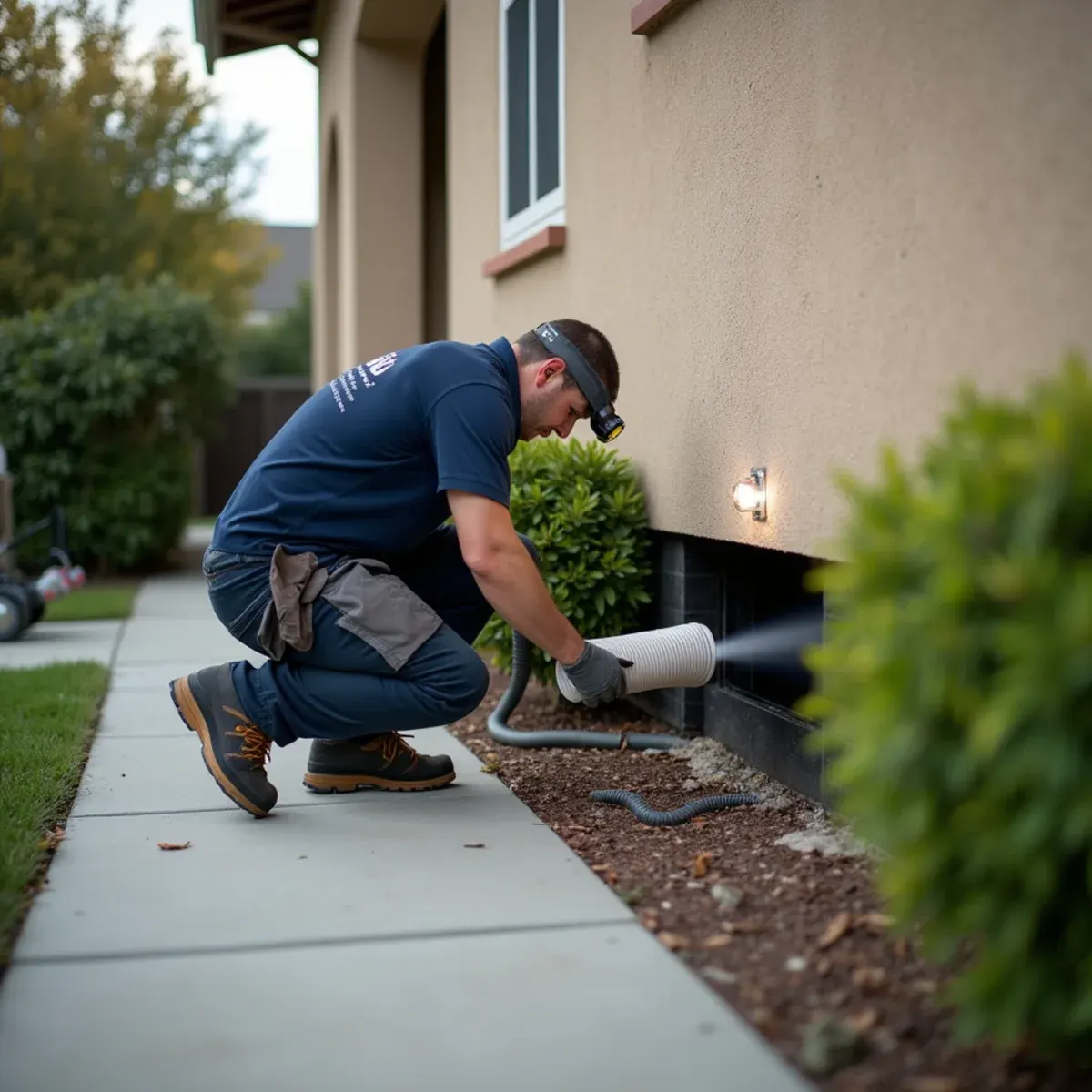
A crawl space leak does not announce itself. Water from a failed supply line or a cracked drain under a raised-foundation home drips onto dirt, and dirt absorbs it. There is no puddle spreading across a floor, no stain on a ceiling, no sound of running water. The leak can run for a week or for two months. The first thing most homeowners notice is a smell in the hallway, or one board near the bathroom door that gives slightly underfoot. By then the soil is saturated, the insulation above it is sagging out of the joist bays, and the subfloor has been wicking moisture upward the whole time.
We treat the sub-area as its own drying chamber rather than an afterthought to the room above it. Under IICRC S500:2025 it is a distinct environment with its own boundary, its own humidity, and its own dry standard, and it has to be contained, dehumidified, and monitored on its own terms. It also holds a reservoir no room upstairs has: wet soil that keeps evaporating for as long as it stays wet. Drying the kitchen floor from above while that continues is how a job gets called finished twice, and how a homeowner pays for it twice.
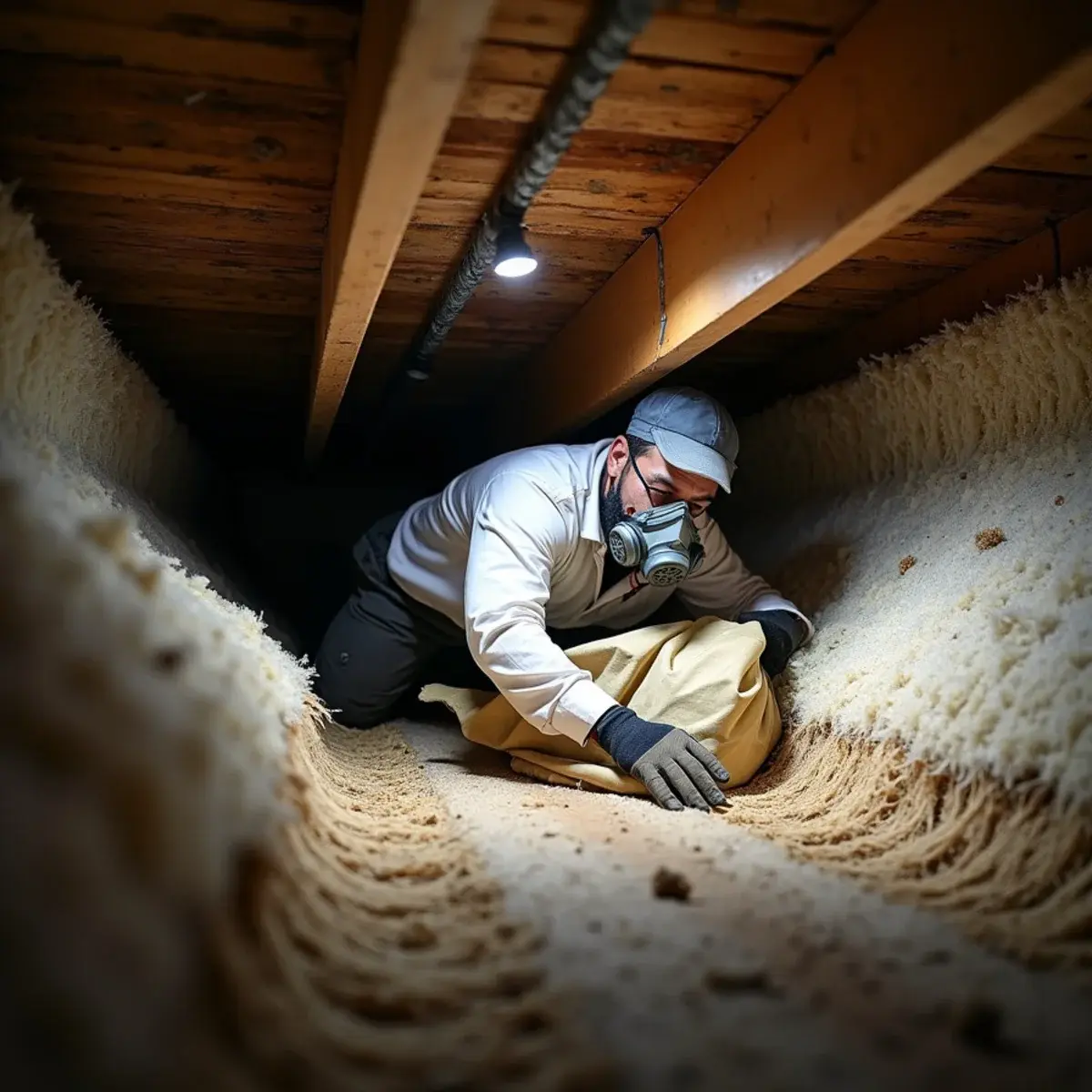
The part that gets mishandled most often is the insulation. Wet fiberglass batts do not recover. The glass fibers shed water, but the batt mats down, loses the loft it depends on, holds moisture against the underside of the subfloor, and eventually pulls loose and lands on the ground. It comes out — every affected bay, not only the ones that look ruined. So does a ground vapor barrier that is torn, buried, or holding water on top of it. Replacing both is not scope padding. It is the only way the space comes back to a condition that stays dry.
How a Crawl Space Leak Shows Itself
These are the signs in roughly the order a homeowner actually notices them, and the first one is almost never water:
A musty smell low in the room
Crawl space odor rises through the subfloor and enters at plumbing penetrations, floor registers, and the baseboard line. If the smell is strongest when you kneel down, or in the closet with the water heater, look under the house before you start opening walls.
One board that gives underfoot
A soft or springy spot, usually in a hallway or near a bathroom door, means the subfloor there has been wet long enough to lose stiffness. It is often the first physical symptom, and it sits directly over the leak far less often than people expect.
Floors that got cold this winter
When batts sag out of the joist bays, the floor above loses its insulation and starts reading cold in winter and warm in summer. A room that suddenly feels drafty at ankle height, or a heating bill that climbed with no rate change, is worth a look.
Cupping or gapping in wood flooring
Moisture wicking up through the subfloor wets the underside of each board first, so the boards cup — edges high, center low. On engineered plank you see edge lift and gapping instead. Either pattern in a raised-foundation home points down, not at a spill.
Condensation and rust in the sub-area
Shine a light through a foundation vent. Beaded water on ductwork, rusted duct straps and joist hangers, and screens that stay damp all mean the space is holding a relative humidity it was never built to hold.
Insulation hanging down or on the ground
Batts drooping out of the bays or lying on the dirt are the clearest signal you can get without going in. Rodents pull insulation down too, so this is a reason to look further rather than a diagnosis on its own.
Standing water or slick mud at the hatch
By the time you open the access and see water or mud, the leak has been running long enough to exceed what the soil can absorb. That is not the start of the problem. That is a late symptom of one that started weeks ago.
How We Dry a Crawl Space
Every one of these steps happens in the sub-area itself, not from the hatch:
- 1
Get in and map the whole space
A technician goes under the house rather than looking through a vent. We map the wet footprint, meter the joists, rim, and subfloor underside, read the soil, and find the source — a supply line, a cracked cast iron drain, a leaking hose bib, or surface water entering at grade. The source sets the water category, and the category sets everything that follows.
- 2
Extract, then remove what is finished
Standing water gets pumped out. Wet fiberglass and its facing come out of every affected bay, along with the vapor barrier underneath if it is torn, buried, or submerged. Where the water came from a drain line, we also remove the contaminated top layer of soil instead of trying to dry it in place.
- 3
Build the crawl space into a chamber
Vents get sealed, the access is contained, and the space is held under slight negative pressure so nothing we disturb migrates into the living space above. Then low-profile air movers and LGR dehumidification go in. Open vents on a marine layer morning bring in air above 80% relative humidity, which is why airing it out does not work here.
- 4
Dry the framing to a measured standard
We set the dry standard from unaffected joists elsewhere under the same house, then read the same points daily — joists, rim, subfloor underside, and the soil surface — and move equipment toward whatever is drying slowest. The soil almost always lags the wood. Pulling equipment when the framing hits target leaves the reservoir in place.
- 5
Deal with growth on the joists
Framing that stayed wet usually has fungal growth on it, and it is generally on the hidden face of a beam where nobody looks. Light surface growth is HEPA vacuumed and cleaned during drying. Established growth on structural wood becomes a contained remediation with abrasive cleaning, and every bay is photographed before and after.
- 6
New barrier, insulation, encapsulation if warranted
A fresh sealed ground vapor barrier goes down, lapped at the seams and run up the stem wall. New batts go back in the bays with proper support, after the wood meters dry and not before. Where the space has a chronic moisture problem, we will talk through full encapsulation and a dedicated crawl-space dehumidifier.
Why Wet Fiberglass Never Goes Back In
Fiberglass gets described as a material that does not absorb water, and that is true of the glass itself. It is not true of the batt. A batt works by holding still air in a lofted structure, and water trapped between the fibers, in the kraft facing, and in decades of settled dust collapses that loft. Once it mats down it does not spring back. What is left is a compressed pad delivering a fraction of its rated R-value while holding moisture directly against the underside of your subfloor.
It also stops staying put. Wet batts get heavy, pull off their supports, and sag out of the bays, which is why so many crawl spaces have insulation lying on the dirt. A batt that sagged is now resting on wet soil and wicking from it, so the bay above it stays damp long after the plumbing was fixed. Rodents finish the job, nesting in material that is already down. That is the loop we come under the house to break, and it does not break while the old batts are still in place.
So the rule is simple, and it is not a sales position. Drying a saturated batt in place takes more equipment days than the material is worth, and at the end of it the R-value is still gone. Removal is cheaper, faster, and it lets us read and dry the framing that actually matters — the joists and the subfloor above them — instead of drying through a wet blanket. None of it is expensive material. All of it is expensive to leave. Here is what leaves the sub-area with the insulation:
- Wet batts and their kraft or foil facing, in every affected bay
- A ground vapor barrier that is torn, buried under fill, or holding standing water
- The top layer of soil where drain or sewer water was involved
- Cardboard, stored boxes, and anything else paper-based left under the house
When Your Crawl Space Does Not Need Us
A crawl space is not supposed to be as dry as your living room. It is cooler, darker, and sits on soil that holds moisture year round, and the correct condition for one is damp rather than arid. We get called to sub-areas where somebody shone a light through a vent, saw dark soil and smelled dust, and came away with a five-figure quote. If the ground barrier is intact, the joists meter at the same moisture content as framing elsewhere in the house, and there is no growth on the wood, the honest answer is to leave it alone.
Encapsulation is genuinely oversold in this market. It is the right answer for a chronic problem — a shallow water table near the coast, a hillside lot that drains under the house, a sub-area that has never been able to shed the humidity it collects. It is not the answer to a one-time supply line failure. If the leak was sudden and the space dries and stays dry after the plumbing repair, a new barrier and new batts are the entire job.
Worth saying plainly too: most homes in Cypress itself have no crawl space at all. If your house is 1950s to 1980s tract construction it is almost certainly slab-on-grade, and wet flooring there is a slab leak or a supply failure inside a wall, not a sub-area problem. The exception we do see is an addition — a converted porch, a back room, a raised family room — framed over a small crawl pocket beside the original slab. Those pockets are unvented, unlit, and rarely have a barrier, and they are the one place a slab home can still hand you this job.
Which Homes Around Here Sit on a Raised Foundation
Our service area is mostly slab country, and that is exactly why crawl space work gets handled badly here — plenty of crews rarely see one. The raised-foundation stock is concentrated and predictable: the pre-war neighborhoods of Old Towne Orange, Uptown Whittier, Old Town Tustin, the Anaheim Colony, the Santa Ana historic districts, Eastside Costa Mesa, and the older streets of Fullerton. Those houses are eighty to a hundred years old, and their ground barriers were either never installed or tore decades ago.
Two other patterns produce the same job under a different name. Manufactured homes in Stanton, Midway City, and Carson have a skirted sub-area with belly wrap instead of open joist bays, and a supply failure there fills the belly and holds water against the floor decking with nowhere to drain. And near the coast — Seal Beach, Huntington Beach, and parts of Long Beach and Costa Mesa — a shallow water table means a sub-area that already runs humid has very little margin before a leak becomes standing water.
Our 60-minute response guarantee covers the city of Cypress. For the raised-foundation neighborhoods outside it we dispatch as fast as conditions allow, and we will tell you on the phone what that realistically looks like that day rather than quoting a number we cannot hold. A crawl space leak that has already run six weeks is rarely a matter of minutes anyway. It is a matter of getting somebody under there this week instead of next month, with a meter, before the joists start growing something that turns a drying job into a remediation job.
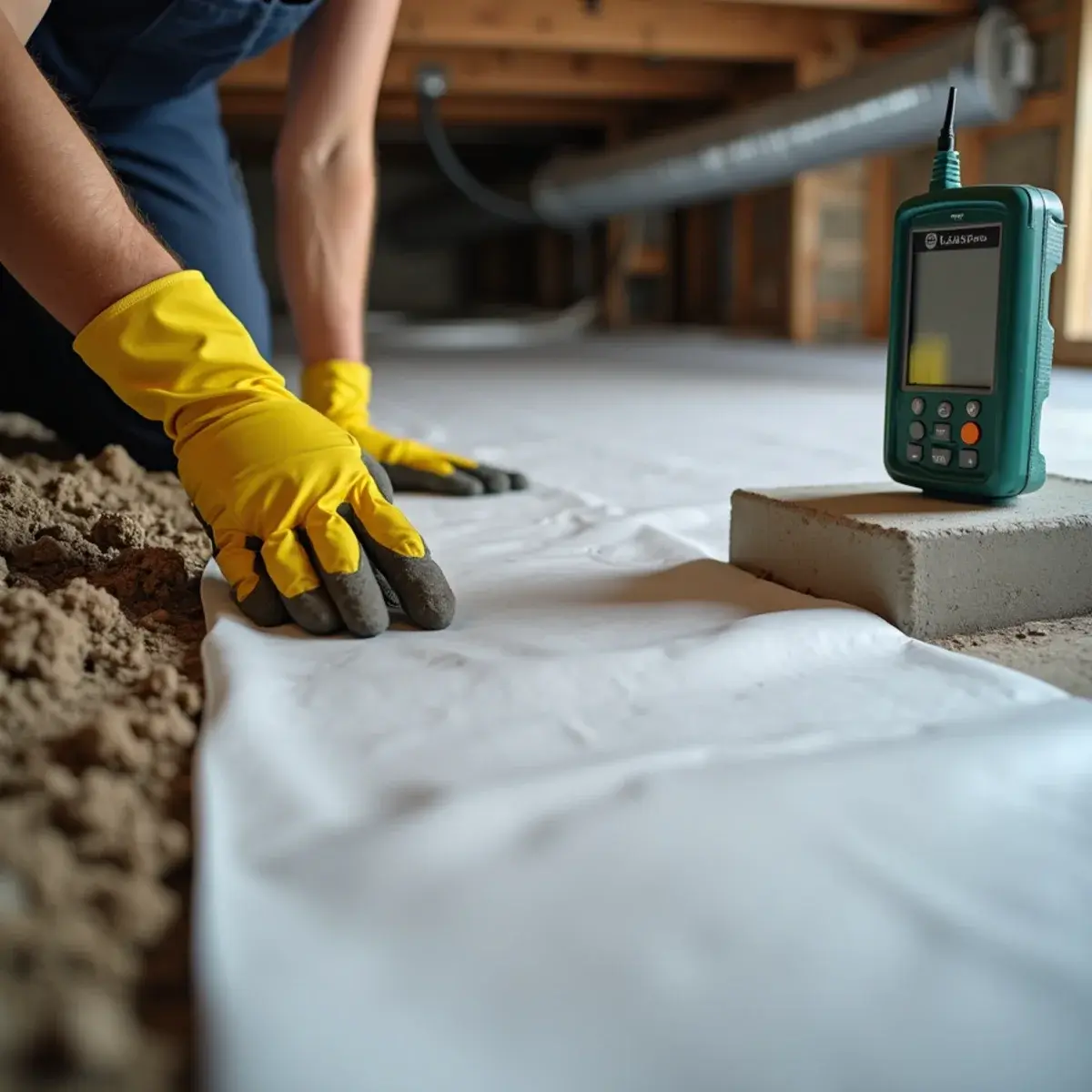
What Crawl Space Drying Costs Depends On
Crawl space work is priced differently from work you can stand up in, and access is the reason:
Access and working height
A sub-area with thirty inches of clearance and an interior hatch is straightforward. Eighteen inches, an exterior access behind a shrub, and ductwork strung through the middle means everything takes longer and every piece of equipment has to be low-profile. Access drives crawl space labor more than anything else on this list.
How much of the footprint got wet
A supply line failure under one bathroom may wet a handful of joist bays. A drain line that ran for two months can saturate half the house. We scope the wet footprint, the linear feet of affected framing, and the number of bays that need insulation replaced, and those three numbers carry most of the cost.
Water category and soil contamination
Clean supply water leaves the soil wet. A sewer or drain line leaves it contaminated, which adds soil removal, disposal, containment, protective equipment, and antimicrobial treatment. That gap is wider than most homeowners expect, and it is set by the source of the water rather than by how the space looks.
Fungal growth on structural wood
Surface growth on a few joists gets cleaned as part of drying. Established growth across girders, sill plates, and the subfloor underside becomes its own remediation scope with containment, HEPA filtration, and documentation, and it is priced separately from the drying because it is separate work.
Barrier, insulation, and encapsulation
Replacing the ground barrier and the batts is standard restoration scope and part of returning the space to its prior condition. Full encapsulation — sealed walls, taped seams, and a dedicated dehumidifier — solves a chronic problem rather than repairing a sudden one, so we quote it on its own.
Insurance note: A sudden failure like a burst supply line or a cracked drain is generally covered, and the drying, insulation removal, and vapor barrier replacement follow as part of that loss. The argument on crawl space claims is almost always the word gradual, because these leaks run unseen for weeks. A plumber's report naming the failure, dated photographs, and our moisture documentation are what settle it. Encapsulation is treated as an improvement and is rarely paid.
Why Cypress Homeowners Call Us for Crawl Space Drying
Plenty of companies list this service. Fewer can tell you what equipment they will bring, what standard the work is measured against, or what happens if they are wrong. Here is what you are actually buying.
Standing water and vapor treated as two problems
Pumping the crawl space out is the easy half. The soil keeps releasing vapor into the framing above it long after the water is gone.
Subfloor and joists read from underneath
Moisture readings taken in the living space miss what is happening on the underside of the floor system, which is where rot actually starts.
Vapor barrier assessed as part of the work
A torn or missing barrier is usually why the crawl space stayed wet. Drying it without addressing that is a repeat visit.
- 20+ years restoring Orange County homes
- IICRC Certified Firm
- Licensed, Bonded & Insured
- We bill your insurance company directly
- IICRC S500:2025 compliant on every job
- 100% satisfaction guarantee — in writing, on every job
Frequently Asked Questions
Often you cannot tell from inside, which is the whole problem. Sub-area odor rises through plumbing penetrations and the baseboard line and reads like a wall or flooring issue. The check takes about twenty minutes: a technician under the house with a light and a moisture meter. If the framing meters dry and the barrier is intact, we tell you it is not the crawl space and go look somewhere else.
Sometimes, over months, and usually not completely. The vents give you passive air exchange, which only helps when outdoor air is drier than the space. On a marine layer morning here that air is above 80% relative humidity, so the vents are bringing moisture in. Meanwhile the wet soil keeps evaporating and the subfloor above keeps taking it up. Left alone, the common outcome is growth on the joists.
It can be dried and it should not be. A wet batt mats down and never recovers its loft, so you pay for equipment days and get material back at a fraction of its R-value, still holding moisture against the subfloor. Batts are inexpensive relative to the labor of drying them. We remove every affected bay, dry the framing, and reinsulate after the wood meters dry.
Most of the time you do not. Encapsulation solves a chronic condition — a high water table, a hillside lot draining under the house, a space that has never held a stable humidity. For a one-time pipe failure, a new ground vapor barrier and new batts are the whole fix. When we do recommend it, we show you the humidity readings that make the case, and we quote it separately because insurance almost never covers it.
Often, though it depends on your policy language and your carrier. Policies cover sudden and accidental discharge and exclude what they judge to be gradual, and crawl space leaks sit right on that line because they run unseen. A plumber's report naming the specific failure, dated photographs, and documentation that you acted the day you found it all help. Waiting after you know is what hurts.
Related Reading
- 9 Signs of Hidden Water Damage Behind Your Walls — Most expensive water losses start as small leaks nobody could see. These are the nine signals that something is wet inside your walls.
- How Fast Does Mold Grow After Water Damage? — The commonly cited window is 24 to 48 hours. Here is what that actually means, what makes it faster, and where the real deadline sits.