
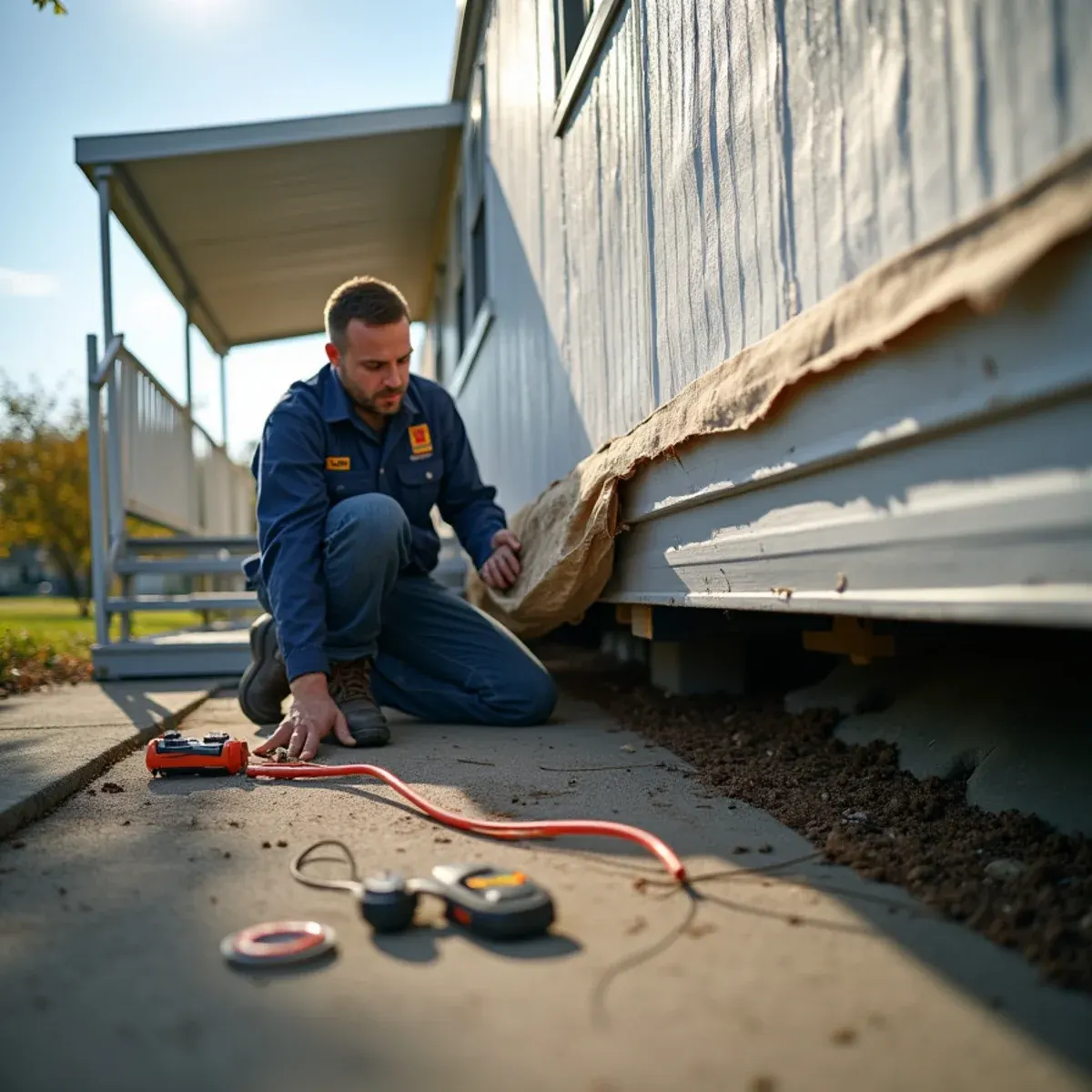
The first thing we ask a Carson caller is what the floor is built on, because the answer splits this city in two. If you are in Scottsdale or Carson Park, it is a concrete slab from the 1960s and the problem is probably under it. If you are in one of the mobile home parks off the Del Amo corridor, there is no slab at all, just a wood floor deck over a steel frame with insulation and a vapor barrier slung underneath. Same storm, same city, two completely different jobs. Plenty of companies never ask.
Carson incorporated in 1968 on ground that had been ranch land, then oil field, then industry, and the housing filled in around all of it. The tracts date from roughly 1950 to 1975: single story, slab on grade, galvanized steel supply, copper routed under the concrete, cast iron drains. What makes the city unusual is what sits next to those tracts, with refinery and logistics operations on nearby streets, a very large mobile home park population, and campuses like Cal State Dominguez Hills and Dignity Health Sports Park breaking up the grid.
The ground matters too. Carson is flat with a shallow water table and enough marine influence off the harbor to keep overnight humidity high most of the year. Flat means storm water sits rather than runs. A shallow water table means a slab that got wet stays wet longer than the calendar suggests it should. High overnight humidity means we dry with the building closed and dehumidification doing the work rather than with the windows open. We are about twenty-two minutes west of our Cypress base and we get a crew moving as fast as conditions allow.
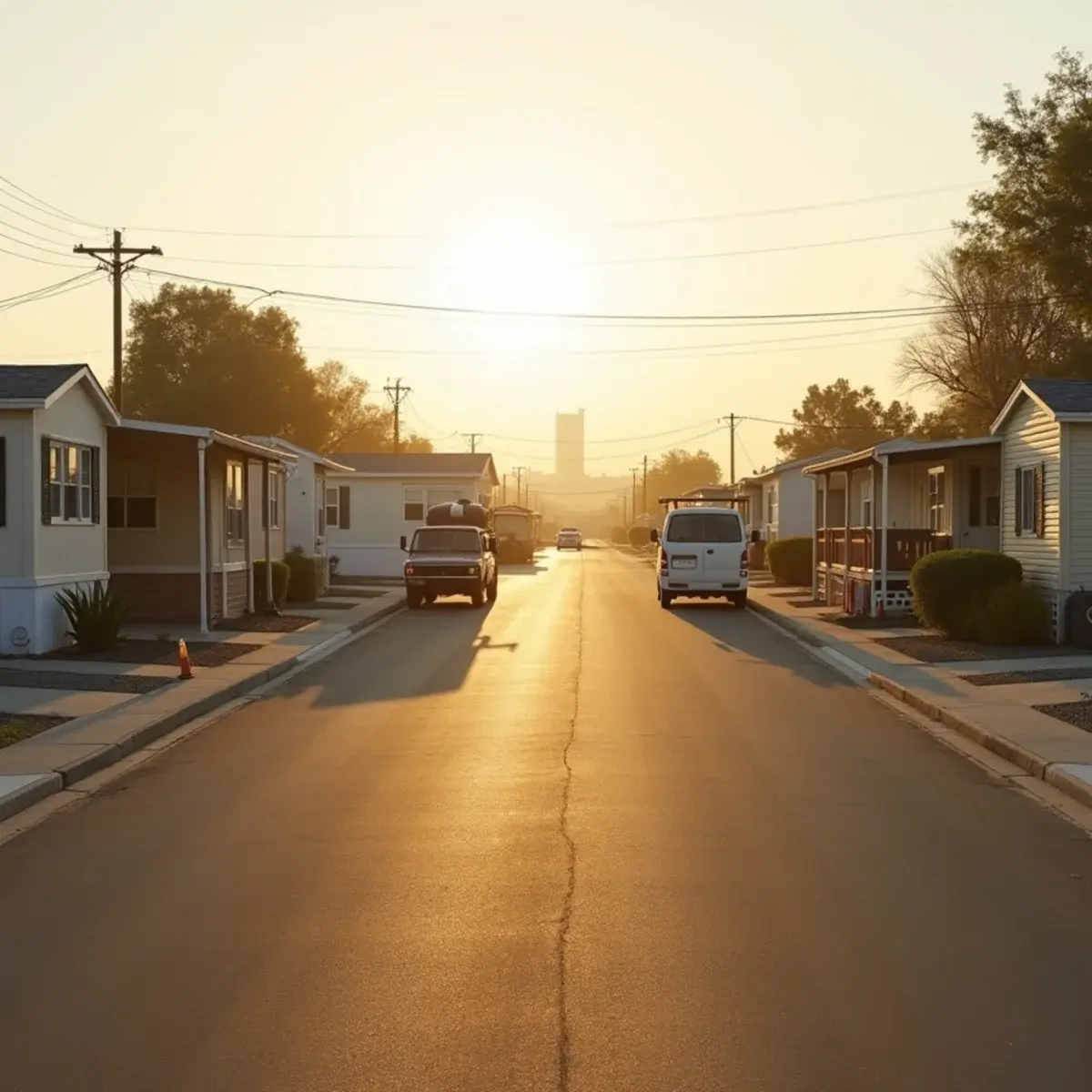
A Soft Spot in a Manufactured Floor Is Water
Manufactured homes are built with the floor deck, usually particleboard or OSB, sitting on a steel frame, with batt insulation below it and a vapor barrier belly wrap stapled underneath to hold everything in place. Supply lines run through that cavity. When one leaks, the water does not run out onto the ground where you would see it. The belly wrap catches and holds it, the insulation soaks it up, and you now have a sealed reservoir under your floor with no path to evaporate. It can sit there for months before anything shows upstairs.
By the time it does show, it shows as a soft spot. Particleboard swells when it gets wet, loses its structure, and does not come back, because unlike plywood it cannot generally be dried to serviceable. That is why our rule in Carson is a simple one: treat any soft or spongy place in a manufactured home floor as moisture until a meter proves otherwise. Waiting to see whether it gets worse is the expensive option, since the decking is quietly failing the entire time you are waiting.
Done properly the repair means opening the belly wrap, draining the cavity, pulling the saturated insulation, drying the frame and the underside of the deck, replacing decking that has failed, and then closing the vapor barrier back up correctly. It is more involved than the equivalent stick-built job and there is no shortcut version. Pointing air movers at the top of the floor accomplishes nothing at all, because the water is sitting on the other side of it. The one honest exception is a small, fresh leak caught within a day or two, where the deck may still be sound and the cavity is the only thing that needs attention.
- A floor area that flexes or feels spongy, especially near a bathroom or the water heater
- A musty smell strongest at floor level that gets worse on warm days
- Skirting with staining, or a sagging bulge in the belly wrap underneath the home
- A water bill that climbed with no change in how you use water
- Flooring that lifts, cups or separates at the seams with no obvious cause
Sixty-Year-Old Slabs and What Comes After
On the tract side the failures are what you would expect from this era. Galvanized supply lines corroding from the inside until flow drops and a fitting lets go. Under-slab copper developing pinhole leaks that run quietly for months. Cast iron drain lines with heavy scale and root intrusion at the joints. The signs are quiet ones. Tile that runs warm in a stripe where a hot line passes beneath it. A meter that keeps creeping after the house has been shut down for the night. Water you can hear moving inside a wall with nothing turned on. A bill that jumped for a reason nobody can name.
What is different in Carson is what happens after the leak is fixed. With a shallow water table under a flat city, the soil beneath the slab holds moisture and gives it back slowly, so a slab can keep reading high well past the point where the plumbing repair is finished. Put new flooring down over a slab that is still releasing vapor and you get adhesive failure, cupping, or vinyl plank that bubbles a season later, and the flooring installer takes the blame for a moisture problem that was there before he arrived.
So we test the slab rather than assume it. Readings taken over consecutive days show whether it is still drying or has settled at the level the local ground supports, and we would rather hold a job open a few extra days than sign off on a floor that fails in the fall. That is a conversation worth having with your adjuster early, because the drying timeline on a slab in this city runs genuinely longer than estimating software tends to assume.
Parks, Rentals and Who Makes the Call
In a mobile home park you generally own the coach and rent the space, and that line runs straight through the middle of a water loss. The park's water service is the park's responsibility up to the point it connects to your home, and everything past that connection is yours. When a leak turns up under a coach, establishing which side of that point it is on is the first thing worth doing, because it decides who pays and whose contractor does the work. We locate the source and document it before anyone starts arguing about it.
The practical constraints matter too. Coaches sit close together, so equipment staging and hose runs need planning rather than improvisation. Older electrical panels cannot carry a full drying setup, which sometimes means bringing our own power instead of tripping your breakers all night. Park management usually wants notice before a crew works under a home, and getting that in the first hour is far faster than chasing it on day two. A mobile home policy is also a different form than a homeowners policy, and coverage for underfloor water varies more than people expect.
Carson also has a lot of rental property, and tenants call us as often as owners do. We can start emergency mitigation on a tenant's call to stop damage spreading, but the owner or property manager has to authorize the full scope, and the structure belongs to the owner's policy while belongings belong to a renters policy. We document both sides, structure for the owner and contents for the tenant, so neither one has to rebuild the story from memory weeks later.
Neighborhoods and Landmarks We Cover in Carson
We work throughout Carson — every neighborhood, every street, residential and commercial. If your address is in the city, we cover it.
Neighborhoods & corridors
- Scottsdale
- Carson Park
- Dominguez
- Victoria
- Del Amo corridor
Landmarks nearby
- Dignity Health Sports Park
- Cal State Dominguez Hills
- SouthBay Pavilion
- Veterans Park
- Del Amo Boulevard
Why Carson Residents Call Us First
Any restoration company can put Carson on a service-area list. What matters at 2 a.m. is how far the truck has to come and whether the crew has opened a wall in a house like yours before.
About 22 minutes west
We dispatch from 6122-6182 Katella Ave in Cypress — not from a regional depot and not from a call centre that sells your job to whoever bids for it. That is the whole reason the 60-minute commitment is one we can put in writing.
Manufactured-home underfloor leaks
Water gets trapped in the belly wrap where it cannot evaporate and cannot be seen. A soft spot underfoot is the only warning, and by then it has been there a while.
Two housing types, one city
Conventional 1960s slab and manufactured homes need completely different diagnostics. We carry equipment for both.
- 20+ years restoring Orange County homes
- IICRC Certified Firm
- Licensed, Bonded & Insured
- We bill your insurance company directly
- IICRC S500:2025 compliant on every job
- 100% satisfaction guarantee — in writing, on every job
Carson Water Damage Questions
By locating it rather than arguing about it. The dividing line is the connection point where the park's service meets your home. Upstream of that is the park's responsibility, downstream is yours. We open the belly wrap where water is pooling, trace the wet path back to its source, and photograph what we find with the connection in frame. That documentation settles the question. Guessing from where the wet spot showed up inside is unreliable, because water travels along the frame first.
Sometimes at the edges of the wet area, rarely in the middle of it. Particleboard swells and loses its bond when it gets wet, and unlike plywood it does not recover strength once dried. We meter it and give you an honest read on which sections can stay and which have to come out. Anyone who tells you a soaked particleboard deck will dry back to serviceable is either guessing or selling you equipment days you do not need.
Shut the house down for an hour and watch the meter. Nothing running, no irrigation, no ice maker, and if the dial has moved when you come back, water is escaping somewhere it should not be. Beyond that, look for a stripe of warm tile where a hot line passes underneath, baseboards that darken along one wall, or a hairline crack in the slab that stays damp. In a house this age it is worth checking once a year.
Not until the slab reads dry, and here that takes longer than most people expect. The water table is shallow and the ground under a flat lot holds moisture, so a slab keeps releasing vapor after the plumbing work is done. Lay flooring over it too early and you get adhesive failure, cupping, or bubbling months down the line. We take readings across consecutive days and tell you when the slab is genuinely ready rather than when the schedule wants it to be.