
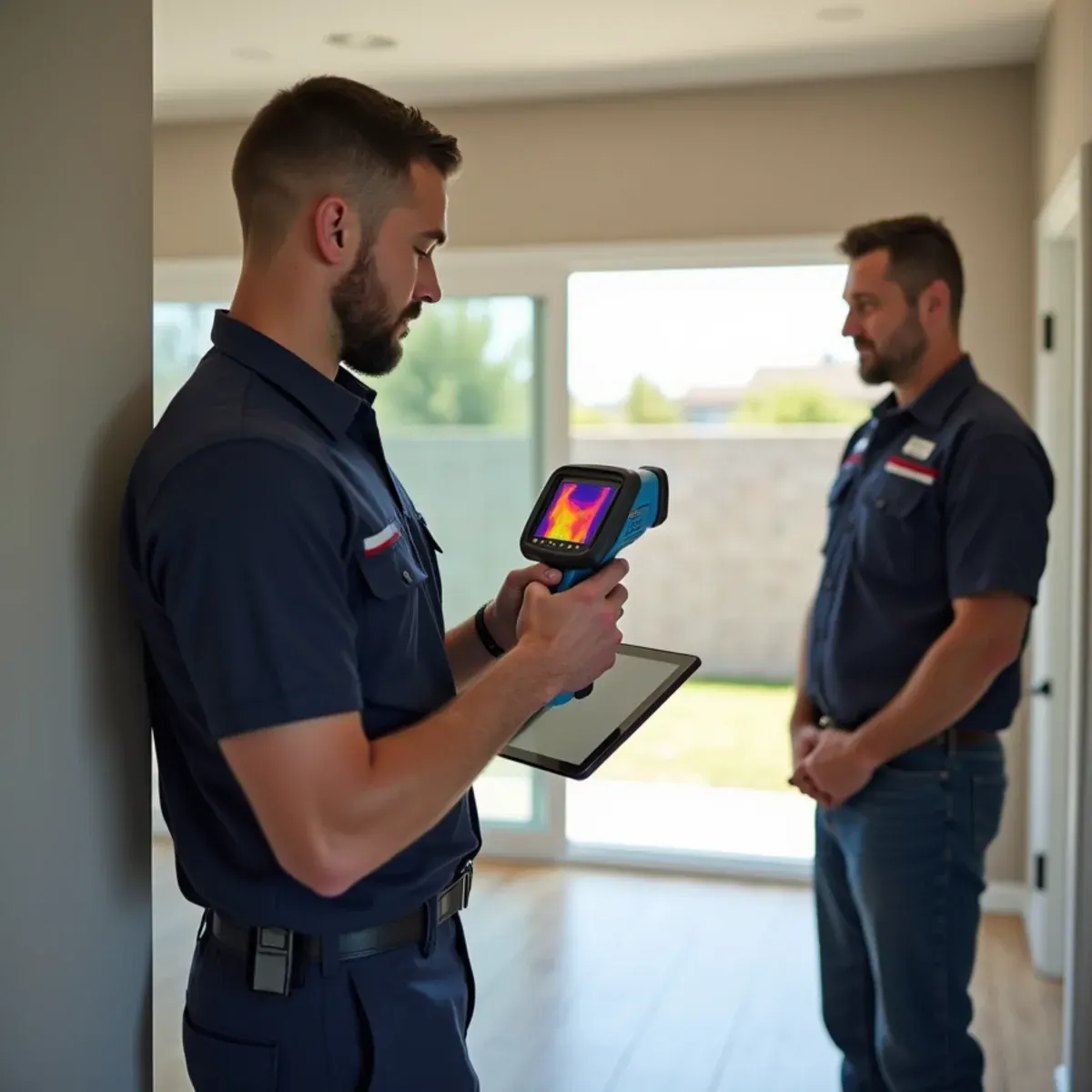
Carson has an unusually large manufactured-housing population, and that changes almost everything about a water damage claim. A mobile home isn't a small house. It has a belly wrap — a sealed membrane under the floor holding insulation and hiding plumbing — and when a supply line fails up in there, the water doesn't run out. It fills the wrap, sits against the underside of the subfloor, and stays. Nothing on a surface moisture meter reads it. An adjuster doing a normal walkthrough sees a stain and a soft spot and not much else.
There's a policy difference too. Manufactured homes are usually written on a mobile home form rather than a standard homeowners form, with different valuation language and actual cash value settlements more common. Alongside all that, Carson holds conventional 1950s to 1970s slab tract on former ranch and oil land, a shallow water table, and refinery and logistics operations right against residential streets. Those slab losses look like the rest of the South Bay. The manufactured-home losses look like nothing else, and the file has to reflect that.
What Carson Changes About Insurance Claim Help
1Belly wrap has to be opened and documented
Water in the underfloor membrane won't show on a surface reading and won't dry through the floor. We cut inspection openings, photograph what's pooled inside, record insulation saturation, and document the wrap's condition before and after. Without that, an adjuster is being asked to pay for underfloor work on the strength of a description. With it, the scope explains itself.
2Mobile home policies value differently
Coverage forms for manufactured homes often settle at actual cash value rather than replacement cost, which means depreciation comes off before you see money. That makes the completion documentation that releases recoverable depreciation more important here than almost anywhere. We keep the final photographs, signed completion and itemized final invoice ready in the format carriers ask for, so nothing sits unreleased.
3Park settings limit access and staging
Coach spacing in these parks is tight, with narrow lanes, shared utility runs and management approvals needed for equipment placement. That affects how long the work takes and where dehumidifiers can sit. We coordinate with park management, photograph the constraints, and note them in the file, because labor hours that look high on paper make sense once the site conditions are visible.
How the Work Runs
The method is the same one we use on every insurance claim help job, documented to the IICRC S500:2025 standard. Here it is in short — the full water damage insurance claim assistance process explains each stage in detail.
- Photograph before anything moves
- Map moisture and set the category
- Open the file with the right facts
- Write the scope in their platform
- Daily drying logs and supplements
- Completion documents that release depreciation
The Carson Background Worth Knowing
Manufactured homes are built with the floor deck, usually particleboard or OSB, sitting on a steel frame, with batt insulation below it and a vapor barrier belly wrap stapled underneath to hold everything in place. Supply lines run through that cavity. When one leaks, the water does not run out onto the ground where you would see it. The belly wrap catches and holds it, the insulation soaks it up, and you now have a sealed reservoir under your floor with no path to evaporate. It can sit there for months before anything shows upstairs.
There is more on the housing stock, drainage and plumbing history of this city on our water damage restoration in Carson page.
Carson at a glance
- Dominant construction era
- 1950–1975
- Foundation type
- slab on grade
- Supply piping found here
- galvanized steel, under-slab copper, manufactured-home supply lines
- Drain line materials
- cast iron
- Terrain and water table
- flat, shallow water table
- Most common local failure
- manufactured-home underfloor leaks trapped in the belly wrap, alongside conventional 1960s slab failures
- Highest-value local prevention
- treating any soft spot in a manufactured-home floor as moisture until a meter proves otherwise
What It Costs in Carson
We do not quote a number over the phone before seeing the property — anyone who does is guessing. The variables that actually move the price on a insurance claim help job are how quickly the loss was documented, category and class of water, whether the materials still match, and they are broken down in full on the water damage insurance claim assistance page. The assessment and the written estimate are free anywhere in Carson, day or night, with no obligation.
Insurance Claim Help Questions from Carson Homeowners
Underneath, specifically. Ask that the belly wrap be opened and inspected rather than judged from a surface meter reading. Water from a failed supply line collects in that membrane and can sit for weeks against the subfloor without showing much above it. We cut access, photograph what's inside, and record insulation and subfloor moisture. If the wrap is holding water, the scope has to include removing it, drying the cavity and replacing the membrane.
No, and the distinction matters. A public adjuster is licensed to represent you in negotiating your settlement and charges a percentage of it. We are a restoration contractor. We document the loss, write and defend the scope of the physical work, and bill your carrier directly for it. If your claim turns into a genuine coverage dispute rather than a scope disagreement, that is the point to consider a public adjuster or an attorney, and we will say so.
Sometimes no. If the total loss is close to or below your deductible, filing puts a claim on your record without producing a payment worth having, and claim history affects renewal in California's current market. Get a written estimate first and compare it to your deductible before you call your carrier. We will give you that number without a claim being open. Any company that pushes you to file before you have seen an estimate has told you something.
By locating it rather than arguing about it. The dividing line is the connection point where the park's service meets your home. Upstream of that is the park's responsibility, downstream is yours. We open the belly wrap where water is pooling, trace the wet path back to its source, and photograph what we find with the connection in frame. That documentation settles the question. Guessing from where the wet spot showed up inside is unreliable, because water travels along the frame first.