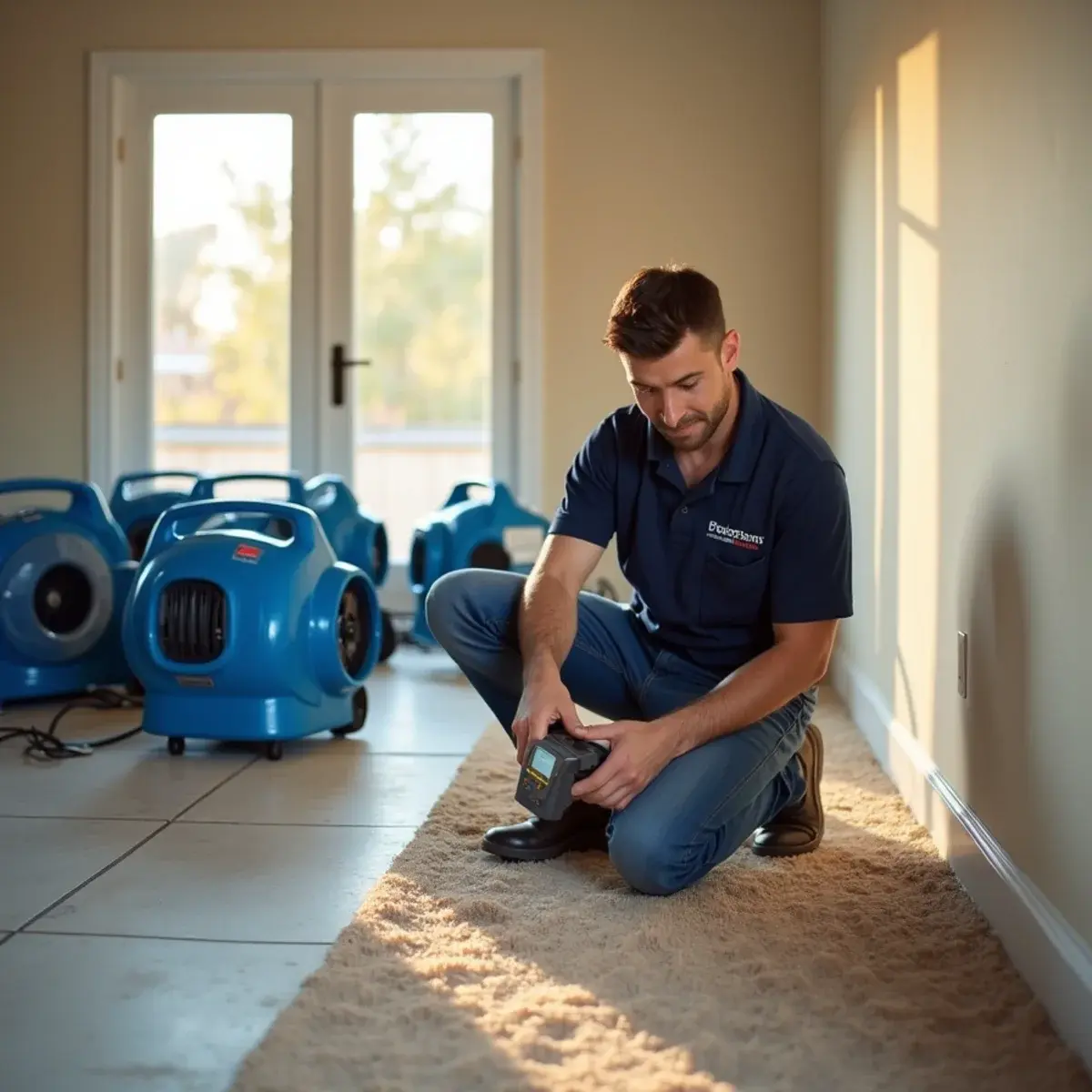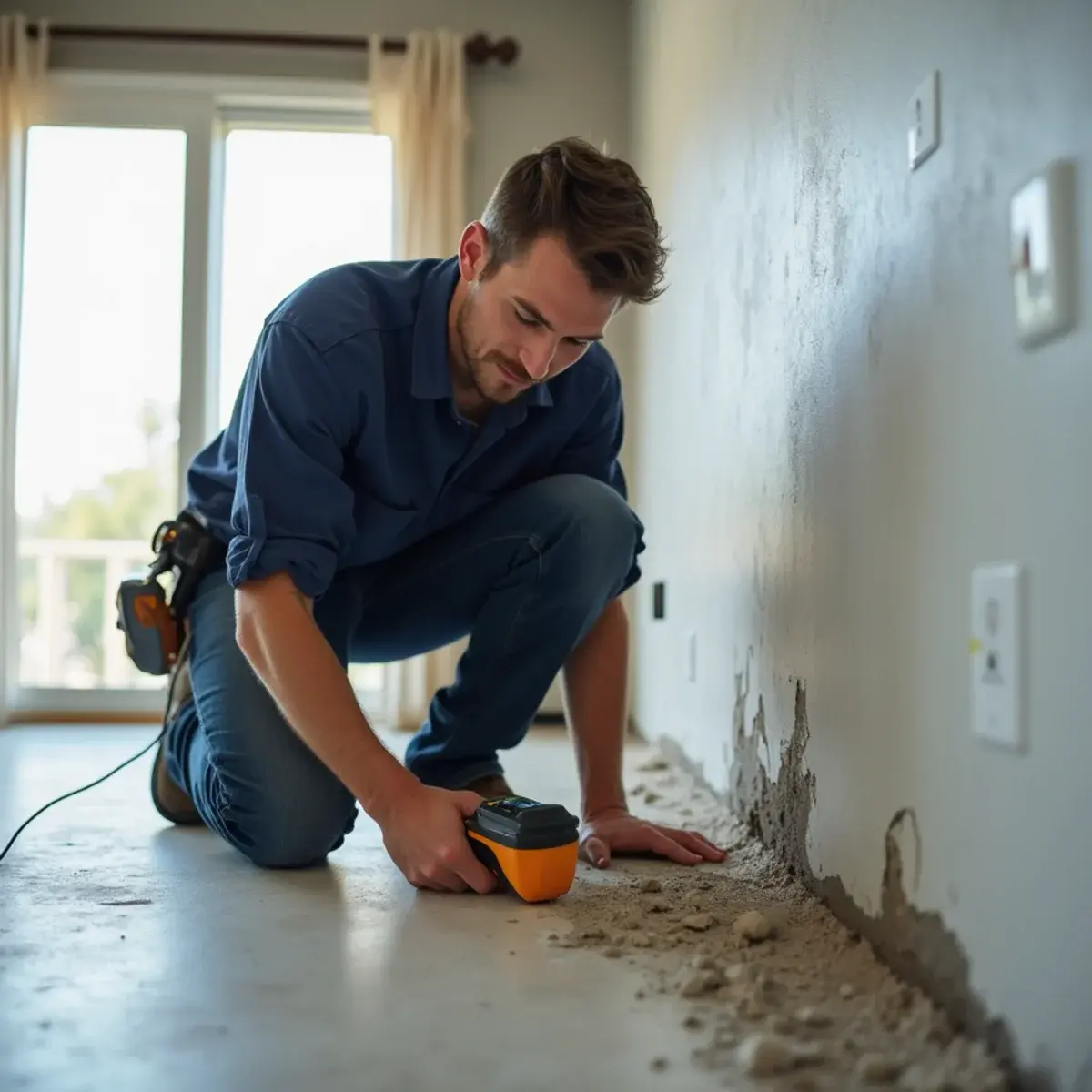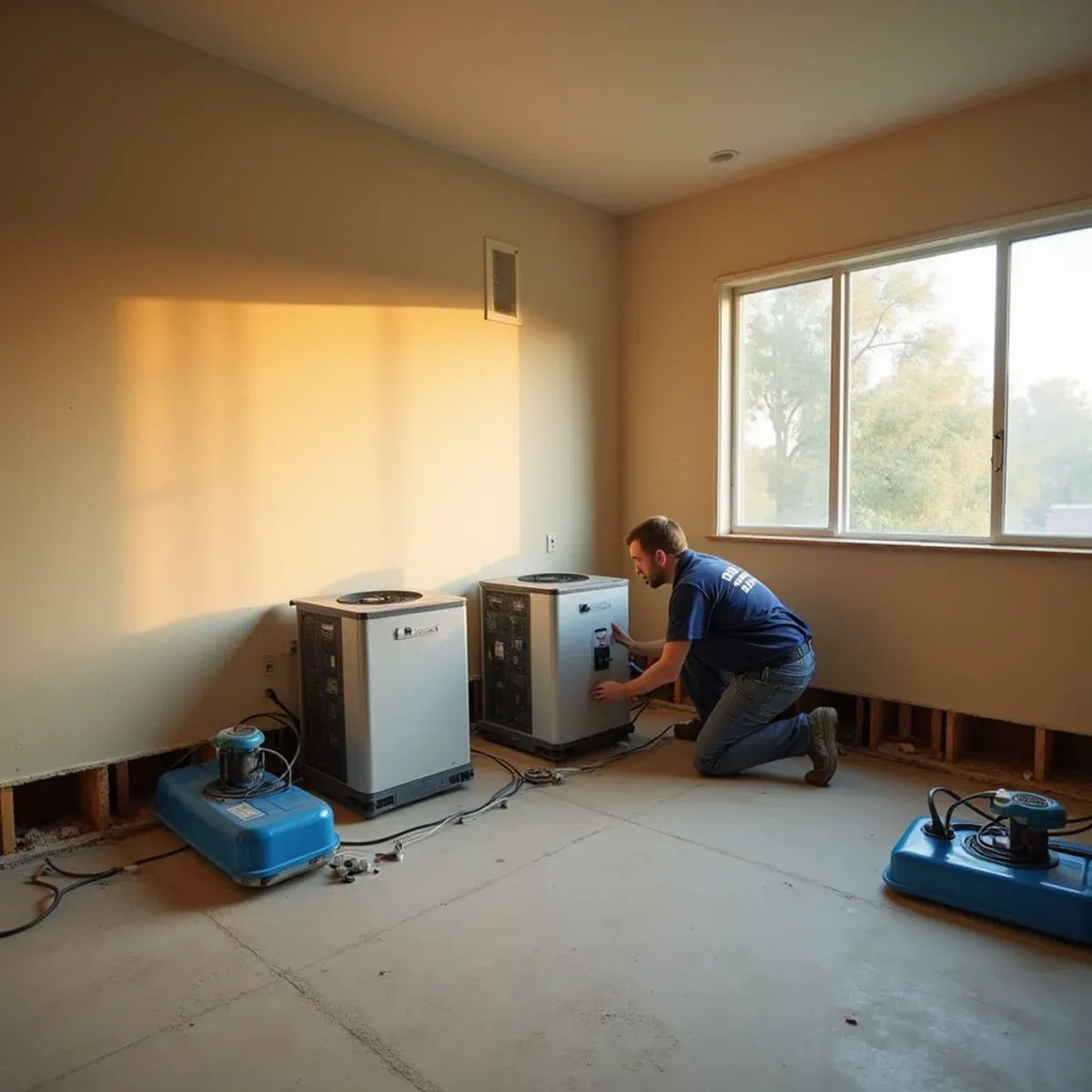
Drying is the part of restoration that separates companies that do the job from companies that stage equipment. Anyone can plug in a fan. Drying a structure to a documented standard requires calculating the load for the space, placing equipment to move air across wet surfaces rather than around them, controlling the humidity of the air doing the work, and reading the materials daily until the numbers say you are finished.
Southern California's mild climate is a double-edged thing here. Outdoor humidity in Cypress is moderate most of the year, which helps — but our marine layer mornings routinely push relative humidity above 80%, and open-window drying during those hours actively works against you. That is why we dry with sealed chambers and controlled dehumidification instead of fresh air.
Everything we do at this stage follows the IICRC S500:2025 standard, and everything we measure gets written down. Those logs are what you hand an adjuster, a buyer's inspector, or a future mold questioner — and they are the reason a properly dried structure stays a closed chapter.
Signs a Structure Was Never Properly Dried
We are called out to re-do incomplete drying jobs regularly. These are the tells:
Musty odor that returns on warm days
Trapped moisture in a wall cavity off-gasses more when the wall warms up. An odor that comes and goes with the temperature almost always means moisture is still in the assembly.
Baseboard or drywall tape lifting weeks later
Paper-faced drywall that dried unevenly shrinks and pulls at the seams. Lifting tape near a former water line is a strong indicator the material never reached its dry standard.
Cupped or crowned wood flooring
Cupping means the bottom of the board is wetter than the top. If it appears after equipment was pulled, the subfloor was still holding moisture.
Efflorescence or chalky white residue on the slab
That is mineral salt left behind as moisture migrates up through concrete. It means the slab is still releasing water vapor into the room.
Condensation on windows in the affected room only
One room with a consistently higher dew point than the rest of the house is a room still giving up moisture.
Equipment was pulled in under 48 hours
Very few structures reach a dry standard in two days. If the fans left that fast and nobody took a final reading, the job was ended by schedule, not by measurement.
How We Dry a Structure to Standard
Drying is a controlled process with a defined endpoint, not an open-ended waiting game.
- 1
Establish the dry standard
We take moisture readings from unaffected materials of the same type elsewhere in the home. That reading is the target — the documented moisture content the wet materials must return to before equipment comes out.
- 2
Calculate the load and build the chamber
Cubic footage, class of water intrusion, and material type determine how many air movers and how much dehumidification capacity the space needs. We contain the area with poly sheeting where it helps, because a smaller sealed chamber dries faster and cheaper than an open house.
- 3
Place air movers for surface evaporation
Air movers are angled to sweep air across wet surfaces at a shallow angle, which strips the saturated boundary layer off the material. Pointed straight at a wall, a fan mostly makes noise.
- 4
Run LGR dehumidification to capture the moisture
Evaporation only relocates water into the air. Low-grain refrigerant dehumidifiers pull it back out and drain it away. Without enough dehumidification capacity, air movers simply move moisture from the floor into your ceiling and adjacent rooms.
- 5
Monitor and adjust daily
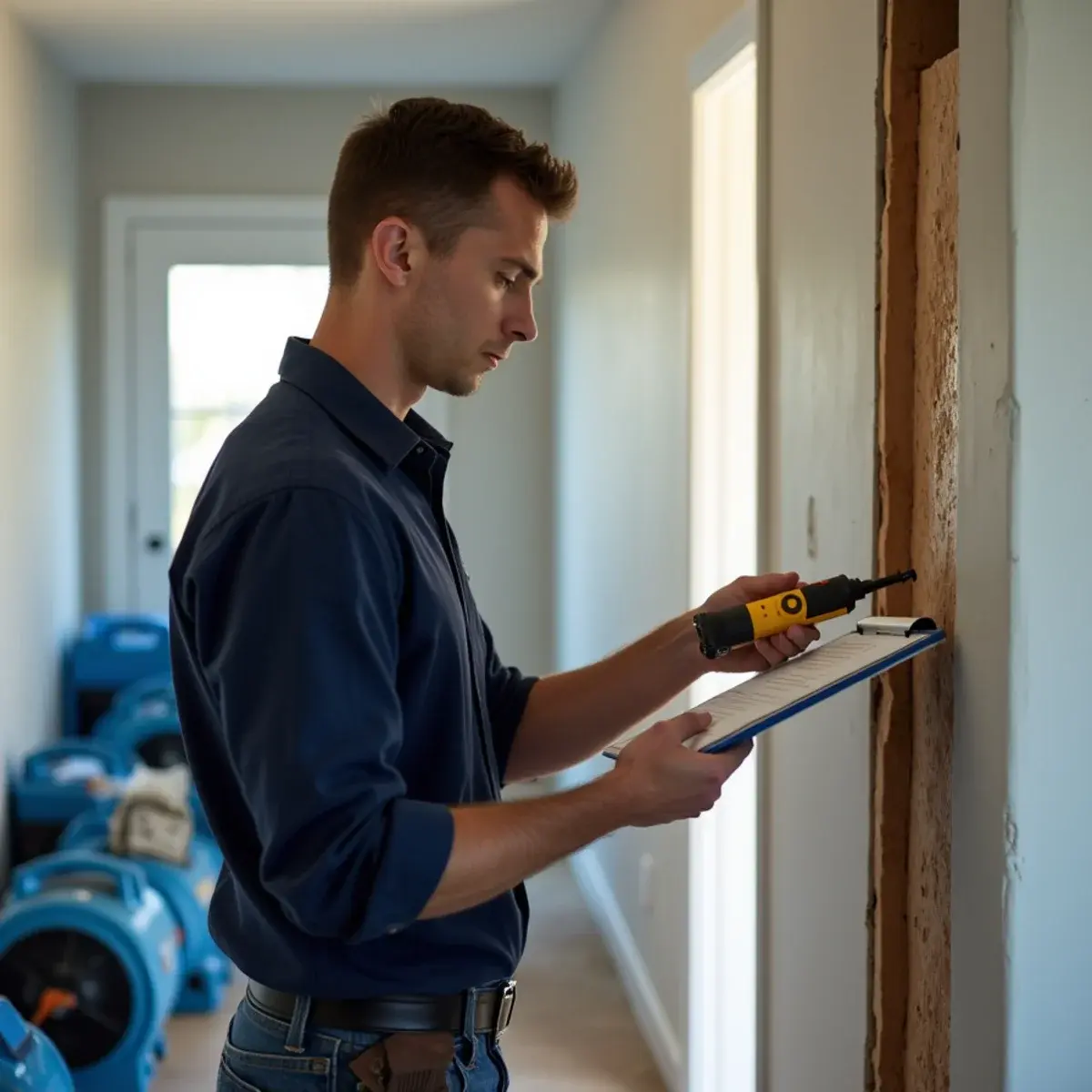
A technician returns every day to read material moisture content, chamber temperature, and relative humidity, and to move equipment toward whatever is drying slowest. Readings are logged with the date, time, and location every single visit.
- 6
Verify, document, and demobilize
Equipment comes out only when every monitored material has reached its dry standard and held it. You get the complete drying log, thermal images, and a certificate of completion.
Why We Dry In Place Whenever the Numbers Allow
There is a version of this industry that solves every wet wall with a saw. It is faster for the contractor and it produces a bigger invoice, but it means your kitchen is torn apart for six weeks instead of your wall being dried in five days.
Our default is to dry in place and only remove what genuinely cannot recover. Cavity drying systems let us move dry air behind drywall through small holes hidden under the baseboard line. Injectidry mats pull moisture up through hardwood seams. Both approaches save the material, the finish, and most of the reconstruction cost.
Sometimes removal is the right call — saturated carpet pad, wet fiberglass insulation, swollen particle-board cabinet bases, and anything touched by Category 3 water all come out. We will show you the meter readings behind that decision rather than asking you to take our word for it.
The Drying Log Is the Deliverable
When we finish, you receive a document that records, for every day equipment was on site: the outside conditions, the chamber temperature and relative humidity, the moisture content of each monitored material, the equipment on site, and photos.
That file does three jobs. It substantiates every equipment-day to your insurance carrier. It proves to any future buyer or inspector that the loss was handled to industry standard. And if anyone ever raises a mold question about this room, it is the contemporaneous evidence that the structure was returned to a documented dry standard.

What Determines Drying Cost
Drying is billed by equipment count and days on site, so the honest way to control the cost is to dry efficiently, not to under-equip.
Size of the drying chamber
Cubic footage drives equipment count directly. Containing an open floor plan down to the affected zone can cut both the equipment count and the number of days.
Class of water intrusion
The S500 classifies losses by how much material absorbed water. A Class 1 loss with minimal absorption dries in days; a Class 4 loss with saturated hardwood, plaster, or concrete can require specialty desiccant equipment and a week or more.
Material types involved
Drywall and carpet release moisture readily. Hardwood, plaster, lath, tile mortar beds, and concrete release it slowly and need longer runs and sometimes injected drying.
Ambient conditions
A June marine layer week in Cypress means higher outdoor humidity and more dehumidification work. Dry inland conditions shorten the run.
Whether the chamber stays sealed
Every time equipment gets unplugged overnight because it is loud, drying time extends. We will explain honestly what turning things off costs you in days.
Insurance note: Drying equipment is a standard, expected line item on any water claim, priced from the same industry schedules adjusters use. We bill the carrier directly and provide the daily logs that substantiate every unit-day charged.
Why Cypress Homeowners Call Us for Structural Drying
Plenty of companies list this service. Fewer can tell you what equipment they will bring, what standard the work is measured against, or what happens if they are wrong. Here is what you are actually buying.
Equipment placed by calculation, not by habit
Air-mover count and dehumidifier capacity are calculated from the affected cubic footage and material class, the way the S500 standard specifies. Dropping four fans in a room and coming back Friday is how homes get released still wet.
Low-grain refrigerant dehumidifiers
LGR units keep pulling moisture at the low humidity levels where conventional refrigerant dehumidifiers stall. In our climate that is the difference between reaching a dry standard and plateauing three points above it.
Drying ends on a number, not on a schedule
We take daily readings against a documented dry standard for each material and the equipment stays until they are met. You get the log, which is also what closes a mold dispute two years later.
- 20+ years restoring Orange County homes
- IICRC Certified Firm
- Licensed, Bonded & Insured
- We bill your insurance company directly
- IICRC S500:2025 compliant on every job
- 100% satisfaction guarantee — in writing, on every job
Frequently Asked Questions
Three to five days covers most residential losses. Saturated hardwood, plaster, or a concrete slab can run seven or more. We will give you an estimated window after the first readings and update you daily — and equipment comes out when the numbers say so, not on a fixed schedule.
We would rather you did not. Drying is a continuous process, and every hour off extends the total run — which usually costs more than the sleep is worth. If noise is genuinely unmanageable we can often reconfigure the chamber or reposition units to reduce it. Talk to us instead of unplugging them.
Air movers evaporate water out of materials into the air. If nothing removes it from the air, that moisture simply redeposits somewhere colder — your ceiling, an adjacent room, the inside of a closet. The dehumidifier is what actually takes the water out of the building.
We establish a dry standard at the start by measuring unaffected material of the same type in the same home, then read the affected materials daily until they match and hold. It is a measured endpoint, documented with dated readings — not a judgment call.
Drying quickly and completely is the single most effective mold prevention there is, because mold needs sustained moisture to establish. On clean-water losses caught early, correct drying is usually sufficient. Where water sat longer or was contaminated, we add antimicrobial treatment and HEPA filtration on top of the drying.
Related Reading
- How Long Does Water Damage Restoration Actually Take? — Extraction is measured in hours, drying in days, and reconstruction in weeks. Here is what each phase actually involves and what stretches it.
- How Fast Does Mold Grow After Water Damage? — The commonly cited window is 24 to 48 hours. Here is what that actually means, what makes it faster, and where the real deadline sits.