
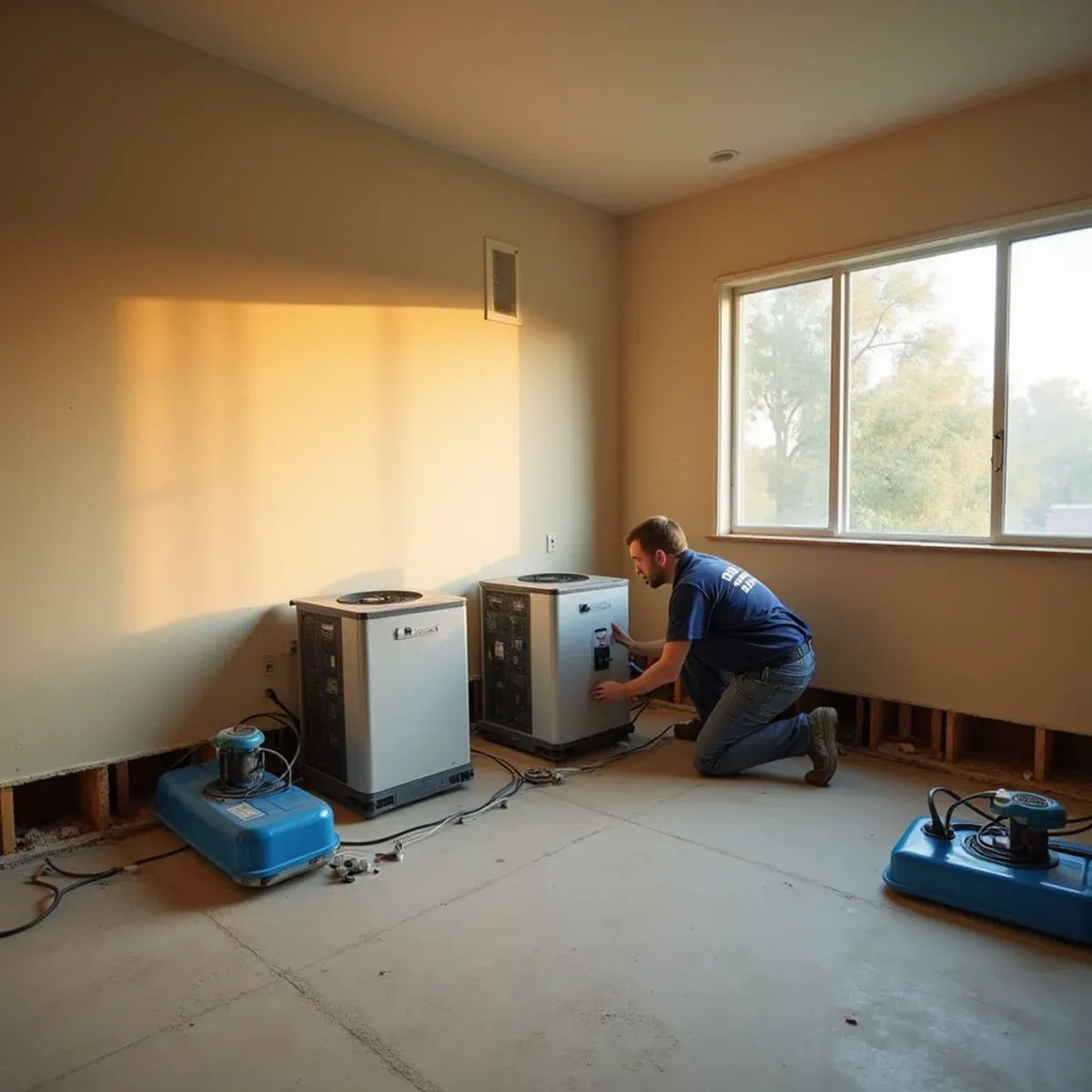
Two Anaheim houses, same size loss, same afternoon, two completely different jobs. A 1915 home in the Colony Historic District has lath and plaster that holds several times the water drywall does and gives it back slowly, which usually calls for desiccant capacity and a longer, gentler schedule. A 1958 house off Ball Road dries in a few days with LGRs and air movers. Guess wrong in either direction and you either damage a plaster wall by rushing it or leave a stud bay wet behind fresh paint.
Then there's Anaheim Hills, where houses step down two or three levels into the slope. Water from an upstairs failure doesn't just stain the ceiling below it. It follows framing down through the levels and collects at the lowest one, often in a room nobody thought to check. We set a dry standard on every level, not only the one that's obviously wet. Around the Resort District the work turns commercial, and hotels and restaurants need containment, quiet hours and rooms back in service, which is a scheduling problem as much as a drying one.
What Anaheim Changes About Structural Drying
1Plaster needs desiccant, not more fans
Wet plaster releases moisture slowly, and low-grain desiccant drying pulls vapor pressure down far enough to keep that release moving without blasting the surface. More air movers won't speed it up and will damage finishes. The real risk is the keys, the plaster squeezed through the wood lath, softening until a section releases from the wall. Speed in the first hours matters more than equipment count.
2Hillside homes drain to the lowest level
In the multi-level construction above Oak Canyon, water leaves the failure point and travels down through framing, stair walls and mechanical chases. The wettest material can end up two floors below the burst line. We meter every level and set containment where the water ended up, not only where it started, then verify the intermediate levels before pulling equipment.
3Hotel and restaurant work near the Resort
Hospitality drying is measured in rooms out of inventory. We contain tightly so adjacent rooms stay sellable, run the loudest phases overnight, and keep equipment and cords out of guest paths. IICRC S500:2025 documentation matters more here than on a house, because a hotel's carrier wants a defensible record of what was wet, what was dried, and when it reached standard.
How the Work Runs
The method is the same one we use on every structural drying job, documented to the IICRC S500:2025 standard. Here it is in short — the full structural drying & dehumidification process explains each stage in detail.
- Establish the dry standard
- Calculate the load and build the chamber
- Place air movers for surface evaporation
- Run LGR dehumidification to capture the moisture
- Monitor and adjust daily
- Verify, document, and demobilize
The Anaheim Background Worth Knowing
The Anaheim Colony Historic District and the older streets around downtown contain homes built from the early 1900s through the 1930s, and they are constructed differently in ways that matter enormously during a water loss.
There is more on the housing stock, drainage and plumbing history of this city on our water damage restoration in Anaheim page.
Anaheim at a glance
- Dominant construction era
- 1900–2000
- Foundation type
- mixed on grade
- Supply piping found here
- galvanized steel, under-slab copper, original early-century piping in the Colony
- Drain line materials
- cast iron, clay
- Terrain and water table
- hillside-mixed, moderate water table
- Most common local failure
- lath-and-plaster assemblies that hold several times the water drywall does and release it far more slowly
- Highest-value local prevention
- acting immediately on any plaster-wall loss, because wet plaster keys soften and release from the lath
What It Costs in Anaheim
We do not quote a number over the phone before seeing the property — anyone who does is guessing. The variables that actually move the price on a structural drying job are size of the drying chamber, class of water intrusion, material types involved, and they are broken down in full on the structural drying & dehumidification page. The assessment and the written estimate are free anywhere in Anaheim, day or night, with no obligation.
Structural Drying Questions from Anaheim Homeowners
Controlled drying shouldn't. Aggressive drying can. Plaster is already stressed when it's saturated, and the real danger is the keys behind the lath softening and letting go, which is a risk of leaving it wet, not of drying it. We use low-grain dehumidification with gentle air movement rather than pointing high-velocity fans at the finish, take readings daily, and slow the rate if the surface starts to move. Plaster dried early and steadily usually comes through intact.
Three to five days covers most residential losses. Saturated hardwood, plaster, or a concrete slab can run seven or more. We will give you an estimated window after the first readings and update you daily — and equipment comes out when the numbers say so, not on a fixed schedule.
We would rather you did not. Drying is a continuous process, and every hour off extends the total run — which usually costs more than the sleep is worth. If noise is genuinely unmanageable we can often reconfigure the chamber or reposition units to reduce it. Talk to us instead of unplugging them.
Yes, and we approach them differently. Lath and plaster holds much more water than drywall and dries far more slowly, so it needs more equipment and considerably more patience — but it can usually be saved in place, and original plaster is not something a repair can replace.