
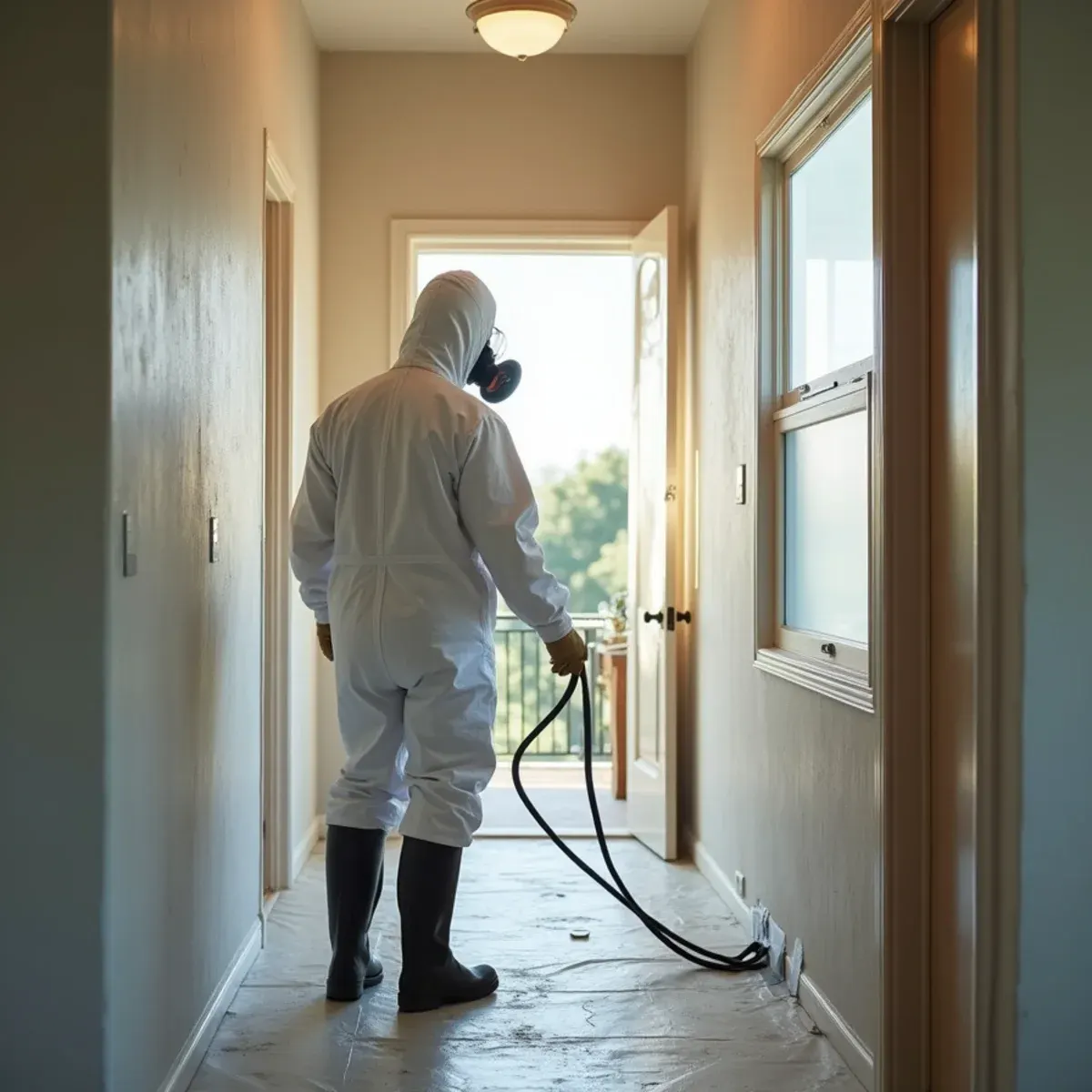
Plaster is what makes the Colony District different. In a postwar tract home, sewage in a wall means cutting drywall two feet up and moving on. In a 1910s Anaheim Colony house, the wall is lath and plaster, which holds several times the water drywall does, releases it far more slowly, and cannot be disinfected through. Once Category 3 water is in the plaster, the keys behind the lath soften, the material starts letting go from the wood strips holding it, and there is no antimicrobial that reaches the back side of a three-coat wall.
Drive twenty minutes east and it is a different trade entirely. Anaheim Hills homes are two and three levels on engineered grading, and the lowest fixture in the house sits well below the street. When a lateral blocks on a downhill lot, that bottom-level bath or laundry is where the whole building relieves itself. West Anaheim's postwar tracts behave like the rest of the county, and the Resort District adds hotels where a backup means occupied rooms and a corridor that has to keep working around a sealed zone.
What Anaheim Changes About Sewage Cleanup
1Contaminated plaster is a removal
We would rather save original plaster than anyone, and on clean-water losses we often can with desiccant drying. Sewage is different. The material is porous through its thickness, the keys behind the lath cannot be reached, and IICRC S500:2025 puts Category 3 water in porous assemblies squarely in the removal column. We cut to a defensible line, save the lath where it is sound, and document the profile so the replacement matches.
2Lower-level fixtures in the Hills
On a multi-level hillside home, the ground-floor bath, the garage-level laundry or a basement-level utility sink is the low point for everything above it. That is where the volume arrives. It is also usually the least-visited room in the house, so contact time is longer before anyone finds it. When we get a hillside call, that lowest level is the first place we look, whatever room the caller reported.
3Occupied hotels and short notice
Resort District properties cannot empty a floor for a week. We stage containment from the service corridor where possible, isolate the affected rooms from shared return air, run negative pressure so nothing migrates into occupied space, and work overnight blocks. The verification documentation matters as much as the cleanup, because a room does not go back into inventory on somebody's opinion.
How the Work Runs
The method is the same one we use on every sewage cleanup job, documented to the IICRC S500:2025 standard. Here it is in short — the full sewage backup cleanup process explains each stage in detail.
- Secure the area and set containment
- Full PPE and safe extraction
- Remove contaminated porous materials
- Clean and disinfect all remaining surfaces
- Deodorize at the source
- Dry, verify, and clear
The Anaheim Background Worth Knowing
The Anaheim Colony Historic District and the older streets around downtown contain homes built from the early 1900s through the 1930s, and they are constructed differently in ways that matter enormously during a water loss.
There is more on the housing stock, drainage and plumbing history of this city on our water damage restoration in Anaheim page.
Anaheim at a glance
- Dominant construction era
- 1900–2000
- Foundation type
- mixed on grade
- Supply piping found here
- galvanized steel, under-slab copper, original early-century piping in the Colony
- Drain line materials
- cast iron, clay
- Terrain and water table
- hillside-mixed, moderate water table
- Most common local failure
- lath-and-plaster assemblies that hold several times the water drywall does and release it far more slowly
- Highest-value local prevention
- acting immediately on any plaster-wall loss, because wet plaster keys soften and release from the lath
What It Costs in Anaheim
We do not quote a number over the phone before seeing the property — anyone who does is guessing. The variables that actually move the price on a sewage cleanup job are affected square footage, volume of porous material removed, contents in the affected area, and they are broken down in full on the sewage backup cleanup page. The assessment and the written estimate are free anywhere in Anaheim, day or night, with no obligation.
Sewage Cleanup Questions from Anaheim Homeowners
On that wall, honestly, no. Plaster absorbs several times what drywall does and holds it deep in the material, and the keys gripping the lath behind it soften once saturated. There is no way to clean the back side. What we can do is limit how far the cut runs by mapping moisture properly instead of guessing, keep the original lath where it is dry and sound, and record the sand texture and coat thickness so a plasterer can match the repair to the rest of the room.
It depends on the source. A toilet that overflows with clean bowl water because of a stuck fill valve is Category 1 or 2 and is far less serious. A toilet that backs up from the main line is carrying waste from the whole system, and that is Category 3 — it needs the full protocol.
No. Standard practice for Category 3 water is removal and disposal of carpet and pad that were contacted. Porous materials cannot be reliably disinfected all the way through, and the health risk of leaving them is not worth the savings.
Yes, and we approach them differently. Lath and plaster holds much more water than drywall and dries far more slowly, so it needs more equipment and considerably more patience — but it can usually be saved in place, and original plaster is not something a repair can replace.