
Dinner service, a floor drain, and then the smell. That is how it starts on Pioneer Boulevard. Little India packs one of the densest concentrations of independent restaurants and retail in the region into buildings put up in the fifties for ordinary storefronts, never for commercial kitchens. Decades of grease has been cooling and hardening on the rough inside of that cast iron, narrowing the line a little each year. Clearing the blockage restores flow, but the coating is still there, which is why the same address backs up again in a year and a half unless the pipe wall actually gets cleaned.
The stakes are different here than in a house. The owner of a restaurant on this stretch does not have a corporate reserve to sit out a three-week closure, and often has staff who cannot afford one either. So the job is not just cleaning up Category 3 water. It is doing it in an order and with documentation that lets the health inspector clear the space as early as it is genuinely safe to clear it. Off the boulevard, Artesia's modest postwar homes and older multi-family run a much more conventional version of this work.
What Artesia Changes About Sewage Cleanup
1Shared waste lines between storefronts
These 1950s retail shells often put two or three tenant spaces on one waste line with party walls between them. Your backup may have originated three doors down, and contamination crosses at the base of a shared wall more readily than owners expect. We check the neighboring space before drawing the containment line, because a sealed zone that stops at your lease boundary is not sealed.
2The health permit, not just the cleanup
Reopening depends on what an inspector will accept. We build the package as the work happens: contamination mapping, what porous material was removed, which EPA-registered antimicrobial was applied where, and verification readings before anything went back. Assembled afterward, that record takes days. Built as we go, it is ready when the drying is, and the re-inspection is not what holds you up.
3Jetting, not snaking, afterward
A cable clears a path through the grease. It does not clean the pipe. On a line that has been coating for fifty years inside corroded cast iron, hydro-jetting is what actually restores the diameter, and it is the difference between a fix and a postponement. We put that in the report with the camera footage so the follow-up gets scheduled instead of forgotten once the doors reopen.
How the Work Runs
The method is the same one we use on every sewage cleanup job, documented to the IICRC S500:2025 standard. Here it is in short — the full sewage backup cleanup process explains each stage in detail.
- Secure the area and set containment
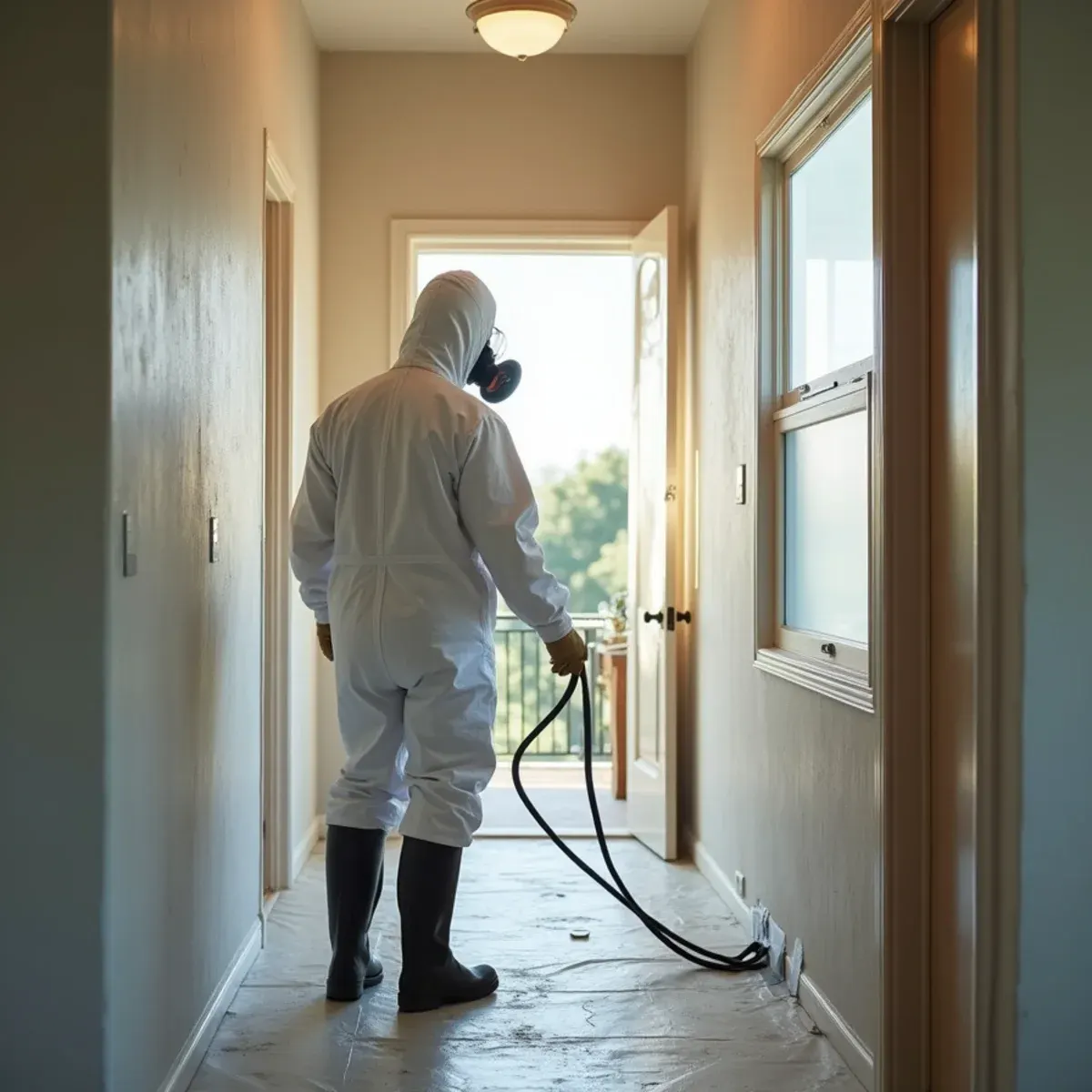
- Full PPE and safe extraction
- Remove contaminated porous materials
- Clean and disinfect all remaining surfaces
- Deodorize at the source
- Dry, verify, and clear
The Artesia Background Worth Knowing
A commercial kitchen is one of the hardest things you can ask a building to accommodate. High water use, continuous drainage, grease loading, floor drains, and equipment connections that get added and modified over the years. When that kitchen is in a building from the 1950s with original cast-iron waste lines, the failure is a matter of time.
There is more on the housing stock, drainage and plumbing history of this city on our water damage restoration in Artesia page.
Artesia at a glance
- Dominant construction era
- 1950–1970
- Foundation type
- slab on grade
- Supply piping found here
- galvanized steel, copper
- Drain line materials
- cast iron
- Terrain and water table
- flat, moderate water table
- Most common local failure
- grease-loaded cast-iron waste lines restricting until a commercial kitchen backs up
- Highest-value local prevention
- hydro-jetting the waste line rather than snaking it, so the pipe wall actually gets cleaned
What It Costs in Artesia
We do not quote a number over the phone before seeing the property — anyone who does is guessing. The variables that actually move the price on a sewage cleanup job are affected square footage, volume of porous material removed, contents in the affected area, and they are broken down in full on the sewage backup cleanup page. The assessment and the written estimate are free anywhere in Artesia, day or night, with no obligation.
Sewage Cleanup Questions from Artesia Homeowners
You will almost certainly still have to close the affected area, because the health department cares about contamination in your space, not about whose grease caused it. On coverage, sewer backup is typically a separate endorsement rather than part of a base commercial policy, and business income loss is another line item again. Check both today, not on Monday. We document the origin and direction of flow carefully, which matters if there is a recovery claim against the other tenant later.
It depends on the source. A toilet that overflows with clean bowl water because of a stuck fill valve is Category 1 or 2 and is far less serious. A toilet that backs up from the main line is carrying waste from the whole system, and that is Category 3 — it needs the full protocol.
No. Standard practice for Category 3 water is removal and disposal of carpet and pad that were contacted. Porous materials cannot be reliably disinfected all the way through, and the health risk of leaving them is not worth the savings.
Yes, and on Pioneer Boulevard that is usually how we schedule it. Overnight crews cost somewhat more in labor and almost always cost dramatically less than lost revenue from closing during operating hours.