
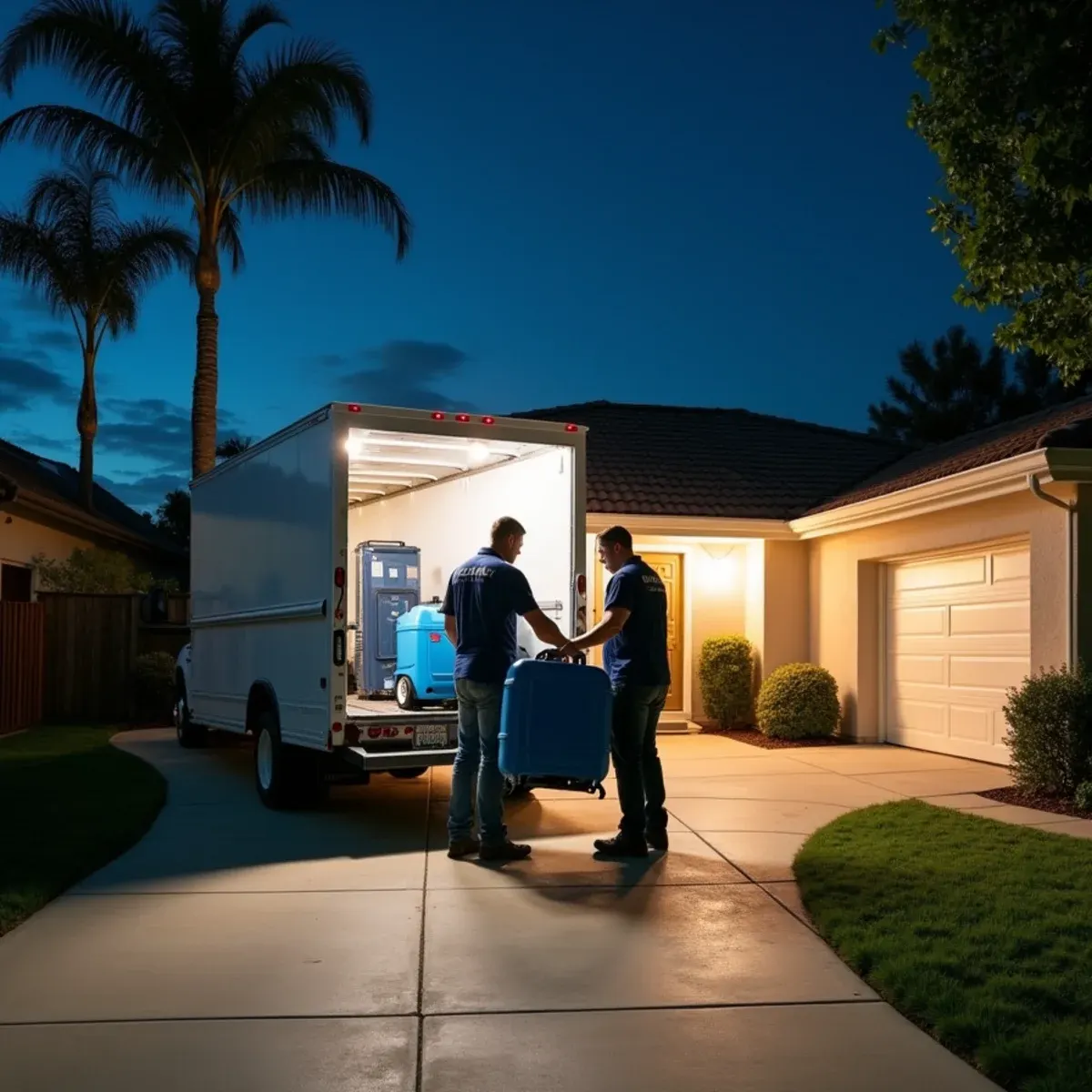
Saturday night. A full dining room on Pioneer Boulevard. The three-compartment sink stops draining, and within ten minutes there's water across the kitchen floor and under the cook line. That call comes from Artesia more than anywhere else we serve, and the reason is structural. This is one of the densest concentrations of independent restaurants in the region, almost all of it operating inside 1950s buildings whose cast-iron waste lines were never designed for a commercial kitchen's volume of grease and hot water.
Grease cools, solidifies and clings to the rough interior of corroded cast iron, narrowing the line a little more each year until one busy service finally exceeds it. What comes back up is category three water on a food-prep floor, which means cleaning and verification, not simply drying. Independent owners here have no corporate reserve to absorb a three-week closure, so the plan we build is about returning you to service with documentation a health inspector will accept, not about how much equipment we can fit in the room.
What Artesia Changes About Emergency Restoration
1Grease narrows cast iron until it fails
Decades of grease film on rough, corroded pipe walls reduce a four-inch line to something far smaller. Snaking punches a hole through the blockage and buys a few weeks. Hydro-jetting scours the pipe wall back toward its actual diameter. After a backup we push for jetting and a camera scope, because the same kitchen calling twice in one season is common here.
2Category three water on a prep floor
A sewage backup in a kitchen is not a mopping job. Porous materials in contact with it come out, hard surfaces get cleaned and disinfected, and the work gets verified and written up. Quarry tile with failed grout lets contaminated water into the setting bed, which is the part people miss and exactly the part an inspector asks about.
3Every closed hour costs an owner
Independent restaurants on Pioneer Boulevard don't have a second location carrying payroll. We work overnight where the building allows, stage equipment so prep areas come back first, and give you a documented completion an inspector can read. If part of the space can reopen while another part dries, we'll set containment to make that possible.
How the Work Runs
The method is the same one we use on every emergency restoration job, documented to the IICRC S500:2025 standard. Here it is in short — the full emergency water damage restoration process explains each stage in detail.
- Call answered and crew dispatched
- Arrival, safety check, and moisture mapping
- Documentation before anything is touched
- Extraction
- Controlled structural drying
- Cleaning, sanitizing, and final verification
The Artesia Background Worth Knowing
A commercial kitchen is one of the hardest things you can ask a building to accommodate. High water use, continuous drainage, grease loading, floor drains, and equipment connections that get added and modified over the years. When that kitchen is in a building from the 1950s with original cast-iron waste lines, the failure is a matter of time.
There is more on the housing stock, drainage and plumbing history of this city on our water damage restoration in Artesia page.
Artesia at a glance
- Dominant construction era
- 1950–1970
- Foundation type
- slab on grade
- Supply piping found here
- galvanized steel, copper
- Drain line materials
- cast iron
- Terrain and water table
- flat, moderate water table
- Most common local failure
- grease-loaded cast-iron waste lines restricting until a commercial kitchen backs up
- Highest-value local prevention
- hydro-jetting the waste line rather than snaking it, so the pipe wall actually gets cleaned
What It Costs in Artesia
We do not quote a number over the phone before seeing the property — anyone who does is guessing. The variables that actually move the price on a emergency restoration job are water category, affected square footage and number of rooms, how many days of equipment, and they are broken down in full on the emergency water damage restoration page. The assessment and the written estimate are free anywhere in Artesia, day or night, with no obligation.
Emergency Restoration Questions from Artesia Homeowners
It depends how far the water traveled and what it touched, but a contained kitchen backup caught the same night is often cleaned, dried and verified in a couple of days rather than weeks. The line has to be cleared first, usually jetted rather than snaked, or you'll repeat the whole event. We document the cleaning and the final moisture verification in a form your health inspector and your insurer can both use.
We commit to being on-site within 60 minutes of a confirmed emergency call anywhere in Cypress, and we credit $100 off your invoice if we miss it. Most of the time we are there in 30 to 45 minutes because our trucks stage on Katella Avenue, right here in the city.
No. The emergency assessment and written estimate are free, 24 hours a day. You are not obligated to hire us after we walk the property, and we will tell you plainly if we think the damage is small enough to handle yourself.
Yes, and on Pioneer Boulevard that is usually how we schedule it. Overnight crews cost somewhat more in labor and almost always cost dramatically less than lost revenue from closing during operating hours.