
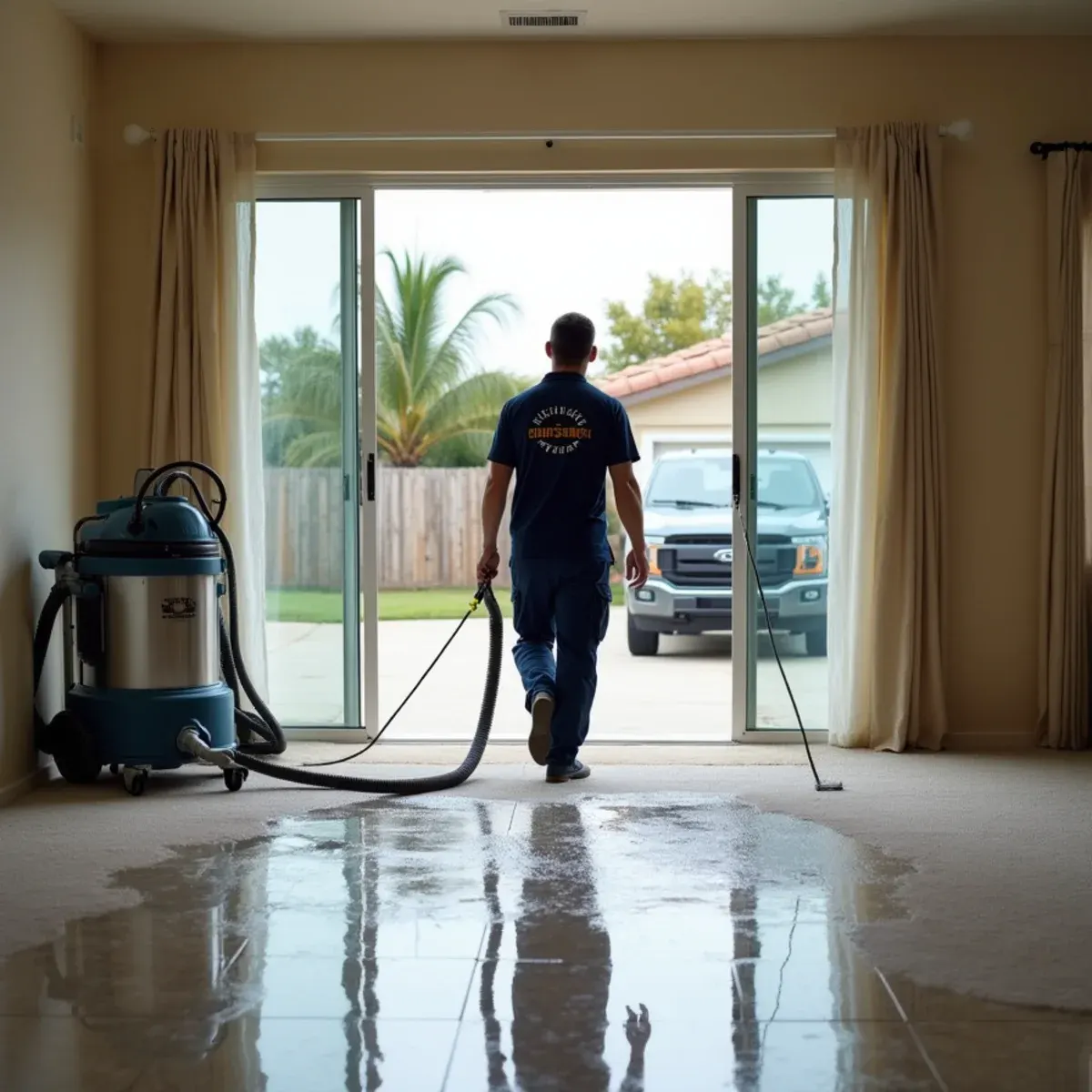
A commercial kitchen on Pioneer Boulevard backs up at nine at night, and by the time the owner calls there's an inch of contaminated water across the line, under the prep tables and creeping into the dining room. That's a Category 3 extraction under IICRC S500:2025 — not a wet floor but a sanitary problem — and it changes everything about how we work. Containment goes up first, extraction runs with dedicated equipment, and porous materials that can't be cleaned come out. Little India runs on independent owners with no reserve for a three-week closure.
The cause is usually the building itself. Almost all of this commercial stock is 1950s construction that was never designed to host commercial kitchens, with cast-iron waste lines whose rough, corroded interiors grab grease and narrow year after year until the pipe simply can't pass what's being put into it. Snaking punches a hole through the blockage; hydro-jetting actually cleans the pipe wall. Residential Artesia is a different job — modest postwar single-family and older multi-family on slab, where extraction is conventional pump-and-weighted-pass work.
What Artesia Changes About Water Extraction
1Category 3 water in commercial kitchens
Drain and sewer water isn't a cleanliness inconvenience, it's a health category with its own rules. Everything porous in the affected zone comes out: cove base, gypsum below the waterline, wood shelving, anything absorbent that touched it. Hard surfaces get extracted, cleaned and treated. We'd rather have an uncomfortable conversation about scope in hour one than sign off a kitchen that's serving food tomorrow.
2Extracting under fixed kitchen equipment
Water goes under the line, under walk-in curbs, and into the void behind equipment installed once and never moved. Surface extraction across the open floor misses most of it. We use narrow-profile tools and access points to pull water from under fixed equipment and out of the mortar bed beneath quarry tile, then verify with meters rather than by eye. That's the part shop vacs and mops never reach.
3Every closed day costs an owner
The businesses along Pioneer Boulevard are largely family-owned, and a closure comes straight out of the family. We sequence extraction so the areas that gate reopening get cleared first, work overnight when it helps, and give a realistic reopening picture rather than an optimistic one. Where we can't compress the timeline, we say so early enough for the owner to plan around it.
How the Work Runs
The method is the same one we use on every water extraction job, documented to the IICRC S500:2025 standard. Here it is in short — the full water extraction & removal process explains each stage in detail.
- Bulk removal with submersible pumps
- Truck-mounted extraction on carpet and pad
- Hard-surface and specialty extraction
- Cavity and void extraction
- Removing what cannot be saved
- Post-extraction moisture reading
The Artesia Background Worth Knowing
A commercial kitchen is one of the hardest things you can ask a building to accommodate. High water use, continuous drainage, grease loading, floor drains, and equipment connections that get added and modified over the years. When that kitchen is in a building from the 1950s with original cast-iron waste lines, the failure is a matter of time.
There is more on the housing stock, drainage and plumbing history of this city on our water damage restoration in Artesia page.
Artesia at a glance
- Dominant construction era
- 1950–1970
- Foundation type
- slab on grade
- Supply piping found here
- galvanized steel, copper
- Drain line materials
- cast iron
- Terrain and water table
- flat, moderate water table
- Most common local failure
- grease-loaded cast-iron waste lines restricting until a commercial kitchen backs up
- Highest-value local prevention
- hydro-jetting the waste line rather than snaking it, so the pipe wall actually gets cleaned
What It Costs in Artesia
We do not quote a number over the phone before seeing the property — anyone who does is guessing. The variables that actually move the price on a water extraction job are volume and depth of water, flooring type, contamination level, and they are broken down in full on the water extraction & removal page. The assessment and the written estimate are free anywhere in Artesia, day or night, with no obligation.
Water Extraction Questions from Artesia Homeowners
The dining room usually comes back well before the kitchen, because the affected materials there are fewer and the contamination boundary sits closer to the drains. We extract and clean it, remove any base or flooring that absorbed contaminated water, and dry it under containment while kitchen work continues. The realistic gate is the health-related work in the kitchen, not the dining floor. We'll give you a specific sequence once we've seen how far the water traveled.
For a typical single-room residential loss, extraction runs one to three hours. Multi-room losses or Category 3 water can take most of a day because of containment setup and material removal. We will give you a realistic timeframe after the walkthrough, before we start.
Often we can save the carpet and only replace the pad, which is the cheaper and less disruptive path. The deciding factors are water category, how long it sat, and whether the pad is a moisture barrier type. Clean water caught quickly usually means the carpet stays.
Yes, and on Pioneer Boulevard that is usually how we schedule it. Overnight crews cost somewhat more in labor and almost always cost dramatically less than lost revenue from closing during operating hours.