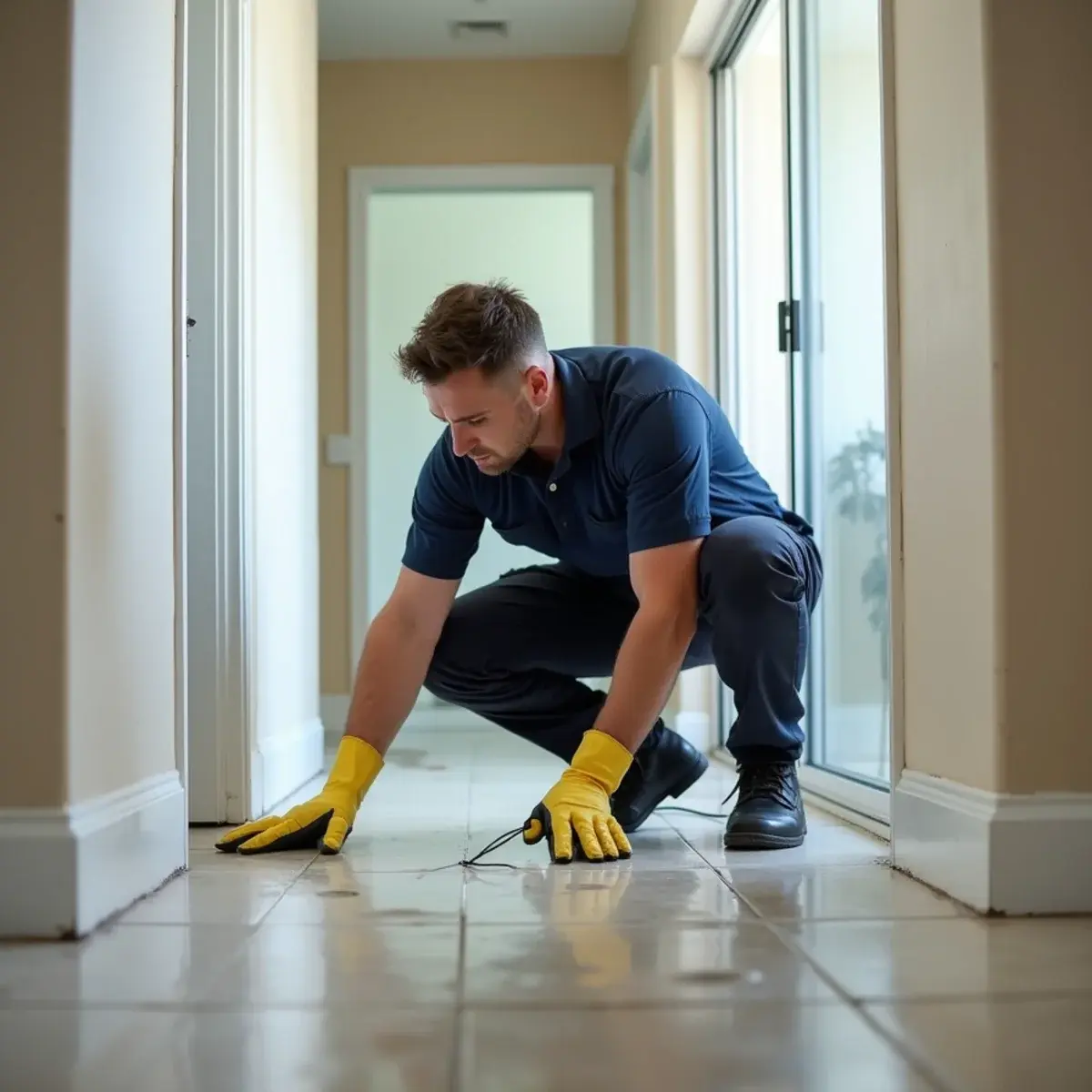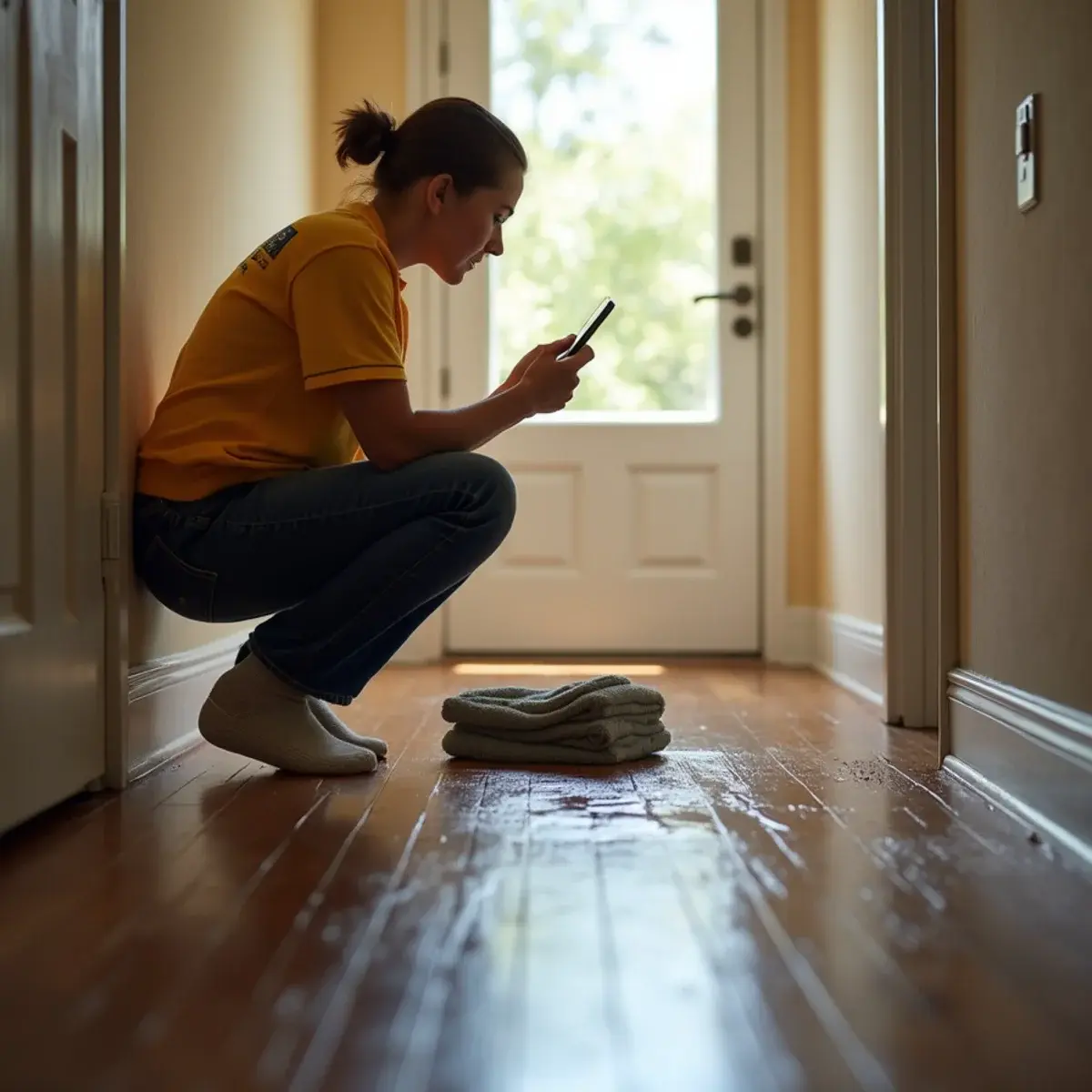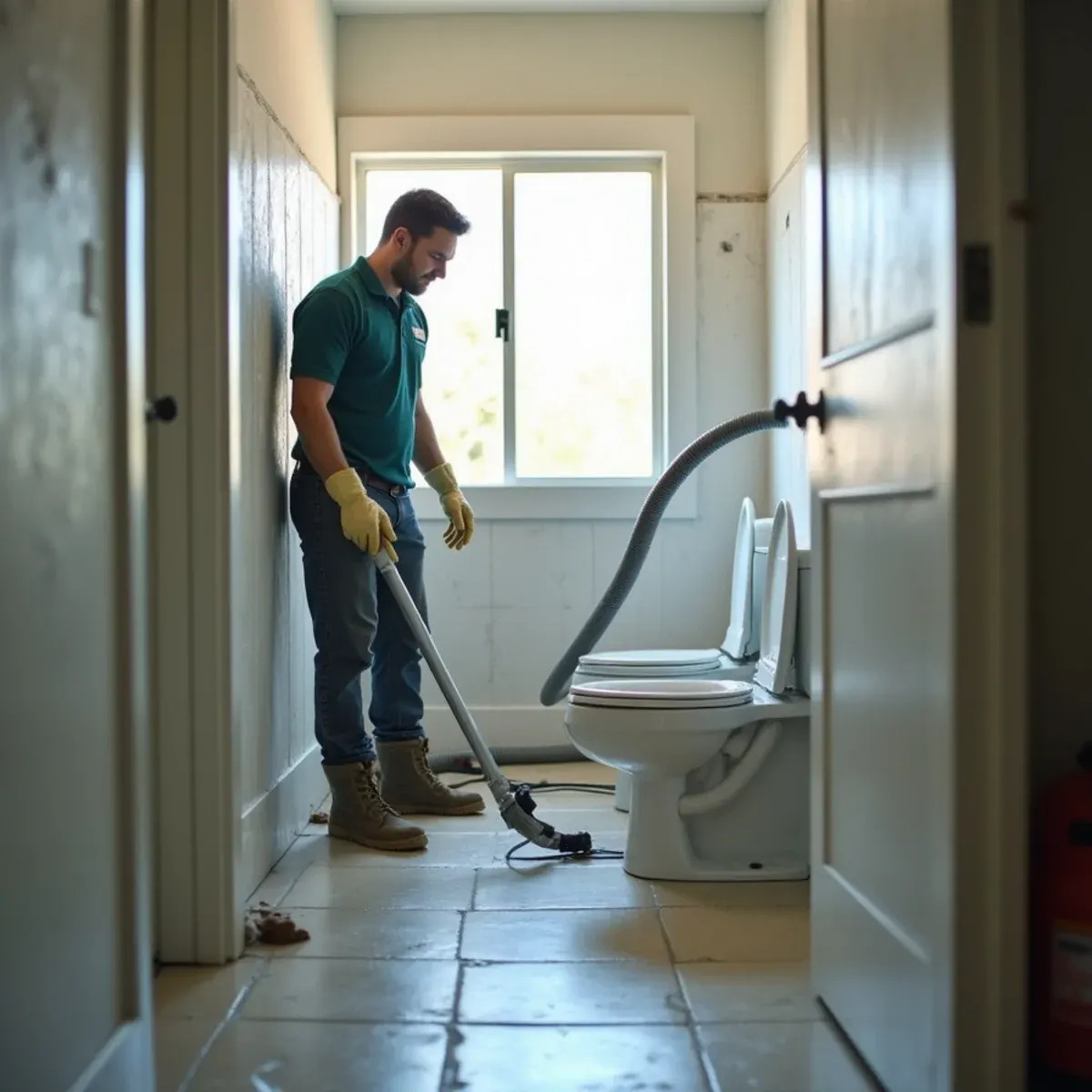
It usually happens in under a minute. One flush, the bowl fills instead of clearing, and before you find the shutoff there is water across the tile, under the vanity toe kick, and moving toward the hall carpet. Most of it looks clean. That is the part that fools people. A toilet overflow is the one loss where homeowners make two opposite mistakes with equal regularity. Some towel it up, put a box fan on it, and consider the matter closed. Others call a company that treats every overflow as a biohazard and prices it that way. Both mistakes cost money, just on different schedules.
What decides the right answer is not how much water came out. It is where that water came from. A bowl that overflowed because the fill valve stuck open, or because a toy blocked the trap, is pushing clean supply and bowl water onto your floor. That is Category 1 or 2 under IICRC S500:2025, and it is usually a straightforward dry-out. A toilet that came up because the main line blocked is the lowest relief point for every fixture in the house, and what surfaced is waste from all of them. That is Category 3, and it needs containment, PPE, removal of porous materials, and disinfection to standard.
The other thing that makes a toilet different from a burst supply line is geometry. The fixture sits over a hole in your floor. Water that pools around the base runs down around the flange, wicks into the cut edge of the subfloor, and travels along plywood seams where you cannot see it or reach it with a fan. On a second floor it finds the ceiling below within hours. We work out of Katella Avenue in Cypress and guarantee a 60-minute response inside the city; everywhere else in our service area we dispatch as fast as conditions allow. Assessments are free and we bill your carrier directly.
What You Notice, In the Order You Notice It
The signs after a toilet overflow arrive in a fairly predictable sequence, and the early ones tell us more about the water than the late ones do.
Water past the bathroom threshold
The first real signal is not the puddle around the base, it is the dark line of dampness under the door. Bathroom floors are rarely level and the doorway is usually the low point. Once water crosses into hallway carpet or an adjoining bedroom, it is under the pad and spreading, not sitting.
The color and the smell of what came up
Look at the water before you clean it. Clear and odorless points to a supply-side or bowl-side failure. Gray, cloudy, carrying solids, or smelling like sewer means the water came back up the drain from the line, and the entire scope of the work changes with it.
Other fixtures gurgling or backing up
If the tub gurgles when the toilet flushes, or the shower pan fills when the washing machine drains, the blockage sits downstream of both fixtures. That is a main line problem rather than a toilet problem, and it means the next overflow is already on its way.
The toilet rocks or the floor gives
Press the floor a foot out from the base. Sponginess, flex, or a bowl that shifts when you sit on it means the subfloor around the flange has been wet before. That points to previous overflows or a slow wax ring leak, not only to what happened today.
Baseboard and vanity kick darkening at the bottom
Painted baseboard swells and the paint line lifts within a day. Particle board vanity kicks darken and blister along the cut edge, because that edge is unfinished and drinks water fast. Both are telling you the water sat there long enough to be absorbed rather than wiped.
A stain or a sag on the ceiling below
With an upstairs bathroom, watch the ceiling underneath it for two full days. A ring, a dimple in the paint, or nail heads suddenly showing means water reached the drywall through the subfloor. The insulation above it is holding water even after the stain stops growing.
The smell returns after everything looks dry
A sewer or musty odor that comes back three days after cleanup means moisture and soil are still sitting in a cavity, usually under the flooring or inside the wall behind the toilet. Deodorizers cover that up for a week or two. They do not fix it.
How We Handle a Toilet Overflow
The category decides the scope, so we settle that question first and build the rest of the job around the answer.
- 1
Stop the water, stabilize the room
If the bowl is still filling, the angle stop behind the toilet is the fastest shutoff — turn it clockwise. We take it from there: standing water off the floor, contents lifted out of the wet zone, wet vacuum on the hard surfaces, and towels pulled back from the doorway so nothing wicks further. In Cypress we are on site within 60 minutes; elsewhere we dispatch as fast as conditions allow.
- 2
Determine the category before scoping
We trace the source, not the mess. A stuck fill valve, a failed flapper, or an obstruction inside the toilet's own trap is clean-water side. Water rising from the drain without a flush, other affected fixtures, or visible soil means the main line, and the job becomes Category 3 under IICRC S500:2025. You get told which one you have, and why, before any demolition is proposed.
- 3
Extract, then remove only what must go
Extraction comes first, because every gallon pulled out is a gallon that never has to be evaporated. On a Category 1 loss, sealed tile stays and carpet often dries once the pad is out. On Category 3, carpet, pad, wet insulation, and drywall below the wet line come out and get bagged, because porous material cannot be reliably disinfected all the way through.
- 4
Pull the toilet, inspect the flange
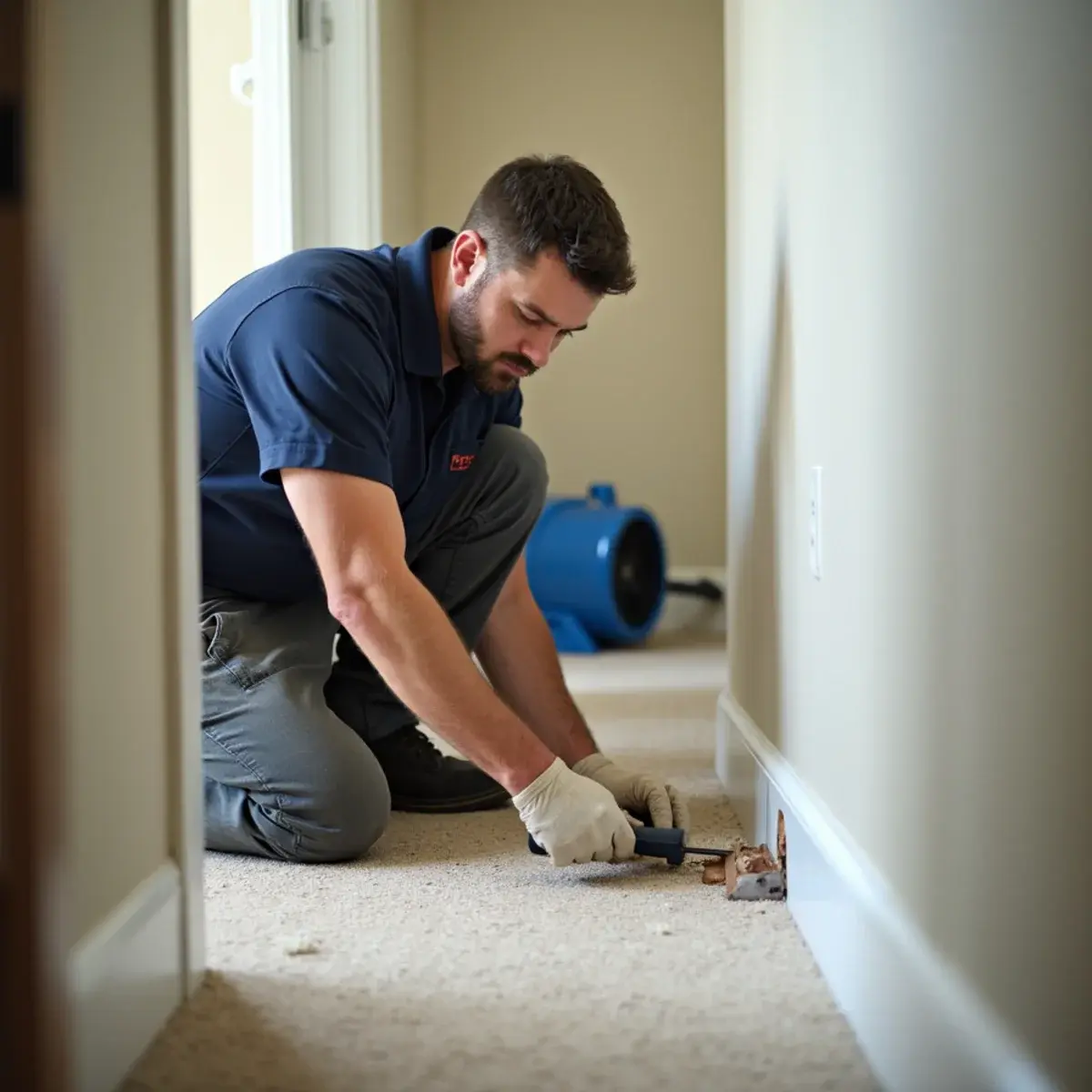
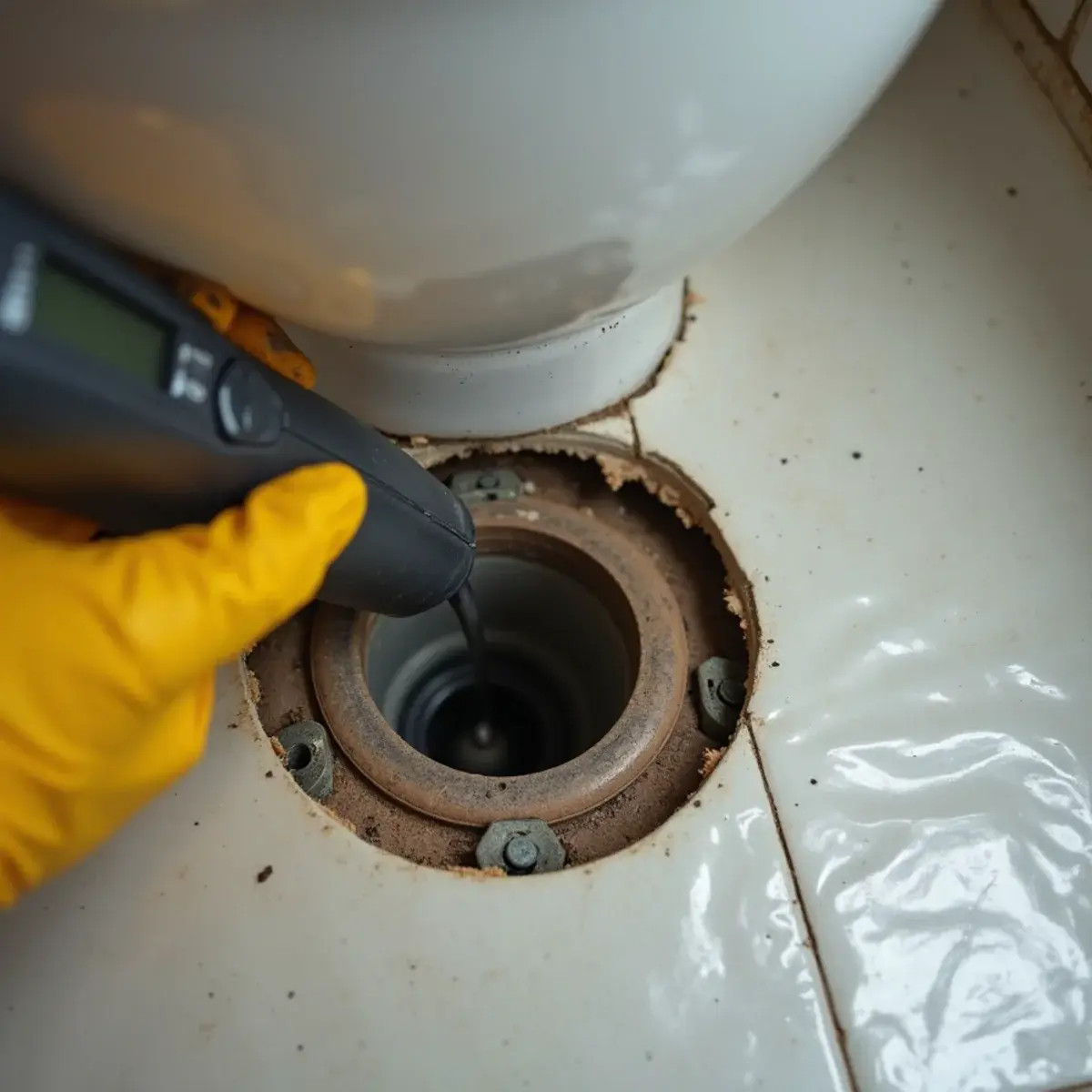
This step gets skipped constantly. The toilet comes off, the wax ring is discarded, and we look at what is underneath: a rusted or cracked flange, a saturated flange cut, a subfloor edge already delaminating. Water that reached the flange opening has run into the joist bay below. You cannot inspect or dry that space with the fixture still bolted down.
- 5
Dry the subfloor and the ceiling below
Air movers pointed at a closed bathroom door accomplish very little. We put airflow where the water actually went — under flooring with mat systems, into the wall cavity behind the toilet through controlled access holes, and into the ceiling cavity beneath an upstairs bath. Dehumidifiers are sized to the space, and we log moisture readings daily instead of guessing at a finish date.
- 6
Disinfect to category, verify, reset
Category 1 work ends with cleaning and a documented dry standard. Category 3 adds removal of the soil load first, then an EPA-registered antimicrobial rated for that use, because disinfectants do not work through organic material. We reset the toilet on a new wax ring and a sound flange, and hand you the moisture log and the photo set for your claim.
How We Decide Whether It Is Category 3
Everything on the drain side of the trap has been in the sewer system. Everything on the supply side has not. That line is where the category call gets made, and it is more specific than most people expect. A bowl that overflowed because the tank kept filling is pushing water that entered the fixture clean and left over the rim. That is Category 1, and it becomes Category 2 once it crosses a dirty floor, sits for a day, or picks up soil on the way into a hallway.
The harder case is a bowl that overflowed because the flow could not leave. If the obstruction sits inside the toilet's own trap, what came over the rim is bowl content and nothing further. If the obstruction is in the branch or the main line, the toilet became the relief valve for the whole system, and what surfaced could have come from any fixture in the house. When it is genuinely ambiguous, S500:2025 has us treat the water as the more contaminated category — and we will tell you plainly that is what we are doing and why.
- Did the water rise on its own, without anyone flushing? That points at the main line.
- Is any other drain slow, gurgling, or backing up at the same time?
- Was the bowl clean before the overflow, or had it already been used?
- Is there visible soil, tissue from elsewhere, or a sewer odor in the water?
When You Probably Do Not Need Us
Not every overflow is a restoration job, and saying so costs us work we would rather not take. A small overflow of clean bowl water on a sealed tile floor, caught while it was happening, wiped up inside a few minutes, and held within the bathroom is a mop-and-towel event. Run the exhaust fan, open the vanity doors, pull the towels out to dry elsewhere, and then watch the baseboard, the vanity kick, and the ceiling below for two days. If nothing swells, darkens, or smells, you are done.
Call us if any one of these is true: the water reached carpet, laminate, or a wood floor; it crossed into another room; the bathroom sits over a finished space; it ran for more than a few minutes; or the water was anything other than clear. Call as well if this has happened more than once in the same year. Repeat overflows almost always mean a line problem, and each one has been quietly wetting the subfloor around the flange while the surface looked fine.
Slab Tracts, Raised Floors, and Second-Story Baths
Most of Cypress, Lakewood, Cerritos, Norwalk, and La Palma is 1950s to 1980s slab-on-grade tract housing. On a slab the water has nowhere to drop, so it runs sideways — under sheet vinyl, under the tile bed where the grout has opened, and out into the hallway along the flattest path it can find. That is easier to dry than a cavity, but it also means the wet area is almost always much larger than the visible one, and the flooring rather than the structure is what gets sacrificed.
Raised-foundation homes in Old Towne Orange, Uptown Whittier, Old Town Tustin, and the Anaheim Colony behave differently. Water gets through at the flange cut and into the crawl space, where it soaks joists, insulation, and duct wrap out of sight. Two-story tracts across Yorba Linda, Brea, and Buena Park give us the third pattern: an upstairs bath that drops water into the ceiling below within hours. In all three, the bathroom floor you are looking at is the least important part of the job.
What Drives the Cost of Toilet Overflow Cleanup
Two overflows of identical size can be very different jobs, and these are the factors that actually move the number.
The category of the water
This is the single biggest lever. A clean-water overflow is extraction and drying. A main line backup adds containment, PPE, HEPA-filtered air, disposal of porous materials, and disinfection. The same square footage can run several times higher as Category 3, which is exactly why the category call has to be made honestly and documented.
How far it traveled from the base
Water held inside a tile bathroom is a small job. Water that reached hallway carpet, a bedroom, or a shared wall multiplies the drying chambers, the equipment count, and the days on site. The distance it traveled matters far more to the total than the volume that came over the rim.
What your floor is built from
Sealed tile over a slab often dries in place. Sheet vinyl traps water against the subfloor and usually has to come up. Laminate swells at the seams and rarely survives. Engineered wood, carpet with pad, and particle board underlayment each behave differently, and that behavior sets the removal scope.
Whether it reached the floor below
An upstairs overflow that got past the subfloor turns one room into three work areas: the bathroom, the joist cavity, and the ceiling below. That means ceiling access, wet insulation removal, and a second set of equipment. It is the most common reason a small-looking overflow becomes a multi-day job.
How long it sat before extraction
An overflow caught in ten minutes and one discovered after a weekend away are not the same loss. Time drives absorption depth, wicking up drywall, and, on Category 2 or 3 water, microbial growth. Response speed is the one variable you still control once the water is already on the floor.
Insurance note: A sudden toilet overflow is usually treated as accidental discharge from a plumbing fixture and covered under most homeowners policies, including damage to flooring, walls, and the ceiling below. Two limits matter here. If the water came back up because the sewer main blocked, that is a backup loss and needs a separate water or sewer backup endorsement. And the failed part itself, the fill valve or the wax ring, is generally not covered — only the damage it caused.
Why Cypress Homeowners Call Us for Toilet Overflow
Plenty of companies list this service. Fewer can tell you what equipment they will bring, what standard the work is measured against, or what happens if they are wrong. Here is what you are actually buying.
Category is established before anyone starts
Clean supply overflow and a sewage backup are the same puddle and completely different jobs. Getting that call wrong at the start contaminates everything downstream.
Flange, subfloor, and the room below
Overflow water runs straight down the closet flange penetration into the ceiling underneath. That is the damage people miss.
Disinfected to a standard, then verified
Affected surfaces are treated with EPA-registered antimicrobial and the work is documented, because 'we cleaned it' is not a defensible record.
- 20+ years restoring Orange County homes
- IICRC Certified Firm
- Licensed, Bonded & Insured
- We bill your insurance company directly
- IICRC S500:2025 compliant on every job
- 100% satisfaction guarantee — in writing, on every job
Frequently Asked Questions
Clear water lowers the health risk, not the drying requirement. Clean water still soaks into carpet pad, particle board, and the cut edge of subfloor around the flange, and it still causes swelling and mold growth if it stays. What clean water does change is the scope: no containment, no PPE, usually no demolition. If it stayed on sealed tile and you got it up quickly, you may genuinely be fine. If it reached anything porous, it needs real drying.
Three checks. Did the water rise in the bowl without anyone flushing it? Does another fixture gurgle, drain slowly, or fill up when you run water elsewhere in the house? Is there visible soil or a sewer odor in what came out? Any one of those points at the main line. A stuck fill valve, by contrast, gives you clear water, a bowl that overflows steadily, and a tank you can hear running continuously.
No, and we push back on companies that treat removal as automatic. Sealed tile over a slab usually dries in place. Carpet often dries once the pad comes out, provided the water was clean. What generally has to go is sheet vinyl and laminate, which trap water underneath, particle board underlayment, and anything porous that Category 3 water touched. We show you the moisture readings behind each removal call before we make it.
The ceiling cavity is now the main part of the job. We need access to it, usually a small opening or removal of the stained section, so we can pull wet insulation, dry the joists and the back of the drywall, and confirm the framing is sound. Drying it from the room below with a fan aimed at the stain does not work, because the water is above the drywall and inside the insulation. Expect several days on equipment.
Usually, if it was sudden. Most homeowners policies cover accidental discharge from a plumbing fixture, including damage to flooring, walls, and the ceiling below. Two limits are worth knowing. A main line backup is excluded unless you carry a sewer or water backup endorsement. And the failed component itself is not covered, only the damage it caused. Repeated overflows a carrier reads as long-term seepage can also be denied. We document from the first visit and bill directly.
Related Reading
- Water Damage Categories 1, 2, and 3 Explained — The category of the water decides what can be saved, what has to be thrown out, and whether it is safe to be in the room. Here is how to tell them apart.
- What to Do in the First 30 Minutes After Water Damage — The half hour after you find water on the floor determines a surprising amount of what the repair costs. Here is exactly what to do, in order.