
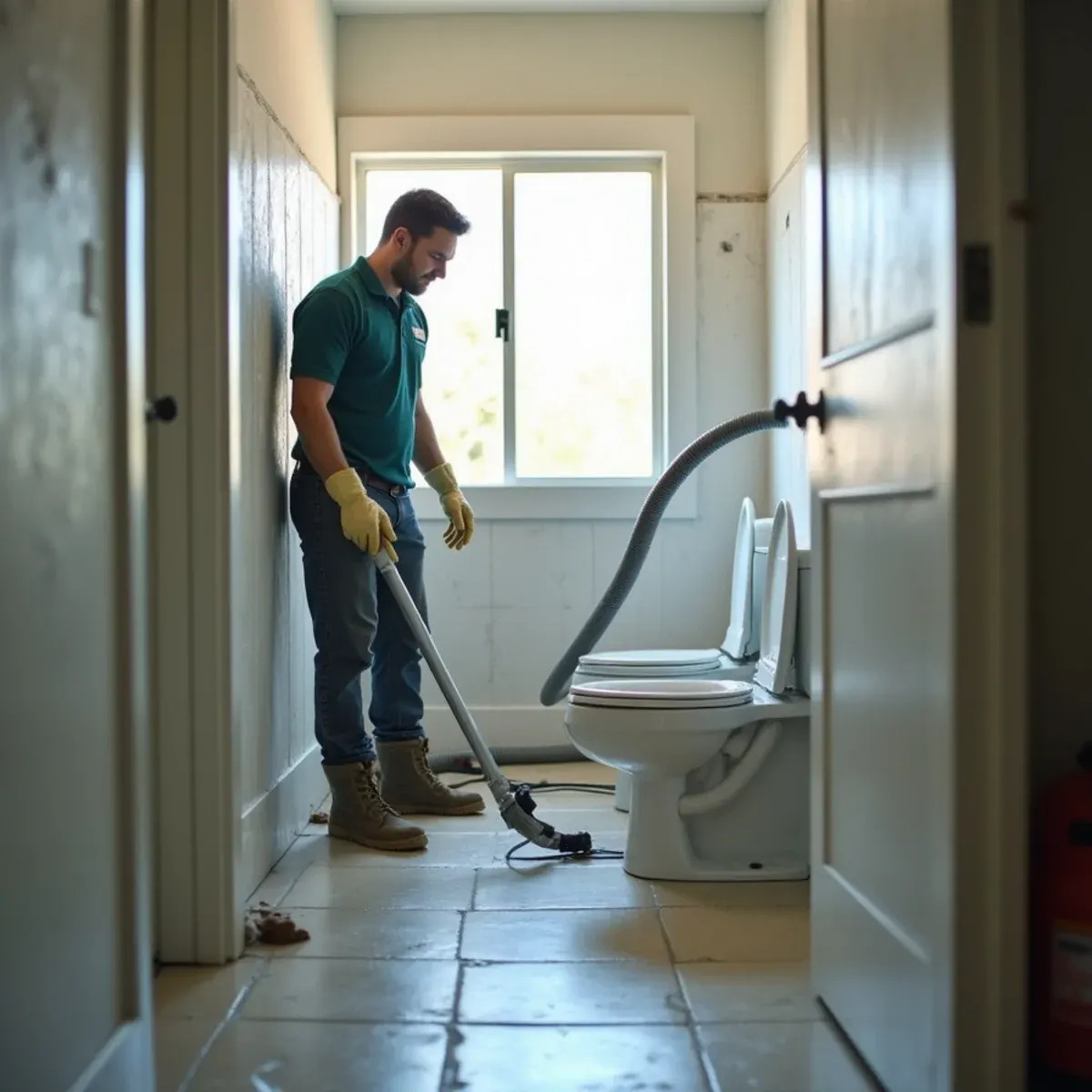
A restroom toilet on Pioneer Boulevard rarely overflows on its own account. It overflows because it is the lowest fixture on a waste line that has been narrowing with grease for years. Little India packs one of the densest concentrations of independent restaurants and retail in the region into 1950s buildings that were never designed for commercial kitchens, running everything through cast iron that was sized for a small storefront. When that line restricts, the backup surfaces at the restroom, in front of customers, with the health department implications that come attached.
That is a Category 3 job from the first minute: containment, PPE, removal of porous material, disinfection of every surface the water touched, and documentation an inspector will accept. Where the layout separates the areas, we sequence to get the dining room back in service before the restroom is fully finished, because a closure costs an operator more than the cleanup does. The residential side of Artesia is modest 1950s to 1970s slab housing, and there the same restricted lateral shows up as an overflow in a single hall bath rather than as a business interruption.
What Artesia Changes About Toilet Overflow
1Grease-loaded cast iron under 1950s buildings
The commercial kitchens along Pioneer Boulevard were fitted into buildings drawn for retail. Decades of cooking oil through original cast iron leaves a hardened lining that narrows the bore until any surge backs up at the lowest opening, which is the restroom floor drain or the toilet. Cleaning the fixture without addressing the line just buys time until the next busy service.
2Restroom closures and inspection records
A sewage event in a food service restroom is a documented matter, not just a mess. We record what was contaminated, what was removed, what was disinfected and with what, and we photograph each stage. That record is what an inspector wants to see before a reopening, and what a business interruption adjuster wants before paying for the days you were dark.
3Sequencing to reopen the dining room first
In these narrow storefront layouts the restroom often sits at the back, past the kitchen, which means containment has to be tight enough that the front of the house is genuinely separated. We build hard containment where the plan allows it, run negative air, and stage work so the highest-revenue space returns first. Nights and pre-service mornings are usually the right windows.
How the Work Runs
The method is the same one we use on every toilet overflow job, documented to the IICRC S500:2025 standard. Here it is in short — the full toilet overflow cleanup process explains each stage in detail.
- Stop the water, stabilize the room
- Determine the category before scoping
- Extract, then remove only what must go
- Pull the toilet, inspect the flange
- Dry the subfloor and the ceiling below
- Disinfect to category, verify, reset
The Artesia Background Worth Knowing
A commercial kitchen is one of the hardest things you can ask a building to accommodate. High water use, continuous drainage, grease loading, floor drains, and equipment connections that get added and modified over the years. When that kitchen is in a building from the 1950s with original cast-iron waste lines, the failure is a matter of time.
There is more on the housing stock, drainage and plumbing history of this city on our water damage restoration in Artesia page.
Artesia at a glance
- Dominant construction era
- 1950–1970
- Foundation type
- slab on grade
- Supply piping found here
- galvanized steel, copper
- Drain line materials
- cast iron
- Terrain and water table
- flat, moderate water table
- Most common local failure
- grease-loaded cast-iron waste lines restricting until a commercial kitchen backs up
- Highest-value local prevention
- hydro-jetting the waste line rather than snaking it, so the pipe wall actually gets cleaned
What It Costs in Artesia
We do not quote a number over the phone before seeing the property — anyone who does is guessing. The variables that actually move the price on a toilet overflow job are the category of the water, how far it traveled from the base, what your floor is built from, and they are broken down in full on the toilet overflow cleanup page. The assessment and the written estimate are free anywhere in Artesia, day or night, with no obligation.
Toilet Overflow Questions from Artesia Homeowners
It depends on how far the water spread and whether it reached the kitchen. If it stayed inside the restroom and we can build hard containment across the back hall, many Pioneer Boulevard operators are serving the front of the house again well before the restroom is finished. If it crossed into the prep area, everything porous it touched comes out first and the dining room waits. We work nights and pre-service mornings to keep those hours down.
Clear water lowers the health risk, not the drying requirement. Clean water still soaks into carpet pad, particle board, and the cut edge of subfloor around the flange, and it still causes swelling and mold growth if it stays. What clean water does change is the scope: no containment, no PPE, usually no demolition. If it stayed on sealed tile and you got it up quickly, you may genuinely be fine. If it reached anything porous, it needs real drying.
Three checks. Did the water rise in the bowl without anyone flushing it? Does another fixture gurgle, drain slowly, or fill up when you run water elsewhere in the house? Is there visible soil or a sewer odor in what came out? Any one of those points at the main line. A stuck fill valve, by contrast, gives you clear water, a bowl that overflows steadily, and a tank you can hear running continuously.
Yes, and on Pioneer Boulevard that is usually how we schedule it. Overnight crews cost somewhat more in labor and almost always cost dramatically less than lost revenue from closing during operating hours.