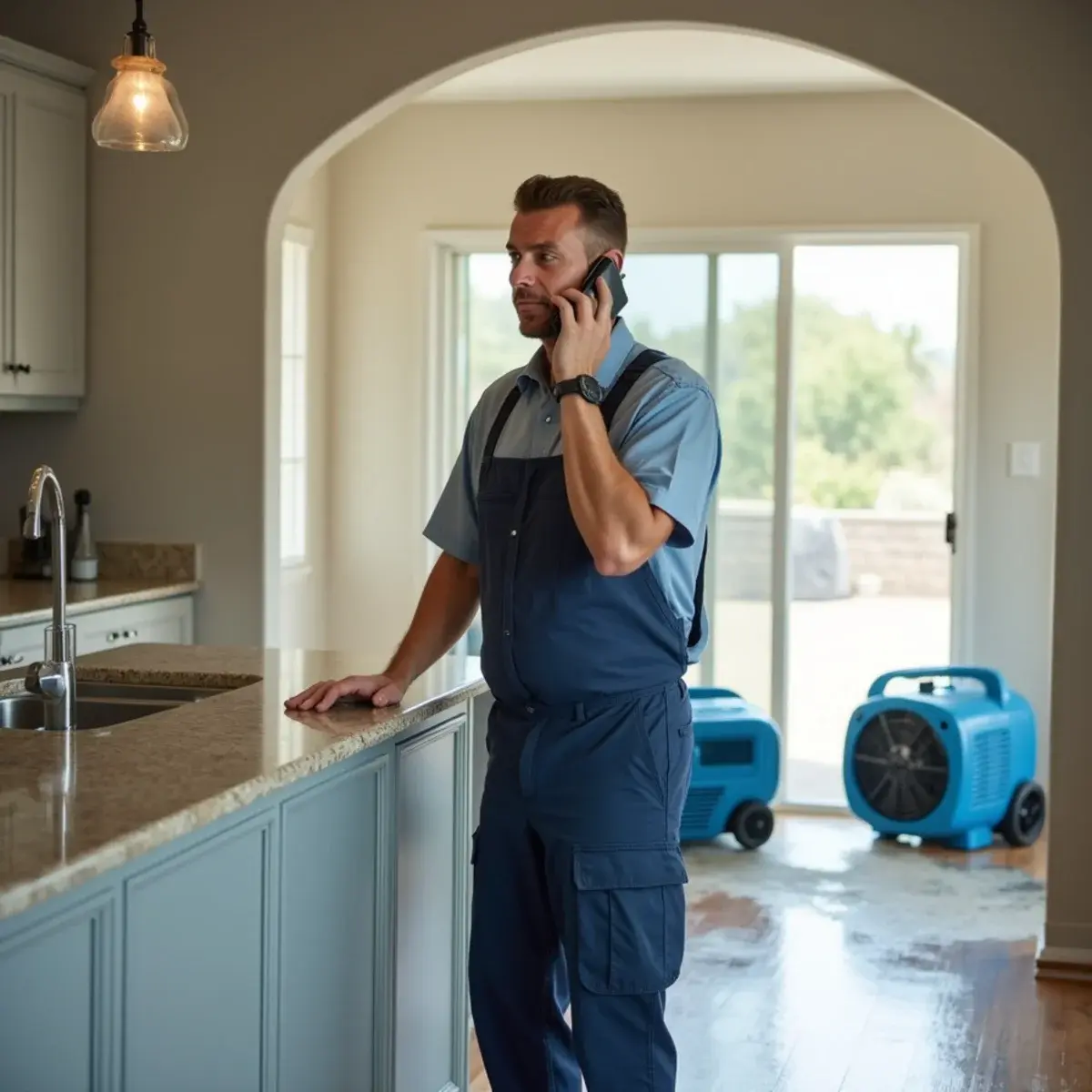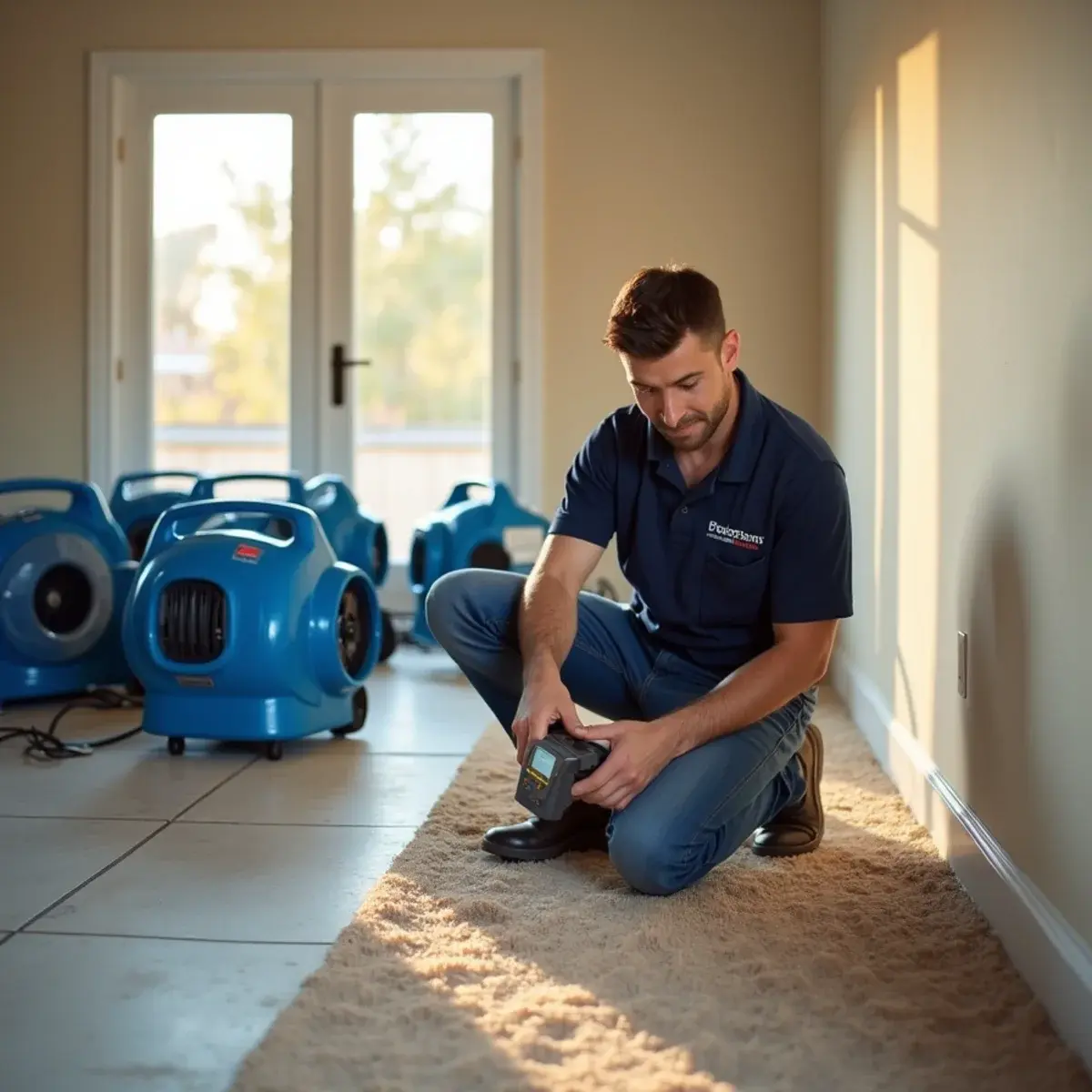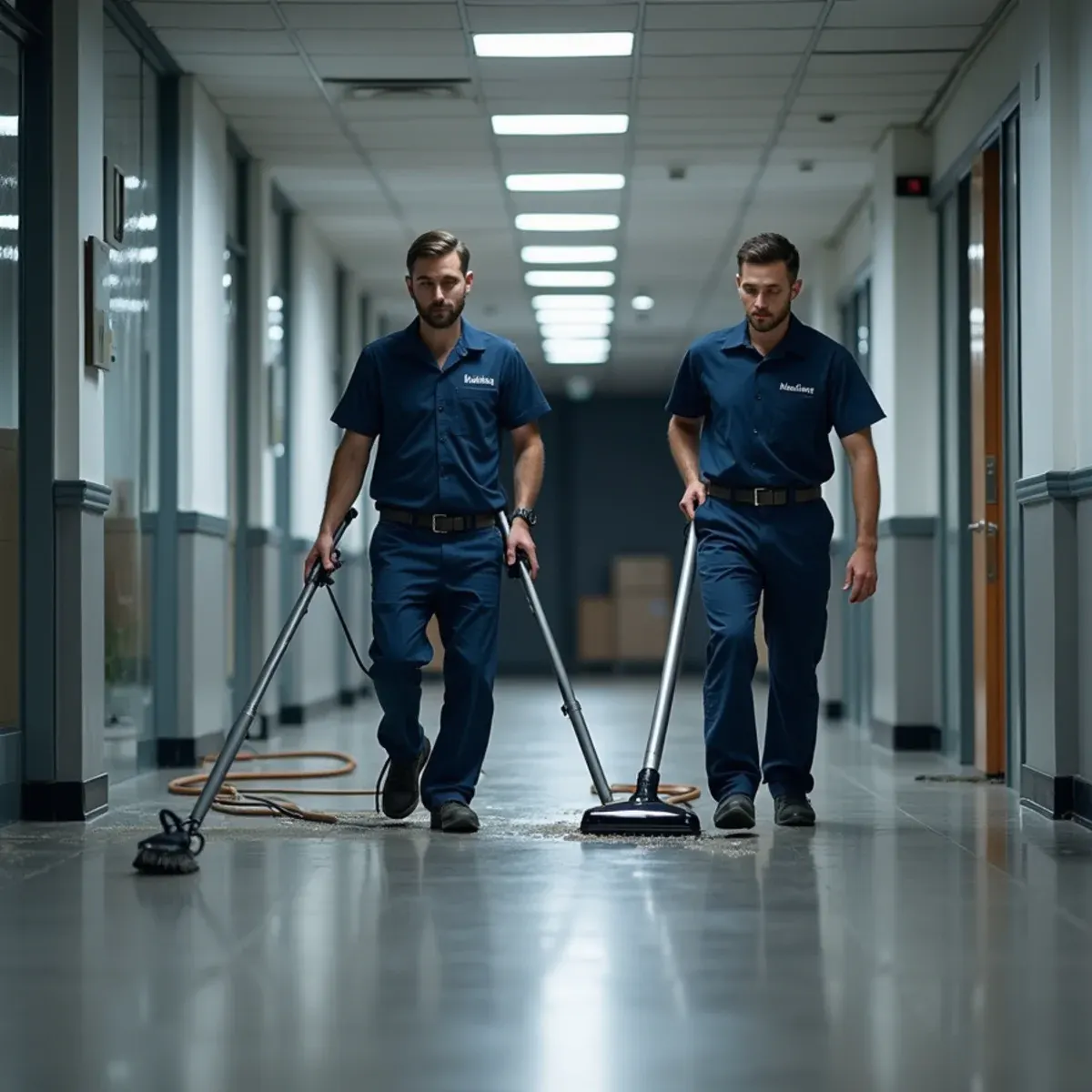
Commercial water losses are judged by a different measure than residential ones. A homeowner wants their house back. A property manager or business owner wants the doors open, the tenants working, and a paper trail that holds up with an owner, a carrier, and possibly a tenant's attorney.
Cypress has a substantial commercial base — the business parks along Katella and Valley View, the retail centers at the major intersections, light industrial near the Los Alamitos border, and a large stock of multi-family and HOA-managed properties. Each of those has a different failure mode and a different definition of a good outcome.
Our commercial work is built around minimizing downtime: night and weekend crews, containment that lets adjacent suites keep operating, and phased scheduling so the parts of the building that can stay open, stay open.
Commercial Losses We Respond To
The causes differ from residential, and so does the urgency calculus:
Fire sprinkler discharge
A single activated head releases roughly 20 to 25 gallons per minute until the system is shut down. Accidental discharge from impact or corrosion is one of the most common commercial losses and one of the fastest-moving.
Water heater or boiler failure in a shared mechanical room
Affects every tenant downstream and downhill at once, which turns a single equipment failure into a multi-tenant claim.
Roof drain and scupper failures on flat roofs
Commercial flat roofs rely entirely on drains staying clear. A blocked drain during a storm ponds thousands of pounds of water and finds every seam in the membrane.
Multi-unit escalation in apartments and condos
A supply line failure in an upstairs unit affects the unit below within minutes and often three or four units before it is contained. These have complicated liability and require careful documentation of each unit separately.
Sewer backups in restaurants and food service
Category 3 water in a food service environment triggers health department involvement and immediate closure. Speed and documented clearance are everything.
Slab and underground line failures in older commercial buildings
The 1970s and 1980s commercial stock along the Katella corridor has the same aging under-slab plumbing as the residential tracts, with more square footage above it.
How We Work on Commercial Properties
Same restoration science, different operational constraints.
- 1
Rapid assessment with a business continuity lens
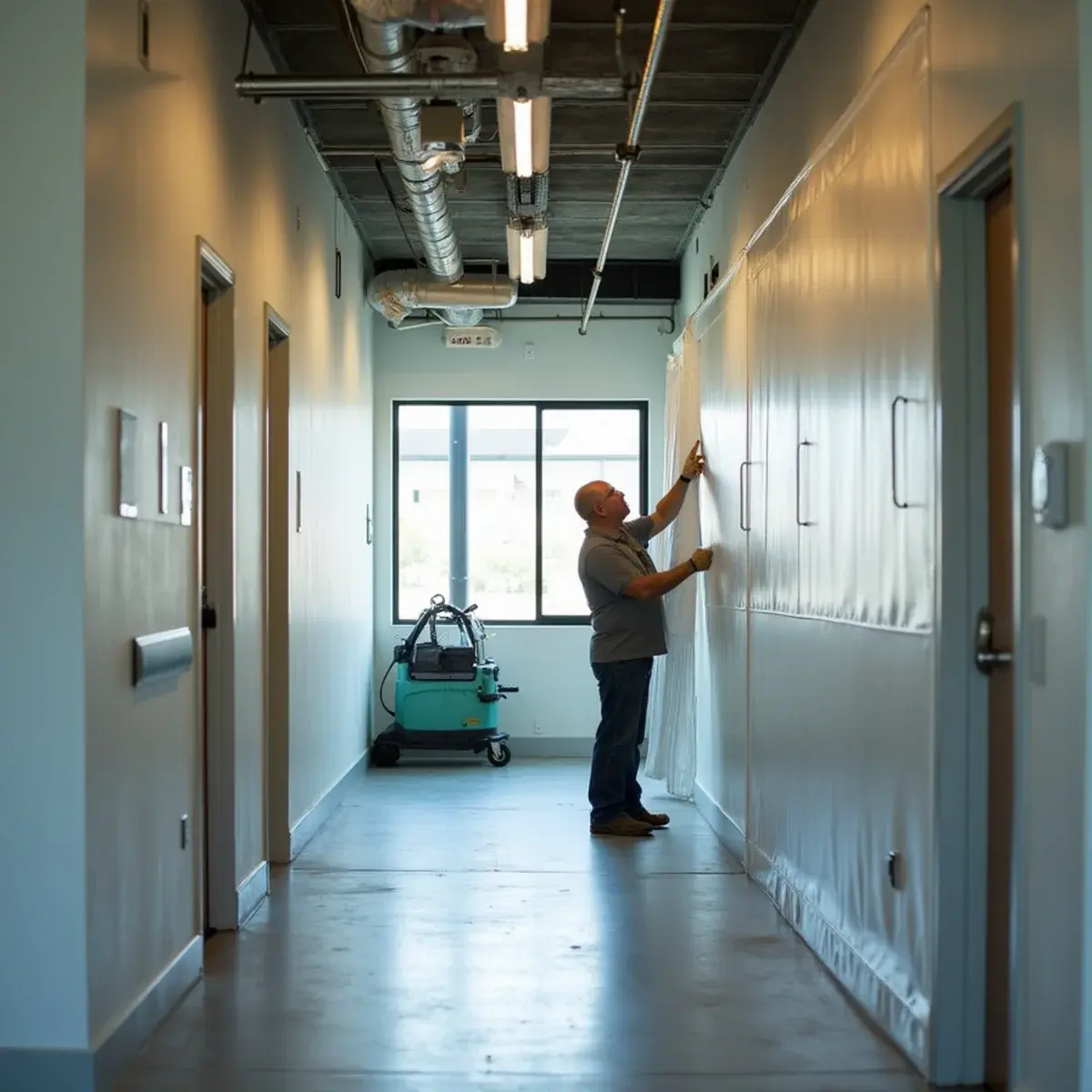
The first question is which areas can keep operating and how we isolate them. Containment strategy is designed around your operations, not just the wet perimeter.
- 2
Coordinate with stakeholders
Property management, ownership, tenants, the carrier, and — where relevant — the health department all need different information at different times. We handle that communication rather than leaving it to you.
- 3
After-hours mobilization
Where the work can be done overnight or over a weekend to avoid disrupting business, we schedule it that way. Equipment placement is planned so operating areas stay accessible and safe.
- 4
Documentation at commercial standard
Unit-by-unit or suite-by-suite moisture mapping, photo documentation, and daily logs. On multi-family losses each unit is documented as its own file, because that is how the claims and any liability questions get resolved.
- 5
Scaled drying and containment
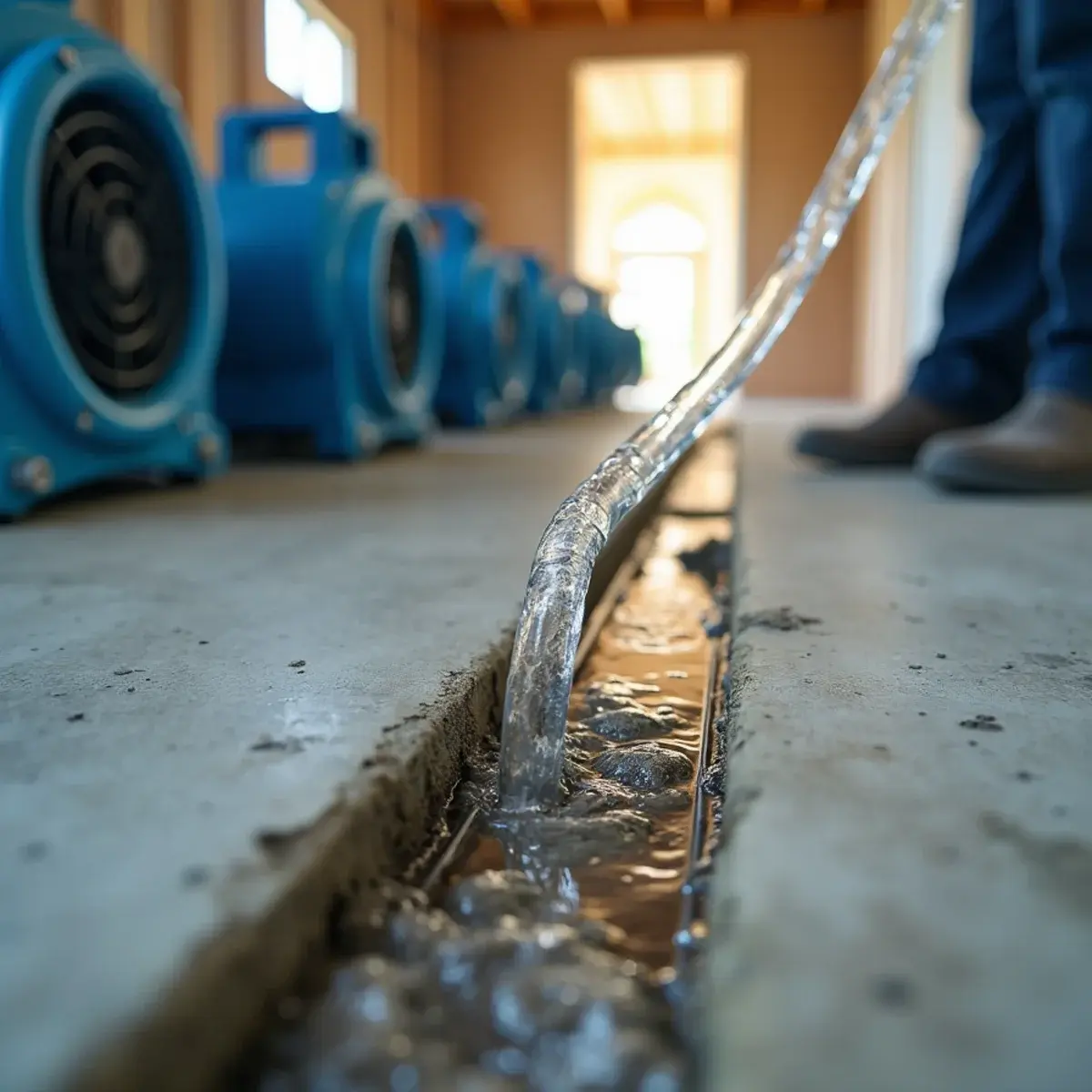
Commercial-capacity dehumidification and, on large-volume spaces, desiccant units. Containment engineered so drying does not push moisture or noise into occupied suites.
- 6
Phased reconstruction
Repairs sequenced so the maximum amount of space returns to service as early as possible, rather than holding the whole building until the last punch item is done.
Multi-Family and HOA Losses: Documenting Every Unit Separately
A supply line failure in a second-floor condo is not one loss — it is potentially four, with four different insurance policies, an HOA master policy, and questions about where unit ownership ends and common area begins.
We document each affected unit as its own file: separate photographs, separate moisture mapping, separate drying logs, separate scope. That structure is what lets an HOA manager, four unit owners, and multiple carriers all resolve their portion without arguing over a single blended invoice.
It also protects the origin unit's owner. Clean documentation of what was actually affected in each unit is the best defense against downstream claims that expand well beyond the real damage.
Why Downtime Costs More Than the Restoration
For most commercial clients, the restoration invoice is not the expensive part of a water loss. A retail suite closed for three weeks, a dental practice that has to reschedule a month of patients, or a restaurant shut by the health department loses far more revenue than the drying costs.
That reality drives every decision we make on a commercial job. We would rather run more equipment for fewer days than fewer units for more days. We would rather work three nights straight than nine partial days. We would rather build a tighter containment and let two thirds of the floor keep operating than close the whole space for convenience.
It also means we tell you early and specifically when the space will be usable again, and we update that estimate daily. A property manager can work with a realistic timeline. Nobody can work with a contractor who will not commit to one.
What Commercial Restoration Costs Depends On
Commercial pricing follows the same industry schedules as residential, with these additional drivers:
Square footage and ceiling height
Drying is calculated on cubic volume, and commercial spaces with high open ceilings require considerably more dehumidification capacity than the floor area alone suggests.
Occupancy and access constraints
Work restricted to nights and weekends, or scheduled around tenant operations, costs more in labor than uninterrupted access. It usually costs far less than the lost revenue from closing.
Building systems involved
Commercial HVAC, elevator pits, electrical rooms, and fire suppression systems each require specialized handling and licensed trades.
Number of affected tenants or units
Each unit needs its own assessment, documentation, containment, and often its own claim file. Administrative and coordination effort scales with unit count.
Specialty flooring and finishes
Commercial-grade carpet tile, VCT, sealed concrete, and specialty finishes have different drying characteristics and replacement costs than residential materials.
Insurance note: Commercial policies commonly include business interruption coverage, which can pay for lost income during the closure. That coverage depends heavily on documented timelines, which is another reason the daily logs matter — they establish exactly how long the space was unusable and why.
Why Cypress Homeowners Call Us for Commercial Restoration
Plenty of companies list this service. Fewer can tell you what equipment they will bring, what standard the work is measured against, or what happens if they are wrong. Here is what you are actually buying.
Scheduled around your tenants and your trading hours
Containment that lets a suite stay open, and demolition scheduled overnight or across a weekend where the layout allows it.
Documentation your property manager can file
Per-unit scopes, per-unit moisture logs, and photographs organised by suite rather than one bundle for the building.
Equipment volume for a commercial footprint
A 6,000 square-foot floor plate needs a different order of equipment than a house. We size the chamber properly instead of staging it over a week.
- 20+ years restoring Orange County homes
- IICRC Certified Firm
- Licensed, Bonded & Insured
- We bill your insurance company directly
- IICRC S500:2025 compliant on every job
- 100% satisfaction guarantee — in writing, on every job
Frequently Asked Questions
Yes, and for most commercial clients that is the default. Night and weekend crews cost somewhat more in labor and almost always cost far less than the revenue lost by closing during business hours.
Regularly. Multi-family losses are documented unit by unit with separate files, moisture mapping, and drying logs, which is what allows multiple owners, an HOA, and several carriers to resolve their portions cleanly.
The same 60-minute commitment applies. For commercial properties we can also hold your building information, access procedures, and emergency contacts on file in advance so there is no delay finding a key or a shutoff at 2 a.m.
Yes. We coordinate with ownership, property management, tenants, and the carrier, and we provide the documentation each one needs in the format they expect. On losses involving health department or municipal oversight we handle that reporting as well.
Food service triggers health department involvement and immediate closure requirements, particularly for Category 3 water. We prioritize those, follow the applicable protocols for the space, and provide the clearance documentation needed to reopen.
Related Reading
- How to File a Water Damage Insurance Claim (Step by Step) — Most people file exactly one water damage claim in their life, while doing it under stress. Here is the process, in order, with the mistakes flagged.
- How Long Does Water Damage Restoration Actually Take? — Extraction is measured in hours, drying in days, and reconstruction in weeks. Here is what each phase actually involves and what stretches it.