
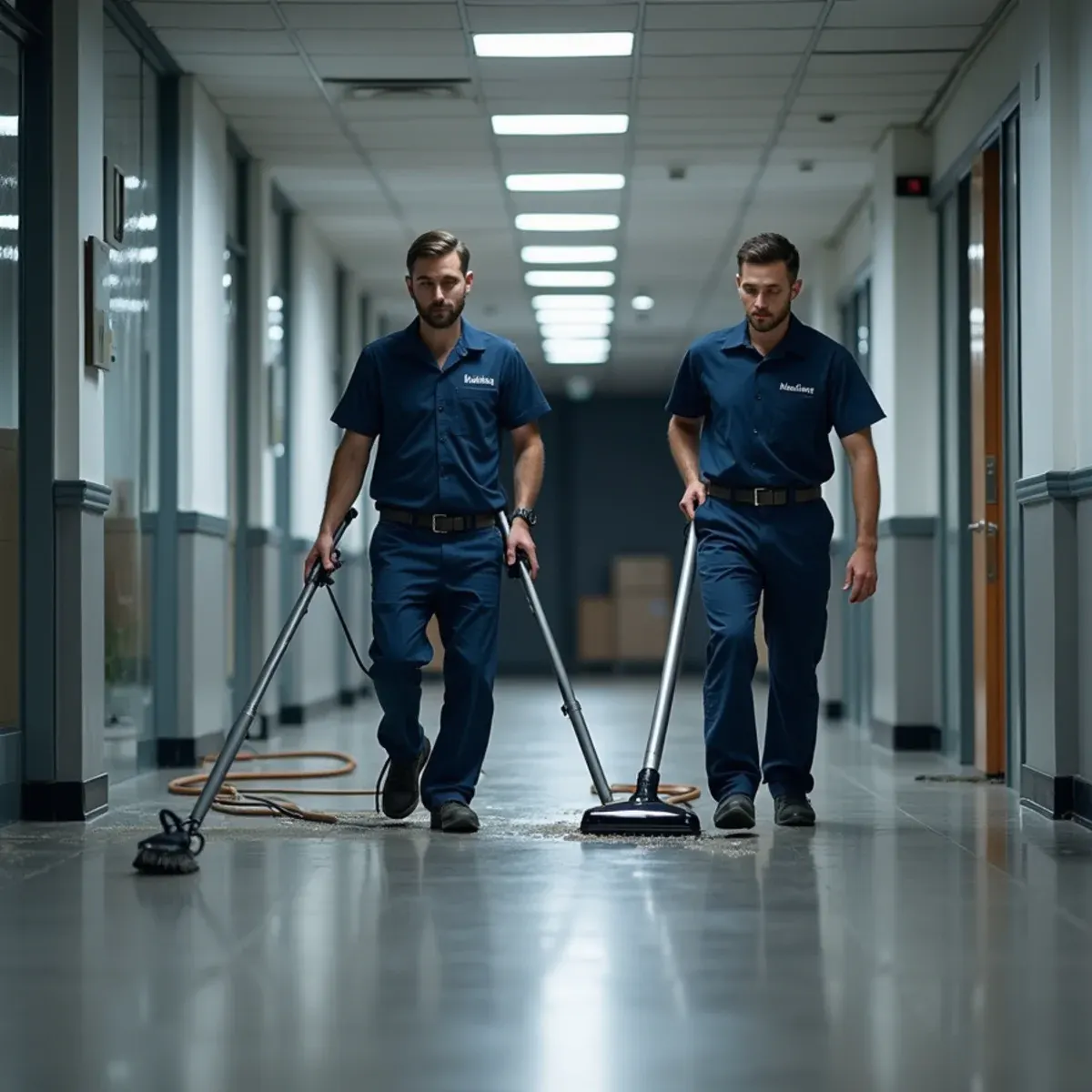
Long Beach spans more construction history than anywhere else we serve, and the right approach changes entirely with the address. A 1926 plaster wall in Bluff Park and a 1955 drywall partition in Los Altos are two different restoration problems that happen to look similar when they are wet. Naples sits on filled land with canal-front buildings and a shallow water table. Belmont Shore has narrow lots, limited street parking and storefronts with no loading access. East Long Beach near the Cypress border behaves almost exactly like our home city: slab on grade, postwar tract construction, San Gabriel River drainage.
So the first fifteen minutes of a Long Beach commercial job are spent identifying what the building actually is. Plaster needs desiccant capacity and immediate action before the keys release from the lath. Slab-on-grade needs in-situ testing before any floor goes back down. Belmont Shore needs an equipment staging plan made before the truck leaves. Getting that sequence right is why two identical-sounding losses in this city can finish four days apart.
What Long Beach Changes About Commercial Restoration
1Construction type identified before demolition
Plaster over wood lath, postwar drywall on slab, and canal-front construction on filled land each demand a different drying plan and a different demolition decision. We confirm what we are working with by inspection, not by year built, because Long Beach buildings have been remodeled in layers. The wrong assumption costs either a savable wall or several days of ineffective drying.
2Belmont Shore access has to be planned
Narrow lots, no rear loading and scarce street parking mean extraction hose runs and equipment staging must be arranged before arrival. We scout access and, where a truck-mount is impractical, use portable extraction staged from the alley. For a storefront on Second Street, starting an hour earlier because staging was planned is worth more than any single piece of equipment.
3East Long Beach behaves like Cypress
Near the Cypress border, El Dorado Park Estates and Los Altos share our home city's construction era, slab-on-grade build and San Gabriel River drainage behavior. We know that stock well: under-slab copper reaching its age, cast iron waste, and storm behavior tied to the river channel. That familiarity shortens diagnosis on the commercial and multi-tenant buildings through this part of the city.
How the Work Runs
The method is the same one we use on every commercial restoration job, documented to the IICRC S500:2025 standard. Here it is in short — the full commercial water damage restoration process explains each stage in detail.
- Rapid assessment with a business continuity lens
- Coordinate with stakeholders
- After-hours mobilization
- Documentation at commercial standard
- Scaled drying and containment
- Phased reconstruction
The Long Beach Background Worth Knowing
The postwar tracts around El Dorado Park, Los Altos, and the neighborhoods near the Cypress border were built in the same era and largely the same way as the housing in our home city. Single-story slab construction, plumbing routed under the concrete, and a fifty-to-seventy-year age on the supply lines.
There is more on the housing stock, drainage and plumbing history of this city on our water damage restoration in Long Beach page.
Long Beach at a glance
- Dominant construction era
- 1920–1980
- Foundation type
- mixed on grade
- Supply piping found here
- original 1920s piping, galvanized steel, under-slab copper
- Drain line materials
- cast iron, clay
- Terrain and water table
- coastal-flat, shallow water table
- Most common local failure
- the approach changing entirely by neighborhood — a 1926 plaster wall and a 1955 drywall wall are different restoration problems
- Highest-value local prevention
- identifying the construction type before anyone starts cutting
What It Costs in Long Beach
We do not quote a number over the phone before seeing the property — anyone who does is guessing. The variables that actually move the price on a commercial restoration job are square footage and ceiling height, occupancy and access constraints, building systems involved, and they are broken down in full on the commercial water damage restoration page. The assessment and the written estimate are free anywhere in Long Beach, day or night, with no obligation.
Commercial Restoration Questions from Long Beach Homeowners
Because they are different buildings. Bluff Park construction typically has lath-and-plaster walls that hold several times the water drywall does, release it slowly and need desiccant drying to save. East Long Beach is postwar slab-on-grade with drywall, which dries faster but requires in-situ slab testing before flooring goes back. Same water volume, different materials, different equipment and different timelines. The scope should reflect the building rather than a standard rate.
Yes, and for most commercial clients that is the default. Night and weekend crews cost somewhat more in labor and almost always cost far less than the revenue lost by closing during business hours.
Regularly. Multi-family losses are documented unit by unit with separate files, moisture mapping, and drying logs, which is what allows multiple owners, an HOA, and several carriers to resolve their portions cleanly.
All of it, with the fastest response to East Long Beach — El Dorado Park Estates, Los Altos, and the neighborhoods near the Cypress border, which are typically twenty to twenty-five minutes. Coastal and downtown areas run a little longer, and we will give you a realistic ETA when you call.