
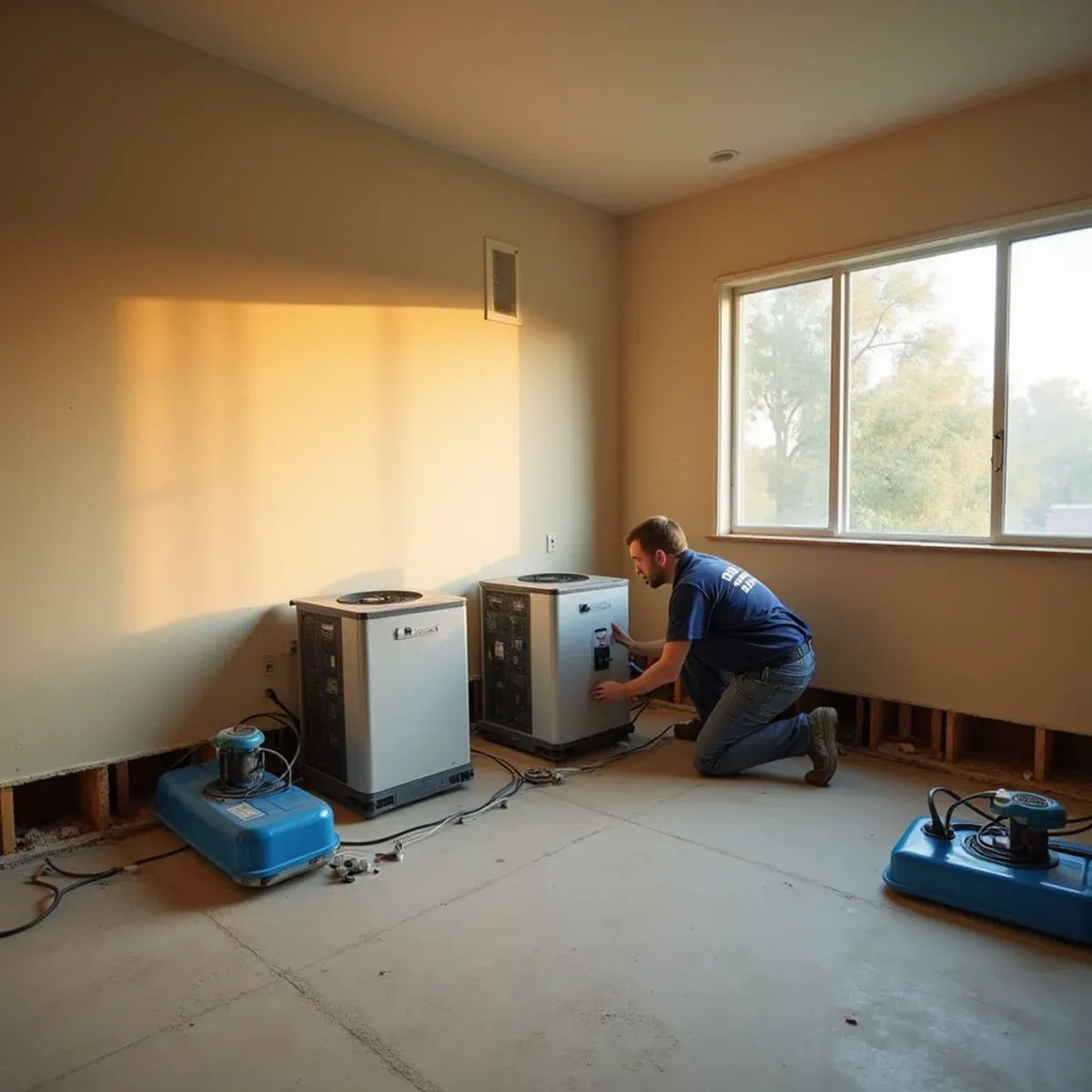
Your address decides the drying plan here more than the size of the loss does. A 1926 Craftsman in California Heights is a plaster job: reservoir walls, slow release, desiccant capacity, patience. A house in El Dorado Park Estates is mid-fifties slab-on-grade and behaves exactly like the homes we dry every day in Cypress, a few minutes east. Same city, same claim amount, different equipment on the truck. So the first thing we do in Long Beach is identify what the house is actually made of, before anyone starts cutting.
Naples sits on filled land between canals with the water table right underneath, so slab and lower-wall readings need a baseline from unaffected material in the same house before they mean anything at all. Belmont Shore lots are narrow with almost no street parking, and equipment staging has to be worked out before the truck arrives rather than at the curb at midnight. Bluff Park adds historic fabric worth protecting. None of that makes for a longer job. It makes the first thirty minutes assessment instead of unloading fans.
What Long Beach Changes About Structural Drying
1Plaster and drywall are different problems
A 1920s plaster wall in Bluff Park holds several times the water a 1955 drywall wall holds and releases it far more slowly, which means different equipment and a longer schedule. Treating them the same is the most common mistake we see in this city. We identify the wall assembly on arrival and set the dry standard and equipment load from that, not from square footage.
2Canal-front readings need a local baseline
On the filled land around Naples the water table sits close, so slab and lower-wall numbers run higher than inland even in a dry house. We record unaffected material in the same structure first and dry to that figure. Without a local baseline, an ordinary Naples reading looks like an ongoing leak and equipment stays out for days longer than it should.
3Belmont Shore staging planned in advance
Narrow lots, no driveways and scarce street parking mean extraction hose runs long and every piece of equipment is carried by hand. We sort out where the truck sits and how power gets distributed before we arrive, because working that out on the street at two in the morning costs the hours that matter most in a fresh loss.
How the Work Runs
The method is the same one we use on every structural drying job, documented to the IICRC S500:2025 standard. Here it is in short — the full structural drying & dehumidification process explains each stage in detail.
- Establish the dry standard
- Calculate the load and build the chamber
- Place air movers for surface evaporation
- Run LGR dehumidification to capture the moisture
- Monitor and adjust daily
- Verify, document, and demobilize
The Long Beach Background Worth Knowing
The postwar tracts around El Dorado Park, Los Altos, and the neighborhoods near the Cypress border were built in the same era and largely the same way as the housing in our home city. Single-story slab construction, plumbing routed under the concrete, and a fifty-to-seventy-year age on the supply lines.
There is more on the housing stock, drainage and plumbing history of this city on our water damage restoration in Long Beach page.
Long Beach at a glance
- Dominant construction era
- 1920–1980
- Foundation type
- mixed on grade
- Supply piping found here
- original 1920s piping, galvanized steel, under-slab copper
- Drain line materials
- cast iron, clay
- Terrain and water table
- coastal-flat, shallow water table
- Most common local failure
- the approach changing entirely by neighborhood — a 1926 plaster wall and a 1955 drywall wall are different restoration problems
- Highest-value local prevention
- identifying the construction type before anyone starts cutting
What It Costs in Long Beach
We do not quote a number over the phone before seeing the property — anyone who does is guessing. The variables that actually move the price on a structural drying job are size of the drying chamber, class of water intrusion, material types involved, and they are broken down in full on the structural drying & dehumidification page. The assessment and the written estimate are free anywhere in Long Beach, day or night, with no obligation.
Structural Drying Questions from Long Beach Homeowners
Because the walls are a different material. Her Los Altos house is postwar drywall over a slab, which releases water quickly and dries in a few days. Yours is lath and plaster, which holds several times the moisture and gives it up slowly, so it needs lower humidity levels and more time to reach the same dry standard. Same city, same water, genuinely different physics. Rushing plaster is how you end up replacing it.
Three to five days covers most residential losses. Saturated hardwood, plaster, or a concrete slab can run seven or more. We will give you an estimated window after the first readings and update you daily — and equipment comes out when the numbers say so, not on a fixed schedule.
We would rather you did not. Drying is a continuous process, and every hour off extends the total run — which usually costs more than the sleep is worth. If noise is genuinely unmanageable we can often reconfigure the chamber or reposition units to reduce it. Talk to us instead of unplugging them.
All of it, with the fastest response to East Long Beach — El Dorado Park Estates, Los Altos, and the neighborhoods near the Cypress border, which are typically twenty to twenty-five minutes. Coastal and downtown areas run a little longer, and we will give you a realistic ETA when you call.