
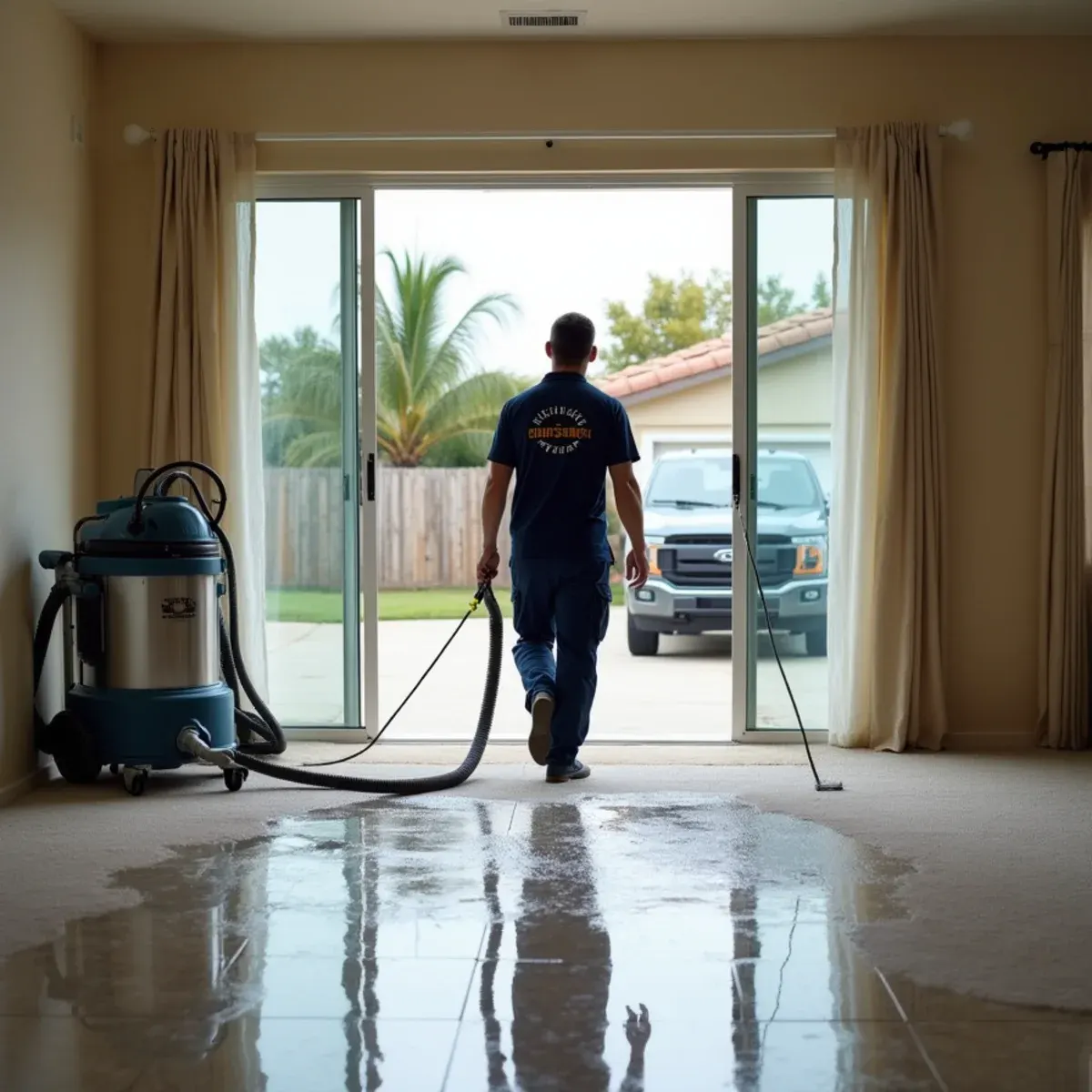
Nobody should start cutting in Long Beach before they know what they're cutting into. A 1926 Craftsman wall in Bluff Park or California Heights is lath and plaster — heavy, water-hungry, slow to release, and prone to letting go from the lath once it's fully soaked. A 1955 wall in Los Altos is drywall over studs and behaves nothing like it. Same city, same storm, two completely different extraction problems. We identify construction type before anything comes off a wall, and it changes the equipment that comes off the truck.
Access varies as much as the buildings. Belmont Shore lots are narrow with almost no street parking, so hose runs and staging get planned before we roll rather than figured out on arrival. Naples sits on filled land with canal-front homes and shallow groundwater that doesn't drain the way an inland lot does. And out in El Dorado Park Estates near the Cypress border, the houses are postwar slab-on-grade on the same San Gabriel River drainage as our own home city — that work looks exactly like what we do every day a few miles east.
What Long Beach Changes About Water Extraction
1Plaster and drywall are different jobs
In the 1920s neighborhoods, plaster holds several times the water drywall does and gives it up slowly, so extraction pairs with far more dehumidification capacity and a close watch on the keys gripping the lath. In the postwar tracts, drywall wets fast, releases fast, and often comes out below the waterline. Bringing the wrong plan to either one wastes the first day, which is the day that counts.
2Belmont Shore staging is planned ahead
Narrow lots, no driveways, and permit parking mean the truck may not get close. We work out the hose route and staging before dispatch, bring the length we'll actually need, and keep sidewalks and neighbors' access clear. It's a real constraint on how fast bulk water comes out, and it's why we ask for the cross street and whether there's alley access when you first call.
3Canal-front Naples drains slowly
Naples sits on filled land beside the canals with a shallow, tide-influenced water table. Lower levels and below-grade spaces there don't drain the way an inland property does, and a space that appears clear can refill. We keep monitoring rather than declaring extraction complete after one pass, and we'll say plainly when a situation needs a drainage specialist rather than more pumping capacity.
How the Work Runs
The method is the same one we use on every water extraction job, documented to the IICRC S500:2025 standard. Here it is in short — the full water extraction & removal process explains each stage in detail.
- Bulk removal with submersible pumps
- Truck-mounted extraction on carpet and pad
- Hard-surface and specialty extraction
- Cavity and void extraction
- Removing what cannot be saved
- Post-extraction moisture reading
The Long Beach Background Worth Knowing
The postwar tracts around El Dorado Park, Los Altos, and the neighborhoods near the Cypress border were built in the same era and largely the same way as the housing in our home city. Single-story slab construction, plumbing routed under the concrete, and a fifty-to-seventy-year age on the supply lines.
There is more on the housing stock, drainage and plumbing history of this city on our water damage restoration in Long Beach page.
Long Beach at a glance
- Dominant construction era
- 1920–1980
- Foundation type
- mixed on grade
- Supply piping found here
- original 1920s piping, galvanized steel, under-slab copper
- Drain line materials
- cast iron, clay
- Terrain and water table
- coastal-flat, shallow water table
- Most common local failure
- the approach changing entirely by neighborhood — a 1926 plaster wall and a 1955 drywall wall are different restoration problems
- Highest-value local prevention
- identifying the construction type before anyone starts cutting
What It Costs in Long Beach
We do not quote a number over the phone before seeing the property — anyone who does is guessing. The variables that actually move the price on a water extraction job are volume and depth of water, flooring type, contamination level, and they are broken down in full on the water extraction & removal page. The assessment and the written estimate are free anywhere in Long Beach, day or night, with no obligation.
Water Extraction Questions from Long Beach Homeowners
Because the walls are a different material. Lath and plaster absorbs several times what drywall does and releases it far more slowly, so even after we've pulled every gallon of standing water, the assembly is still holding moisture that has to leave through the air. Her postwar drywall wets and dries quickly. Yours needs more dehumidification, more monitoring days, and closer attention to whether the plaster keys are still holding to the lath.
For a typical single-room residential loss, extraction runs one to three hours. Multi-room losses or Category 3 water can take most of a day because of containment setup and material removal. We will give you a realistic timeframe after the walkthrough, before we start.
Often we can save the carpet and only replace the pad, which is the cheaper and less disruptive path. The deciding factors are water category, how long it sat, and whether the pad is a moisture barrier type. Clean water caught quickly usually means the carpet stays.
All of it, with the fastest response to East Long Beach — El Dorado Park Estates, Los Altos, and the neighborhoods near the Cypress border, which are typically twenty to twenty-five minutes. Coastal and downtown areas run a little longer, and we will give you a realistic ETA when you call.