Wet hardwood is the most salvageable-looking floor that most companies condemn and the most expensive floor to replace unnecessarily. The default recommendation in this industry is to tear it out, because tearing it out is fast, requires no specialized equipment, and produces a much larger invoice. That is not always the right call, and often it is not.
Wood cups because the underside absorbs moisture faster than the top, swelling the bottom of each board and lifting its edges. That deformation is not permanent if the wood is dried correctly and slowly enough — in many cases a cupped floor returns close to flat on its own, and a light sand-and-refinish takes it the rest of the way for a fraction of replacement cost.
The variables are time, water category, and finish type. A clean-water loss addressed in the first day or two has a genuinely good chance. A floor that sat wet for a week, or that got Category 3 water, generally does not. We will tell you which one you have based on meter readings, not on which answer bills more.
How Water Damage Presents in Wood Flooring
Wood tells you what is happening to it if you know what the shapes mean:
Cupping — board edges higher than centers
The classic wet-from-below signature. The underside has absorbed moisture and swollen. This is the most treatable form and often reverses with proper drying.
Crowning — board centers higher than edges
Usually the result of a cupped floor that was sanded flat before it finished drying. It is a much harder problem to fix and is often the consequence of rushing.
Buckling — boards lifting off the subfloor
Severe expansion with nowhere to go, so the floor releases from its fasteners or adhesive. Buckled sections generally have to be replaced, though surrounding areas may still be saved.
Dark staining along seams
Water penetrating between boards and reacting with tannins in the wood or with fasteners. Light staining sands out; deep black staining has penetrated too far.
A hollow or shifting sound underfoot
For glued-down or engineered floors, this means the adhesive bond has released — moisture got underneath and broke the bond line.
Gaps that appear after everything dries
Wood that swelled while wet and compressed against its neighbors will shrink back smaller than it started. Gapping shows up weeks later and is a sign the floor dried too fast.
How We Dry Hardwood Instead of Removing It
Wood drying is a slower, more controlled process than drywall. Rushing it causes more damage than the water did.
- 1
Measure before deciding anything
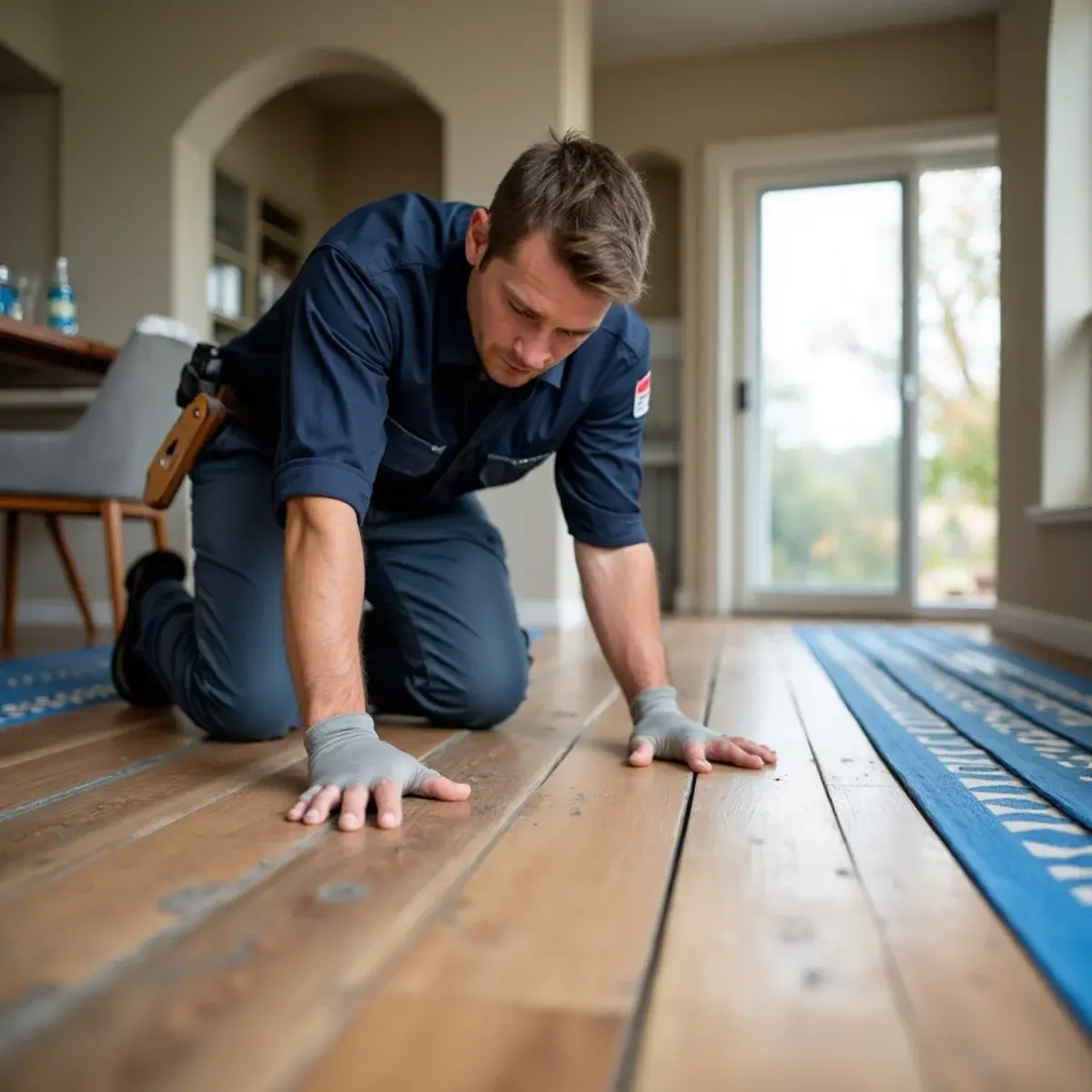
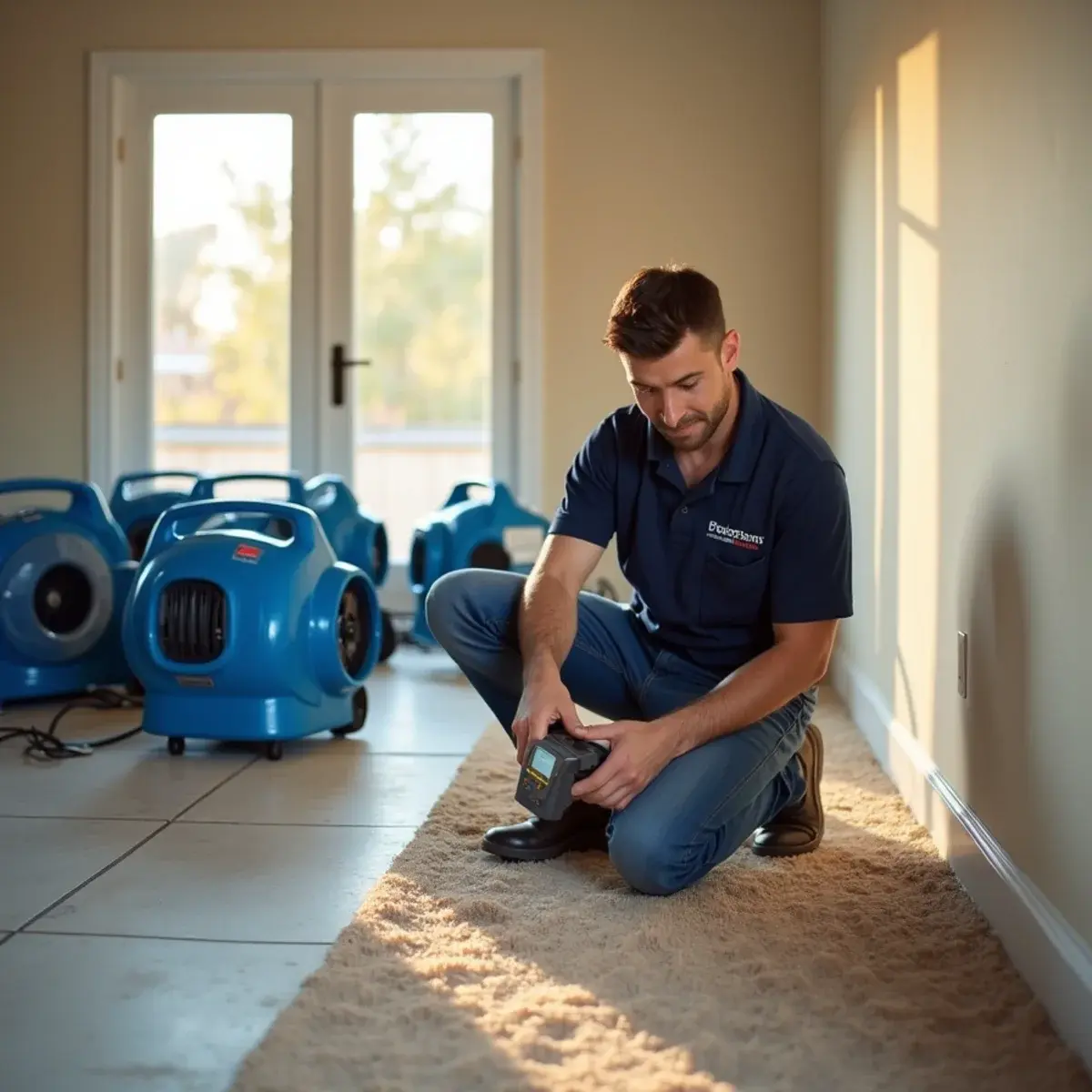
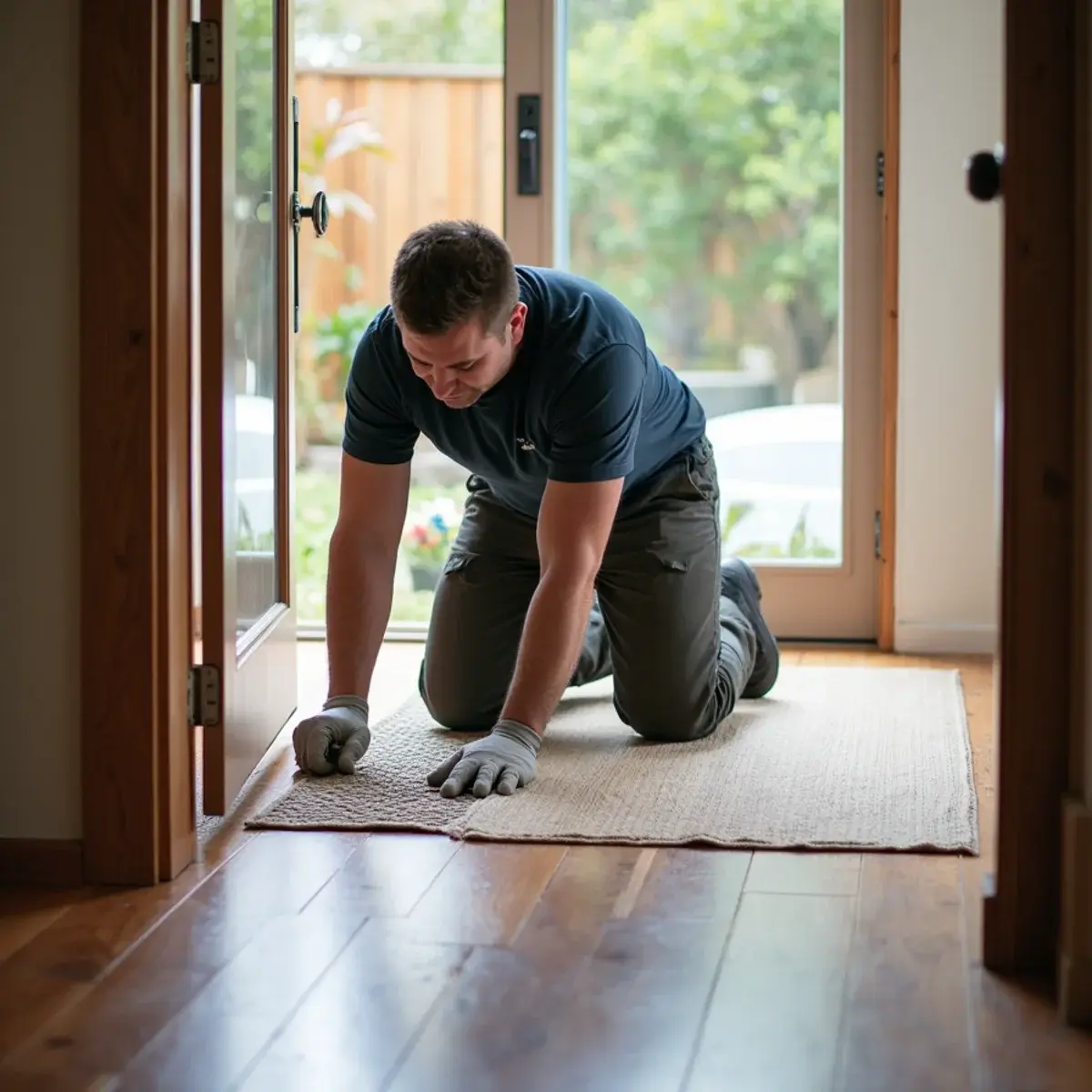
We take moisture content readings across the affected area and in unaffected wood of the same species elsewhere in the home. Those numbers decide whether the floor is a drying candidate or a replacement — not a visual judgment.
- 2
Extract from below the surface
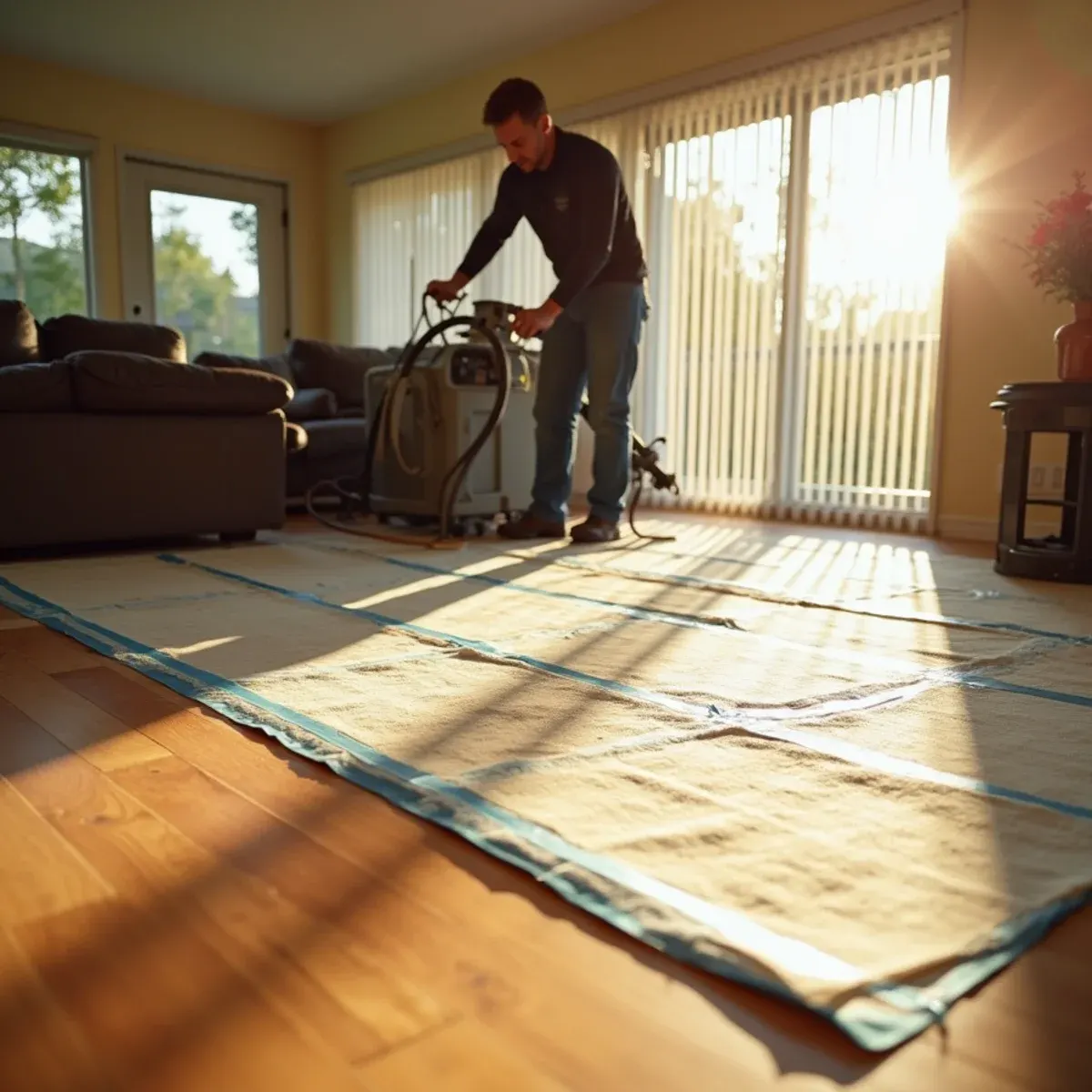
Weighted extraction removes surface water, then a floor mat drying system is sealed to the surface and connected to a vacuum unit that pulls moisture up through the board seams from underneath.
- 3
Control the drying rate deliberately
This is the part that is easy to get wrong. Wood dried too aggressively splits, checks, and gaps permanently. We manage chamber humidity to bring the moisture content down at a rate the wood can tolerate.
- 4
Dry the subfloor and any cavity below
The wood cannot stabilize while the plywood or slab beneath it is still wet. Subfloor and, where applicable, the crawl space or slab get their own monitoring and their own dry standard.
- 5
Let it acclimate before judging it
A floor that looks cupped at the end of drying frequently flattens substantially over the following two to four weeks as moisture equalizes through the boards. We do not recommend sanding until that has happened.
- 6
Sand and refinish only if needed
Once the floor has stabilized, a light sand-and-refinish handles any residual cupping and the surface damage. Only truly failed sections get replaced and woven in.
Why the Rush to Replace Is Usually Wrong
There is a real financial incentive in this industry to condemn wood floors. Replacement is straightforward labor with a large materials line, while drying requires specialized equipment, daily monitoring, and patience — and it produces a smaller invoice.
Here is the honest version. A floor that has been wet less than 48 hours from clean water, with a solid wood wear layer and a subfloor that can be dried, has a good chance of coming back with nothing more than a refinish. A floor that sat for a week, or got sewage on it, or is engineered with a delaminating core, does not, and pretending otherwise wastes your time and money.
We take the readings and show them to you. If your floor is not a candidate, we will say so on the first visit rather than billing for a week of mats and then recommending replacement anyway.
What Cypress Homes Actually Have on the Floor
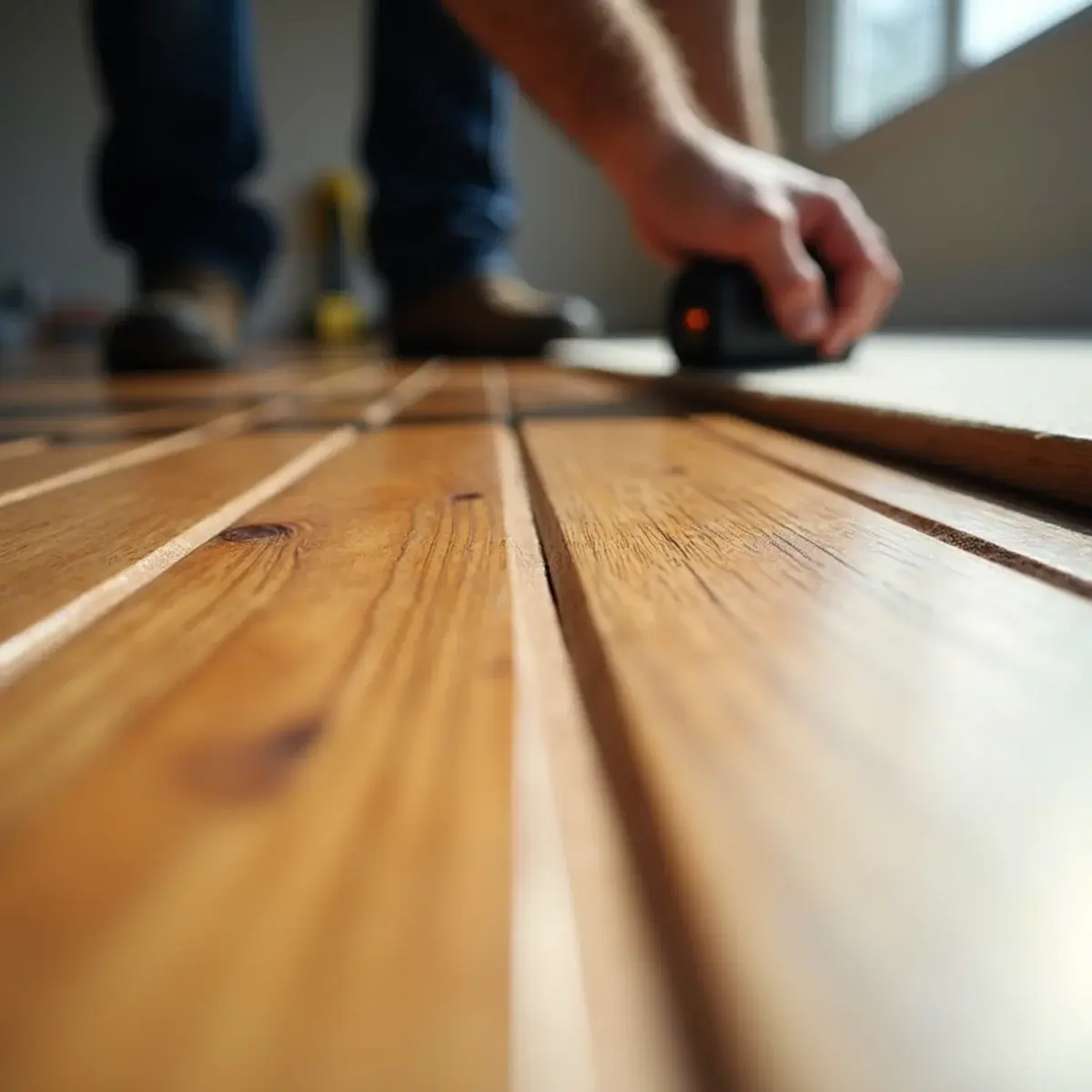
The housing stock here creates a specific mix. Many 1960s and 1970s Cypress homes originally had oak strip flooring over a plywood subfloor in the living areas, and a good number of those original floors are still in place under later carpet or laminate. Solid oak over plywood is the best-case drying scenario, and if that is what you have, it is worth fighting for.
Homes and remodels from the 2000s onward more commonly have engineered wood or wood-look luxury vinyl plank glued or floated over the slab. Engineered wood over concrete is the hardest case — the plywood core wicks moisture laterally, the wear layer is too thin to sand more than once, and the adhesive bond fails when wet. LVP, on the other hand, is waterproof itself but traps water underneath, so the plank often lifts out fine and the real work is drying the slab.
Knowing which of these you have changes the entire approach, which is why the first thing we do is identify the floor construction rather than assuming.
What Hardwood Drying Costs Depends On
Drying is nearly always cheaper than replacement, but the gap depends on these:
Square footage under the mat system
Floor mat drying is priced by the area covered and days of operation. It is equipment-intensive, but so is the alternative of demolishing and reinstalling the same square footage.
Solid versus engineered wood
Solid hardwood is thick and can be sanded several times, which makes it a strong drying candidate. Engineered wood has a thin wear layer and a plywood core that delaminates when saturated — it is far less often salvageable.
What is underneath
Wood over a ventilated crawl space dries from both sides and does well. Wood glued directly to a concrete slab traps moisture against the adhesive and is the hardest scenario.
How long it was wet
The first 48 hours matter enormously. Beyond that, adhesive failure, delamination, and microbial growth start driving the outcome toward replacement.
Refinishing scope
Refinishing usually has to run to a natural break — a doorway or a transition — rather than stopping mid-room, because a partial refinish will show. That can make the finished area larger than the damaged area.
Insurance note: Insurers generally prefer drying to replacement when it is viable, because it costs them less. Documented moisture readings showing the floor is a drying candidate is usually all the justification an adjuster needs to approve the mat system.
Why Cypress Homeowners Call Us for Hardwood Floor Drying
Plenty of companies list this service. Fewer can tell you what equipment they will bring, what standard the work is measured against, or what happens if they are wrong. Here is what you are actually buying.
Floor mat drying saves boards worth saving
Negative-pressure mat systems pull moisture up through the boards. Hardwood that a demolition-first company would tear out often dries flat and refinishes.
We tell you when it is not worth saving
Engineered plank with a delaminated core does not come back. You get that answer before you pay for a drying attempt that cannot work.
Cupping is monitored, not guessed at
Wood keeps moving for weeks. We read moisture content against the subfloor and let it stabilise before anyone talks about sanding.
- 20+ years restoring Orange County homes
- IICRC Certified Firm
- Licensed, Bonded & Insured
- We bill your insurance company directly
- IICRC S500:2025 compliant on every job
- 100% satisfaction guarantee — in writing, on every job
Frequently Asked Questions
Frequently, yes. Cupping is caused by uneven moisture between the top and bottom of each board, and when the moisture equalizes during controlled drying, much of the deformation reverses. Full flattening can take two to four weeks of acclimation after the equipment comes out, which is why we do not recommend sanding immediately.
Five to ten days under the mat system is typical, which is longer than drywall because wood gives up moisture slowly and has to be dried at a controlled rate. Rushing it causes splitting and permanent gapping, so the extra days are doing real work.
Engineered is harder. The plywood core delaminates when saturated and the wear layer is usually too thin to sand more than once. We still measure before deciding — some engineered products with thicker cores and wear layers dry acceptably — but the odds are lower and we will be straight with you about that.
Refinishing generally has to extend to a natural break like a doorway or transition strip, because a partial refinish within a continuous field will always show as a color and sheen difference. So the refinished area is often larger than the damaged area, though still far less than replacing the floor.
Get it read before you assume so. Wood can look normal on top while the subfloor beneath holds moisture, and the consequences — cupping, adhesive failure, or growth underneath — show up weeks later. A meter reading is free and takes twenty minutes.
Related Reading
- Can Hardwood Floors Be Saved After Water Damage? — Often, yes — and the default recommendation to tear it out is frequently wrong. Here is what actually decides it.
- How Long Does Water Damage Restoration Actually Take? — Extraction is measured in hours, drying in days, and reconstruction in weeks. Here is what each phase actually involves and what stretches it.