
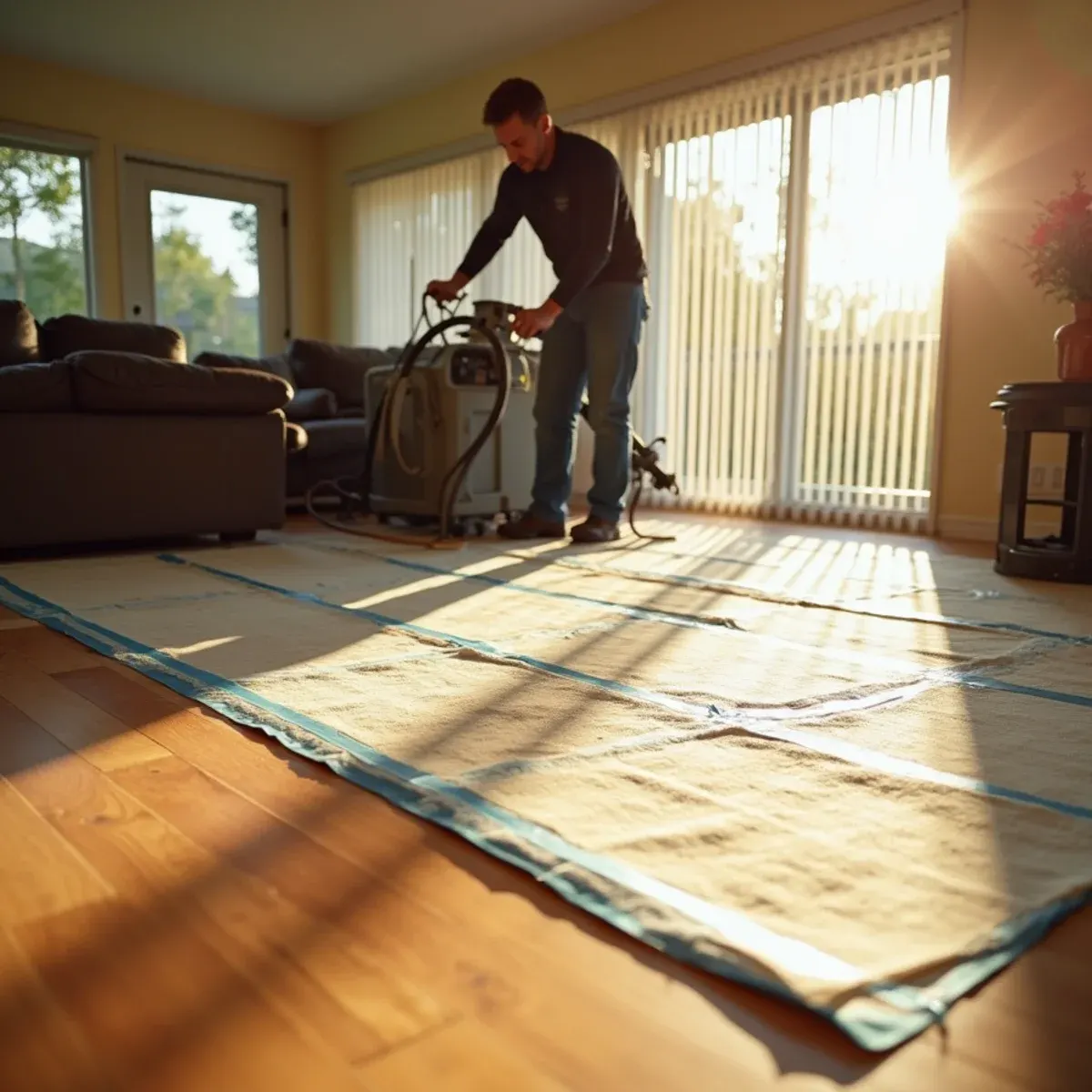
Open the windows is the worst advice you'll get in Costa Mesa. On a typical morning here the outside air carries more moisture than the air inside your house, and every hour of cross-ventilation puts water back into the floor you're trying to dry. We close the structure, run LGR or desiccant dehumidification, and control the environment as a system. It's a large part of why a job on the Eastside runs a couple of days longer than the same loss would take in Placentia or Yorba Linda.
The Eastside cottages from the 1920s through the 1940s sit on raised foundations, and the crawl space under them is where the real problem lives. Shallow groundwater, a bare dirt floor and vents that got blocked off during a remodel add up to a damp cavity that keeps feeding the underside of the boards. Mesa Verde is a different animal — 1960s slab tract with wood floors added later, one drying direction only. Same city, same weather, two completely different plans.
What Costa Mesa Changes About Hardwood Floor Drying
1Outdoor air works against you here
On a typical Costa Mesa morning the outside air carries more moisture than the air we're using to dry your floor. Opening windows puts water back into the boards. We close the structure, run dehumidification and control it as a system. Neighbors mean well when they tell you to air the place out — inland that can help, three miles from the water it doesn't.
2Eastside crawl spaces feed the boards
Shallow groundwater, a bare dirt crawl-space floor and vents that got blocked during a remodel add up to a cavity that keeps pushing vapor into the underside of the flooring. We dry the crawl space alongside the floor, and where the ground is bare we recommend a vapor retarder afterward. Otherwise the floor dries now and slowly cups again over the next winter.
3Old fir and oak, refinished thin
The 1920s-to-1940s cottages on the Eastside have narrow-strip fir or oak that has been sanded more than once. There isn't much wear layer left, so drying carefully matters more than moving fast — an aggressive sanding after a rushed dry-out ends the floor's life. We dry, wait for the moisture content to equalize, then let the flooring contractor decide what it needs.
How the Work Runs
The method is the same one we use on every hardwood floor drying job, documented to the IICRC S500:2025 standard. Here it is in short — the full hardwood floor water damage drying process explains each stage in detail.
- Measure before deciding anything
- Extract from below the surface
- Control the drying rate deliberately
- Dry the subfloor and any cavity below
- Let it acclimate before judging it
- Sand and refinish only if needed
The Costa Mesa Background Worth Knowing
Under a raised Eastside cottage there is bare soil, and that soil is supposed to stay dry because the foundation vents exchange air with the outside. That system depends on the outside air being drier than the space under the house. For a good part of the year in Costa Mesa it is not. The marine layer holds humidity high through the night and well into the morning, so the crawl space never gets the dry stretch it needs, and moisture that arrives from a plumbing drip, a downspout, or an irrigation line just accumulates.
There is more on the housing stock, drainage and plumbing history of this city on our water damage restoration in Costa Mesa page.
Costa Mesa at a glance
- Dominant construction era
- 1920–1980
- Foundation type
- mixed on grade
- Supply piping found here
- original 1920s–1940s piping on the Eastside, galvanized steel, under-slab copper
- Drain line materials
- cast iron, clay
- Terrain and water table
- coastal-flat, shallow water table
- Most common local failure
- crawl-space moisture under Eastside cottages, held in by a marine layer that slows every natural drying process
- Highest-value local prevention
- confirming crawl-space vents are actually open and that the ground under the house is dry
What It Costs in Costa Mesa
We do not quote a number over the phone before seeing the property — anyone who does is guessing. The variables that actually move the price on a hardwood floor drying job are square footage under the mat system, solid versus engineered wood, what is underneath, and they are broken down in full on the hardwood floor water damage drying page. The assessment and the written estimate are free anywhere in Costa Mesa, day or night, with no obligation.
Hardwood Floor Drying Questions from Costa Mesa Homeowners
Marine air. This close to the water the outdoor dew point sits high enough that we can't use ventilation the way an inland crew can, so every bit of moisture has to come out mechanically. Add a raised foundation with a damp crawl space beneath and the reservoir is larger to start with. S500:2025 sets a drying goal, not a schedule. We measure daily and pull equipment when the readings say so, not on a calendar.
Frequently, yes. Cupping is caused by uneven moisture between the top and bottom of each board, and when the moisture equalizes during controlled drying, much of the deformation reverses. Full flattening can take two to four weeks of acclimation after the equipment comes out, which is why we do not recommend sanding immediately.
Five to ten days under the mat system is typical, which is longer than drywall because wood gives up moisture slowly and has to be dried at a controlled rate. Rushing it causes splitting and permanent gapping, so the extra days are doing real work.
Almost always the crawl space. On these raised 1920s to 1940s houses the soil under the floor stays damp when the foundation vents are blocked and the marine layer keeps outside air humid overnight. That moisture moves up through the subfloor and into the rooms above it. Before assuming anything, walk your perimeter and see whether a planter, a poured patio or landscaping has covered the vents that are supposed to be breathing.