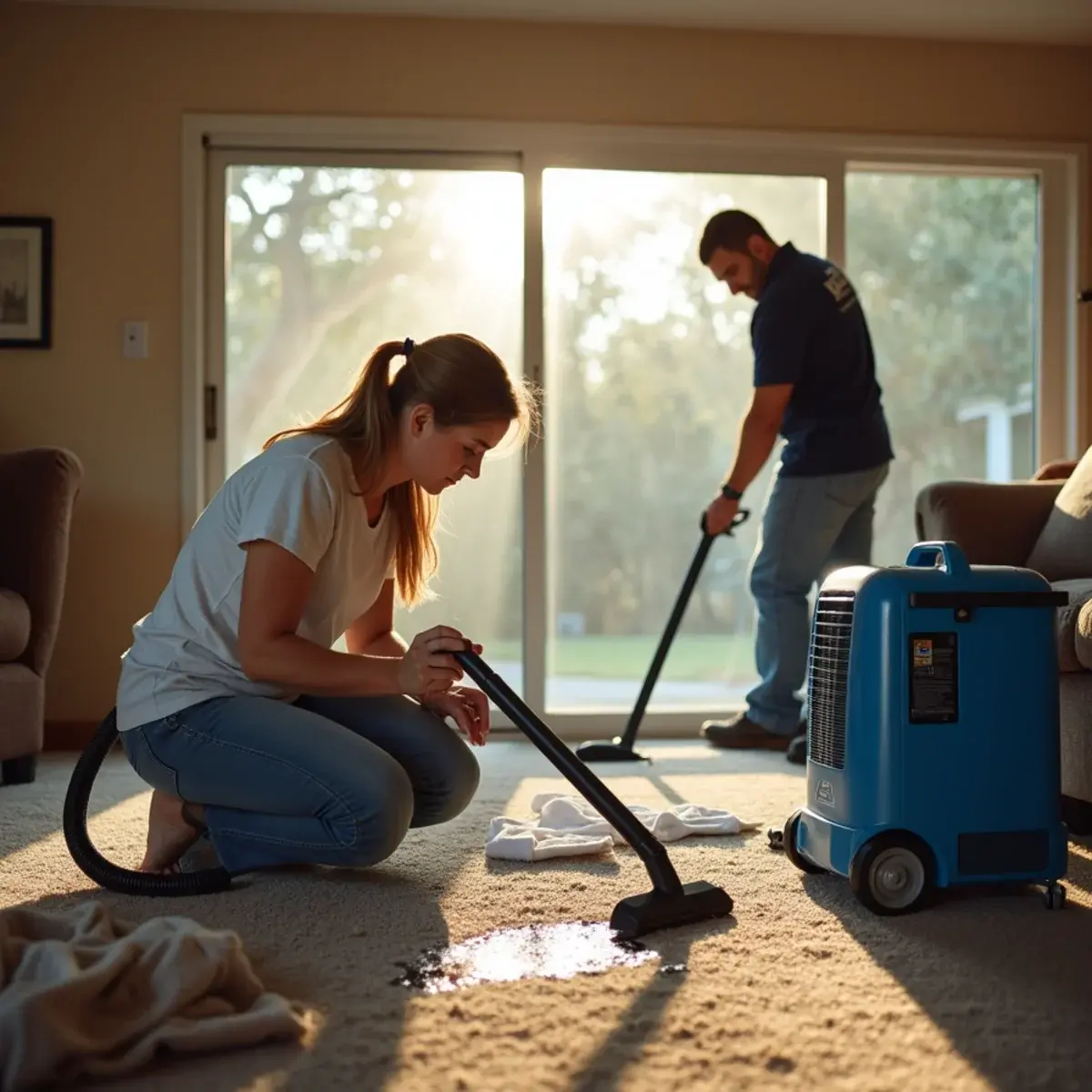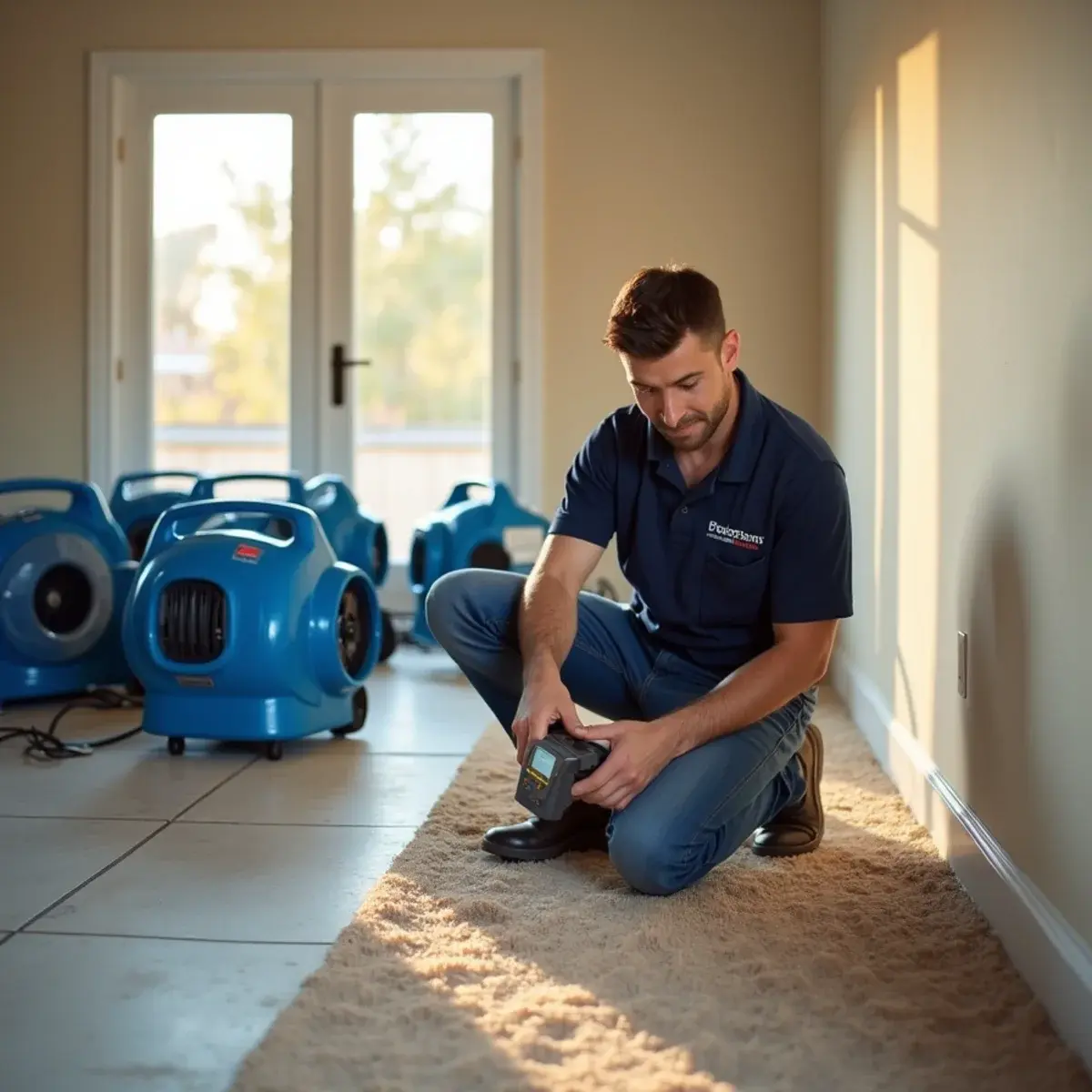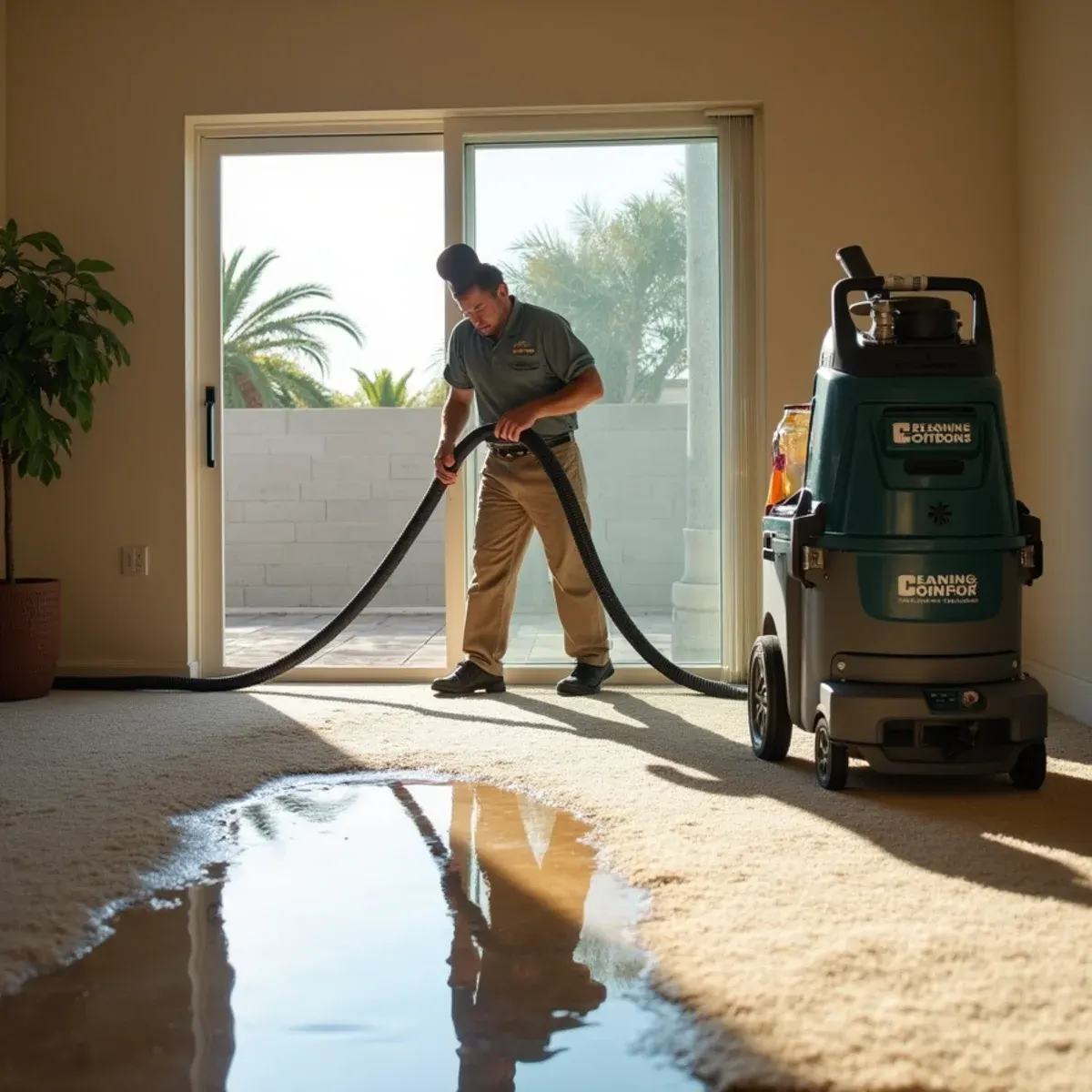
Wet carpet lies to you. Walk across a room the day after a washing machine let go and the surface feels close to normal — maybe cool, maybe a little heavy underfoot — while the pad beneath it is still holding water like a sponge nobody wrung out. That gap between what the carpet face feels like and what the pad actually holds is the most common reason a homeowner calls us back six weeks later describing a musty smell they cannot locate. The carpet dried. The pad never did, and the slab or subfloor under it stayed damp the entire time.
Carpet is a two-layer system, and the layers behave nothing alike. The face yarn and its backing release moisture fairly readily to airflow across the top. The pad underneath — usually bonded urethane, sometimes prime or slab rubber, occasionally a moisture-barrier product — holds several times more water by weight and sits sandwiched between the carpet and a surface that will not absorb a drop. Air moving over the top of a carpet does almost nothing for the pad. That is why a rented blower in a doorway for three days produces a dry-feeling floor over a wet assembly.
So the real question on a wet-carpet job is never how long to run fans. It is whether the pad comes out and whether the carpet can be floated and saved. Water category and elapsed time drive that call more than anything else. On a clean-water loss caught in the first day, the carpet itself is frequently saveable and only the pad gets replaced. Past Category 1, the pad comes out nearly every time. We take the readings, identify the pad type, check the backing for delamination, and give you the answer with the numbers behind it.
What Wet Carpet Actually Looks and Feels Like
These show up roughly in this order, and the last two arrive long after most people believe the problem is behind them.
Water rises around your foot when you step
Press down with your heel and watch the fibers. If water comes up around the sole, the pad underneath is saturated — a wet carpet face alone does not release water that way. It is the fastest field test there is, and it works several feet past where the carpet looks dark.
A dry-feeling surface over a cold floor
Within a day the face yarn feels close to normal while the assembly beneath it is still full. Temperature is the tell. Evaporating water pulls heat, so carpet that reads noticeably cooler than the room under a bare foot is still giving up moisture from below.
Dark staining along baseboards and doorways
Water wicks into the carpet edge at the tack strip and lingers there, pulling dirt up out of the pad and backing as it evaporates. A gray or brown line following the wall, or a shadow spreading through a doorway into the next room, marks where the water actually traveled.
Ripples or waves after everything dries
Carpet stretches while it is wet and does not always shrink back the way it went in. Waves that appear once the equipment comes out mean the carpet needs a re-stretch, not replacement. Left alone they turn into permanent wear lines and, on a stair landing, a genuine trip hazard.
A crunchy, loose feel underfoot
The latex holding the primary and secondary backing together softens when it stays wet, particularly if people keep walking on it. Once those layers separate, the carpet feels loose and slightly crackly and will not lie flat. Delamination is not repairable, and it is the main reason a carpet gets condemned.
A musty smell you cannot locate
It arrives weeks after everyone thought the job was finished, strongest near the floor and on humid marine-layer mornings. Nothing is visible because the growth is on the underside of the pad or on the slab beneath it. By the time the odor is obvious, the baseboard and lower drywall are usually involved.
How We Dry Carpet and Pad
The order matters here, because every hour the pad stays saturated narrows what can be saved.
- 1
Map the real wet perimeter
Water travels through pad far faster than it wicks through carpet face, so the visible wet line is never the boundary. We map moisture across the whole floor, lift corners at the tack strip to read the pad and the surface beneath it, and mark the actual perimeter in every direction — including through doorways into rooms nobody thought were affected.
- 2
Identify the pad and the category
We pull a corner and look. Pad type, thickness, and the presence of a moisture barrier all change what is possible, and so does the water itself: clean supply line, gray water from an appliance or washer drain, or contaminated. S500:2025 treats category as time-dependent, so how many hours it has been sitting is part of that reading too.
- 3
Weighted extraction, pass after pass
A weighted extraction tool uses the technician's body weight to compress the pad and force water up through the carpet into the vacuum. It is slow, methodical work that takes repeated overlapping passes over the same square foot. Each pass pulls less than the one before, and we keep going until the returns stop rather than stopping when the carpet looks acceptable.
- 4
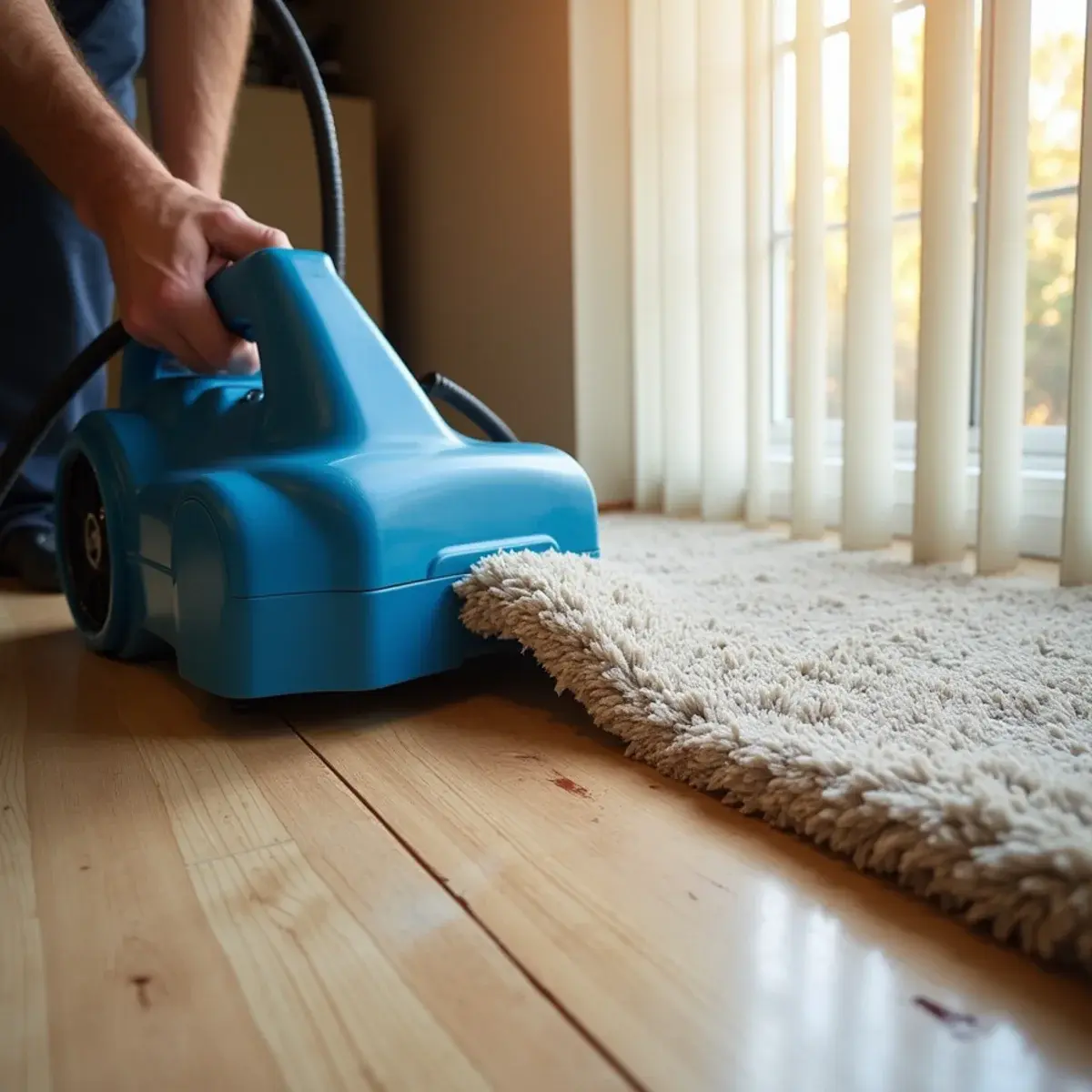
Float the carpet or pull the pad
If the pad is salvageable, we disengage the carpet from the tack strip along one edge and float it over air movers so drying air gets underneath, into the pad and across the floor. If it is not, the pad comes out in strips, tack strip that has rusted or swelled gets replaced, and we dry the carpet flat with the floor directly exposed.
- 5
Dry the slab or subfloor
The surface under the pad is what keeps a job open. Concrete absorbs water and releases it slowly. Plywood subfloor holds it in the sheet and at the seams. Both get their own meter readings and their own dry standard, set against unaffected material of the same type elsewhere in the home, before anything is called finished.
- 6
New pad, re-stretch, reinstall
New pad goes down, the carpet is power-stretched back onto the tack strip, and any seams that opened get re-sealed. Carpet stretches while it is wet, so re-stretching is not optional — skipping it leaves the ripples that become permanent wear lines. Baseboard or shoe molding that came off goes back, and the final readings are documented.
Why the Pad Holds the Water, Not the Carpet
A carpet face is a thin layer of yarn tufted into a woven primary backing, with a secondary backing glued underneath. Even soaked, it holds a limited amount of water and gives most of it up to air moving across the surface. The pad is a different animal entirely. Bonded urethane foam is an open-cell structure several times thicker than the carpet face, and it holds far more water by weight than the carpet ever will. When both are wet, the great majority of the water in that assembly is sitting in the layer you cannot see or touch.
Air moving over the top of a carpet barely reaches the pad. The carpet backing is a reasonably effective barrier, and the pad is pinned between it and a slab or subfloor that absorbs nothing. So the face dries, everyone declares it finished, and the water underneath evaporates slowly into a closed space. That is the exact condition that produces a phone call six weeks later. Knowing which pad you have changes the plan, so it is worth knowing what is under your carpet.
- Bonded urethane, the multicolored foam in most homes here — absorbent, slow to release water, and the most commonly floated and saved pad on a fast clean-water loss.
- Prime urethane and slab rubber — denser and more grudging about giving water back, and rarely worth the days it takes to dry in place.
- Moisture-barrier pad — a film on top stops spills from reaching the floor, and stops water from leaving. Whatever got in around the edges stays. This one almost always comes out.
- Older jute or felt pad, still found in some raised-foundation homes — it absorbs heavily, breaks down structurally when saturated, and does not recover.
Carpet Over a Cypress Slab Is a Different Job
Most of the homes we work in around Cypress, Rossmoor, Lakewood, La Palma and Norwalk are slab-on-grade tract houses built between the 1950s and the 1980s. In those homes there is no subfloor under the carpet. There is pad, and then there is concrete. That changes the problem in two ways. Concrete is a heat sink, so the surface under the pad stays cool and evaporation there runs slow. And concrete is porous, so a slab that had water standing on it for a day has absorbed some of that water and will hand it back to the new pad for days afterward.
This is why we meter the slab and not just the carpet. A carpet and pad reading dry over a slab that is still releasing moisture will simply re-wet, and the room will smell in a month. Where the water came from a slab leak rather than from above, the concrete may be feeding the floor continuously, and no amount of air movement over the carpet changes that until the line is repaired.
The raised-foundation pockets in our service area are their own case. In Old Towne Orange, Uptown Whittier, Old Town Tustin, Eastside Costa Mesa, parts of Fullerton and the Anaheim Colony, carpet sits over plank or plywood subfloor with a crawl space below. Water runs through the pad, finds the seams between boards, and drips onto soil under a house with very little airflow. We look under those floors before calling anything dry.
When We Tell You to Let the Carpet Go
There are losses where the carpet is not coming back, and saying so on the first visit saves you a week of equipment and a second round of demolition. Category 3 water is the clearest case — S500:2025 treats contaminated porous materials as non-restorable, so carpet and pad both go. Delamination is the next one. Once the latex bond between the primary and secondary backing has released, the carpet will not lie flat again, and no drying process reverses it. Carpet already worn thin before the loss rarely justifies the installer labor to save it.
The flip side is just as real, and it is the more common outcome. We regularly dry and keep carpet that another company had already written up for replacement, because the loss was clean supply-line water, we reached it inside a day, and the pad was the only casualty. Replacing pad and re-stretching carpet costs a fraction of replacing the floor covering across three rooms. It takes about twenty minutes with a meter and a lifted corner to find out which of those two situations you actually have.
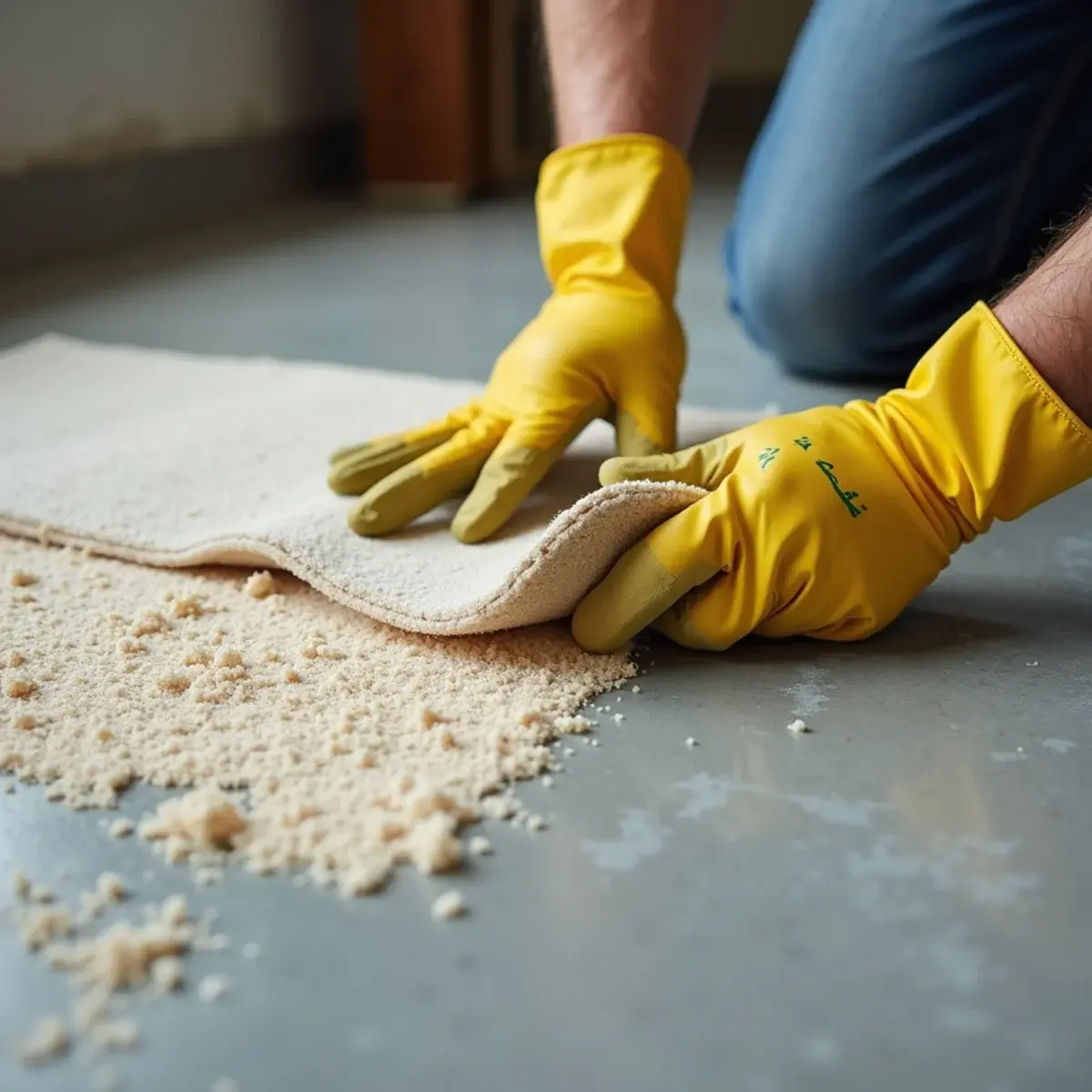
What Carpet Water Damage Drying Costs Depends On
Two things drive the number more than the rest combined: whether the pad survives, and what sits underneath it.
Whether the pad is salvageable
Floating the carpet and drying pad in place costs less than removing and replacing it, but that only works on clean water caught early with the right pad type. Removal adds demolition labor, disposal, and new material across the full room footprint — pad gets replaced wall to wall, not just under the visibly wet part.
Square footage and equipment days
Air movers and dehumidifiers bill by unit and by day, and carpet across multiple rooms means more of both. S500:2025 ties equipment counts to wet surface area and the class of the loss, and carpeted rooms carry a lot of evaporative surface, so the machine count climbs faster than most people expect.
What sits under the pad
Carpet over a concrete slab means drying the slab as well, which is slower than drying wood. Carpet over a plywood subfloor may mean water went through to a crawl space, adding access, drying, and sometimes insulation removal. What is underneath regularly costs more to address than the carpet does.
Water category on arrival
Clean supply-line water is the least expensive scenario. Gray water from a washing machine drain or a dishwasher means the pad goes and the carpet is cleaned and sanitized. Category 3 means carpet, pad, and usually the baseboard and lower drywall are removed and disposed of under containment.
Re-stretching, seams, and carpet matching
Re-stretching is skilled installer labor and is part of every carpet we float or lift. If a section has to be replaced, matching the existing carpet is the hard part — dye lots vary and discontinued styles force a larger replacement area to reach a doorway or another natural break.
Insurance note: Carriers rarely argue about pad replacement. It is inexpensive material, it is the standard remedy, and drying carpet in place costs them far less than replacing floor covering across three rooms. Full carpet replacement is where the negotiation happens, and it turns entirely on documentation — photographs of delamination or backing separation, the water category, and the daily moisture logs. Adjusters approve what is written down. A verbal claim that the carpet was ruined seldom survives review.
Why Cypress Homeowners Call Us for Carpet Drying
Plenty of companies list this service. Fewer can tell you what equipment they will bring, what standard the work is measured against, or what happens if they are wrong. Here is what you are actually buying.
Pad decisions made on category, not on cost
Clean-water pad can often be dried in place. Anything Category 2 or worse comes out — we will not save you a few hundred dollars by leaving contaminated cushion under your floor.
Floated and dried rather than pulled where possible
Lifting carpet to force air underneath saves the installation and the seams. Re-stretch and re-tack afterward is part of the job, not an extra.
Tack strip and subfloor read separately
Carpet can be dry while the plywood under it is not. The reading that matters is the one taken through the floor, not on it.
- 20+ years restoring Orange County homes
- IICRC Certified Firm
- Licensed, Bonded & Insured
- We bill your insurance company directly
- IICRC S500:2025 compliant on every job
- 100% satisfaction guarantee — in writing, on every job
Frequently Asked Questions
Frequently it can be saved. The deciding factors are water category, how many hours it sat, and whether the backing has delaminated. Clean supply-line water caught within a day, on carpet that was in decent shape beforehand, usually means we replace the pad and keep the carpet. Anything past Category 1, or carpet that has come apart at the backing, is a different answer. We take the readings and check the backing before saying either way.
No, but it does more often than not. On a clean-water loss we reach quickly, we can float the carpet, push dry air into the pad space, and dry it in place. Moisture-barrier pad, dense slab rubber, and anything that sat overnight in gray water comes out. S500:2025 treats pad as non-restorable once contamination is involved, and field experience supports that. It is inexpensive material against a real risk.
Almost certainly not for the pad. A consumer vacuum pulls water off the carpet face, and household fans move air across the top. Neither does much for a saturated pad sealed under a carpet backing. Weighted extraction works because a technician's body weight compresses the pad and forces water up through the carpet where the vacuum can take it. The gap between those two approaches is where most delayed odor and mold problems begin.
Two to four days is typical for a clean-water loss in a room or two, assuming the pad is floated or removed on the first day. What extends it is what sits underneath. A slab that absorbed water, or a subfloor and crawl space that took some, holds the job open longer than the carpet itself does. We read materials daily and pull equipment when the numbers reach the dry standard, not on a fixed schedule.
Have it read before you assume it is fine. A dry-feeling face tells you very little about the pad or the floor beneath it. A moisture meter and a lifted corner at the tack strip settle the question in twenty minutes, and the assessment is free. If it is genuinely dry, we will say so and leave. If it is not, you have found it before the baseboard and lower drywall get involved.
Related Reading
- DIY vs. Professional Water Damage Restoration: An Honest Comparison — Some water losses genuinely do not need a restoration company. Here is where the line actually is — and what the wrong call costs.
- How Long Does Water Damage Restoration Actually Take? — Extraction is measured in hours, drying in days, and reconstruction in weeks. Here is what each phase actually involves and what stretches it.