We are a restoration company, so you would reasonably expect this article to conclude that you should always call a restoration company. It does not, because that is not true and pretending otherwise does not help anyone.
Plenty of small water events are genuinely a mop-and-towel situation. Calling a crew for a spilled bucket or an overflowed sink you caught immediately is a waste of your time and ours.
What matters is knowing where the line is, because the losses that go badly are almost always the ones where a homeowner was on the wrong side of it and did not realize until six weeks later.
When DIY Is Genuinely Fine
You can reasonably handle it yourself when all of these are true:
- The water is clean — a supply line, a clean fixture overflow, or rainwater with no ground contact
- You caught it within an hour or two
- It covers a small area, roughly under 50 square feet, in one room
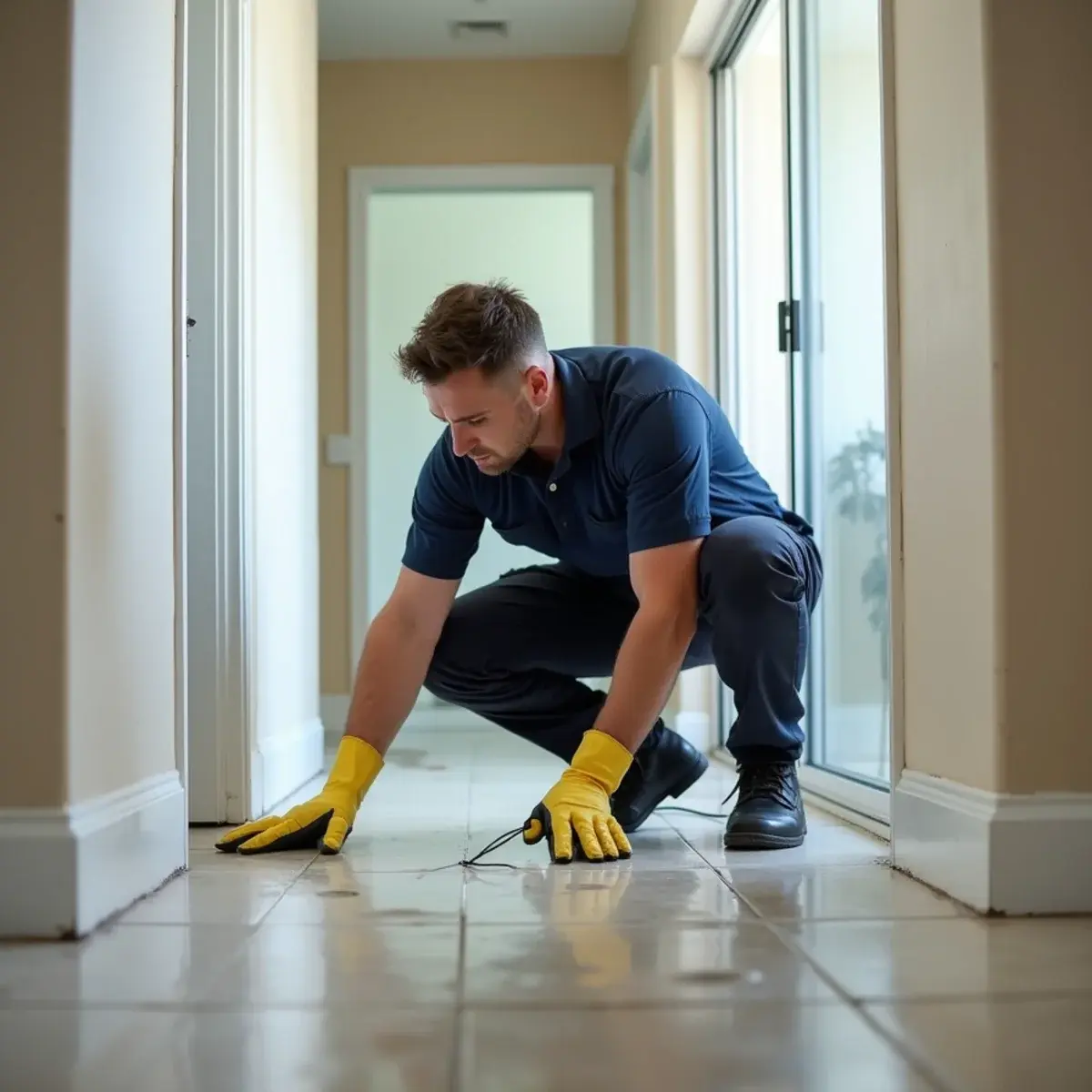
- It is on a hard, non-porous surface like tile, sealed concrete, or vinyl
- It did not reach drywall, baseboard, cabinetry, or carpet
- Nothing has been sitting wet overnight
How to Do It Properly Yourself
If you are on the right side of that line, here is how to actually finish the job rather than just make the floor look dry.
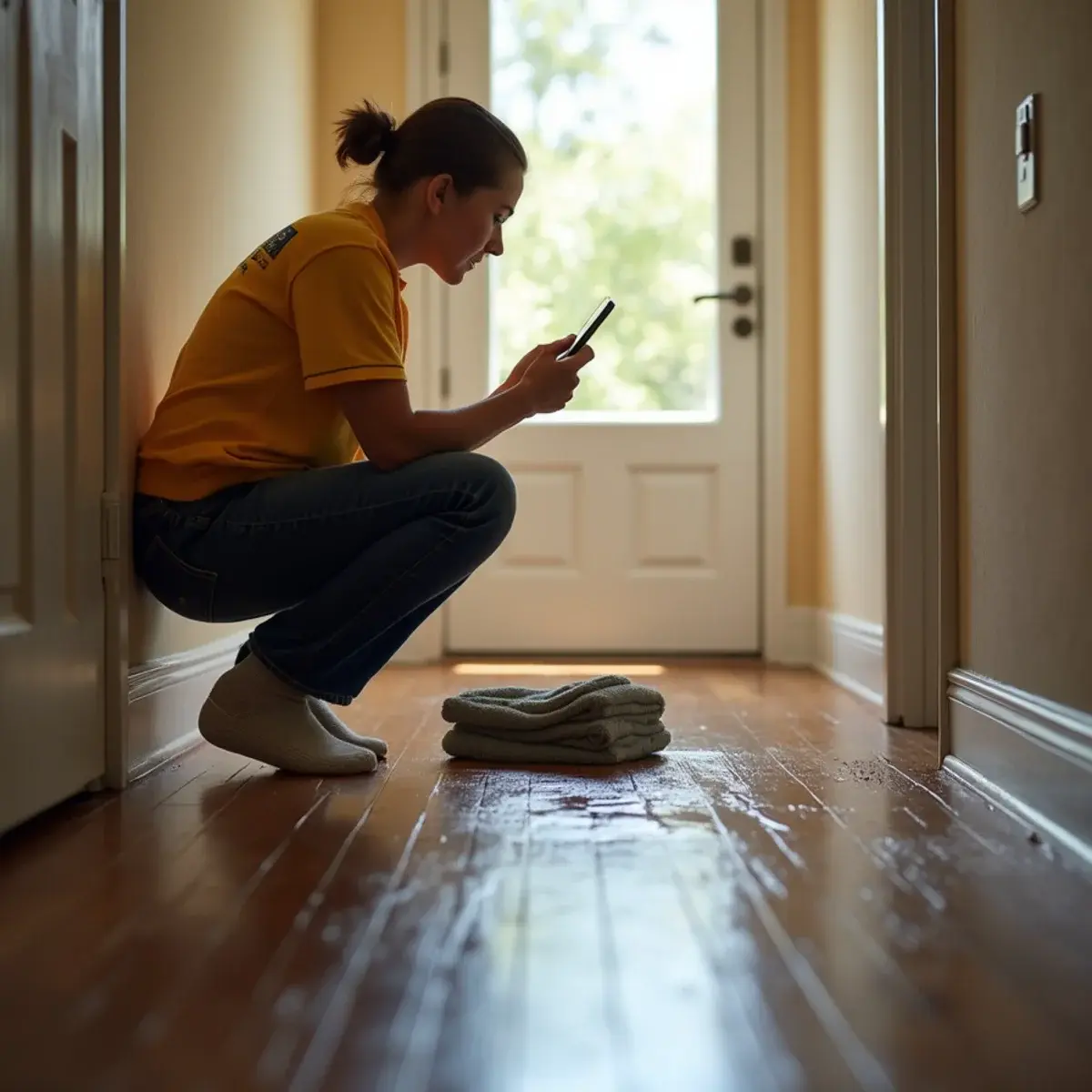
Stop the source. Remove standing water with towels and a mop — not a household vacuum, and not a shop vac if there is any chance of contact with an energized circuit. Wipe every surface the water touched, including under and behind things. Pull the baseboard if there is any doubt about whether water got behind it, since that is where it hides.
Then run air movement and dehumidification for two to three days, not two to three hours. A box fan alone moves moisture into your air and then into another part of your house. A rented dehumidifier plus fans is closer to the right idea. And check the area at day three and again at day ten — a musty smell or any staining appearing later means water got somewhere you did not reach.
When to Call — No Judgment Calls Needed
Any one of these means calling, regardless of how small the visible area is:
- The water came from a toilet, sewer line, washing machine, or dishwasher
- It came from outside across the ground
- It reached carpet, drywall, baseboard, cabinetry, or hardwood
- It has been sitting more than 24 hours
- It covers more than one room, or you are not sure how far it went
- It came through a ceiling
- It is near outlets, appliances, or the electrical panel
- You already cleaned it up and there is now a musty smell
- You are planning to file an insurance claim
What DIY Actually Costs When It Goes Wrong
The reason the line matters is that the failure mode is expensive and delayed. It does not show up the next day when you could still correct course. It shows up in about six weeks.
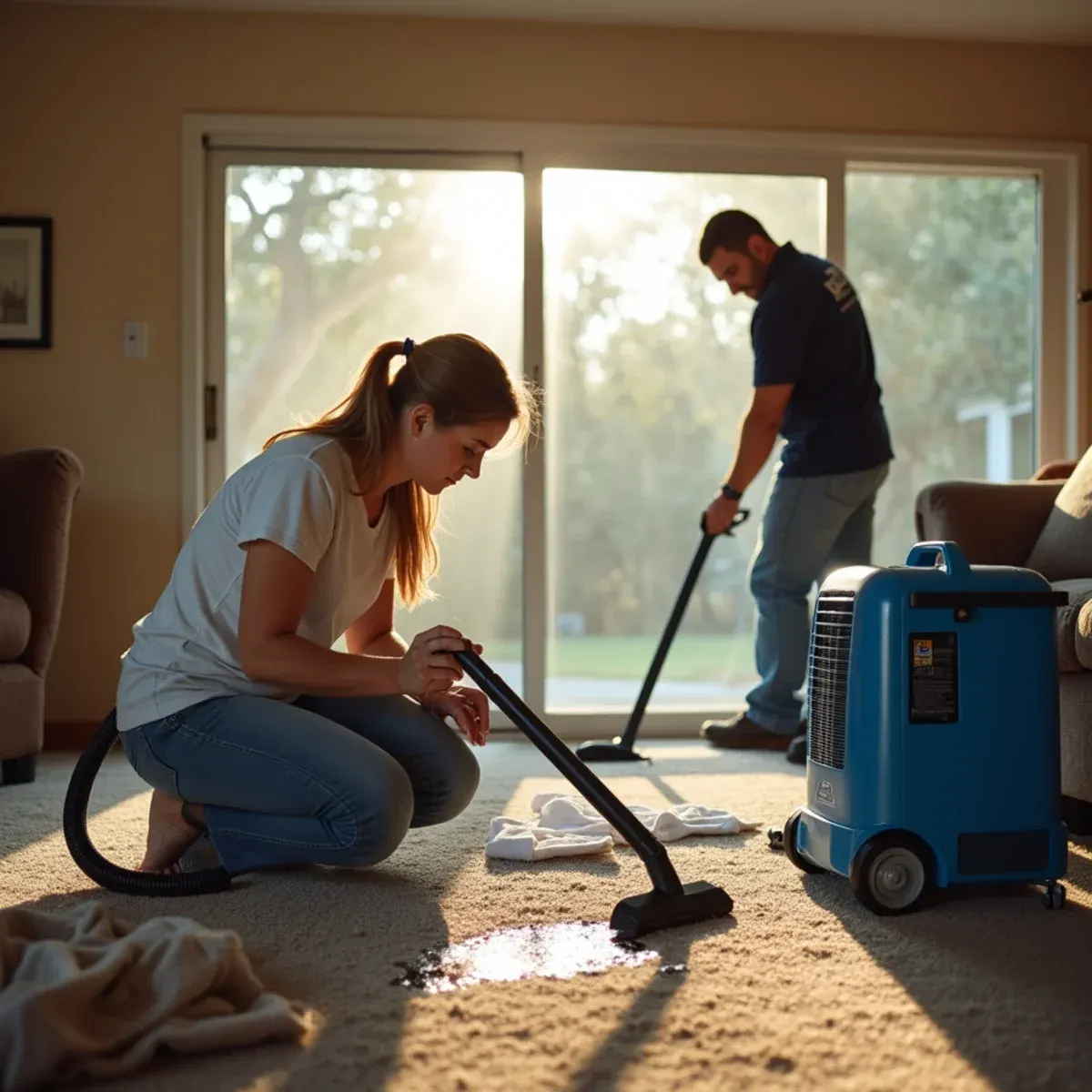
The pattern is consistent. Someone extracts the surface water from a carpeted room with a rented wet vac. The carpet feels dry within a day. The pad underneath, which holds several times more water than the carpet face, stays saturated. Six weeks later there is a musty smell, and now the carpet, the pad, the baseboard, the lower drywall, and possibly the framing all have to come out — plus mold remediation with containment.
The other cost is the insurance one. Policies cover sudden and accidental damage but generally exclude damage that resulted from a failure to mitigate. A carrier can reasonably decline the mold portion of a claim on the grounds that the water damage was handled inadequately. In practice, the DIY attempt that saved eight hundred dollars on mitigation frequently costs several thousand in denied coverage.
The Equipment Gap Is Real
It is worth being specific about why rented equipment does not close the gap, because it is not about effort.
A rented wet vac generates a fraction of the vacuum and airflow of a truck-mounted extraction unit, which is what actually pulls water back up out of carpet padding. A consumer dehumidifier removes a small fraction of the water per day that a low-grain refrigerant unit does, and LGR units keep working at low humidity levels where consumer units effectively stop. Box fans move air in a general direction; air movers are designed to strip the saturated boundary layer off a wet surface at a specific angle.
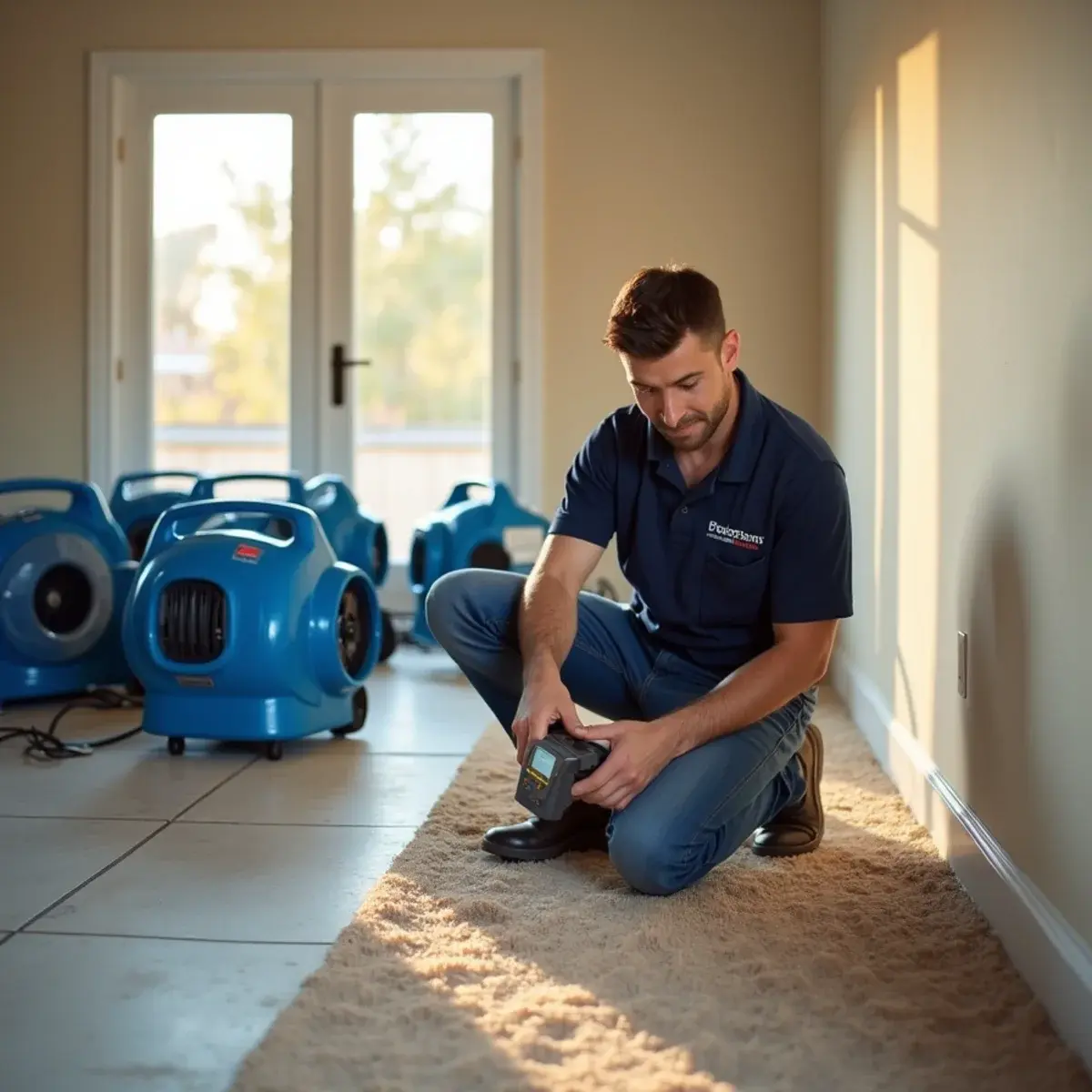
And none of it is measured. The single biggest difference is not any machine — it is that a professional job establishes a dry standard by measuring unaffected material, then reads the affected materials daily until they match. Without that, you are guessing about the only question that matters.
The Honest Middle Ground
There is a third option people rarely consider: get it inspected, then decide.
A moisture inspection is free, takes twenty to forty minutes, and is non-invasive. You get thermal images, actual moisture readings, and a written explanation of what they mean. If the reading says the assembly is dry and the problem was genuinely surface-level, you have confirmation and you keep your money.
That is a legitimately common outcome, and it is a better basis for a decision than either guessing that you are fine or paying for equipment you may not need. Any restoration company unwilling to give you that answer for free is not the one to hire.
When We Tell People Not to Hire Us
From our crews in the field
A clean-water spill under 50 square feet, caught within the hour, on tile or sealed hard flooring, with nothing having run under a wall — that is a towels-and-a-fan job and we will say so on the phone. We would rather give that answer than send a truck, because the callers who get honest advice are the ones who call back when something serious happens.
Where DIY stops working is not effort, it is instrumentation and airflow. You cannot see into a wall cavity, and household fans do not produce the airflow across a surface that actually moves bound moisture out of building material. The common outcome we get called to is a room that was dried on the surface, felt fine for three weeks, then developed a smell.
The safety line is firm rather than a judgement call: standing water near outlets, appliances or a panel, anything from a toilet or sewer line, and any ceiling holding water. Those are not DIY situations at any size, and shop vacuums in standing water are a genuine electrocution risk rather than a liability disclaimer.
- Small, clean, hard-surface, caught immediately — handle it yourself
- Anything into a wall cavity, under flooring, or over one room — get a meter on it
- Contaminated water and anything electrical are never DIY
- A free inspection costs you nothing and settles the question in twenty minutes
Services Mentioned in This Guide
- Water Damage Inspection & Leak Detection in Cypress, CA — Thermal imaging and moisture meters that find what a visual inspection cannot — free, and with no obligation.
- Water Extraction & Removal in Cypress, CA — Truck-mounted units and submersible pumps that move hundreds of gallons an hour — not a rented shop vac.
- Structural Drying & Dehumidification in Cypress, CA — LGR dehumidifiers, calculated air-mover placement, and a daily moisture log that proves the structure actually dried.
- Water Damage Restoration in Cypress, CA — Predominantly single-story slab-on-grade tract homes built between 1960 and 1980, with a newer band of construction from the 1990s onward on the west side.
- Water Damage Restoration in La Palma, CA — Orange County's smallest city by area at under two square miles, built out almost entirely between 1960 and 1980 with well-maintained single-family tracts.
Frequently Asked Questions
You can rent air movers and dehumidifiers. What you cannot rent is the calculation of how many units the space needs, the placement that makes them work, and the daily moisture measurement that tells you when you are finished. Equipment without measurement is guessing with a bigger electricity bill.
Possibly not the whole thing. Policies generally exclude damage resulting from a failure to mitigate, so a carrier can decline the mold portion of a claim on the grounds that the original water damage was handled inadequately. If you intend to file, get professional documentation from the start.
The only reliable way is a moisture meter reading on the affected materials compared to unaffected material of the same type. Touch and smell both lag by weeks. A free inspection answers it definitively in about twenty minutes.
Small and Clean and Fast: Handle It. Anything Else: Get It Read.
A small clean-water spill on tile that you caught immediately is yours. Anything involving contaminated water, porous materials, more than a day of sitting, or a ceiling is not, and the cost of getting that call wrong is delayed by about six weeks and multiplied by about five.
When you are genuinely unsure, the inspection is free anywhere in Cypress and the surrounding cities, and finding nothing is a fine outcome. We would rather tell you that you are fine than restore the same room twice.
Open 24 hours a day, 7 days a week — including holidays
On-site within 60 minutes of your confirmed emergency call anywhere in Cypress — or we credit $100 off your final invoice.