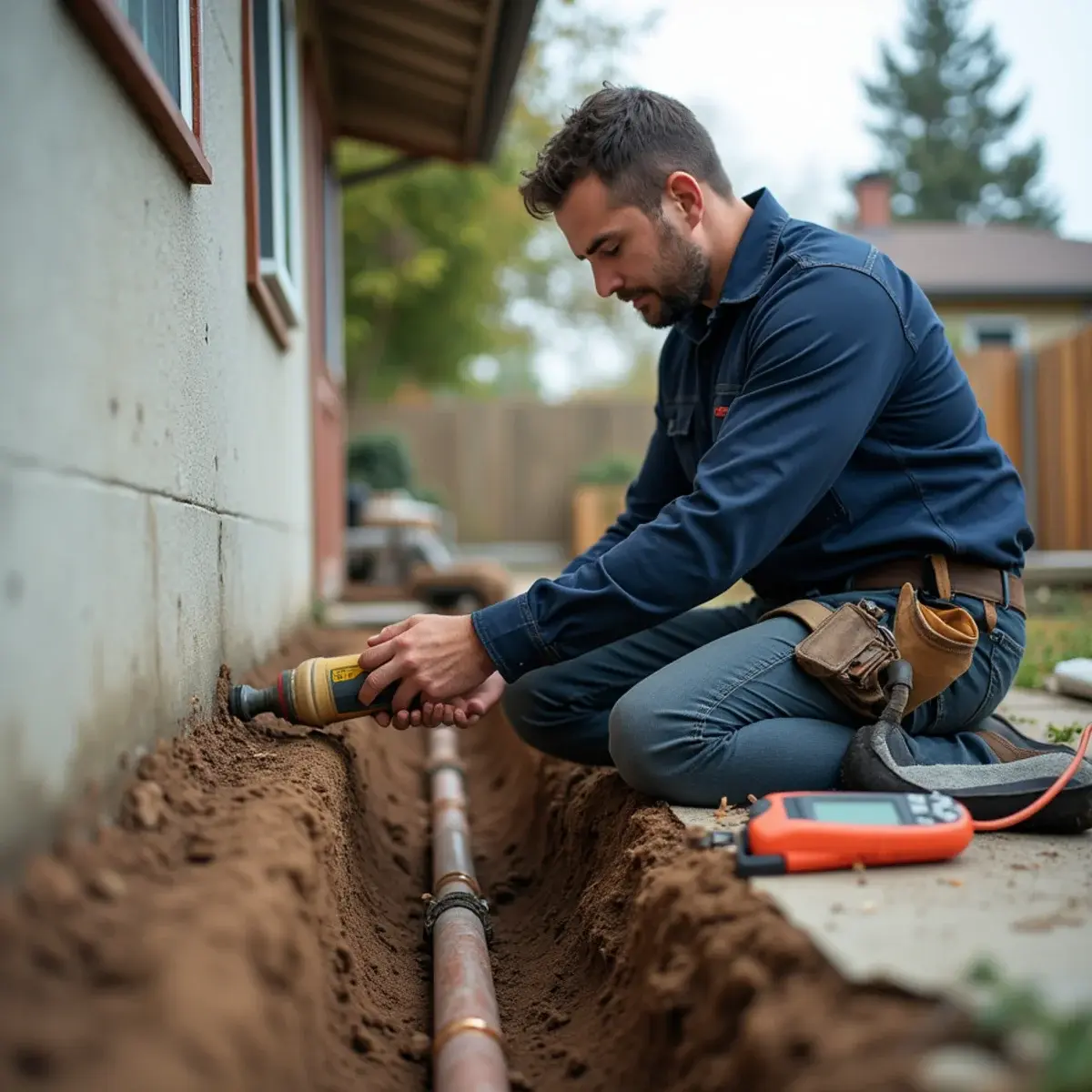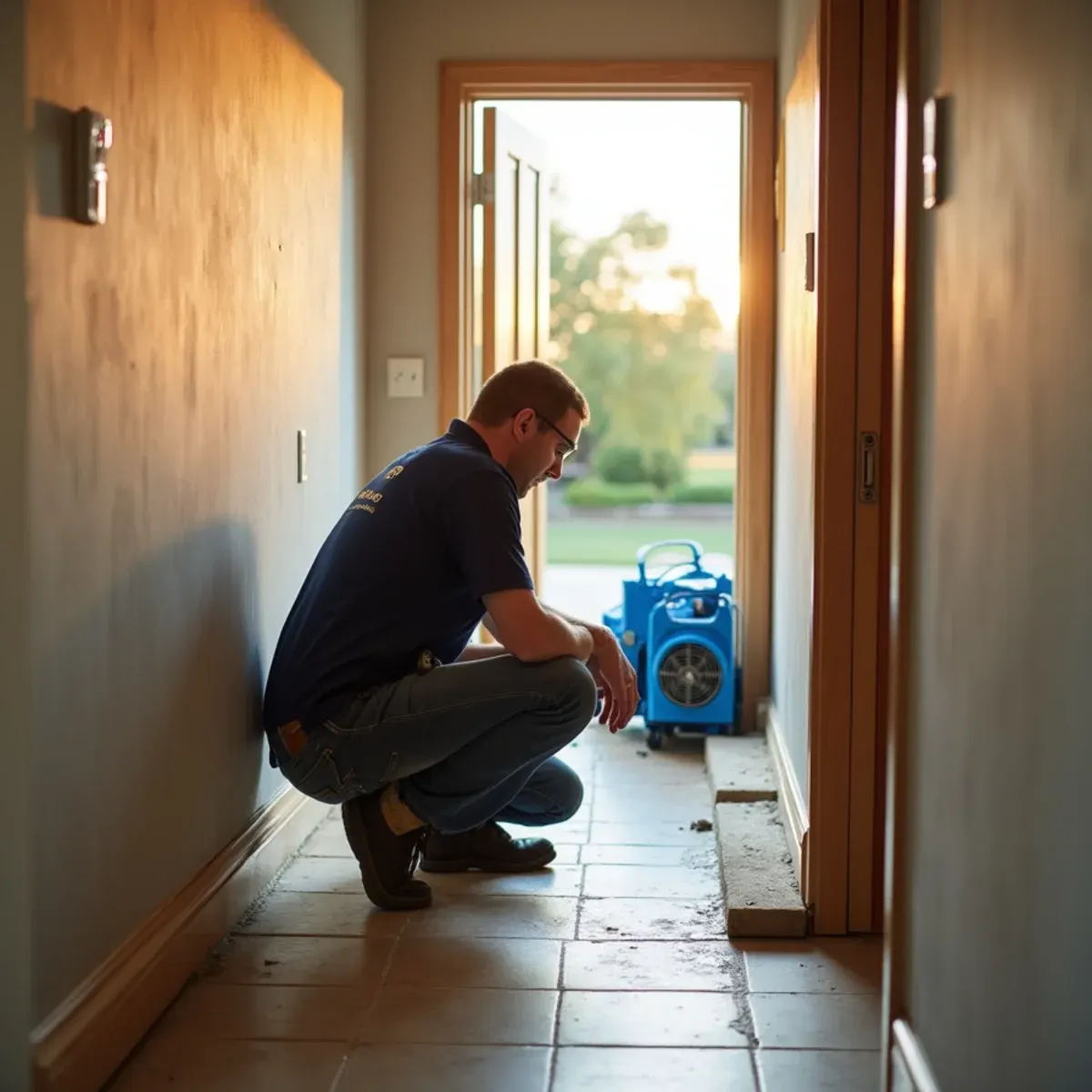
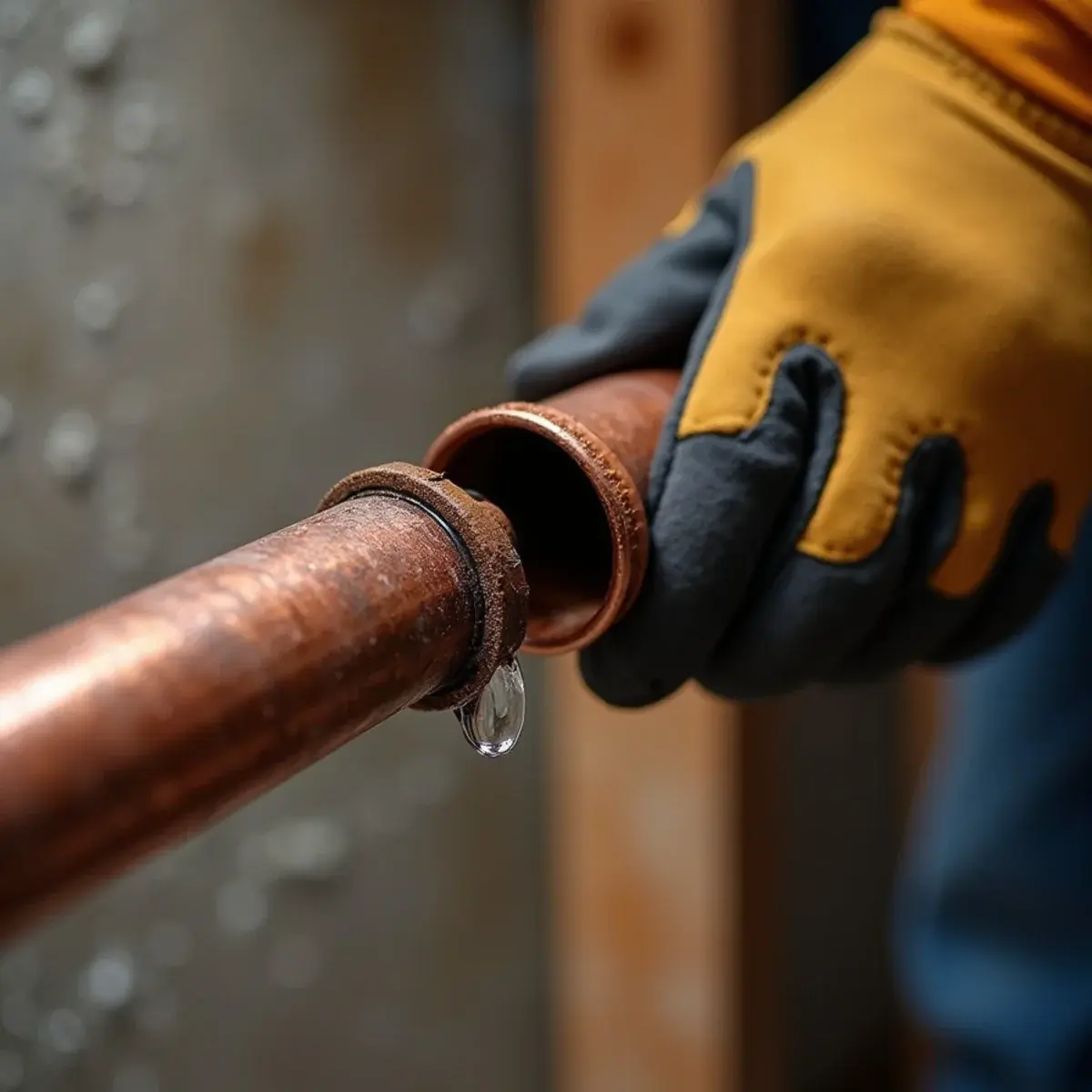
A burst supply line is the most common serious water loss we respond to in Cypress, and it is almost always a pressurized half-inch or three-quarter-inch line running at about 60 psi. That matters because a pressurized line does not drip — it sprays, continuously, until someone closes the main. A quarter-inch split can move several hundred gallons in an hour.
The other thing that makes burst pipes distinct is where the water goes. It starts inside a wall or ceiling cavity, which means the framing, insulation, and back side of the drywall are soaked long before a drop appears on your floor. Homeowners often mop up what they can see and assume it is handled. It is not — the assembly is wet and it will stay wet without forced drying.
We have opened a lot of walls in this city. The pattern is consistent: homes from the 1960s and 1970s development boom with original galvanized steel or early copper, and 1990s-era homes with the first generation of plastic fittings. Both fail the same way — quietly for years, then all at once.
Signs a Pipe Has Failed Inside Your Walls
A burst inside a cavity often announces itself indirectly. These are the early warnings worth acting on:
A sudden drop in water pressure
If pressure falls off across the whole house and no fixture explains it, water is escaping somewhere before it reaches the taps.
Running water sound with everything turned off
Stand in a quiet house and listen. A faint continuous hiss or trickle inside a wall is a pressurized leak, and it is running whether you are home or not.
A water bill that jumped for no reason
Check the meter with every fixture off. If the low-flow indicator is turning, you have an active leak. This is the single most reliable DIY test there is.
A warm or damp spot on a wall or floor
A hot-water line failure warms the surface above it. Combined with dampness, that narrows the location considerably.
Staining, bubbling paint, or a soft spot in drywall
Paint blisters when moisture pushes from behind. A soft, spongy patch means the gypsum has already lost integrity and the cavity is saturated.
Rust-colored water at the tap
In older galvanized systems, discolored water signals advanced internal corrosion — the condition that immediately precedes a pinhole or a full split.
How We Handle a Burst Pipe Loss
The plumbing repair and the water damage restoration are two different jobs. We coordinate both so you are not managing two contractors during a crisis.
- 1
Stop the source
If the main is not already off, we close it. If the failure is isolated to a fixture, we shut the local angle stop so the rest of the house keeps water.
- 2
Locate the failure precisely
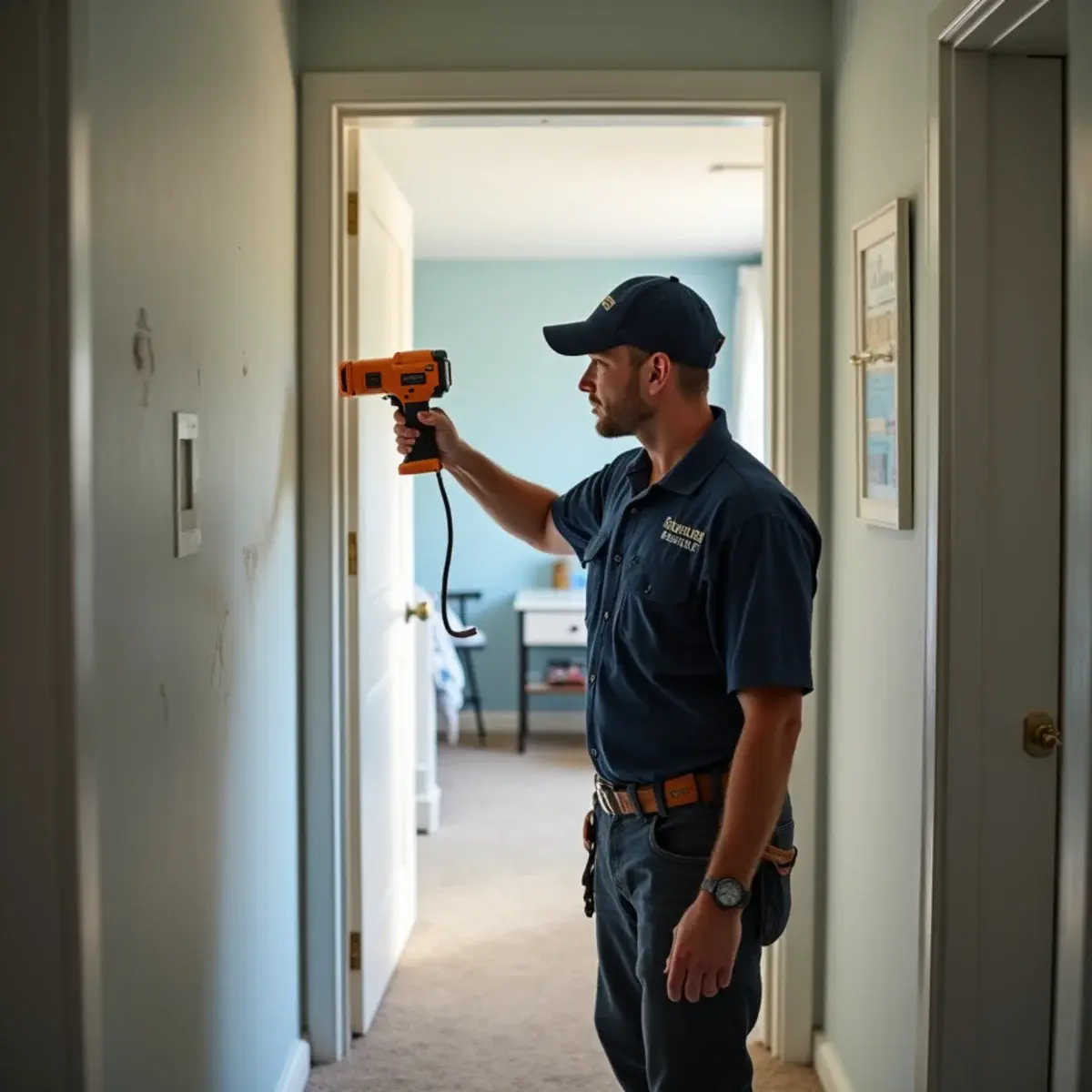
Thermal imaging and moisture meters trace the wet zone back to its origin so we open the smallest possible opening. This is the difference between one patchable access hole and a demolished wall.
- 3
Coordinate the plumbing repair
We work alongside your plumber, or bring in a licensed one from our network. Restoration cannot begin properly until the line is repaired and pressure-tested.
- 4
Extract and open only what must be opened
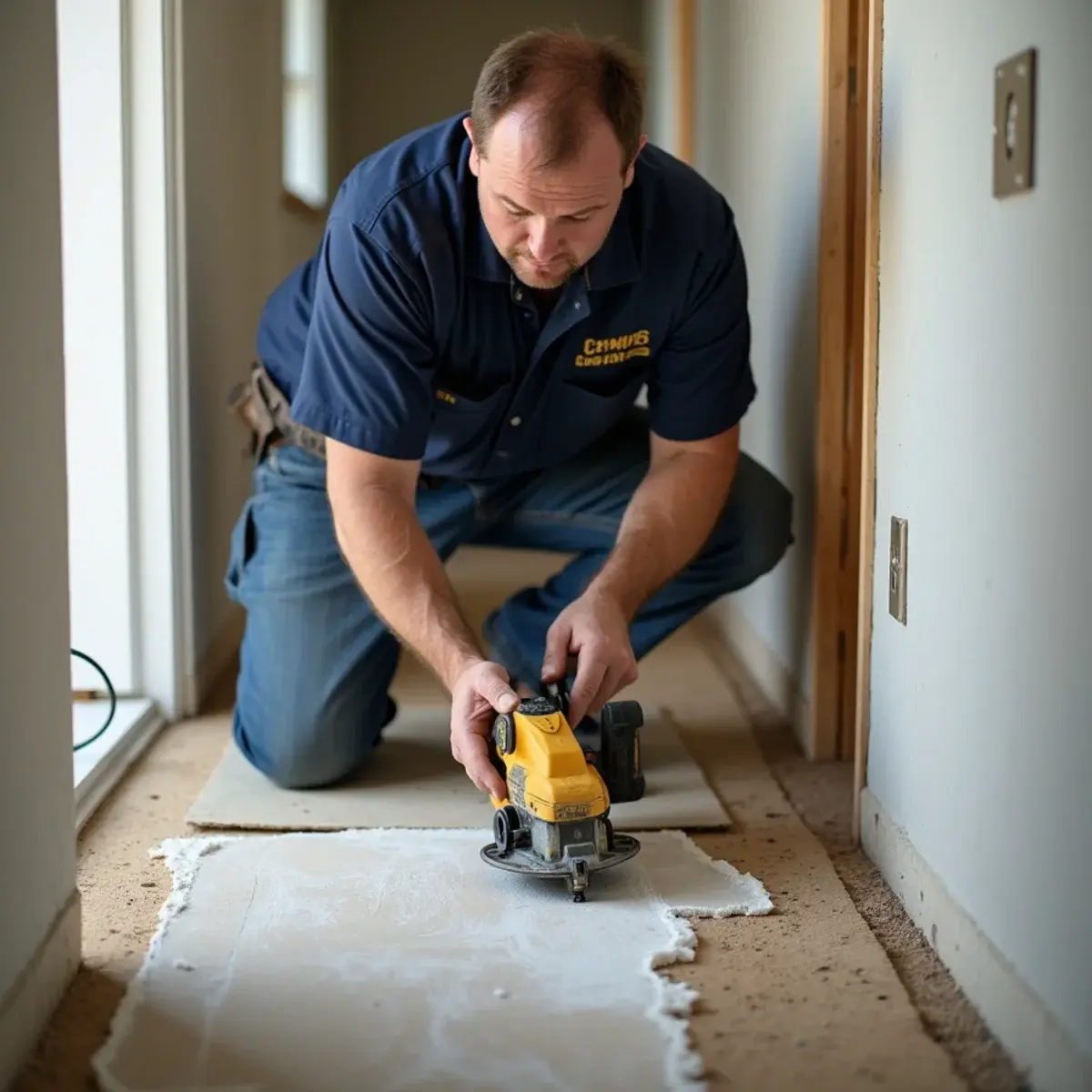
Standing water comes out, then wet insulation and unsalvageable material. Where possible we dry the cavity through small drilled ports behind the baseboard line rather than removing the wall.
- 5
Cavity and structural drying
Cavity ventilation systems push dry air directly into the wall assembly while air movers and dehumidifiers handle the room. Framing and the back of the drywall are read daily until they reach the dry standard.
- 6
Rebuild and finish
Insulation, drywall, texture match, paint, baseboard, and flooring — restored so the repair is not visible. We handle this in-house rather than handing you off.
Why Cypress Homes Burst Where They Do
This city's housing stock tells you a lot about what is going to fail. A large share of Cypress homes went up between 1960 and 1980, when galvanized steel supply lines were still common and copper was installed with the practices of the day. Galvanized pipe corrodes from the inside out — the interior diameter narrows with scale for decades, pressure and velocity climb, and eventually a thin spot lets go.
Copper in this area fails differently: pinhole leaks caused by slow interior pitting, often worst on hot recirculating lines. A pinhole releases far less water than a split, which is precisely why it is dangerous. It can weep inside a wall for months, and the first sign is frequently mold rather than water.
Homes built in the late 1980s and 1990s may still have original polybutylene supply piping, which is known to degrade and fail at the fittings. If your home is from that era and you have not repiped, it is worth having a plumber identify what is actually in your walls before it identifies itself.
The Wall Has to Dry, Not Just the Room
The most common mistake after a burst pipe is treating it as a floor problem. Water sprayed sideways into the cavity first — it soaked the insulation, ran down the framing, pooled on the bottom plate, and wicked upward into the drywall from below. The floor is where it finally emerged.
Fiberglass insulation is the worst offender because it holds water against the framing and loses its R-value permanently once compressed and wet. It has to come out. The bottom plate and studs then need directed airflow, which is what cavity drying systems provide — dry air pushed into the assembly through small ports, hidden under the baseboard when we are done.
Skip this and the room reads dry on the surface while the wall stays wet. Four to six weeks later you get the musty smell, and now you are paying for mold remediation on top of a repair you already paid for.
What Burst Pipe Restoration Costs Depends On
Two burst pipes on the same street can differ by a factor of ten in cost. Here is why:
How long the line ran before discovery
The biggest variable by far. A break caught in ten minutes may be a one-room dry-out. The same break running for eight hours while nobody was home routinely affects several rooms and the ceiling below.
Which floor it happened on
A second-story or attic line failure sends water through the ceiling into the level below, doubling the affected area and adding ceiling drywall, insulation, and often light fixtures to the scope.
Hot line versus cold line
Hot water raises the temperature and humidity of the cavity, accelerating both the wicking and the microbial clock. Hot-line failures typically need more aggressive drying.
What the water crossed
Water that traveled under cabinets, into a hardwood floor, or across a finished wall assembly costs more than water that stayed on tile in a laundry room.
Reconstruction finish level
Matching a smooth-wall finish, a custom texture, or a discontinued flooring product costs more than a standard repaint. We will tell you upfront if a match is going to be difficult.
Insurance note: A sudden pipe burst is the textbook covered peril on a standard homeowners policy. The repair of the pipe itself is often excluded while all the resulting water damage is covered — a distinction worth knowing before you talk to your adjuster.
Why Cypress Homeowners Call Us for Burst Pipe Damage
Plenty of companies list this service. Fewer can tell you what equipment they will bring, what standard the work is measured against, or what happens if they are wrong. Here is what you are actually buying.
We dry the cavity, not the puddle
A burst supply line pushes water inside the wall long before it shows on the floor. Cavity drying through small access points saves the drywall that a demolition-first company would cut out.
Thermal imaging finds the true wet edge
Water travels along framing and under flooring well past the visible stain. We map the actual boundary before setting equipment, so the drying chamber covers the whole loss.
Galvanized and under-slab copper are what we see most
Cypress housing from the 1960s and 70s runs on piping at the end of its service life. We have opened enough of these walls to know where the line usually let go before we cut anything.
- 20+ years restoring Orange County homes
- IICRC Certified Firm
- Licensed, Bonded & Insured
- We bill your insurance company directly
- IICRC S500:2025 compliant on every job
- 100% satisfaction guarantee — in writing, on every job
Frequently Asked Questions
We restore the water damage and coordinate the plumbing repair, working with your plumber or bringing in a licensed one from our network. Handling both under one schedule is what keeps a burst pipe from turning into two weeks of contractor coordination.
More than people expect. A half-inch supply line at typical residential pressure moves in the range of 8 to 10 gallons a minute. That is roughly 500 gallons in an hour — comparable to filling a small backyard pool inside your walls and floor.
Usually not. Thermal imaging lets us locate the failure precisely and open the smallest access we can, and cavity drying often lets us dry the assembly through small ports rather than removing drywall. Where water sat long enough that the material is compromised, we cut cleanly to a standard seam so the repair is invisible.
Usually, though some policies have conditions about extended vacancy or require the water to have been shut off. Call us immediately regardless — prompt mitigation is a policy requirement, and a long-running loss discovered late needs thorough documentation from the outset.
Know where your main shutoff is and confirm it turns freely. Replace washing machine hoses with braided stainless every five years. Have a plumber scope your supply lines if the home predates 1990. And consider a smart leak detector at the water heater and under sinks — they cost less than one hour of a burst line.
Related Reading
- Why Cypress Homes Built Before 1980 Face Higher Water Damage Risk — Cypress built out in about twenty years, which means most of its plumbing is reaching end of life at the same time. Here is what fails and when.
- 9 Signs of Hidden Water Damage Behind Your Walls — Most expensive water losses start as small leaks nobody could see. These are the nine signals that something is wet inside your walls.