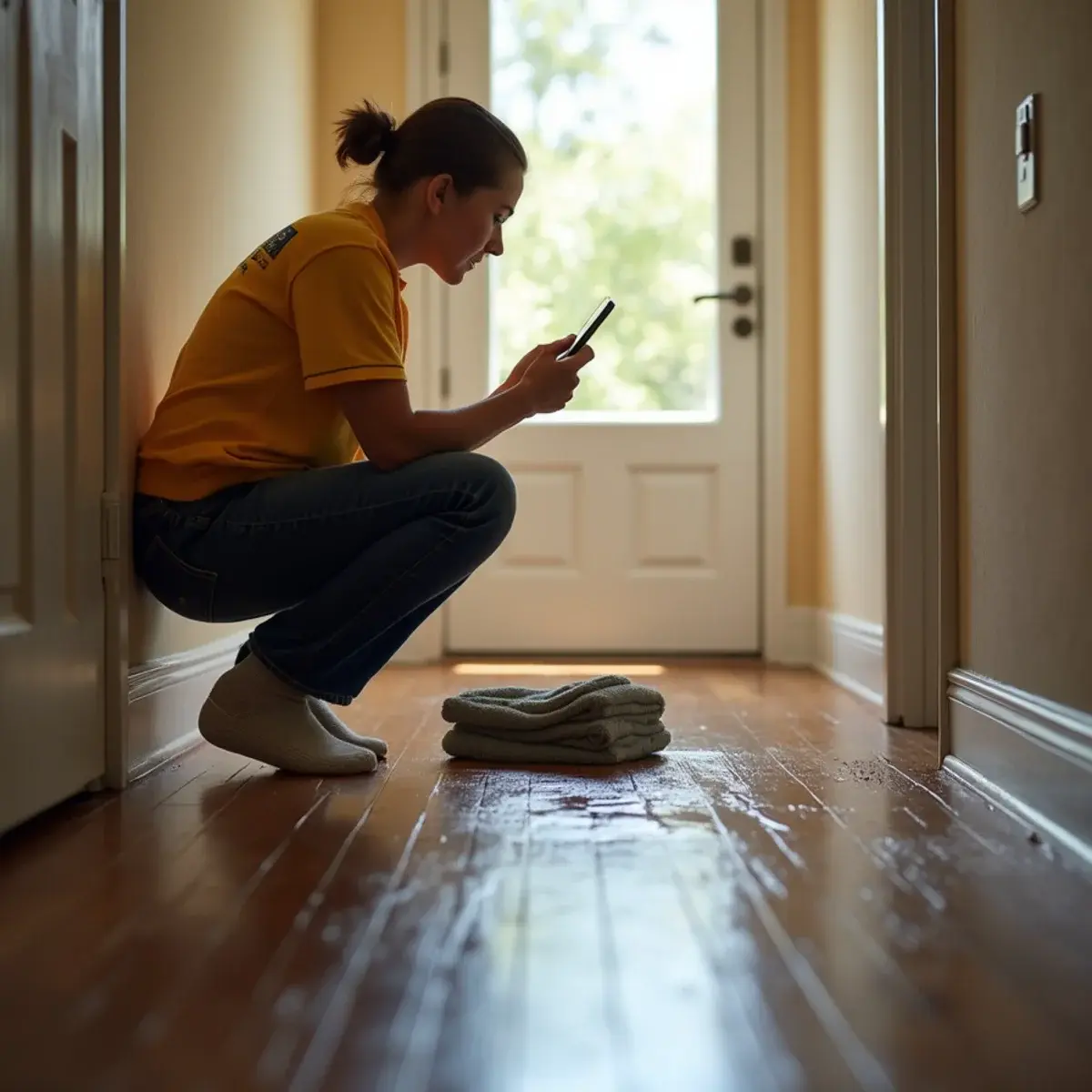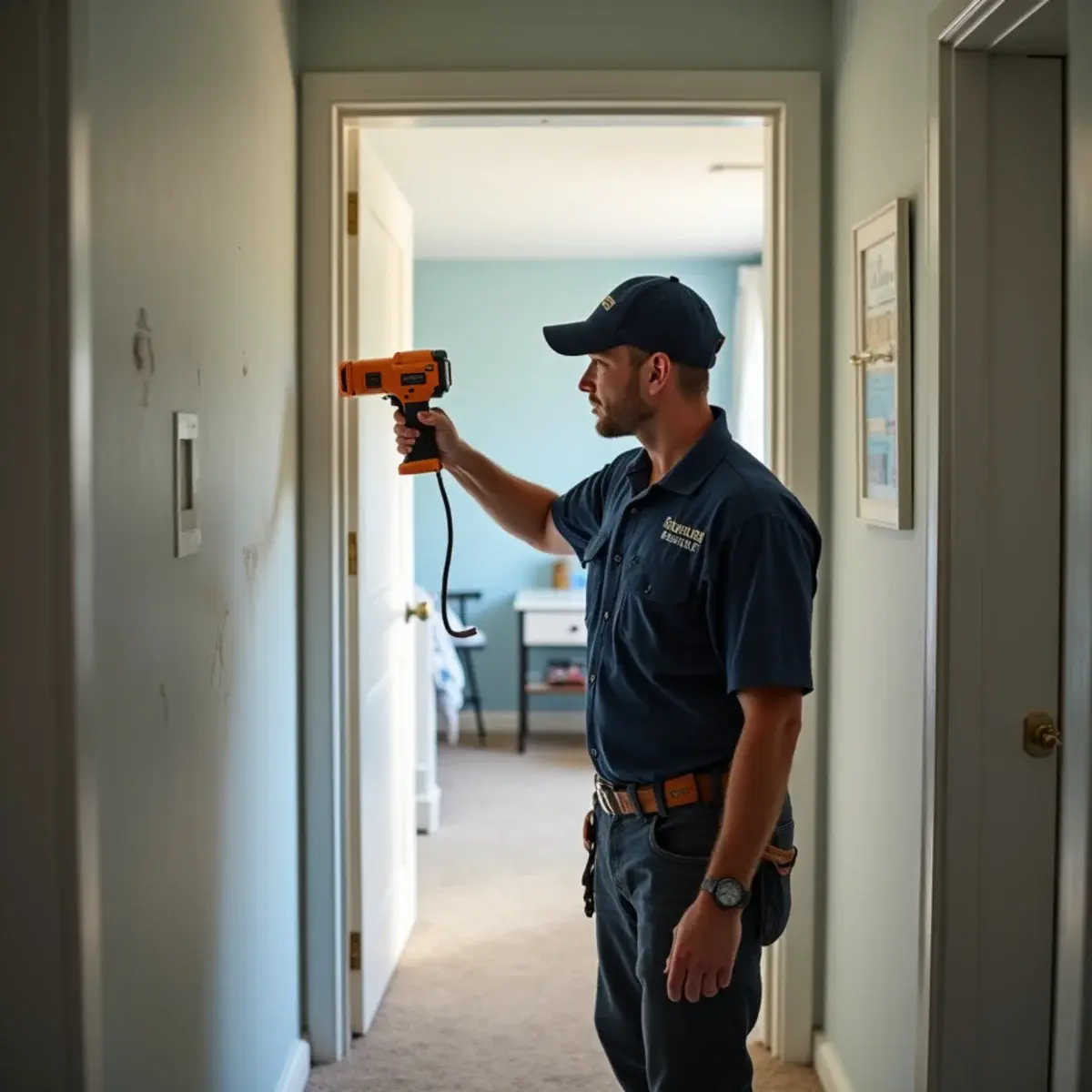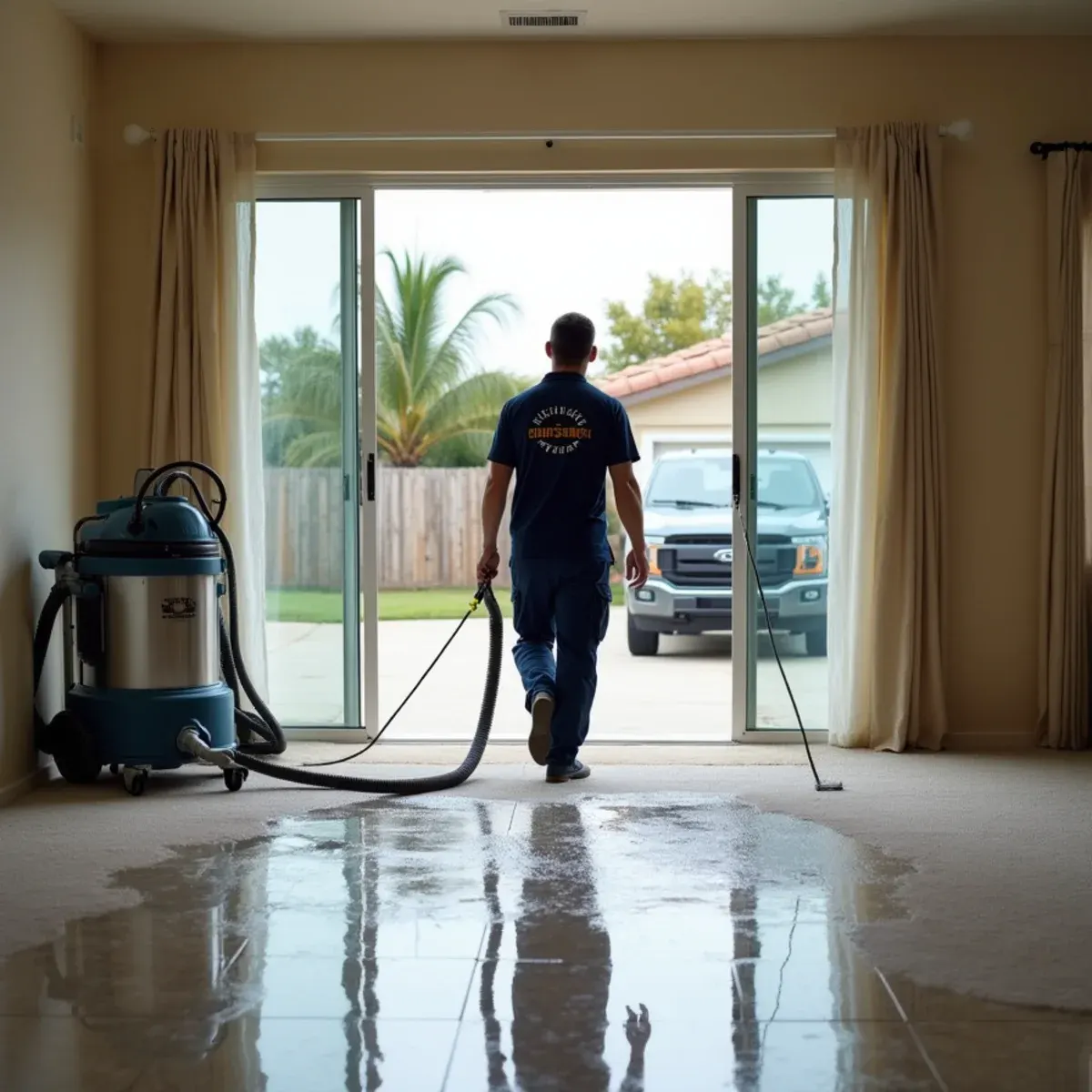
Extraction is the step where the most damage is prevented in the least time. Every gallon we pull out in hour one is a gallon that never gets absorbed into drywall, subfloor, cabinet boxes, or carpet pad — and absorbed water is what turns a two-day dry-out into a two-week reconstruction.
The difference between professional extraction and a rented wet vac is not effort, it is physics. A truck-mounted unit generates enough vacuum and airflow to pull water back out of carpet padding and up through the face of hardwood. A consumer vacuum skims the surface, tells you the job is done, and leaves the pad saturated underneath.
We extract first and ask questions second. Assessment, documentation, and drying plans all matter, but with standing water on the floor the clock is the enemy, and we would rather do the paperwork with the water already in the truck.
Signs You Have More Water Than You Think
Standing water is the obvious part. These are the indicators that water has migrated well past what you can see:
Carpet squishes several feet from the visible edge
Water travels through carpet pad far faster than it wicks through the carpet face. If the pad is wet three feet past the visible line, that is your real perimeter.
Baseboards are darkened or swollen
MDF baseboard swells within hours of contact. Swelling means water sat against the bottom plate of the wall, which means the drywall above it is wet too.
The room smells damp before it looks wet
Elevated humidity and off-gassing from wet building materials is often the first sign that water is under a floating floor or behind a cabinet.
Tile grout lines look darker in a pattern
Tile itself is not porous, but grout, mortar bed, and the subfloor under it are. Dark grout lines usually trace where water is sitting underneath the tile.
Water appeared in a room next to the leak, not the leak room
Slabs are rarely dead level. Water follows the slope, which is why the damage often shows up two rooms away from the burst pipe.
How We Remove the Water
The right tool depends on volume, depth, contamination, and what is under the water. Most jobs use several of these in sequence.
- 1
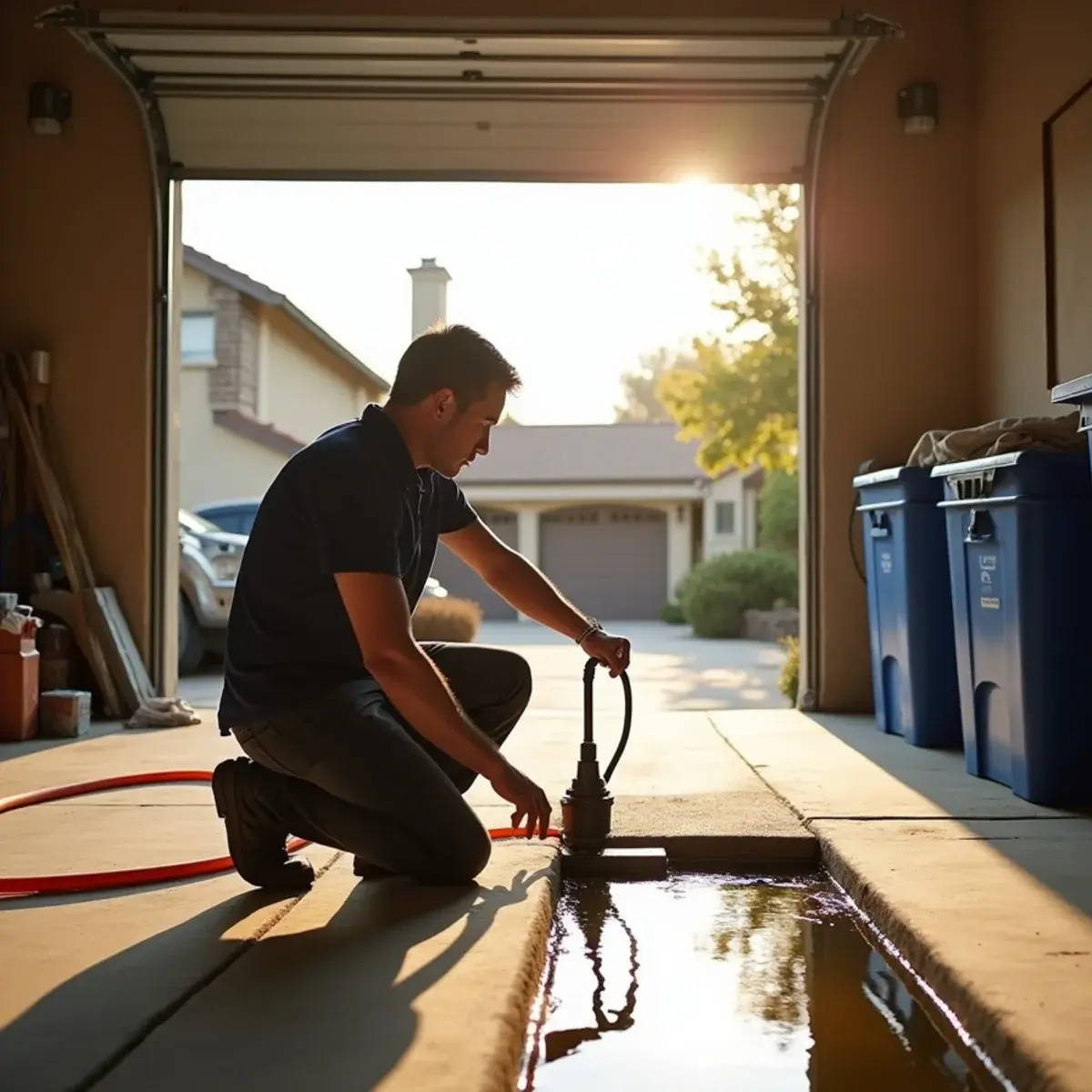
Bulk removal with submersible pumps
Anything more than a couple of inches deep gets pumped before we touch a wand. Submersible pumps move high volume quickly and, unlike a shop vac, are built to run in standing water without becoming an electrical hazard.
- 2
Truck-mounted extraction on carpet and pad
For soft flooring, a truck-mounted unit with a weighted extraction tool uses the operator's body weight to compress the pad and force water up out of it. This is what determines whether your carpet can be dried in place or has to be pulled.
- 3
Hard-surface and specialty extraction
Squeegee wands for tile and vinyl, and for water under laminate or engineered wood, floor mat drying systems that create negative pressure and pull moisture up through the seams rather than tearing the floor out.
- 4
Cavity and void extraction
Water trapped inside wall cavities gets released through small, patchable drill holes at the base plate and drawn out with a cavity ventilation system — far less invasive than cutting the wall open.
- 5
Removing what cannot be saved
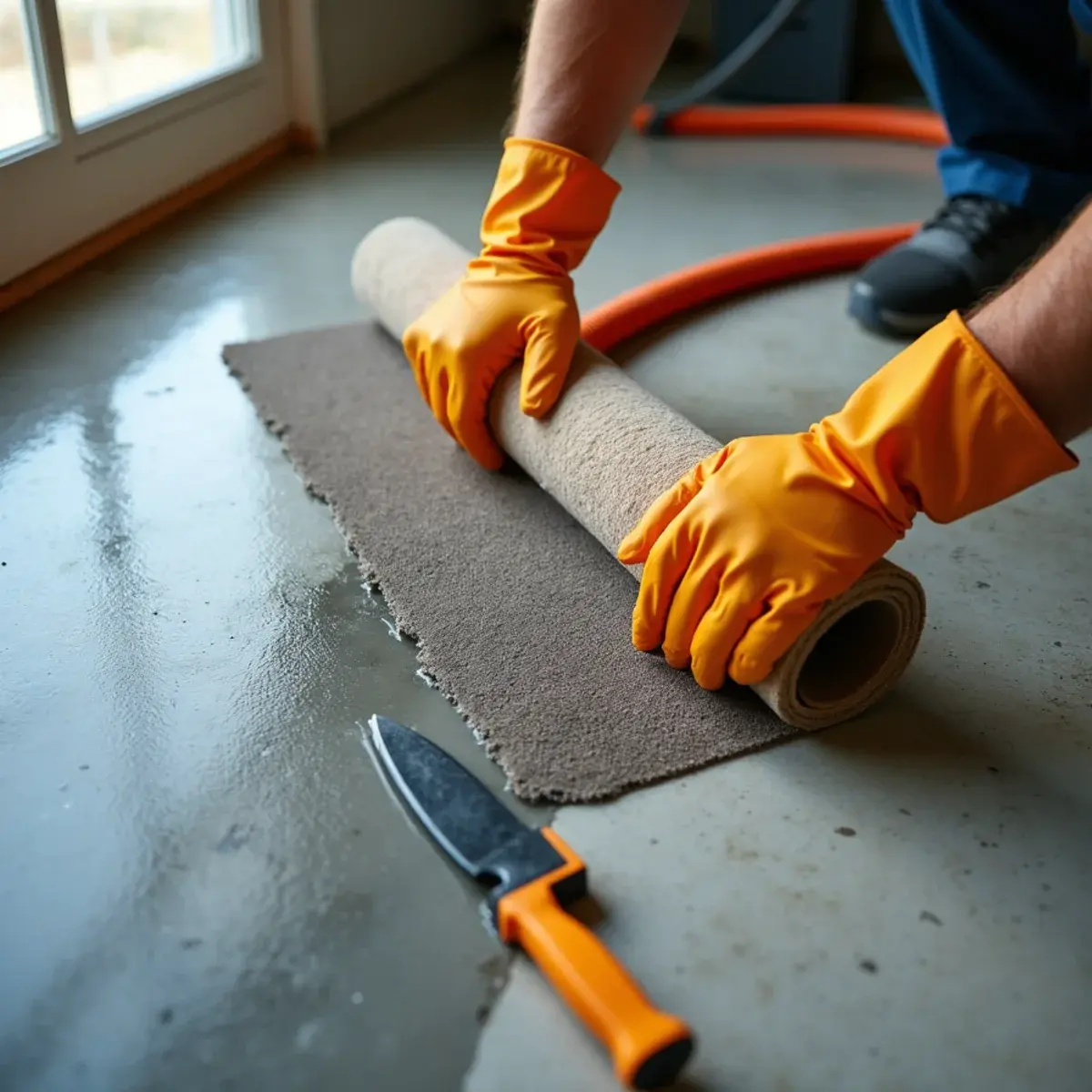
Saturated carpet pad, wet insulation, and swollen particle-board are almost never worth drying. We cut and dispose of those first so the drying equipment is working on materials that can actually recover.
- 6
Post-extraction moisture reading
We re-read every affected material after extraction and record the numbers. That reading becomes the baseline the drying plan is measured against.
Why a Shop Vac Costs You More Than It Saves
We understand the instinct. The hardware store is ten minutes away and a wet vac is under a hundred dollars. But the math does not work, for two reasons.
First, capacity. A five-gallon vac holding water from a burst half-inch supply line running for one hour is emptying a bucket every ninety seconds for most of an afternoon, and it still will not touch the pad. Second, safety: consumer vacuums are not rated for standing water near energized circuits, and this is the single most common way people get hurt during a water loss.
The larger cost is what gets missed. Surface extraction with a consumer machine leaves the carpet feeling dry while the pad underneath stays saturated — which is precisely the condition mold needs. Homeowners who do this often call us five days later with a musty odor, and by then the drywall and baseboard have to come out too.
Extraction Is Only Step One
Getting the water out solves the visible problem. It does not solve the absorbed one. Drywall, framing, subfloor, and cabinet material hold moisture long after the floor looks dry, and that trapped moisture is what causes mold, cupped floors, and delaminated cabinets weeks later.
That is why every extraction we do rolls straight into a documented structural drying plan with daily moisture readings. Water removal without verified drying is half a job — and it is the half that does not protect you when a mold question comes up two years from now.
What Extraction Costs Depends On
Extraction is usually priced by affected square footage and water category, with equipment and disposal on top. These are the variables that matter:
Volume and depth of water
Two inches across a great room is a very different job from a damp hallway. Depth determines whether we start with pumps or go straight to extraction wands.
Flooring type
Carpet and pad extract quickly. Tile over a mortar bed, glued-down vinyl plank, and engineered hardwood all take specialized equipment and considerably more time.
Contamination level
Category 3 water requires containment, PPE, and disposal of nearly everything porous it contacted. That changes the labor and disposal line items significantly.
Access and distance to the truck
A second-floor unit at the back of a complex means longer hose runs and slower recovery. Ground-floor access adjacent to a driveway is the fastest and cheapest scenario.
Furniture and contents in the way
Rooms that need to be emptied before extraction add a content-manipulation line item. We can often block furniture in place instead, which is cheaper.
Insurance note: Extraction is almost always covered under a sudden-and-accidental water loss because it is mitigation — the work your policy actually requires you to do. We bill the carrier directly for it.
Why Cypress Homeowners Call Us for Water Extraction
Plenty of companies list this service. Fewer can tell you what equipment they will bring, what standard the work is measured against, or what happens if they are wrong. Here is what you are actually buying.
Truck-mounted extraction, not a portable box
Truck-mounted units pull hundreds of gallons an hour and keep pulling after a portable's recovery tank is full. On a whole-floor loss that difference is measured in hours, and hours are what decide whether the pad can be saved.
We extract the pad, not just the carpet
Weighted extraction wands pull water from the cushion underneath, which is where the volume actually sits. Surface extraction leaves carpet feeling dry over a saturated pad — the exact condition mold needs.
Extraction rolls straight into documented drying
Water removal without verified drying is half a job. Every extraction we run continues into a drying plan with daily moisture readings, so nobody is guessing whether the structure underneath actually dried.
- 20+ years restoring Orange County homes
- IICRC Certified Firm
- Licensed, Bonded & Insured
- We bill your insurance company directly
- IICRC S500:2025 compliant on every job
- 100% satisfaction guarantee — in writing, on every job
Frequently Asked Questions
For a typical single-room residential loss, extraction runs one to three hours. Multi-room losses or Category 3 water can take most of a day because of containment setup and material removal. We will give you a realistic timeframe after the walkthrough, before we start.
Often we can save the carpet and only replace the pad, which is the cheaper and less disruptive path. The deciding factors are water category, how long it sat, and whether the pad is a moisture barrier type. Clean water caught quickly usually means the carpet stays.
Yes. We use floor mat drying systems that seal to the surface and pull moisture up through the seams under negative pressure. It is slower than drying carpet, but it very often saves a floor that would otherwise have to be torn out and replaced.
Maybe not extraction, but you do need a moisture reading. Surfaces dry long before the materials underneath do. A free twenty-minute inspection with a meter and thermal camera will tell you definitively whether anything is still holding water.
You can, and for a small clean-water spill caught in the first hour it is a reasonable thing to do. What a rental machine cannot do is pull water out of the pad underneath or out of the wall cavity, because it has neither the vacuum lift nor the weighted wand for it. The common outcome is carpet that feels dry over cushion that is still saturated, which is the exact condition mold needs. If more than one room is affected, the water has been sitting overnight, or it came from anything other than a clean supply line, a rental machine will not get you there.
Related Reading
- What to Do in the First 30 Minutes After Water Damage — The half hour after you find water on the floor determines a surprising amount of what the repair costs. Here is exactly what to do, in order.
- 9 Signs of Hidden Water Damage Behind Your Walls — Most expensive water losses start as small leaks nobody could see. These are the nine signals that something is wet inside your walls.