
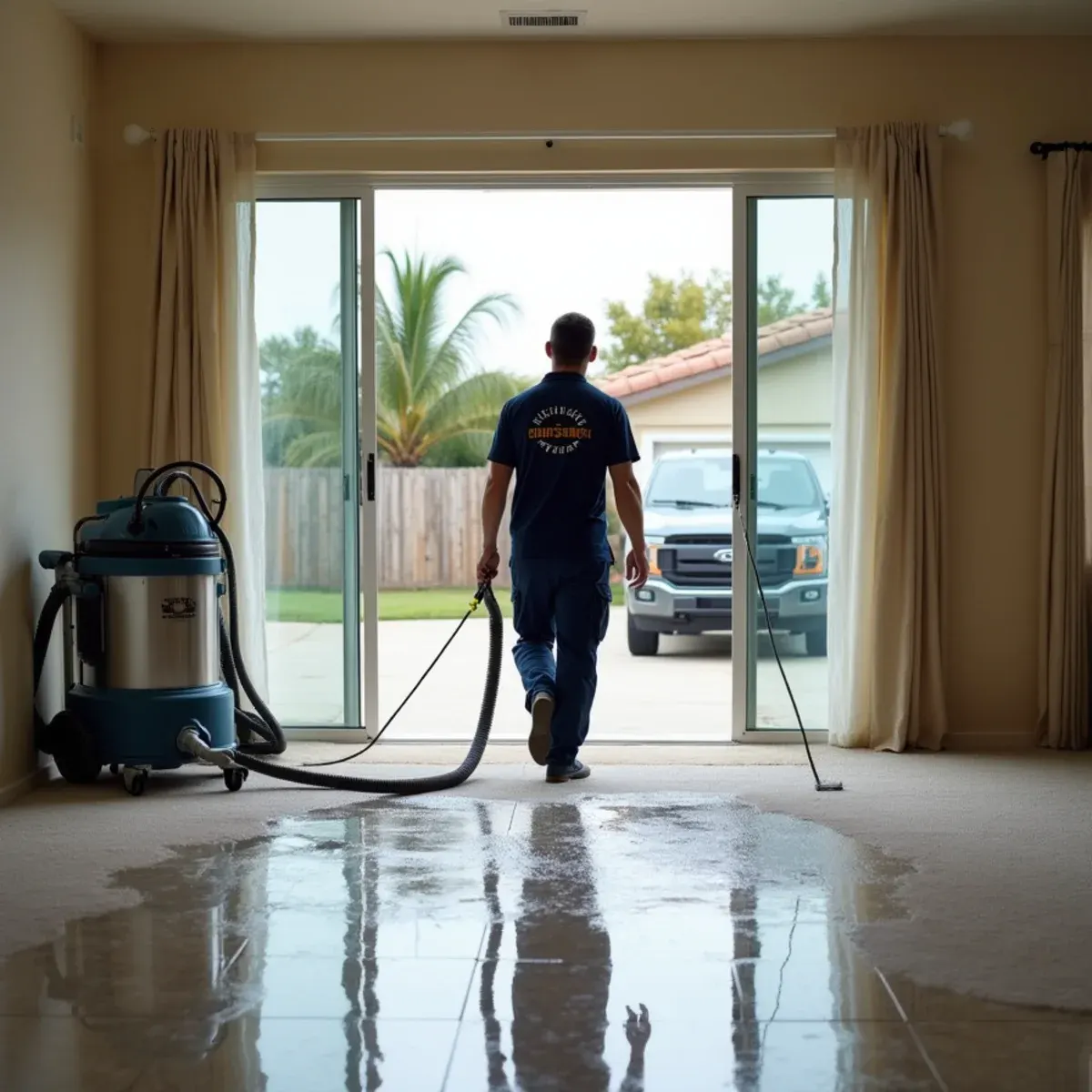
In most of the cities around here a supply leak leaves water on your floor. In the older parts of Fullerton it doesn't. Pre-war Craftsman and Spanish Revival homes near downtown sit on raised foundations, so a leak drips through the subfloor and pools on the dirt in the crawl space, out of sight and out of mind. That's why these losses run for weeks before anyone notices, and why the extraction is a pumping job under the house rather than a wand-and-carpet job above it.
It cuts both ways, though. A crawl space is far easier to get into than a slab, so we can pump the standing water, pull down saturated batt insulation, and remove wet vapor barrier without opening a single finished surface. Above it, the thick original fir and oak flooring in these houses is worth real effort to save, and the old-growth Douglas fir framing rewards proper drying. Around Cal State Fullerton and Fullerton College the problem changes shape entirely: student rentals get reported late, sometimes days late, and by then the scope has doubled.
What Fullerton Changes About Water Extraction
1Pumping standing water from a crawl space
On a raised foundation the extraction happens on your hands and knees. We get a submersible pump to the low point, move the water out to an approved discharge, then work the perimeter where it collects against footings. Ground under a Fullerton crawl space holds water longer than you'd think, so we monitor rather than calling it finished after one pass. The upside is that no floors have to come up.
2Wet insulation has to come out
Saturated fiberglass batts between the floor joists are the worst thing to leave behind under a raised house. They hold water against your subfloor, lose all insulating value, and turn into an odor source. We pull them, bag them, and replace vapor barrier that's been fouled. Homeowners are often surprised this is part of extraction, but leaving it in place undoes everything else we did down there.
3Student rentals report water late
Near CSUF and Fullerton College, a leak in a shared rental frequently isn't reported for days — nobody is sure whose problem it is or who to call. The extraction scope grows with each of those days, from a pad and a section of base to subfloor and framing. Post the main shutoff location and an emergency number where tenants see it, and tell them water gets reported the same hour it's noticed.
How the Work Runs
The method is the same one we use on every water extraction job, documented to the IICRC S500:2025 standard. Here it is in short — the full water extraction & removal process explains each stage in detail.
- Bulk removal with submersible pumps
- Truck-mounted extraction on carpet and pad
- Hard-surface and specialty extraction
- Cavity and void extraction
- Removing what cannot be saved
- Post-extraction moisture reading
The Fullerton Background Worth Knowing
The pre-war homes around downtown Fullerton were built with materials that behave completely differently from modern construction. Lath and plaster walls hold several times the water drywall does. Old-growth Douglas fir framing is dense and dries slowly. Original oak and fir flooring is thick, high-quality material that is well worth saving.
There is more on the housing stock, drainage and plumbing history of this city on our water damage restoration in Fullerton page.
Fullerton at a glance
- Dominant construction era
- 1910–1980
- Foundation type
- mixed on grade
- Supply piping found here
- galvanized steel, copper, original pre-war piping
- Drain line materials
- cast iron, clay
- Terrain and water table
- rolling, moderate water table
- Most common local failure
- crawl-space leaks that run undetected for weeks because the water drips away instead of pooling on a floor
- Highest-value local prevention
- posting a shutoff location and emergency contact in every rental, since delayed reporting is the local failure mode
What It Costs in Fullerton
We do not quote a number over the phone before seeing the property — anyone who does is guessing. The variables that actually move the price on a water extraction job are volume and depth of water, flooring type, contamination level, and they are broken down in full on the water extraction & removal page. The assessment and the written estimate are free anywhere in Fullerton, day or night, with no obligation.
Water Extraction Questions from Fullerton Homeowners
That combination is close to a signature for a crawl-space leak in these older Fullerton homes. Water drips down and pools on the soil, so finished floors stay dry while the space below stays wet for weeks. We open the crawl access, pump anything standing, remove saturated insulation and fouled vapor barrier, then dry the joists and subfloor from below. It's dirty work, but it rarely means disturbing your finished floors or original woodwork.
For a typical single-room residential loss, extraction runs one to three hours. Multi-room losses or Category 3 water can take most of a day because of containment setup and material removal. We will give you a realistic timeframe after the walkthrough, before we start.
Often we can save the carpet and only replace the pad, which is the cheaper and less disruptive path. The deciding factors are water category, how long it sat, and whether the pad is a moisture barrier type. Clean water caught quickly usually means the carpet stays.
Yes, and they need a different approach. Lath and plaster and old-growth framing hold far more water than modern materials and dry much more slowly, so we plan for seven to fourteen days with higher-capacity equipment. The original material is worth that effort — nothing sold today replaces it.