
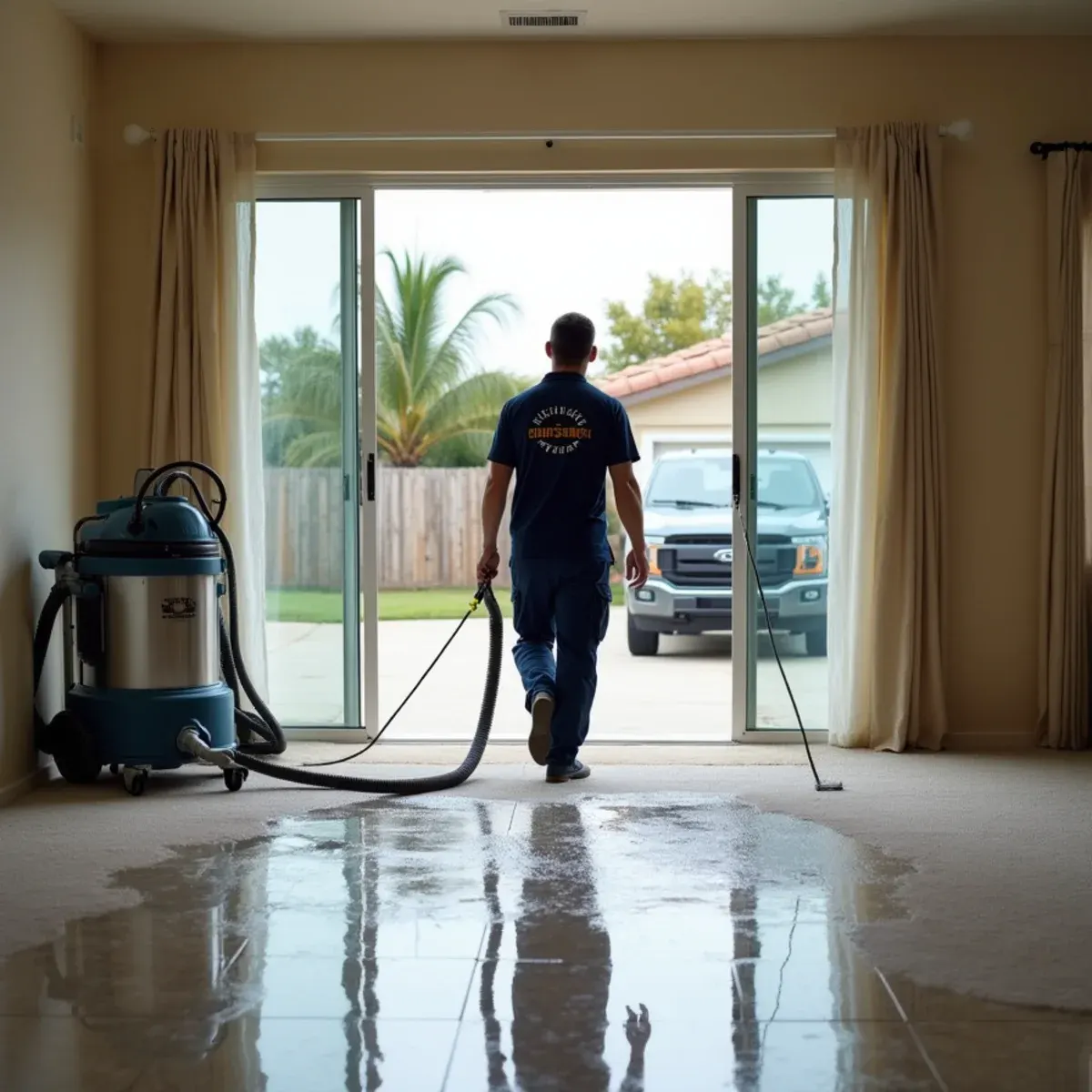
La Mirada isn't flat, and that single fact separates it from most of the cities around it. Storm water moves across properties here instead of ponding, which is generally an advantage — right up until fifty years of added patios, raised planters, retaining walls and settled hardscape redirect it back toward the house. When water arrives that way it arrives fast and it arrives dirty. Silt and grit change the extraction entirely: trash pumps rather than fine-filter equipment, carpet pad that is almost never salvageable, and a cleaning step before any drying starts.
The housing itself is remarkably consistent — a planned community built inside a tight twelve-year window from 1953, slab-on-grade, often handed from one long-tenured owner to the next. Under-slab copper and galvanized both show up, and interior plumbing losses behave much like they do in any city of that era. Biola University adds student rentals and institutional buildings to the mix, where reporting lags and water sits longer than it should. If you want to know your own exposure, walk the property during the first real rain and watch where the water actually goes.
What La Mirada Changes About Water Extraction
1Grade-driven water arrives with silt
Water that comes overland picks up soil, mulch and whatever was sitting on the hardscape. That's abrasive and it's dirty, so extraction uses pumps that tolerate solids and the affected carpet pad comes out rather than being dried. Fine-filter extraction equipment clogs on this and slows to nothing. It's also a different water category than a clean supply break, and the cleaning that follows isn't optional.
2Added hardscape redirects original drainage
The original grading on these lots was designed to carry water past the house. Decades of patio extensions, raised beds, block walls and settled concrete have quietly reversed that on a lot of properties. We note where water actually entered during extraction and photograph it, because that information is worth more to you afterward than the extraction itself — it's what stops a repeat next winter.
3Downslope rooms and garages fill first
On rolling ground the lowest finished space takes the water: a garage, a sunken family room, a rear addition built into the slope. Those are also the spaces with no floor drain and the most stored belongings. We extract from the low point upward and get contents lifted early, because water still arriving from uphill will refill anything we clear before the source is controlled.
How the Work Runs
The method is the same one we use on every water extraction job, documented to the IICRC S500:2025 standard. Here it is in short — the full water extraction & removal process explains each stage in detail.
- Bulk removal with submersible pumps
- Truck-mounted extraction on carpet and pad
- Hard-surface and specialty extraction
- Cavity and void extraction
- Removing what cannot be saved
- Post-extraction moisture reading
The La Mirada Background Worth Knowing
La Mirada's gentle slopes mean storm water moves across properties instead of sitting on them, which is generally an advantage — except where fifty years of added patios, raised planters, retaining walls, and settled hardscape have redirected it.
There is more on the housing stock, drainage and plumbing history of this city on our water damage restoration in La Mirada page.
La Mirada at a glance
- Dominant construction era
- 1953–1965
- Foundation type
- slab on grade
- Supply piping found here
- under-slab copper, galvanized steel
- Drain line materials
- cast iron
- Terrain and water table
- rolling, moderate water table
- Most common local failure
- exterior water entering where fifty years of added patios, planters and retaining walls redirected the original drainage back toward the house
- Highest-value local prevention
- walking the property during the first real rain and watching where water actually goes
What It Costs in La Mirada
We do not quote a number over the phone before seeing the property — anyone who does is guessing. The variables that actually move the price on a water extraction job are volume and depth of water, flooring type, contamination level, and they are broken down in full on the water extraction & removal page. The assessment and the written estimate are free anywhere in La Mirada, day or night, with no obligation.
Water Extraction Questions from La Mirada Homeowners
Yes, and it's one of the more common calls we get in La Mirada. Storm water entering at grade is still standing water in your structure, and the drywall base, framing and any stored contents will hold it. We pump it out, extract from the slab, remove wet base material, and clean rather than just dry, because overland water carries soil. Then we'll show you photos of where it entered so the grading or hardscape can be addressed before the next storm.
For a typical single-room residential loss, extraction runs one to three hours. Multi-room losses or Category 3 water can take most of a day because of containment setup and material removal. We will give you a realistic timeframe after the walkthrough, before we start.
Often we can save the carpet and only replace the pad, which is the cheaper and less disruptive path. The deciding factors are water category, how long it sat, and whether the pad is a moisture barrier type. Clean water caught quickly usually means the carpet stays.
Almost always exterior drainage rather than a plumbing leak — a plugged area drain, a patio that has settled toward the house, or a planter holding moisture against the wall. We identify the actual path rather than just drying the wall, because drying without fixing the cause means doing it again next storm.