
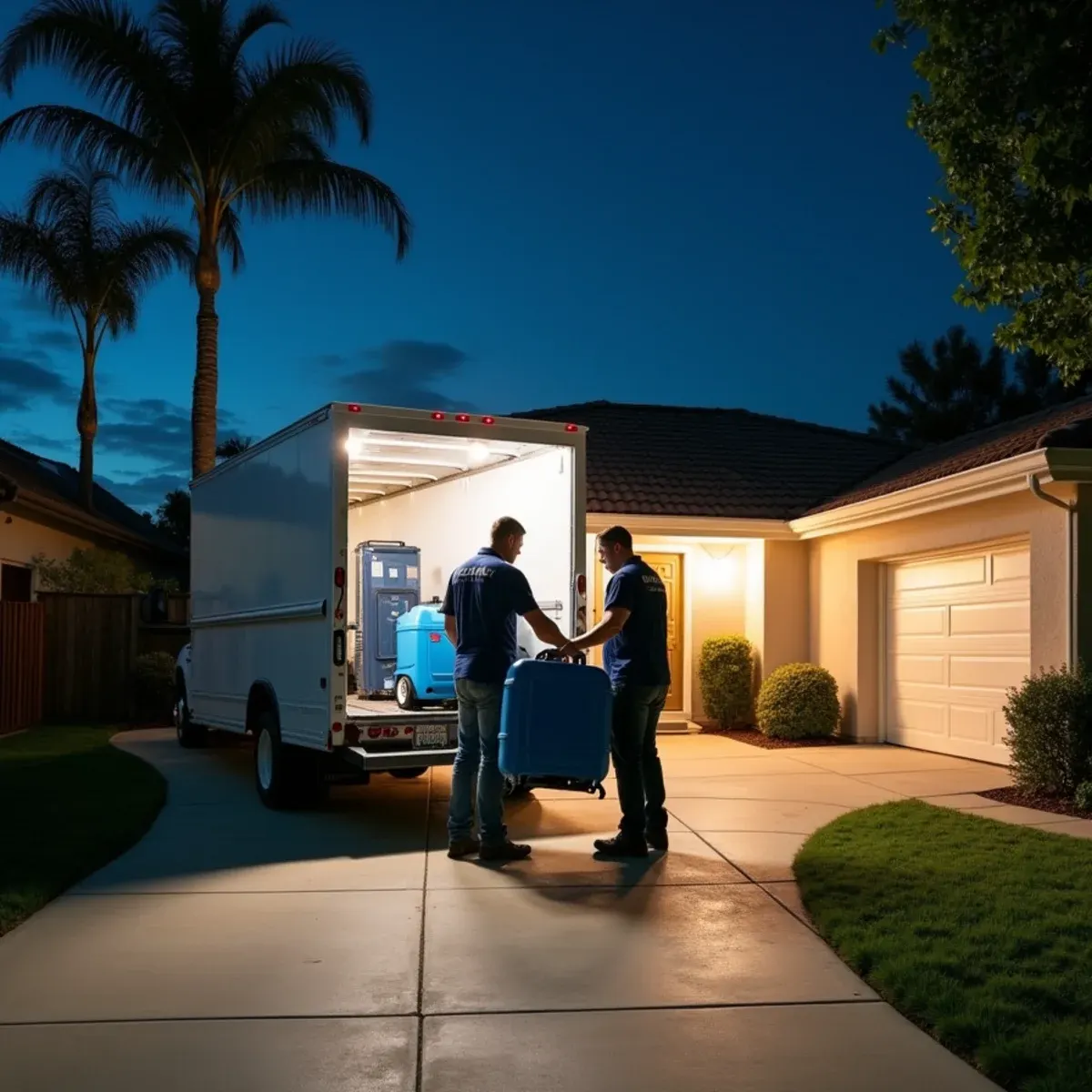
The first real rain of the season tells you more about a La Mirada house than any inspection will. Unlike the dead-flat coastal cities, this one was built on gently rolling ground, so storm water moves across properties instead of ponding on them. That's an advantage, right up until fifty years of added patios, raised planters, retaining walls and settled hardscape have quietly rerouted the original grading back toward the house. Then you get water at a slider or along a back wall with no plumbing failure anywhere near it.
The tracts here went in during a concentrated twelve-year window from 1953, so slab construction and drainage design are consistent across whole neighborhoods while the alterations sitting on top of them are not. That's what we're sorting out on a storm call: original grade versus everything added since. The Biola area brings a second kind of work, in institutional buildings and off-campus student rentals where the person who first sees the water usually isn't the person who can authorize anything about it.
What La Mirada Changes About Emergency Restoration
1Added hardscape redirects the original grading
A patio poured level with the slab, a planter built against the wall, or a retaining wall with no drain behind it can each undo the grading a tract was designed with. We walk the exterior during or right after rain and follow the actual path of the water, because the interior wet spot only tells you where it got in, not where it started.
2Slope sends water to one corner
On sloping lots the low corner of the house takes everything. That's usually where we find saturated bottom plates, wet baseboard and, in bad cases, moisture wicking up drywall from the slab edge. Drying that corner without addressing why water keeps arriving there means doing the whole thing again next storm, so our report covers both.
3Rentals and institutional buildings near Biola
Off-campus houses and university-owned buildings share a reporting problem: students and tenants notice water but have no authority to act and often no after-hours number. Posting the shutoff location and an emergency contact in every unit is the cheapest fix available. For institutional buildings we coordinate access and keys before dispatch so nobody waits at a locked door.
How the Work Runs
The method is the same one we use on every emergency restoration job, documented to the IICRC S500:2025 standard. Here it is in short — the full emergency water damage restoration process explains each stage in detail.
- Call answered and crew dispatched
- Arrival, safety check, and moisture mapping
- Documentation before anything is touched
- Extraction
- Controlled structural drying
- Cleaning, sanitizing, and final verification
The La Mirada Background Worth Knowing
La Mirada's gentle slopes mean storm water moves across properties instead of sitting on them, which is generally an advantage — except where fifty years of added patios, raised planters, retaining walls, and settled hardscape have redirected it.
There is more on the housing stock, drainage and plumbing history of this city on our water damage restoration in La Mirada page.
La Mirada at a glance
- Dominant construction era
- 1953–1965
- Foundation type
- slab on grade
- Supply piping found here
- under-slab copper, galvanized steel
- Drain line materials
- cast iron
- Terrain and water table
- rolling, moderate water table
- Most common local failure
- exterior water entering where fifty years of added patios, planters and retaining walls redirected the original drainage back toward the house
- Highest-value local prevention
- walking the property during the first real rain and watching where water actually goes
What It Costs in La Mirada
We do not quote a number over the phone before seeing the property — anyone who does is guessing. The variables that actually move the price on a emergency restoration job are water category, affected square footage and number of rooms, how many days of equipment, and they are broken down in full on the emergency water damage restoration page. The assessment and the written estimate are free anywhere in La Mirada, day or night, with no obligation.
Emergency Restoration Questions from La Mirada Homeowners
Very likely. A patio poured close to slab height, or one that has settled back toward the house, gives water a path straight to the door track instead of away from it. Add a planter or a wall with no drain behind it and you've built a small reservoir against your foundation. We dry the interior, then walk the exterior with you during runoff and show you where it's actually entering. The drainage fix usually costs less than a second claim.
We commit to being on-site within 60 minutes of a confirmed emergency call anywhere in Cypress, and we credit $100 off your invoice if we miss it. Most of the time we are there in 30 to 45 minutes because our trucks stage on Katella Avenue, right here in the city.
No. The emergency assessment and written estimate are free, 24 hours a day. You are not obligated to hire us after we walk the property, and we will tell you plainly if we think the damage is small enough to handle yourself.
Almost always exterior drainage rather than a plumbing leak — a plugged area drain, a patio that has settled toward the house, or a planter holding moisture against the wall. We identify the actual path rather than just drying the wall, because drying without fixing the cause means doing it again next storm.