
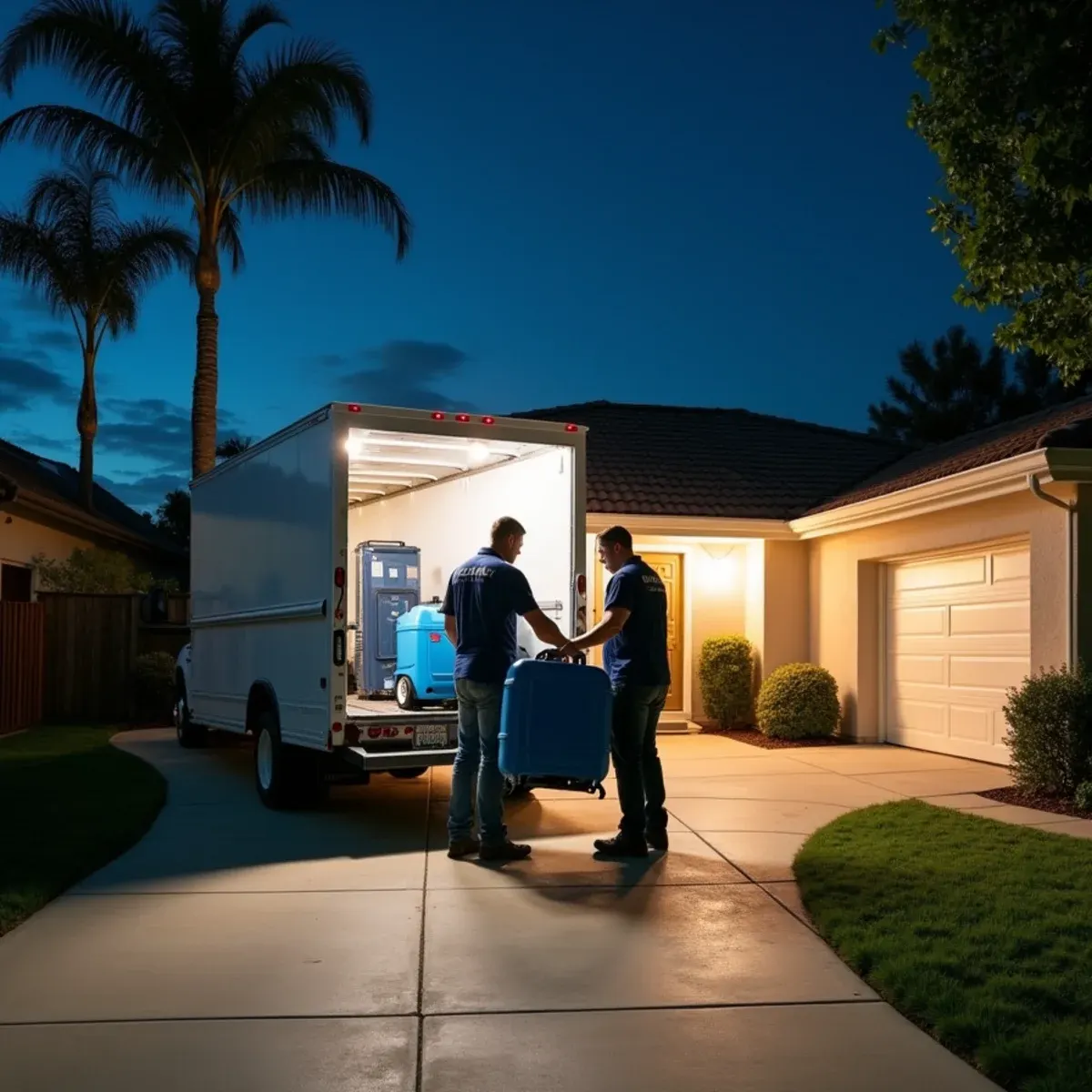
Rust-colored water at the first draw of the morning isn't a cosmetic problem in Norwalk. This city went from farmland to finished in about fifteen years after 1945, built fast and economically, and a large share of those homes still run on their original galvanized steel supply lines. Inside that pipe the zinc has long since worn away, the steel is corroding, and scale keeps narrowing the bore until water moves fast enough to erode a fitting from the inside. When it lets go, it's usually at a joint inside a wall.
Outside the house, the constraint is space. These are small lots with short setbacks, so there's very little open ground between the street and the stucco to absorb anything. Along the western edge, the San Gabriel River channel carries a huge share of regional runoff and the neighborhoods beside it saturate quickly during a long storm. A yard drain that hasn't been cleared since summer is a real liability here in a way it simply isn't on a half-acre lot with room to spare.
What Norwalk Changes About Emergency Restoration
1Galvanized fails at the fittings
Seventy years of scaling narrows the pipe, which raises velocity, which erodes the threads at elbows and tees. That's why so many Norwalk failures happen at a joint rather than in a straight run, and why they happen inside walls. Falling pressure at one fixture, rusty first-draw water, or a stain at a baseboard are all worth acting on rather than watching.
2Small lots absorb almost nothing
With a short setback and most of the yard paved or compacted, storm water reaches the house quickly and then stays. Clearing area and yard drains before the season is the cheapest prevention available in this city. We've traced wet baseboard on the street side of homes to nothing more complicated than a grate packed with leaves since August.
3West-side saturation near the channel
Neighborhoods along the San Gabriel River channel take on regional runoff, and after a long storm the ground beside them holds water well after the rain stops. That raises soil moisture against slabs and keeps low spaces damp, so drying there runs longer than the same loss two miles east. We size dehumidification for that instead of pretending the calendar decides.
How the Work Runs
The method is the same one we use on every emergency restoration job, documented to the IICRC S500:2025 standard. Here it is in short — the full emergency water damage restoration process explains each stage in detail.
- Call answered and crew dispatched
- Arrival, safety check, and moisture mapping
- Documentation before anything is touched
- Extraction
- Controlled structural drying
- Cleaning, sanitizing, and final verification
The Norwalk Background Worth Knowing
The homes built in Norwalk during the postwar surge were built to be affordable and built fast, which was exactly the right priority at the time. Seventy years later, some of those choices have consequences.
There is more on the housing stock, drainage and plumbing history of this city on our water damage restoration in Norwalk page.
Norwalk at a glance
- Dominant construction era
- 1945–1960
- Foundation type
- slab on grade
- Supply piping found here
- original galvanized steel
- Drain line materials
- cast iron
- Terrain and water table
- flat, moderate water table
- Most common local failure
- original galvanized supply lines failing after decades of internal scaling and erosion at fittings
- Highest-value local prevention
- clearing yard and area drains before the season, since small lots leave little ground between the street and the house
What It Costs in Norwalk
We do not quote a number over the phone before seeing the property — anyone who does is guessing. The variables that actually move the price on a emergency restoration job are water category, affected square footage and number of rooms, how many days of equipment, and they are broken down in full on the emergency water damage restoration page. The assessment and the written estimate are free anywhere in Norwalk, day or night, with no obligation.
Emergency Restoration Questions from Norwalk Homeowners
Rusty water points at the galvanized. Corrosion inside the pipe sheds into the supply, and a wet baseboard on the same wall as a plumbing run usually means a fitting has started weeping inside the cavity. Storm intrusion tends to show up at exterior walls near doors and grade, gets worse only when it rains, and dries out between systems. We meter both and tell you which one you're dealing with before anything is opened.
We commit to being on-site within 60 minutes of a confirmed emergency call anywhere in Cypress, and we credit $100 off your invoice if we miss it. Most of the time we are there in 30 to 45 minutes because our trucks stage on Katella Avenue, right here in the city.
No. The emergency assessment and written estimate are free, 24 hours a day. You are not obligated to hire us after we walk the property, and we will tell you plainly if we think the damage is small enough to handle yourself.
If it is original galvanized from the postwar build-out, it has exceeded any reasonable service life. If you have had one failure, a second is a matter of when. The cheapest moment to repipe is while walls are already open for a repair — the demolition and patching are already in the scope.