
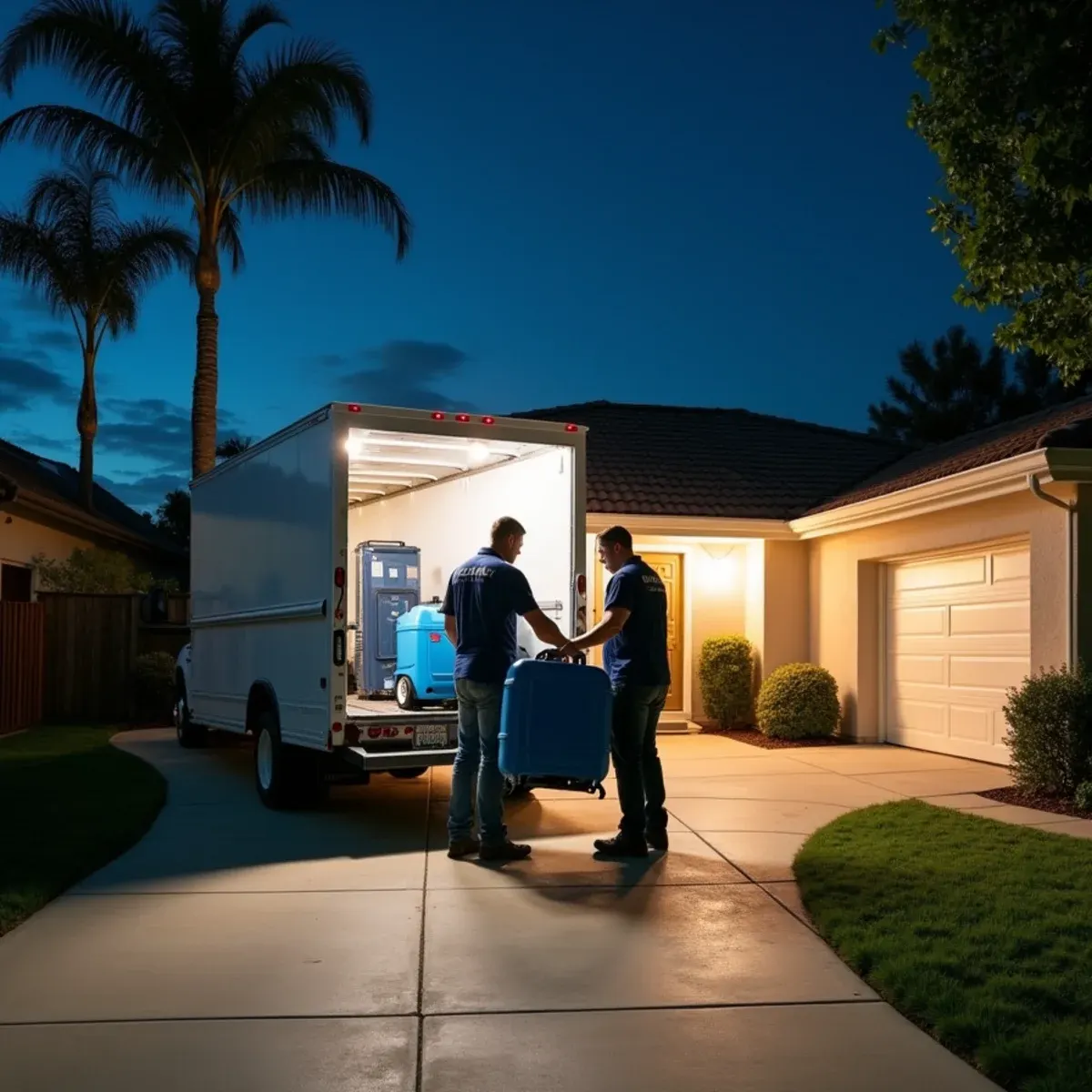
It's eleven at night, a supply riser lets go on the second floor of a Buena Park fourplex, and the person calling us is the tenant below, not the tenant with the broken pipe. By the time someone locates the shutoff, usually in a locked utility closet, water has crossed three ceilings and two units. This city carries far more multi-family stock than the small cities around it, and that changes the first ten minutes of the job from drying to containment and unit-by-unit documentation.
The Beach Boulevard corridor adds a second kind of work. Hotels near Knott's Berry Farm, chain restaurants and retail all lose money by the hour, and none of them can hand us an empty building. We isolate the affected rooms, keep guest corridors and dining areas usable where the moisture map allows, and write each unit or space up as its own file so the property's carrier isn't handed one blurred claim. The 1950s and 60s tracts off La Palma Avenue are ordinary slab work by comparison.
What Buena Park Changes About Emergency Restoration
1One riser, four units, one clock
In a stacked building the loss grows with delay more than with volume. Our first move is isolating the water and identifying every unit in the path, including the ones with no visible damage yet. Wet insulation inside a shared wall doesn't announce itself. Each unit gets separate readings, separate photos and a separate scope, because they'll likely end up in front of different adjusters.
2Hotel and restaurant rooms out of service
A guest room out of inventory costs money every night, and a closed dining room costs more. We stage equipment to release spaces in sequence instead of drying a whole floor at once, run the loud extraction outside peak hours, and give management a daily readings sheet they can use to decide what to resell. Corridor access for hose runs is worth arranging before we arrive.
3Tenants who don't know where to shut off
Most renters in this city have never been shown the main. A laminated card by the entry with the shutoff location, the after-hours number and instructions to call immediately does more to limit a loss than anything we can install. It costs nothing, and in a building with shared plumbing walls it routinely keeps two more units dry.
How the Work Runs
The method is the same one we use on every emergency restoration job, documented to the IICRC S500:2025 standard. Here it is in short — the full emergency water damage restoration process explains each stage in detail.
- Call answered and crew dispatched
- Arrival, safety check, and moisture mapping
- Documentation before anything is touched
- Extraction
- Controlled structural drying
- Cleaning, sanitizing, and final verification
The Buena Park Background Worth Knowing
Buena Park has a large apartment and condominium stock, and multi-unit water losses are a meaningful share of our work here. A supply line failure in a second-floor unit reaches the unit below within minutes and frequently affects three or four units before anyone finds the shutoff.
There is more on the housing stock, drainage and plumbing history of this city on our water damage restoration in Buena Park page.
Buena Park at a glance
- Dominant construction era
- 1950–1975
- Foundation type
- slab on grade
- Supply piping found here
- galvanized steel, under-slab copper
- Drain line materials
- cast iron
- Terrain and water table
- flat, moderate water table
- Most common local failure
- multi-unit escalation, where one riser or supply failure reaches three or four units before anyone finds the shutoff
- Highest-value local prevention
- posting the main shutoff location and an emergency contact where tenants will actually see it
What It Costs in Buena Park
We do not quote a number over the phone before seeing the property — anyone who does is guessing. The variables that actually move the price on a emergency restoration job are water category, affected square footage and number of rooms, how many days of equipment, and they are broken down in full on the emergency water damage restoration page. The assessment and the written estimate are free anywhere in Buena Park, day or night, with no obligation.
Emergency Restoration Questions from Buena Park Homeowners
Not always, but they have to be checked. Water crosses shared walls through the bottom plate and insulation long before it shows on paint, so we meter the adjoining units and the ones directly below before deciding anything. If they read dry, we document that and leave them alone. If they read wet, opening a small inspection area now costs far less than replacing a wall assembly that quietly grew mold for three weeks.
We commit to being on-site within 60 minutes of a confirmed emergency call anywhere in Cypress, and we credit $100 off your invoice if we miss it. Most of the time we are there in 30 to 45 minutes because our trucks stage on Katella Avenue, right here in the city.
No. The emergency assessment and written estimate are free, 24 hours a day. You are not obligated to hire us after we walk the property, and we will tell you plainly if we think the damage is small enough to handle yourself.
Regularly. Multi-unit losses get documented unit by unit with separate photographs, moisture maps, and drying logs, which is what lets several owners, an HOA, and multiple carriers each resolve their portion without disputing a single blended invoice.