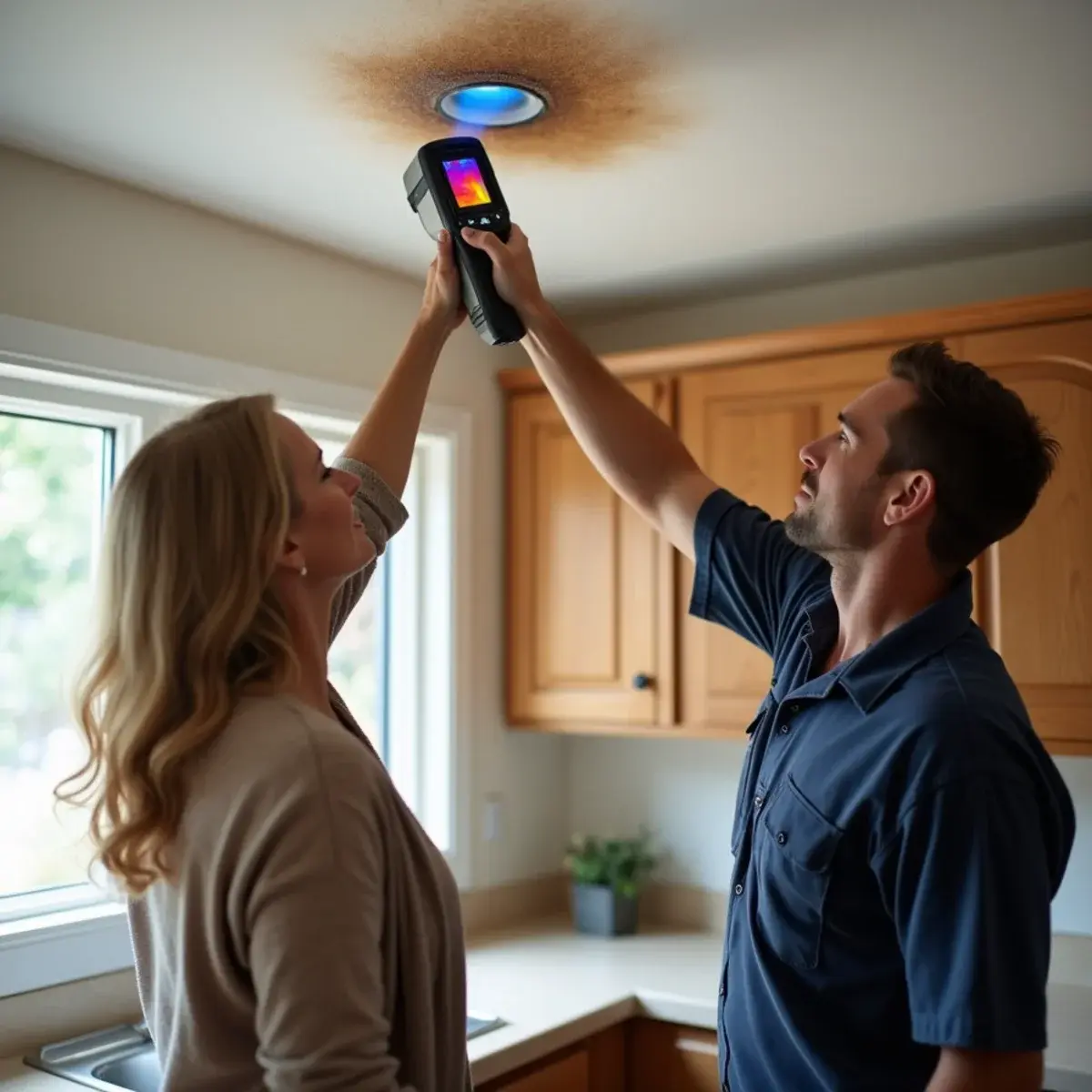
Cypress sits on a flat coastal plain a few miles from the Coyote Creek and Carbon Creek channels, and the whole city drains through a storm system that was designed for the rainfall patterns of an earlier era. Most of the year that is fine. During an atmospheric river, when three inches falls in six hours, it is not — and the water that backs up into a garage or comes under a slider is not clean rainwater.
Flood cleanup is a different job from a burst pipe. Water that has traveled across soil, pavement, and storm drains carries bacteria, fuel residue, fertilizer, and whatever was on the ground it crossed. Under IICRC classification that is Category 3 water, and it has to be handled as contaminated regardless of how clear it looks.
We treat every flood loss as a health-and-safety job first and a property job second. That means containment, PPE, disposal of porous materials that absorbed contaminated water, disinfection, and verified drying — in that order, and documented at each step.
How Flood Damage Shows Up in Cypress Homes
Flooding here rarely looks like the news footage. It looks like this:
Water coming under the garage door
The most common flood entry point in this city. Garage slabs sit low, the door seal is the weakest point in the envelope, and one inch of water across a two-car garage is roughly 250 gallons.
Water at a sliding door or patio threshold
Patios that have settled toward the house over the decades pond water against the slider track. Once it crosses the threshold it runs straight into the living room flooring.
Backed-up floor drains or toilets during heavy rain
When the municipal system surcharges, the lowest fixture in your home becomes the relief valve. That is Category 3 water by definition and needs professional handling immediately.
Saturated drywall from the bottom up
Floodwater wicks vertically. A visible waterline at four inches usually means the drywall is wet to twelve or more, and the insulation behind it is holding water.
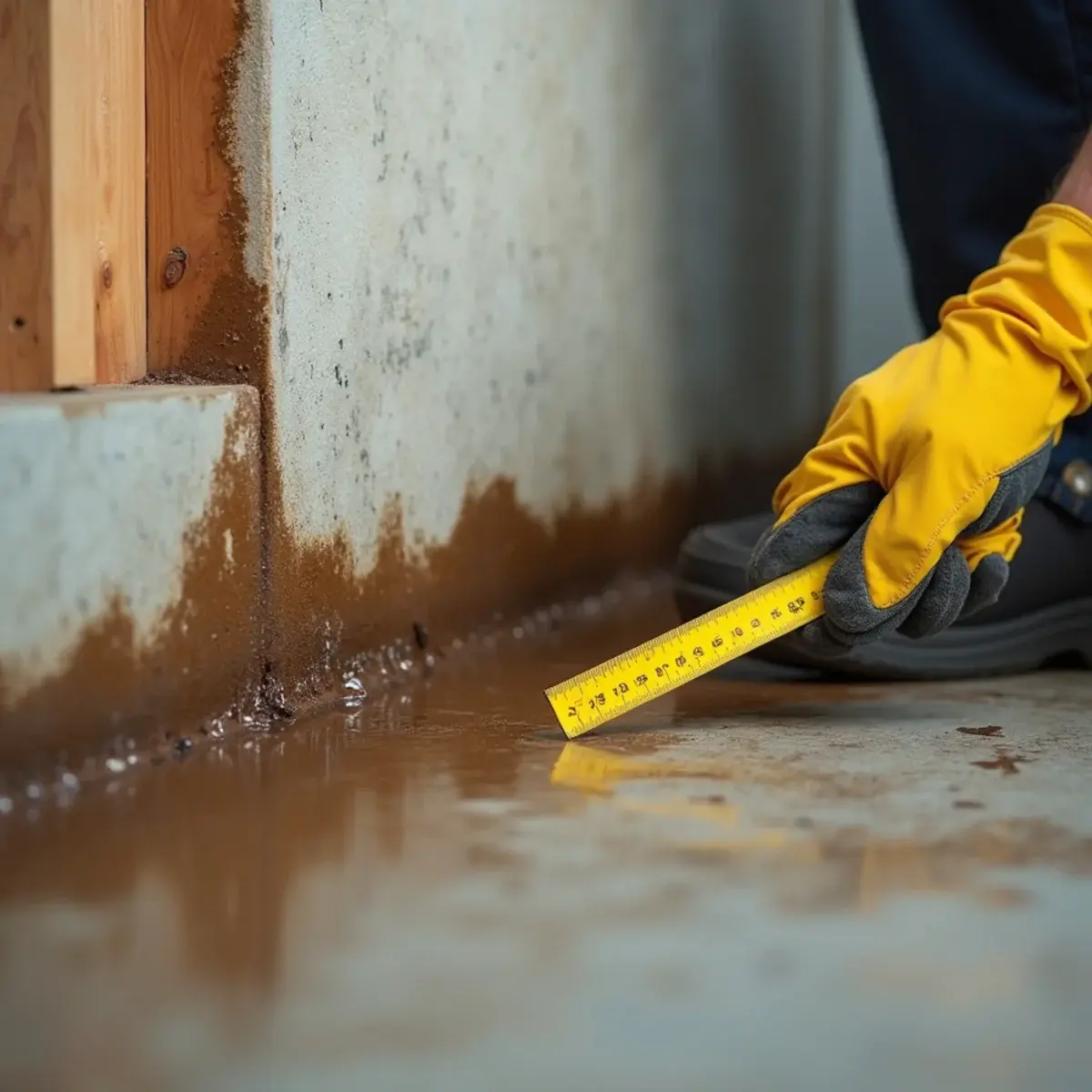
Silt or debris line inside the home
A residue line is a reliable marker for how high the water reached and, more importantly, is direct evidence the water carried outside contaminants inside.
Wet crawl space or persistent damp slab smell
In older Cypress homes with raised foundations, floodwater that entered a crawl space can sit for weeks and drive moisture and odor up into the living space.
Our Flood Cleanup Process
Contaminated-water work follows a stricter sequence than a clean-water loss, and skipping steps creates health risk rather than just property risk.
- 1
Safety assessment and utility check
Before anyone enters, we assess electrical hazards, structural stability, and whether gas appliances were submerged. Water-damaged water heaters and furnaces are red-tagged for a licensed technician, not restarted.
- 2
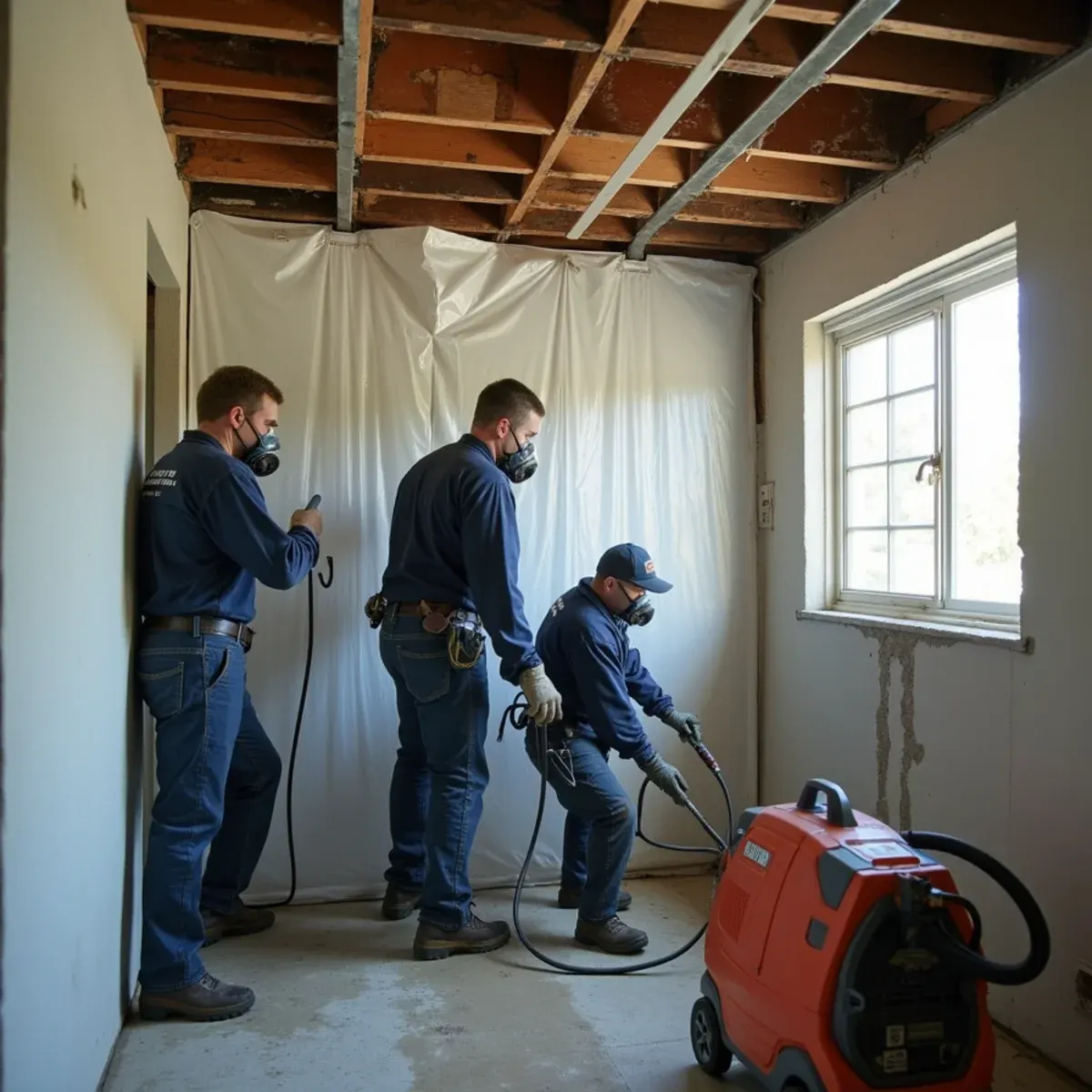
Containment and negative air
We isolate the affected zone with poly barriers and run HEPA-filtered negative air machines so contaminated aerosols do not migrate into clean parts of the home while we work.
- 3
Documentation and contents triage
Everything gets photographed at its found position with the waterline visible. Contents are sorted into salvageable, cleanable, and non-salvageable, with an itemized loss list for your claim.
- 4
Extraction and controlled demolition
Water is pumped and extracted, then we remove what cannot be safely restored: carpet and pad, wet insulation, and drywall cut cleanly above the wick line — typically at 12 or 24 inches so the repair lands on a standard sheet.
- 5
Cleaning and disinfection
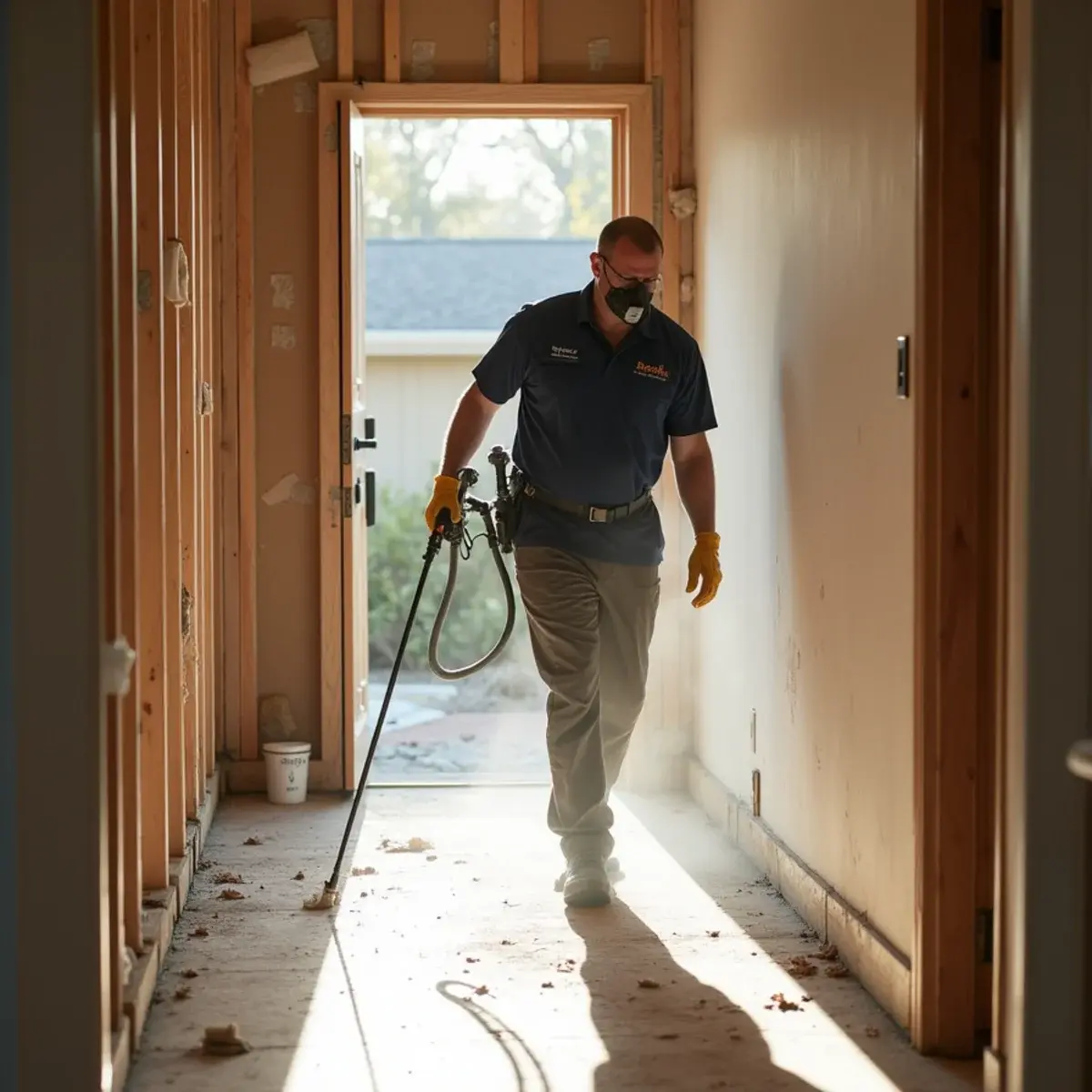
All remaining surfaces are cleaned and treated with EPA-registered antimicrobials rated for Category 3 water, including framing, the slab, and the back side of any wall left in place.
- 6
Structural drying and clearance
Once the space is clean, we build the drying chamber and run it to a documented dry standard, with HEPA air scrubbers filtering the space throughout. Final readings and photos close the file.
Why Cypress Floods the Way It Does
Cypress is almost entirely built out on flat former agricultural land at low elevation, with a water table that sits high enough that ground saturation happens fast in a sustained storm. Once the soil stops accepting water, everything runs across the surface toward the lowest opening it can find — and for most homes here, that is the garage door or a settled patio slab.
Newer developments in the Sorrento and Cypress Village areas were graded with modern drainage requirements and generally fare better. Homes from the 1960s and 1970s boom near the Lincoln Avenue corridor and around Cypress College were graded to older standards, and after fifty years of landscaping changes, added patios, and settled hardscape, many of them now slope gently toward the house instead of away from it.
The practical fix is unglamorous and effective: extend downspouts well away from the foundation, keep the yard drains and area drains clear before the season starts, re-grade any hardscape that ponds against the wall, and add a threshold seal at the garage. We can point out the specific weak spot at your property while we are on site.
Flood Insurance vs. Homeowners Insurance
This is the question that decides whether a flood loss is a deductible or a five-figure out-of-pocket expense, and most homeowners learn the answer at the worst possible moment.
In broad terms: water that originates inside your home — a burst supply line, an overflowing appliance, a failed water heater — is a covered peril on a standard HO-3 policy. Water that originates outside and reaches your home across the ground is a flood, and it is excluded. NFIP flood policies also carry a 30-day waiting period, so buying one the week a storm is forecast does not help.
Where it gets genuinely complicated is a hybrid loss — for instance, a roof that failed under storm loading and let rain in, which is often a covered wind-driven-rain claim rather than a flood. Because that distinction turns on evidence, we photograph the point of entry, the flow path, and any debris line before anything is disturbed. That documentation is what your adjuster needs, and it protects you either way the determination lands.
What Flood Cleanup Costs Depends On
Flood work costs more per square foot than clean-water restoration because of the contamination handling. Here is what moves the number:
How high the water reached
The waterline determines how much drywall, insulation, and trim has to come out. Two inches of water and eighteen inches of water are very different demolition scopes.
How long it sat before extraction
Water standing for a day or more contaminates progressively more material and drives more of it from cleanable to disposable.
Contents volume in the flooded area
A flooded garage packed with stored belongings requires sorting, itemizing, cleaning, and disposal — often more labor than the structure itself.
Disposal volume
Contaminated materials go to landfill under specific handling, and dump fees scale with the load.
Reconstruction scope afterward
Drywall, insulation, baseboard, paint, and flooring replacement is a separate phase from mitigation. We handle it in-house so you are not chasing a second contractor.
Insurance note: This is the important one: standard homeowners policies exclude flooding from an external source. Water that came up from the ground, off the street, or out of a storm drain is typically covered only by separate NFIP or private flood insurance — while the same water arriving from a burst pipe inside your home is usually covered. We will document the source precisely, because that determination decides which policy responds.
Why Cypress Homeowners Call Us for Flood Cleanup
Plenty of companies list this service. Fewer can tell you what equipment they will bring, what standard the work is measured against, or what happens if they are wrong. Here is what you are actually buying.
Floodwater is treated as Category 3 from the start
Water that has crossed ground, storm drain, or landscaping carries whatever it touched. We contain and disinfect on that assumption rather than discovering the contamination halfway through.
Containment and negative air before demolition
Cutting out saturated material without containment moves contamination into the rest of the house through the HVAC. Barriers and negative pressure go up first, every time.
Documentation built for a disputed claim
Flood losses are the ones carriers scrutinise hardest, especially where the policy separates surface water from a plumbing failure. Our photo, moisture, and scope record is written with that argument in mind.
- 20+ years restoring Orange County homes
- IICRC Certified Firm
- Licensed, Bonded & Insured
- We bill your insurance company directly
- IICRC S500:2025 compliant on every job
- 100% satisfaction guarantee — in writing, on every job
Frequently Asked Questions
Yes. Water that crossed soil, pavement, or a storm drain is Category 3 by IICRC classification regardless of appearance — it carries bacteria, fuel and oil residue, lawn chemicals, and whatever else was on the ground. Do not walk through it in open shoes, and keep children and pets out of the area entirely.
If the water came from outside across the ground, almost certainly not — that requires separate flood insurance. If it came from a failed water heater, a burst pipe, or a supply line inside the garage, it is usually covered. We document the source carefully because that distinction determines everything.
Generally no. Standard practice for Category 3 water is to remove drywall to at least twelve inches above the highest wick line, along with the insulation behind it. Drywall is inexpensive; the risk of leaving contaminated material inside a wall is not worth the savings.
We dispatch during the storm, not after it. During widespread events we triage by severity — active intrusion and contaminated water first. Calling early gets you into the queue ahead of the surge of calls that always comes the following morning.
Do not throw anything away yet, and photograph everything where it sits. Many items can be restored, and for the ones that cannot, your claim needs the documentation. We provide an itemized non-salvageable list and can pack out and restore contents that are worth saving.
Related Reading
- Atmospheric River Prep: Getting Your Orange County Home Ready — Southern California gets a year of rain in a handful of storms. Here is the pre-season checklist that prevents most of what we get called out for.
- Does Homeowners Insurance Cover Water Damage in California? — The answer is usually yes, with four specific exclusions that account for nearly every denied claim we see. Here they are.