
The question that matters most on a Bellflower flood call is what else is in the water. Houses here went up fast between 1940 and 1960 on small lots, and the cast-iron sewer laterals under them are now eighty years old — bellied, scaled and in a lot of cases never scoped. When a heavy storm saturates the ground and loads the system at the same time, surface water coming under the door and sewage pushing back up through a floor drain or shower pan can arrive in the same hour.
Lot size compounds it. Compact postwar houses sit close together with minimal setbacks and a good share of the yard paved, so very little ground is left to absorb anything. The multi-family stock added since — along Bellflower Boulevard, through the Somerset and Mayfair areas — concentrates people in buildings where one ground-floor flood affects several units and shared walls carry moisture between them. Getting containment right in an occupied fourplex is a different problem from a single house, and it is most of what we do here.
What Bellflower Changes About Flood Cleanup
1Sewage and storm water arriving together
Category 3 is Category 3, but a loss with sewage in it changes the scope. More porous material comes out, disinfection is more thorough, and we treat the whole affected floor area as contaminated rather than only the visibly soiled part. On houses this age we also suggest scoping the lateral afterward, because a flood that produced a backup is usually telling you something about the pipe.
2Multi-family containment while people stay home
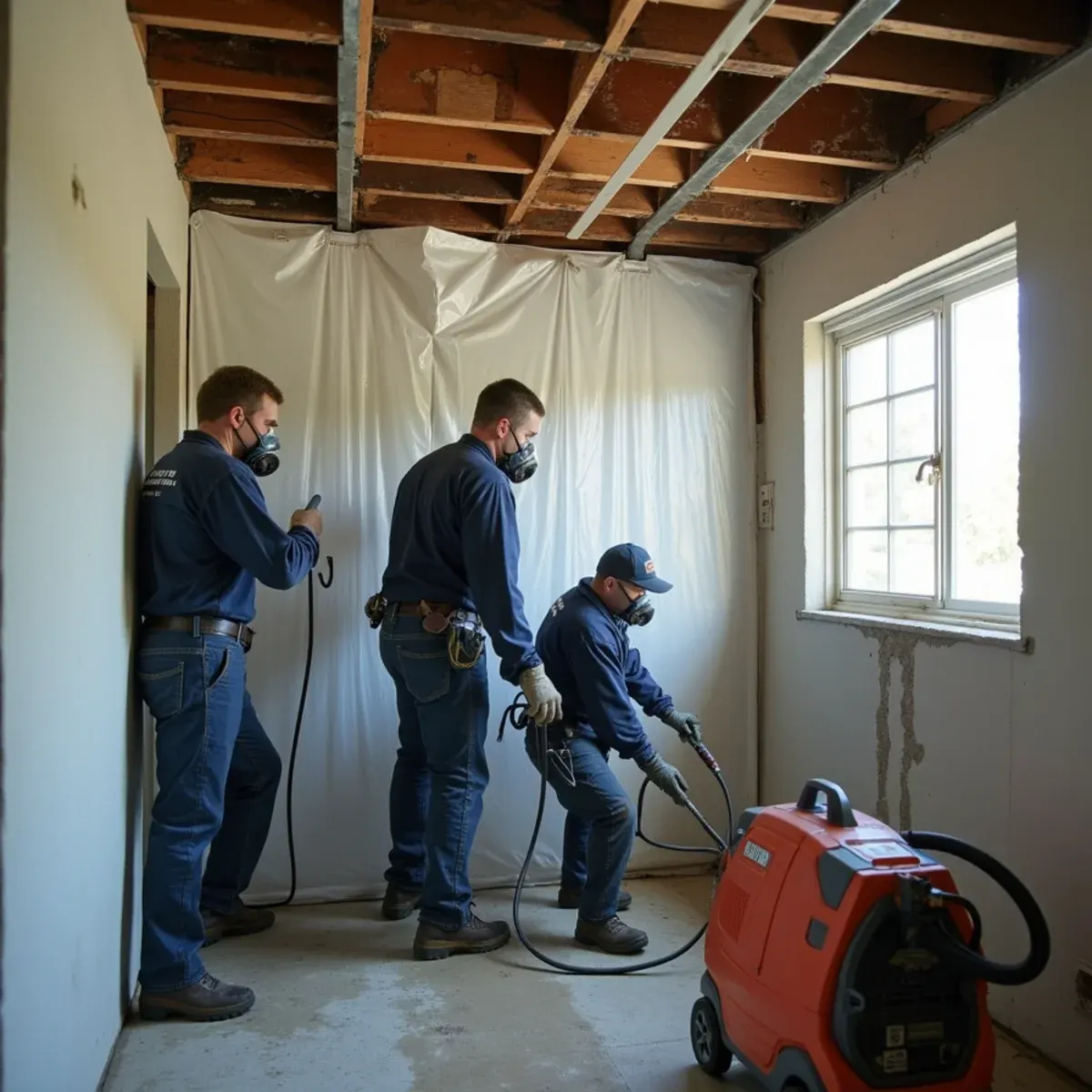
In an occupied fourplex we cannot simply seal the building and leave. We build containment around the affected units, run negative air so contaminated air does not migrate into dry apartments, and keep safe access routes open for residents. Tenants need to know which areas are off limits and why. Owners need documentation of what was done in each unit. We handle both sides of that.
3Small lots leave nowhere for debris
Removing porous material from a flooded Bellflower house produces more volume than the driveway can hold, and the driveways here are short. We plan staging and disposal before demolition begins — where the container sits, how it gets loaded without tracking contamination through dry rooms, how fast it leaves. On a lot this tight, that single logistics decision decides how long you live with the mess.
How the Work Runs
The method is the same one we use on every flood cleanup job, documented to the IICRC S500:2025 standard. Here it is in short — the full flood damage cleanup process explains each stage in detail.
- Safety assessment and utility check
- Containment and negative air
- Documentation and contents triage
- Extraction and controlled demolition
- Cleaning and disinfection
- Structural drying and clearance
The Bellflower Background Worth Knowing
Galvanized steel was the standard supply pipe when Bellflower was being built, and it fails from the inside out. The zinc lining wears through, the steel underneath corrodes, and scale builds on the interior wall until the pipe is a fraction of its original diameter. Narrower pipe means faster, more turbulent water, which chews at elbows and threaded fittings until one of them lets go. Hot lines corrode faster than cold, which is why hot water pressure is usually the first thing to drop. Eighty years is well past any service life anyone intended when this was installed.
There is more on the housing stock, drainage and plumbing history of this city on our water damage restoration in Bellflower page.
Bellflower at a glance
- Dominant construction era
- 1940–1960
- Foundation type
- slab on grade
- Supply piping found here
- original galvanized steel, early copper
- Drain line materials
- cast iron
- Terrain and water table
- flat, moderate water table
- Most common local failure
- original galvanized supply lines and cast-iron laterals failing together in the same decade
- Highest-value local prevention
- scoping the sewer lateral, which on a house this age has usually never been looked at
What It Costs in Bellflower
We do not quote a number over the phone before seeing the property — anyone who does is guessing. The variables that actually move the price on a flood cleanup job are how high the water reached, how long it sat before extraction, contents volume in the flooded area, and they are broken down in full on the flood damage cleanup page. The assessment and the written estimate are free anywhere in Bellflower, day or night, with no obligation.
Flood Cleanup Questions from Bellflower Homeowners
That is a sewer backup, and it matters for two reasons. First, the contamination level sits at the top of Category 3, so anything porous it touched is coming out — carpet, pad, drywall bottoms, cabinet kick boards. Second, coverage works differently: ground flooding is excluded from a standard homeowners policy, while sewer and drain backup is often available as a specific endorsement people forget they bought years ago. Check your declarations page before assuming you are on your own.
Yes. Water that crossed soil, pavement, or a storm drain is Category 3 by IICRC classification regardless of appearance — it carries bacteria, fuel and oil residue, lawn chemicals, and whatever else was on the ground. Do not walk through it in open shoes, and keep children and pets out of the area entirely.
If the water came from outside across the ground, almost certainly not — that requires separate flood insurance. If it came from a failed water heater, a burst pipe, or a supply line inside the garage, it is usually covered. We document the source carefully because that distinction determines everything.
It is the most common gap we see here. A cast iron lateral that age has corroded along the bottom, the joints have shifted, and the parkway trees on most Bellflower streets have had seventy years to find them. A camera inspection costs a small fraction of a sewage remediation, and on a line that has never been scoped it usually finds something worth knowing about before it finds you at two in the morning.