
For an independent restaurant on Pioneer Boulevard, the flood is not the damage. It is the closed sign. Little India packs one of the densest concentrations of family-owned retail and restaurants in the region into 1950s buildings that were never designed for commercial kitchens, and an owner with no corporate reserve cannot absorb three weeks dark. So the sequence has to be right the first time: contain, remove everything porous the contaminated water touched, disinfect, dry, and produce documentation an inspector will accept without a second visit.
There is a second layer under Artesia that turns a flood into something worse. The waste lines are cast iron of the same vintage, rough inside and loaded with decades of grease, and when a storm surcharges the system that restricted line backs up into the same room the street water is already entering. Now there are two contaminated sources in one space. Homes in the modest postwar tracts around Artesia Park and AJ Padelford Park see the milder version of the same problem.
What Artesia Changes About Flood Cleanup
1Every closed day is the real cost
We schedule Artesia commercial work around reopening rather than around convenience, which usually means overnight demolition, parallel drying and disinfection, and assembling the health documentation package while equipment is still running. The slow step is almost never the drying. It is discovering wet material behind base cabinetry or inside a walk-in curb on day six, so we open the suspect assemblies first.
2Floodwater plus a grease-loaded waste line
Grease solidifies against corroded cast iron and narrows the pipe until it cannot take a surcharge. During a storm that means sewage backing into a kitchen already taking ground water. Both are Category 3 and both get the same handling, but the repair differs — a grease-restricted line needs hydro-jetting so the pipe wall actually gets cleaned, not a snake punching a hole through the middle of the blockage.
3Tenant improvements and split coverage
Most Pioneer Boulevard businesses lease their space and paid for their own buildout — flooring, counters, kitchen finishes, equipment. The landlord's policy covers the shell, yours covers what you installed and your contents, and neither covers ground-source flooding without separate flood coverage. We document the improvements separately from the building so the two claims do not collide and stall each other.
How the Work Runs
The method is the same one we use on every flood cleanup job, documented to the IICRC S500:2025 standard. Here it is in short — the full flood damage cleanup process explains each stage in detail.
- Safety assessment and utility check
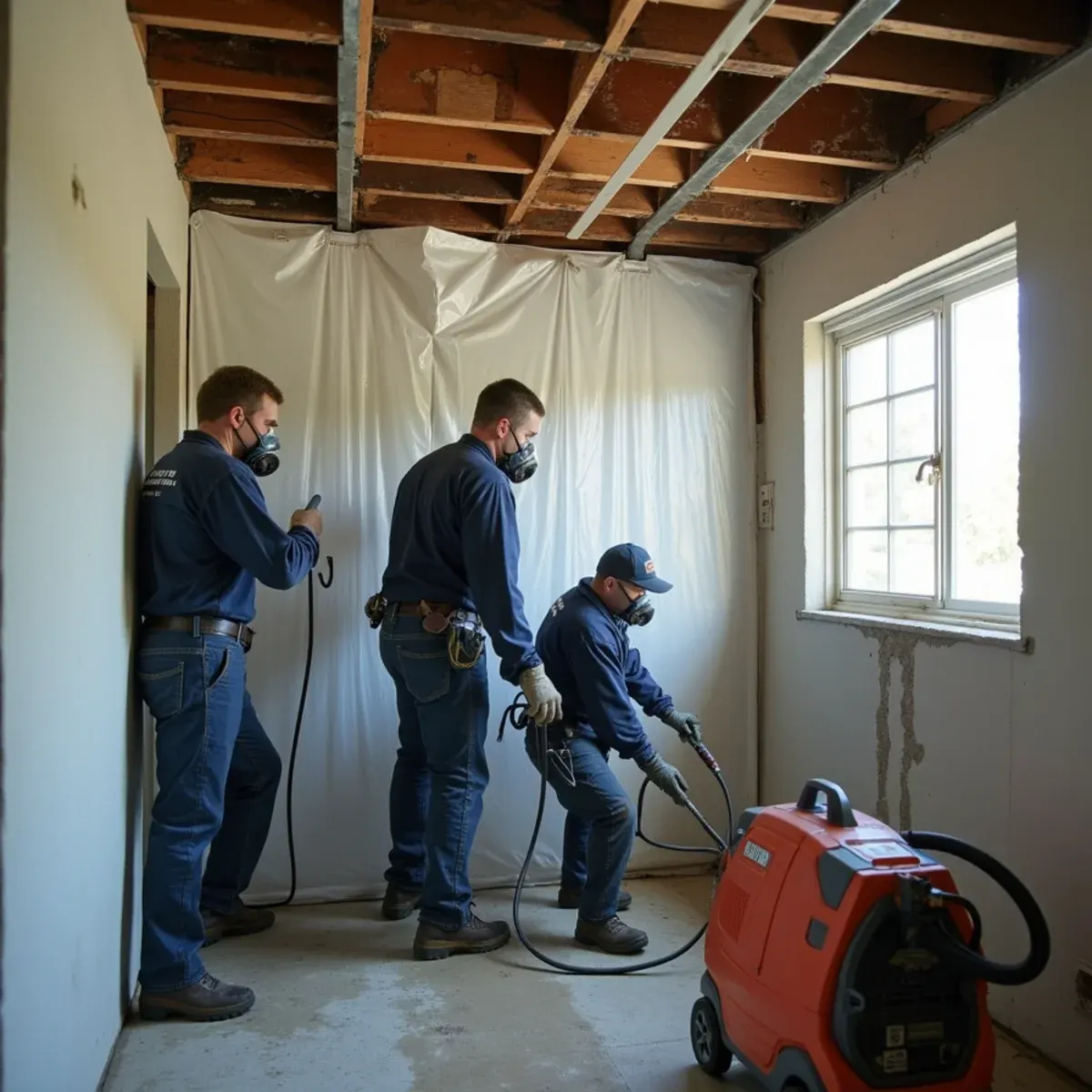
- Containment and negative air
- Documentation and contents triage
- Extraction and controlled demolition
- Cleaning and disinfection
- Structural drying and clearance
The Artesia Background Worth Knowing
A commercial kitchen is one of the hardest things you can ask a building to accommodate. High water use, continuous drainage, grease loading, floor drains, and equipment connections that get added and modified over the years. When that kitchen is in a building from the 1950s with original cast-iron waste lines, the failure is a matter of time.
There is more on the housing stock, drainage and plumbing history of this city on our water damage restoration in Artesia page.
Artesia at a glance
- Dominant construction era
- 1950–1970
- Foundation type
- slab on grade
- Supply piping found here
- galvanized steel, copper
- Drain line materials
- cast iron
- Terrain and water table
- flat, moderate water table
- Most common local failure
- grease-loaded cast-iron waste lines restricting until a commercial kitchen backs up
- Highest-value local prevention
- hydro-jetting the waste line rather than snaking it, so the pipe wall actually gets cleaned
What It Costs in Artesia
We do not quote a number over the phone before seeing the property — anyone who does is guessing. The variables that actually move the price on a flood cleanup job are how high the water reached, how long it sat before extraction, contents volume in the flooded area, and they are broken down in full on the flood damage cleanup page. The assessment and the written estimate are free anywhere in Artesia, day or night, with no obligation.
Flood Cleanup Questions from Artesia Homeowners
Anything porous the water touched, and that list runs longer than owners expect: wood shelving and prep tables, gaskets, insulation inside walk-in curbs, damaged wall board, degraded FRP seams, open food and packaging, and usually the lower cabinetry. Non-porous surfaces and equipment get cleaned and disinfected rather than discarded. We photograph and log every disposal, because reopenings stall on missing documentation far more often than on the actual condition of the kitchen.
Yes. Water that crossed soil, pavement, or a storm drain is Category 3 by IICRC classification regardless of appearance — it carries bacteria, fuel and oil residue, lawn chemicals, and whatever else was on the ground. Do not walk through it in open shoes, and keep children and pets out of the area entirely.
If the water came from outside across the ground, almost certainly not — that requires separate flood insurance. If it came from a failed water heater, a burst pipe, or a supply line inside the garage, it is usually covered. We document the source carefully because that distinction determines everything.
Yes, and on Pioneer Boulevard that is usually how we schedule it. Overnight crews cost somewhat more in labor and almost always cost dramatically less than lost revenue from closing during operating hours.