
If you live on the ground floor here, you carry the whole event. Hawaiian Gardens is under a square mile, the most densely populated ground in Los Angeles County by acre, and a large share of the housing is 1960s and 1970s apartments where the parking lot drains toward the buildings rather than away. When storm water crosses the threshold of a downstairs unit, the tenants above stay dry and entirely unaware, while the downstairs household loses carpet, furniture, and usually everything stored on a closet floor.
Most residents here rent, which changes the whole shape of the job. The building belongs to an owner whose policy addresses the structure; your belongings are yours, and standard renters coverage excludes ground-source flooding. Meanwhile the buildings around Carson Street and Lee Ware Park run shared vertical stacks, so a storm that surcharges the drain system can push contaminated water back into lower units from inside at the same time it is coming under the door. Written notice to management on day one is not a formality.
What Hawaiian Gardens Changes About Flood Cleanup
1Downstairs units absorb the whole loss
Grading in these lots sends water toward the slab rather than to a drain, so ground-floor apartments take it first and hold it in carpet, pad and the bottom of the drywall. We extract, remove porous material as contaminated, cut the affected wall base, and dry the slab. Upstairs neighbors are usually unaffected, which means the person with the damage also has the least leverage to get it addressed.
2Written notice to management, day one
Verbal reports disappear. Send an email or a dated written note the same day with photographs, the water depth measured against a wall, and the time you found it, then keep a copy. In a dense rental city this record is what decides whether the structural cleanup happens in days or in weeks, and delay is what turns a wet carpet into wet framing and a longer displacement.
3Contents are usually uninsured here
Very few renters in Hawaiian Gardens carry flood coverage for belongings, so salvage decisions are financial as much as technical. We separate what can be cleaned and restored from what has to go, do it in front of you rather than in the back of a truck, and are honest about which upholstered and particleboard items are not worth the cleaning cost after Category 3 exposure.
How the Work Runs
The method is the same one we use on every flood cleanup job, documented to the IICRC S500:2025 standard. Here it is in short — the full flood damage cleanup process explains each stage in detail.
- Safety assessment and utility check
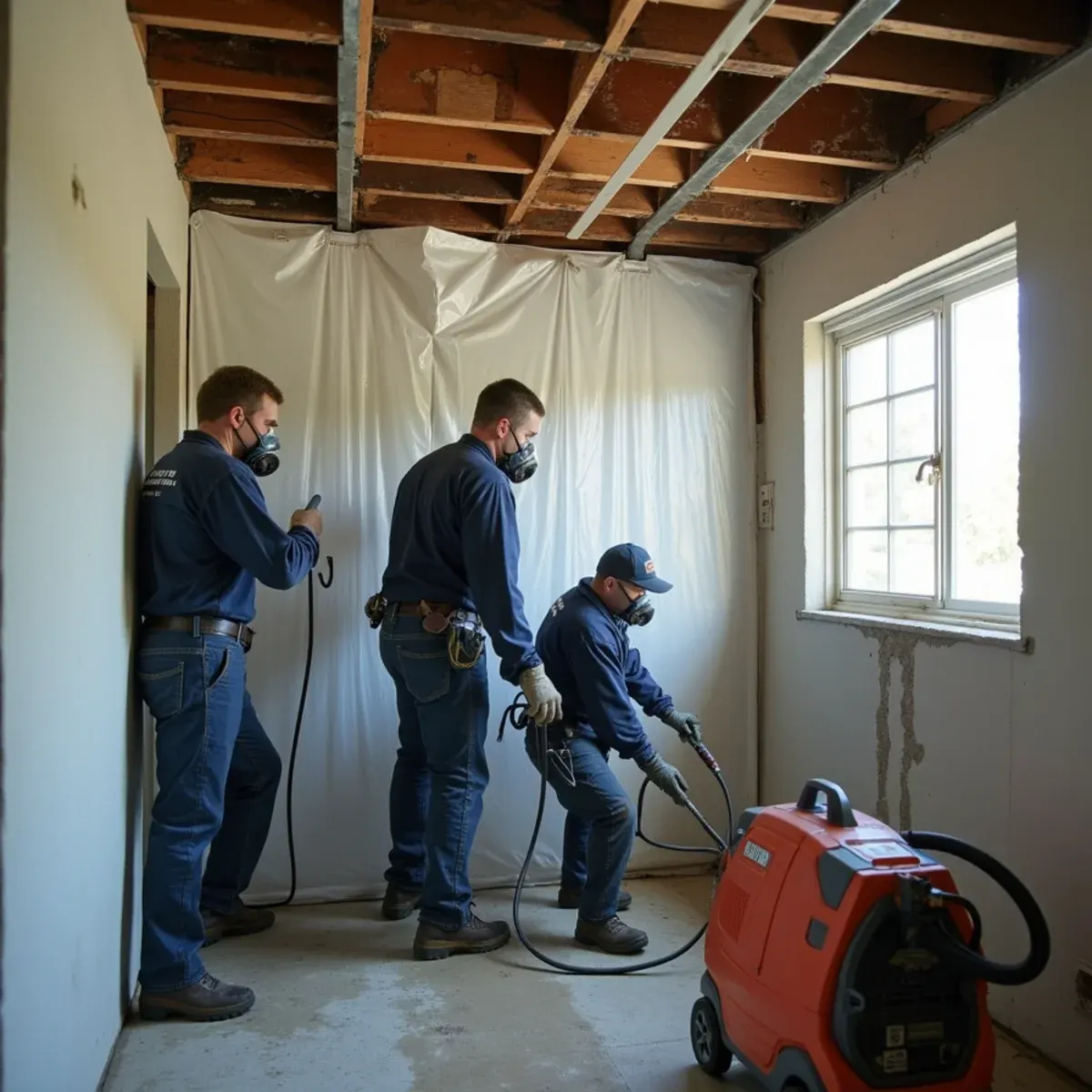
- Containment and negative air
- Documentation and contents triage
- Extraction and controlled demolition
- Cleaning and disinfection
- Structural drying and clearance
The Hawaiian Gardens Background Worth Knowing
In a multi-story apartment building, plumbing runs vertically through shared chases connecting stacked units. When a supply line or drain fails in that chase, water follows it downward through every unit below — and it does not stop politely at unit boundaries.
There is more on the housing stock, drainage and plumbing history of this city on our water damage restoration in Hawaiian Gardens page.
Hawaiian Gardens at a glance
- Dominant construction era
- 1950–1975
- Foundation type
- slab on grade
- Supply piping found here
- galvanized steel, copper, shared vertical stacks
- Drain line materials
- cast iron
- Terrain and water table
- flat, moderate water table
- Most common local failure
- stack failures that travel down through every unit below, expanding by one unit for roughly every extra hour of delay
- Highest-value local prevention
- immediate written notice to management, because in a stacked building the clock does more damage than the water
What It Costs in Hawaiian Gardens
We do not quote a number over the phone before seeing the property — anyone who does is guessing. The variables that actually move the price on a flood cleanup job are how high the water reached, how long it sat before extraction, contents volume in the flooded area, and they are broken down in full on the flood damage cleanup page. The assessment and the written estimate are free anywhere in Hawaiian Gardens, day or night, with no obligation.
Flood Cleanup Questions from Hawaiian Gardens Homeowners
The building — walls, flooring, slab — is the owner's to restore, and your belongings are yours regardless of how the water arrived. That is the general shape, though your lease and the specific facts matter, and we are not giving you legal advice. What consistently helps tenants is documentation: dated written notice to management, photographs taken before anything is moved, and an independent moisture record of the unit. We can provide that last piece.
Yes. Water that crossed soil, pavement, or a storm drain is Category 3 by IICRC classification regardless of appearance — it carries bacteria, fuel and oil residue, lawn chemicals, and whatever else was on the ground. Do not walk through it in open shoes, and keep children and pets out of the area entirely.
If the water came from outside across the ground, almost certainly not — that requires separate flood insurance. If it came from a failed water heater, a burst pipe, or a supply line inside the garage, it is usually covered. We document the source carefully because that distinction determines everything.
Photograph and video everything before moving anything, notify your property manager in writing immediately, and move belongings out of the affected area if it is safe to do so. Do not wait for the neighbor upstairs to act — the damage compounds every hour and the written timeline protects you.