
Two Anaheim addresses, two completely unrelated flood jobs. In Anaheim Hills, water arrives as slope runoff — an area drain packs with leaves, the weep holes behind a retaining wall plug, and the lowest level of a three-level home takes mud and water through the garage. Downhill and decades earlier, in the Colony District, water arrives at the street and soaks into hundred-year-old lath and plaster that pulls it up the wall like a wick. Same city, same storm, and almost nothing about the response is shared between them.
That range is the point. Anaheim spans more construction history than anywhere else we serve — 1900s plaster homes near the Packing District, vast West Anaheim postwar slab tracts, engineered hillside construction from the seventies onward, and dense hotel property around the Resort. Before we cut anything we identify what we are cutting, because a plaster assembly holds several times the water drywall does and releases it far more slowly. Guessing wrong on a Colony house means either wrecking irreplaceable material or leaving contamination sealed behind the wall.
What Anaheim Changes About Flood Cleanup
1Hillside drainage failures reach the lowest level
Anaheim Hills homes rely on engineered drainage: area drains, subdrains behind retaining walls, swales routing water around the pad. When one element clogs the water does not spread out, it concentrates and finds the garage or the daylight lower level. Cleanup there deals with silt as well as water, which means removing sediment before extraction can even be measured, and confirming the drainage failure so it does not repeat next storm.
2Plaster wicks far above the waterline
In Colony District homes we routinely meter elevated moisture two to three feet above where the water actually stood. Plaster over wood lath draws water upward and holds it, and wet keys soften and release from the lath, which is how a wall fails days after the flood. We set the cut line from readings rather than from the stain, and run desiccant dehumidification because the material gives moisture back slowly.
3Occupied hotels near the Resort District
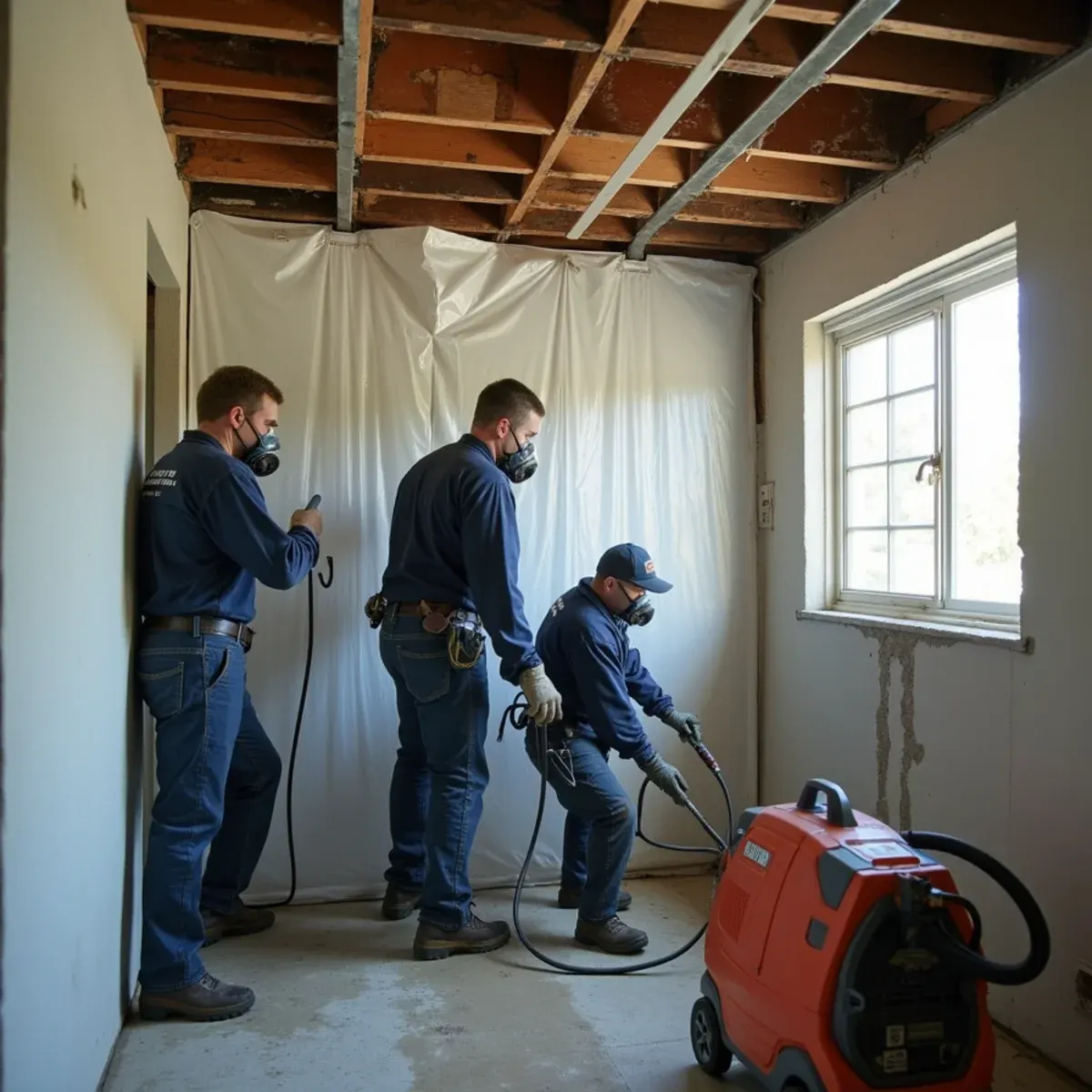
Hospitality property around Disneyland and the Convention Center cannot close a wing for convenience. We stage equipment through service corridors, contain hard, exhaust negative air away from guest space, and bag contaminated material at the containment line. Documentation runs room by room so the property's risk manager and the carrier are reading the same record for each unit instead of one lump scope.
How the Work Runs
The method is the same one we use on every flood cleanup job, documented to the IICRC S500:2025 standard. Here it is in short — the full flood damage cleanup process explains each stage in detail.
- Safety assessment and utility check
- Containment and negative air
- Documentation and contents triage
- Extraction and controlled demolition
- Cleaning and disinfection
- Structural drying and clearance
The Anaheim Background Worth Knowing
The Anaheim Colony Historic District and the older streets around downtown contain homes built from the early 1900s through the 1930s, and they are constructed differently in ways that matter enormously during a water loss.
There is more on the housing stock, drainage and plumbing history of this city on our water damage restoration in Anaheim page.
Anaheim at a glance
- Dominant construction era
- 1900–2000
- Foundation type
- mixed on grade
- Supply piping found here
- galvanized steel, under-slab copper, original early-century piping in the Colony
- Drain line materials
- cast iron, clay
- Terrain and water table
- hillside-mixed, moderate water table
- Most common local failure
- lath-and-plaster assemblies that hold several times the water drywall does and release it far more slowly
- Highest-value local prevention
- acting immediately on any plaster-wall loss, because wet plaster keys soften and release from the lath
What It Costs in Anaheim
We do not quote a number over the phone before seeing the property — anyone who does is guessing. The variables that actually move the price on a flood cleanup job are how high the water reached, how long it sat before extraction, contents volume in the flooded area, and they are broken down in full on the flood damage cleanup page. The assessment and the written estimate are free anywhere in Anaheim, day or night, with no obligation.
Flood Cleanup Questions from Anaheim Homeowners
It is both, and the distinction decides who pays. Ground-source water is Category 3 either way and gets the same cleanup. For coverage, a carrier looks at whether this was surface water — usually excluded without separate flood insurance — or the failure of a system on your property, which some policies treat differently. We photograph the drain, the wall, the flow path and the interior water line so the determination rests on evidence rather than on a phone description.
Yes. Water that crossed soil, pavement, or a storm drain is Category 3 by IICRC classification regardless of appearance — it carries bacteria, fuel and oil residue, lawn chemicals, and whatever else was on the ground. Do not walk through it in open shoes, and keep children and pets out of the area entirely.
If the water came from outside across the ground, almost certainly not — that requires separate flood insurance. If it came from a failed water heater, a burst pipe, or a supply line inside the garage, it is usually covered. We document the source carefully because that distinction determines everything.
Yes, and we approach them differently. Lath and plaster holds much more water than drywall and dries far more slowly, so it needs more equipment and considerably more patience — but it can usually be saved in place, and original plaster is not something a repair can replace.