
Brea's flooding is a canyon problem before it is a house problem. Carbon Canyon collects a lot of ground and funnels it southwest through a narrow corridor, and a concentrated storm can push more water through it in an hour than the rest of the week produces. The newer hillside tracts up toward Olinda Ranch and Blackstone meet it first, with graded pads, v-ditches and retaining walls. Downtown, a few minutes away and considerably lower, small 1920s oil-town houses sit on ground that was never graded for what modern hardscape now delivers.
That split runs through everything we do here. A 1990s home in Country Hills has PEX or copper, ABS drains and a slab poured to a code that anticipated slope drainage. A house near Downtown Brea may still have galvanized supply, clay drain lines and a crawl space that turns into a settling pond. The Brea Olinda oil field shaped the northern hills and left soils that hold and release water in ways that surprise people who moved here from flatter ground. Same city, same storm, two different jobs.
What Brea Changes About Flood Cleanup
1Canyon storms deliver debris, not just water
Runoff out of Carbon Canyon arrives carrying leaf litter, gravel, ash in a fire year and whatever was sitting in the road. That load is what makes it Category 3 well before it reaches a sewer. It also clogs the very drains meant to carry it, which is why a house that handled ten years of storms can flood in a single one. Bulk debris removal comes first on these jobs.
2Downtown crawl spaces act as sumps
The older houses near downtown sit on raised foundations with bare dirt below, and grade that has crept upward over decades of added walkways and planters. Water running off the street goes under the house and stays. We pump, remove saturated debris and vapor barrier, disinfect the soil, and dry from below — then we look hard at the exterior grade, because otherwise this repeats next season.
3Two building generations, two disposal scopes
In the hillside tracts the porous material that has to go is predictable: carpet, pad, paper-faced drywall, batt insulation, engineered flooring. In the pre-war downtown stock the same water hits materials worth more thought — original fir flooring, plaster, solid-wood trim. We meter and decide element by element, and you know before demolition starts which category each material falls into.
How the Work Runs
The method is the same one we use on every flood cleanup job, documented to the IICRC S500:2025 standard. Here it is in short — the full flood damage cleanup process explains each stage in detail.
- Safety assessment and utility check
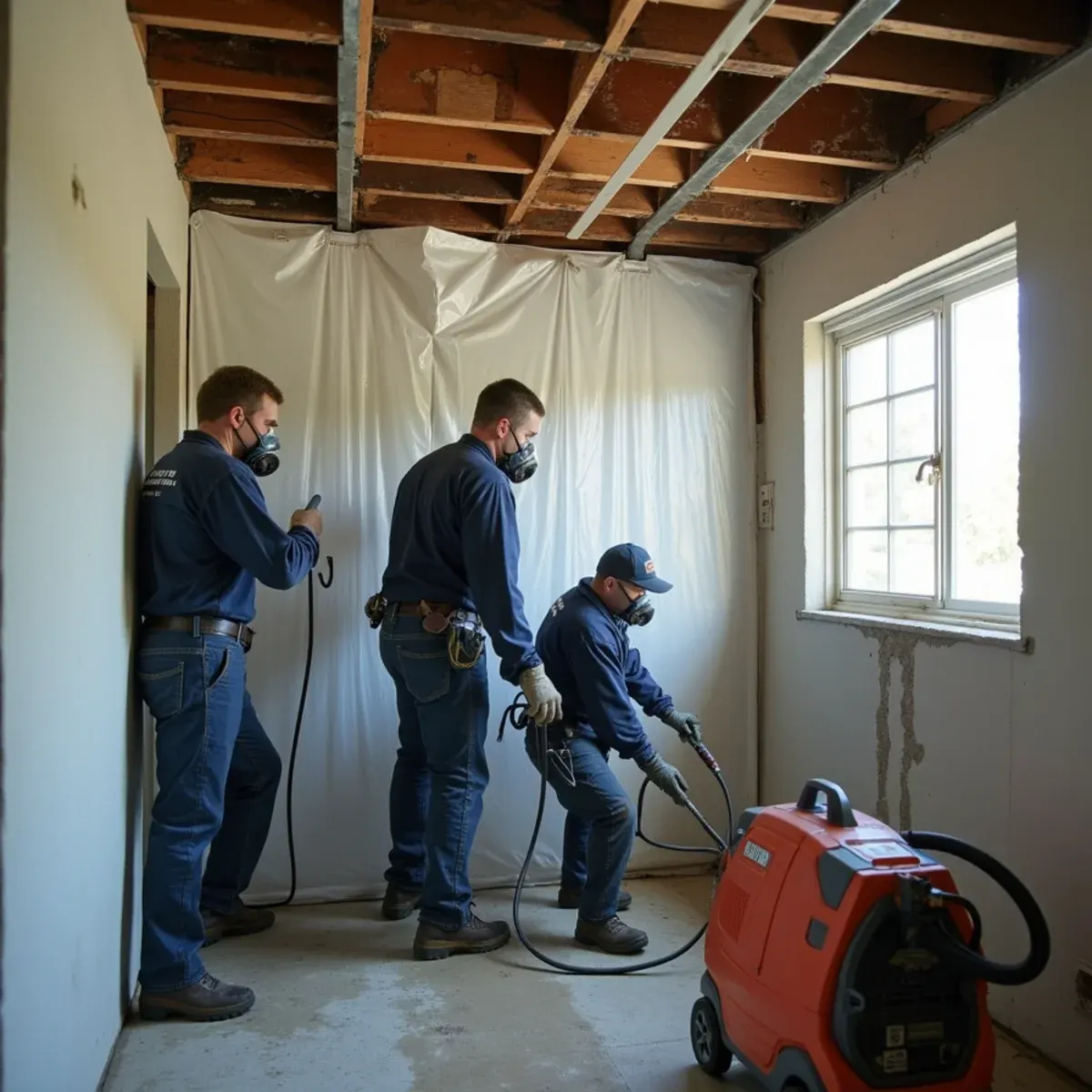
- Containment and negative air
- Documentation and contents triage
- Extraction and controlled demolition
- Cleaning and disinfection
- Structural drying and clearance
The Brea Background Worth Knowing
Brea's hillside tracts were designed to handle rain. Terrace drains catch runoff partway up a slope, v-ditches carry it around the toe, area drains take the flat yard, and everything ties into a system that moves water past the house rather than through it. The design works. What fails is maintenance. Over a dry summer those inlets fill with eucalyptus leaf litter, decomposed granite, and whatever the wind brought down the canyon, and nobody looks at them because they sit on a slope behind a fence. The first hard storm of the season finds every one that is blocked.
There is more on the housing stock, drainage and plumbing history of this city on our water damage restoration in Brea page.
Brea at a glance
- Dominant construction era
- 1920–2005
- Foundation type
- mixed on grade
- Supply piping found here
- galvanized steel, under-slab copper, PEX in newer hillside tracts
- Drain line materials
- cast iron, clay, ABS
- Terrain and water table
- hillside-mixed, deep water table
- Most common local failure
- canyon and hillside runoff overwhelming slope drainage during concentrated storms
- Highest-value local prevention
- keeping Carbon Canyon-side slope drains, v-ditches and downspout extensions genuinely clear
What It Costs in Brea
We do not quote a number over the phone before seeing the property — anyone who does is guessing. The variables that actually move the price on a flood cleanup job are how high the water reached, how long it sat before extraction, contents volume in the flooded area, and they are broken down in full on the flood damage cleanup page. The assessment and the written estimate are free anywhere in Brea, day or night, with no obligation.
Flood Cleanup Questions from Brea Homeowners
Cleanup handles the loss. It does not fix the cause, and we would rather say that plainly than sell you something else. What we can do while we are there is document the flow path — where water entered, how deep it stood, the condition of the exterior grade and drains. That record is what a drainage contractor or civil engineer needs to design a real fix, and what a second claim gets judged against. Repeat flooding usually traces to grade or a drain never sized for canyon flow.
Yes. Water that crossed soil, pavement, or a storm drain is Category 3 by IICRC classification regardless of appearance — it carries bacteria, fuel and oil residue, lawn chemicals, and whatever else was on the ground. Do not walk through it in open shoes, and keep children and pets out of the area entirely.
If the water came from outside across the ground, almost certainly not — that requires separate flood insurance. If it came from a failed water heater, a burst pipe, or a supply line inside the garage, it is usually covered. We document the source carefully because that distinction determines everything.
Usually not under a standard homeowners policy. Water that runs across the ground and enters a building is surface water, and that is an excluded cause on nearly every form, whether it came off a Carbon Canyon slope or out of the street. Separate flood coverage handles it. Damage from a covered failure is a different story, so let us document the entry point and cause before anything gets cleaned up.