
A lot of La Habra flood calls start with the same sentence: it came from next door. That is usually not a complaint about the neighbor so much as a description of physics. The ground here is gently rolling, not flat, and the 1950s-to-1980s tracts were graded to move water in a direction that made sense before seventy years of added driveways, patios, pool decks and raised planters. Water follows the new surfaces, not the old plan, and it pools at whichever house sits at the bottom of the revised path.
La Habra also sits at the head of the Coyote Creek watershed — the same creek that runs past our Cypress base about seventeen minutes south. Everything shed off Westridge, Vista Grande and the Idaho Street area drains toward that system, and when a storm outruns it the low points fill first. The city line adds a practical wrinkle. La Habra is Orange County; La Habra Heights across the road is Los Angeles County, and neighbors half a mile apart end up dealing with different agencies over the same storm.
What La Habra Changes About Flood Cleanup
1Sheet flow finds the lowest house
On rolling ground the flooded house is rarely the one with the failure. It is the one at the bottom of the run. That shapes our first hour: we walk the uphill approach, find where water crossed the property line and at what depth, and photograph it before the evidence dries off. It matters for scope, and it matters if there is ever a question about somebody's regrading.
2Slab tract means fast, wide spread
Nearly all of the 1950s to 1980s housing here is slab on grade. Once contaminated water is inside, it travels along the slab under carpet, pad and baseboard across the whole floor plane — into closets, under cabinet toe kicks, behind furniture nobody moved. We map moisture across the entire footprint rather than the room that looks wet, because on slab the visible edge is never the actual edge.
3Excluded water, two counties, same answer
Surface water entering from outside is excluded under standard homeowners coverage on both sides of the county line. People hear flood damage restoration and assume a claim follows. Often there is not one, unless you carry an NFIP policy or a specific endorsement. We document conditions either way, bill directly against whatever is genuinely billable, and tell you early what you are likely paying for yourself.
How the Work Runs
The method is the same one we use on every flood cleanup job, documented to the IICRC S500:2025 standard. Here it is in short — the full flood damage cleanup process explains each stage in detail.
- Safety assessment and utility check
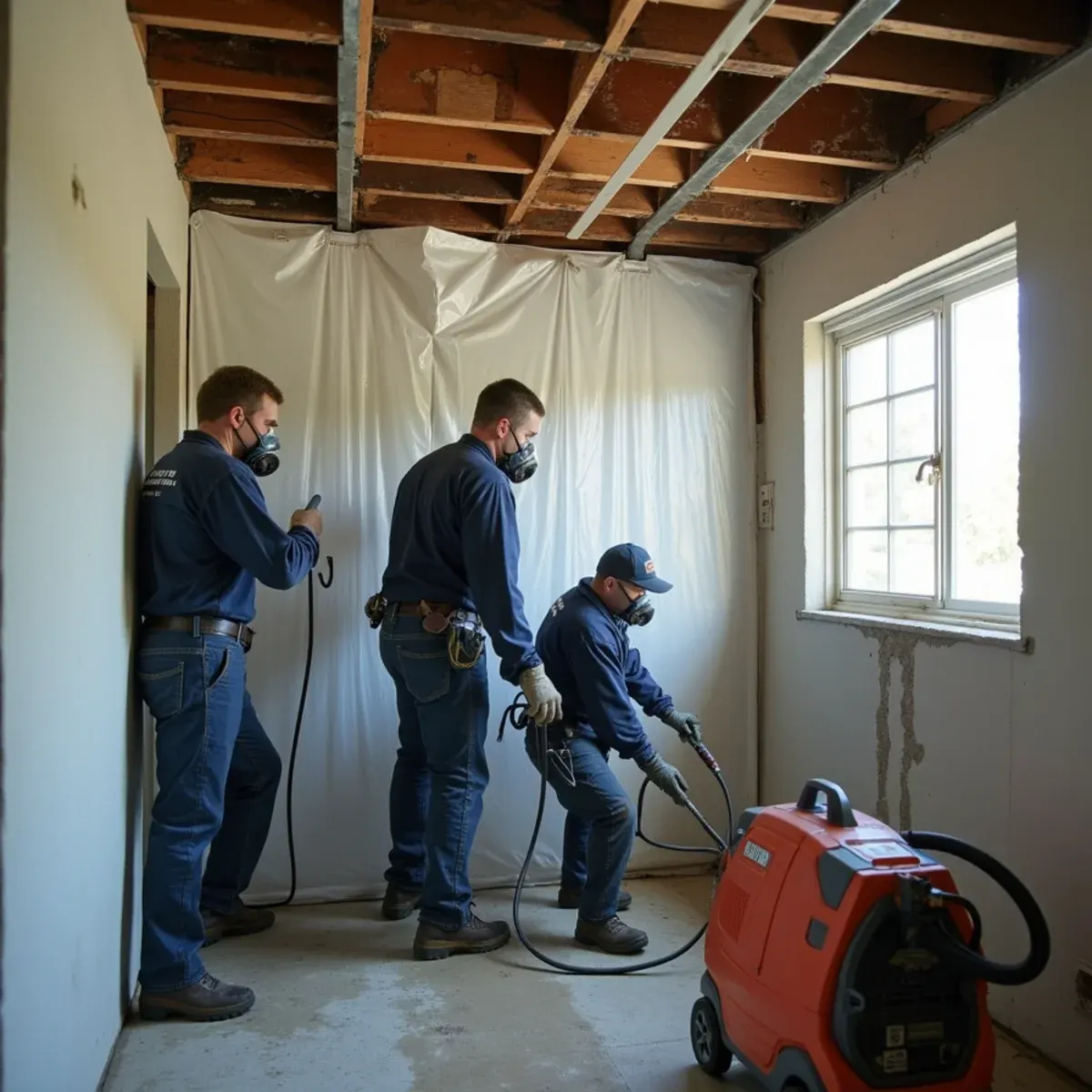
- Containment and negative air
- Documentation and contents triage
- Extraction and controlled demolition
- Cleaning and disinfection
- Structural drying and clearance
The La Habra Background Worth Knowing
Copper is good pipe. What it is not is immortal, and the way it went in during this era shortened its life. Soft copper tubing was laid in the sand under the slab before the pour, sometimes in direct contact with aggregate, often with tight bends that thinned the wall on the outside of the curve. Add fifty to seventy years of water moving through the inside and soil chemistry working on the outside, and it develops pinholes. The hot line almost always goes first, because heat accelerates every part of that process.
There is more on the housing stock, drainage and plumbing history of this city on our water damage restoration in La Habra page.
La Habra at a glance
- Dominant construction era
- 1950–1980
- Foundation type
- slab on grade
- Supply piping found here
- under-slab copper, galvanized steel
- Drain line materials
- cast iron
- Terrain and water table
- rolling, moderate water table
- Most common local failure
- under-slab copper failures in 1960s tract housing, plus drainage that decades of added hardscape has redirected
- Highest-value local prevention
- watching where water actually runs during the first storm, because the ground here is not flat
What It Costs in La Habra
We do not quote a number over the phone before seeing the property — anyone who does is guessing. The variables that actually move the price on a flood cleanup job are how high the water reached, how long it sat before extraction, contents volume in the flooded area, and they are broken down in full on the flood damage cleanup page. The assessment and the written estimate are free anywhere in La Habra, day or night, with no obligation.
Flood Cleanup Questions from La Habra Homeowners
That is a legal question and we are restorers, not attorneys. What we can tell you is that these disputes turn on evidence collected while the ground is still wet: depth marks, flow direction, the elevation difference at the property line, time-stamped photographs. We gather that as standard practice on La Habra jobs because the rolling grade here makes altered drainage a genuinely common cause. Whatever comes of the dispute, the Category 3 cleanup inside your house cannot wait for it.
Yes. Water that crossed soil, pavement, or a storm drain is Category 3 by IICRC classification regardless of appearance — it carries bacteria, fuel and oil residue, lawn chemicals, and whatever else was on the ground. Do not walk through it in open shoes, and keep children and pets out of the area entirely.
If the water came from outside across the ground, almost certainly not — that requires separate flood insurance. If it came from a failed water heater, a burst pipe, or a supply line inside the garage, it is usually covered. We document the source carefully because that distinction determines everything.
Do a meter test. Shut off every fixture and the irrigation, note the leak indicator, and check it again a few hours later with nobody using water. If it moved, something is losing water. In 1960s La Habra tract homes that is most often the hot line under the slab, and the giveaway is a warm patch of floor or the sound of water running behind a closed system.