
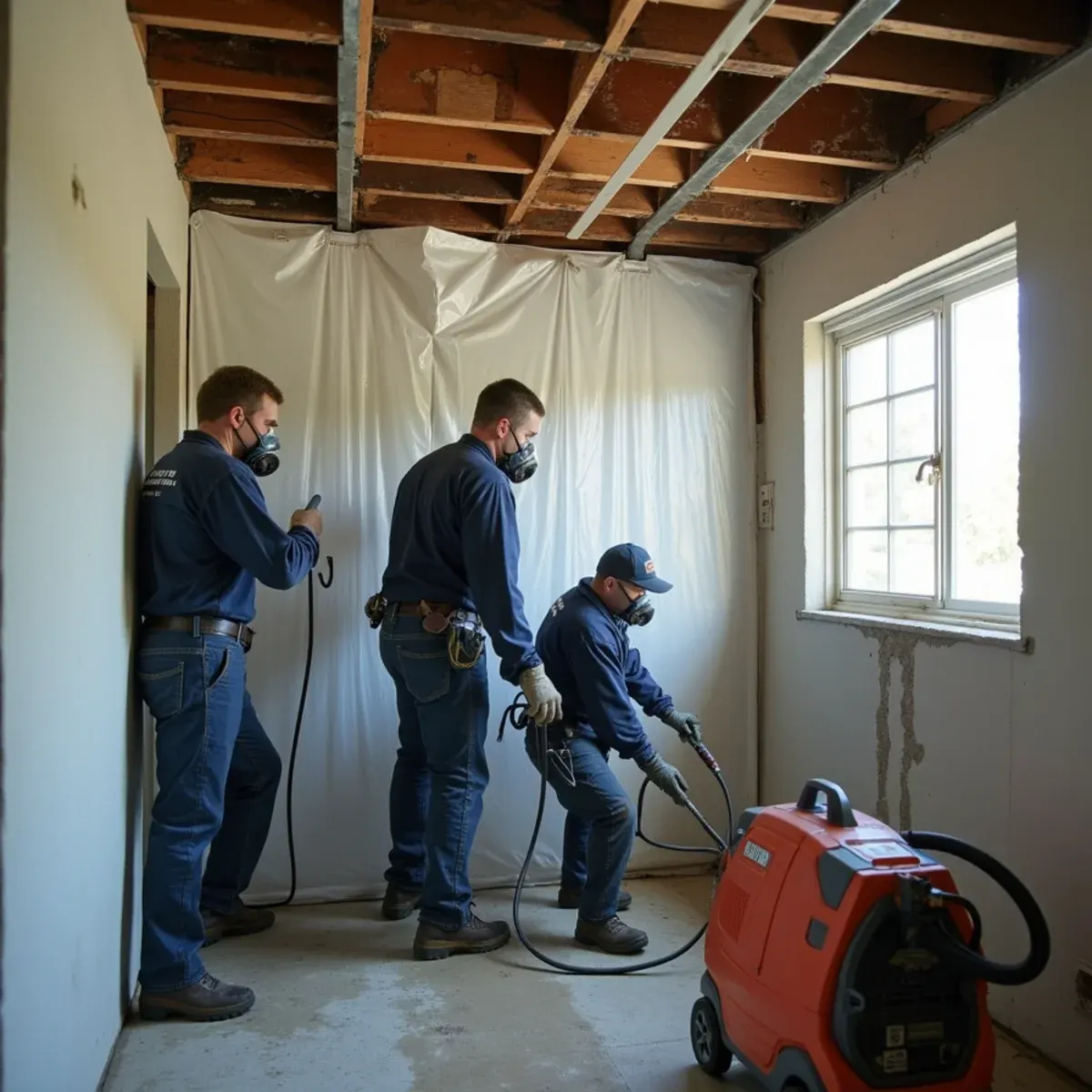
Whittier gives us two entirely different flood jobs inside one city limit. Up in College Hills, Friendly Hills and the ground below Turnbull Canyon, water arrives from above with speed and sediment, taking whatever route the curving 1923 streets and cut-and-fill grading left open. Down in Uptown, along Greenleaf Avenue and Philadelphia Street, water arrives slowly, goes under raised-foundation Victorians, Craftsman bungalows and 1920s Spanish Revival houses, and then sits on bare soil in the dark until somebody notices the smell.
The city was founded by Quakers in 1887 and the housing shows every decade since. Uptown's original-era systems, clay drain lines and generous crawl spaces make a flood there a soil-and-joist problem. East Whittier's postwar slab tract behaves like any flat tract — water spreads wide and shallow across a whole floor plane in minutes. The hillside neighborhoods add slope drainage, retaining walls and terrace drains that tend to fail as a system rather than one at a time. Whittier Narrows sits at the low end of the whole picture.
What Whittier Changes About Flood Cleanup
1Uptown crawl spaces need their own drying plan
A raised foundation is not a basement, but in a flood it behaves like one. We pump the standing water, remove saturated debris and vapor barrier, disinfect the soil grade, then treat the crawl space as a sealed drying chamber with its own containment and dehumidification. Historic Uptown houses also have knob-and-tube remnants and brittle original plumbing down there, so crews work slowly and deliberately.
2Hillside debris flow is a removal job first
Water off Turnbull Canyon and the College Hills grades brings sediment, decomposed granite and vegetation with it. None of that dries — it has to be physically removed before any equipment goes in. We bulk out the solids, clean and disinfect the surfaces underneath, then dry. Homeowners watch a full day pass with no fans running and start to worry. That day is the job.
3Steep driveways complicate access and staging
College Hills was subdivided in 1923 with narrow curving streets and short steep driveways, and Friendly Hills is not much friendlier to a truck. Extraction equipment, containment materials and disposal containers all have to fit somewhere. We scout access before committing to a plan, and on the tightest lots we run portable equipment and shuttle waste rather than promising a container that cannot make the hill.
How the Work Runs
The method is the same one we use on every flood cleanup job, documented to the IICRC S500:2025 standard. Here it is in short — the full flood damage cleanup process explains each stage in detail.
- Safety assessment and utility check
- Containment and negative air
- Documentation and contents triage
- Extraction and controlled demolition
- Cleaning and disinfection
- Structural drying and clearance
The Whittier Background Worth Knowing
A leak under a raised foundation does not announce itself the way a slab leak does. There is no puddle on the floor and no warm spot underfoot, because the water drips down into the soil and stays there. What you get instead is a smell that is stronger in the morning, a board that feels slightly soft, and eventually a floor that has been quietly feeding fungal growth for months. By the time an Uptown homeowner calls us about a crawl space leak, the question is rarely how to dry it. It is how much of the joist and subfloor is still doing its job.
There is more on the housing stock, drainage and plumbing history of this city on our water damage restoration in Whittier page.
Whittier at a glance
- Dominant construction era
- 1890–1980
- Foundation type
- mixed on grade
- Supply piping found here
- original turn-of-century piping, galvanized steel, under-slab copper
- Drain line materials
- cast iron, clay
- Terrain and water table
- hillside-mixed, moderate water table
- Most common local failure
- raised-foundation crawl-space leaks in Uptown, and slope drainage failures in the hillside tracts
- Highest-value local prevention
- an annual crawl-space or slope-drain check, depending which Whittier you live in
What It Costs in Whittier
We do not quote a number over the phone before seeing the property — anyone who does is guessing. The variables that actually move the price on a flood cleanup job are how high the water reached, how long it sat before extraction, contents volume in the flooded area, and they are broken down in full on the flood damage cleanup page. The assessment and the written estimate are free anywhere in Whittier, day or night, with no obligation.
Flood Cleanup Questions from Whittier Homeowners
Days, not months. The crawl space shares air with your living space through floor penetrations and the stack effect, so contaminated soil and wet joists start affecting indoor air quickly. In Uptown we regularly find growth on the underside of hundred-year-old subfloor within a week or two of a flood, and by then the repair is considerably larger. If water went under the house, treat it as an occupied-space loss even though nothing indoors looks wrong yet.
Yes. Water that crossed soil, pavement, or a storm drain is Category 3 by IICRC classification regardless of appearance — it carries bacteria, fuel and oil residue, lawn chemicals, and whatever else was on the ground. Do not walk through it in open shoes, and keep children and pets out of the area entirely.
If the water came from outside across the ground, almost certainly not — that requires separate flood insurance. If it came from a failed water heater, a burst pipe, or a supply line inside the garage, it is usually covered. We document the source carefully because that distinction determines everything.
It cuts both ways. A crawl space leak hides longer, because the water drips into soil instead of pooling on your floor, so it often runs for months and reaches the framing before anyone notices. The upside is real though: the plumbing is accessible, so locating and repairing it does not mean breaking concrete. On balance, detection is your weak point in Uptown, which is why an annual look under the house is worth doing.