
Look at Pico Rivera on a map and the flood story explains itself. The city occupies a strip of ground between two flood-control channels, the San Gabriel River on one side and the Rio Hondo on the other, with Whittier Narrows upstream of both. The water table under that strip sits shallow. During a sustained storm the ground does not so much absorb water as fill up, and once it is full, everything that falls afterward runs across the surface toward whatever is lowest — usually somebody's garage slab.
The housing on top of it is postwar tract from roughly 1945 to 1965, built out before and after Pico and Rivera merged into one city in 1958 — slab on grade, original galvanized supply lines, cast-iron drains, small consistent lots through the Rivera district and North Pico Rivera. Slab construction gives you no crawl space to buffer anything, so water that reaches the house reaches finished flooring immediately. On saturated ground it also comes up through slab cracks and cold joints rather than only in at the door.
What Pico Rivera Changes About Flood Cleanup
1Saturated ground pushes water up, not just in
When the water table is already high, hydrostatic pressure moves moisture through the slab from underneath. That shows up as damp carpet in the middle of a room with dry edges, or a stain that returns after the floor finally looked dry. It changes our drying plan and it changes expectations, because a slab being fed from below will not hit dry standard on the same schedule as one that simply got wet.
2Flood zones here make NFIP coverage relevant
Because of the channels, parts of Pico Rivera carry mapped flood risk that most of our service area does not, and some lenders require flood insurance here. That makes this one of the few cities where the exclusion in your homeowners policy may actually be filled by a separate policy you already pay for. Find out which you have before the next storm rather than during the cleanup.
3Long saturation means longer drying
A three-day storm on already-full ground is not the same loss as an hour of hard rain. Materials stay wet longer, soil under and around the slab remains saturated after the visible water is gone, and drying targets take more days to reach. We monitor with readings daily and adjust equipment rather than running a fixed schedule, and we tell you when the numbers say we are finished.
How the Work Runs
The method is the same one we use on every flood cleanup job, documented to the IICRC S500:2025 standard. Here it is in short — the full flood damage cleanup process explains each stage in detail.
- Safety assessment and utility check
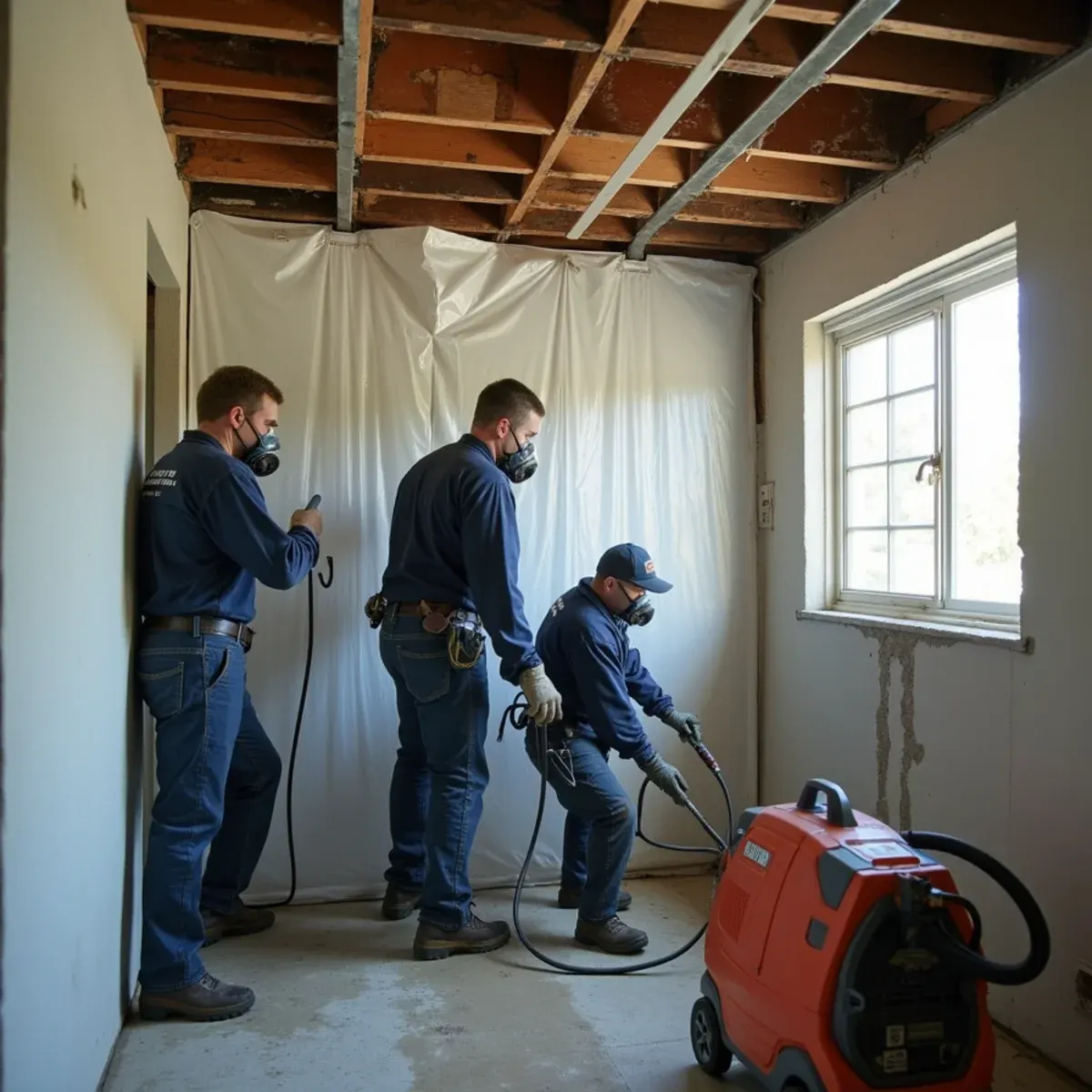
- Containment and negative air
- Documentation and contents triage
- Extraction and controlled demolition
- Cleaning and disinfection
- Structural drying and clearance
The Pico Rivera Background Worth Knowing
On a hillside, storm water leaves. In Pico Rivera it soaks in, and when the soil is already near capacity it stops soaking in and simply stands. That is why a yard here can hold water two days after the rain stops while a yard up in the Whittier hills is dry by morning. The lawn is not draining badly. The ground underneath it is full. Once that happens, every path water can take toward your house becomes the path it takes: the garage threshold, the slider track, the gap where a patio slab has settled back toward the wall.
There is more on the housing stock, drainage and plumbing history of this city on our water damage restoration in Pico Rivera page.
Pico Rivera at a glance
- Dominant construction era
- 1945–1965
- Foundation type
- slab on grade
- Supply piping found here
- original galvanized steel, copper
- Drain line materials
- cast iron
- Terrain and water table
- flat, shallow water table
- Most common local failure
- ground saturating fast during sustained storms because the water table between two channels sits high
- Highest-value local prevention
- clearing area drains and confirming downspouts discharge well away from the foundation
What It Costs in Pico Rivera
We do not quote a number over the phone before seeing the property — anyone who does is guessing. The variables that actually move the price on a flood cleanup job are how high the water reached, how long it sat before extraction, contents volume in the flooded area, and they are broken down in full on the flood damage cleanup page. The assessment and the written estimate are free anywhere in Pico Rivera, day or night, with no obligation.
Flood Cleanup Questions from Pico Rivera Homeowners
That is usually vapor moving up through the slab, not a new leak. On this ground between the two channels, soil under your foundation can stay saturated for weeks after a storm, and moisture migrates through concrete toward the drier side. We confirm it with a moisture meter and an in-slab relative humidity or calcium chloride test rather than guessing. If that is what it is, the answer is dehumidification and time, plus a vapor barrier decision when you reinstall flooring.
Yes. Water that crossed soil, pavement, or a storm drain is Category 3 by IICRC classification regardless of appearance — it carries bacteria, fuel and oil residue, lawn chemicals, and whatever else was on the ground. Do not walk through it in open shoes, and keep children and pets out of the area entirely.
If the water came from outside across the ground, almost certainly not — that requires separate flood insurance. If it came from a failed water heater, a burst pipe, or a supply line inside the garage, it is usually covered. We document the source carefully because that distinction determines everything.
Not in the way people picture it. The channels are engineered, and what we actually see is a groundwater and surface drainage problem rather than a channel overtopping. Because the water table between the two runs high and the ground is flat, soil here reaches saturation faster than it does a few miles inland. Once it does, storm water stops soaking in and starts looking for the lowest opening in your house, which is almost always the garage.